pool algae stains in your Plano pool are removable when you follow a stepwise approach: test and balance your water, brush stained areas, shock with chlorine, apply a polymeric algaecide for persistent stains, run the filter continuously while vacuuming, and clean or backwash your filter; repeat treatments and maintain your sanitizer levels to prevent recurrence.
Key Takeaways:
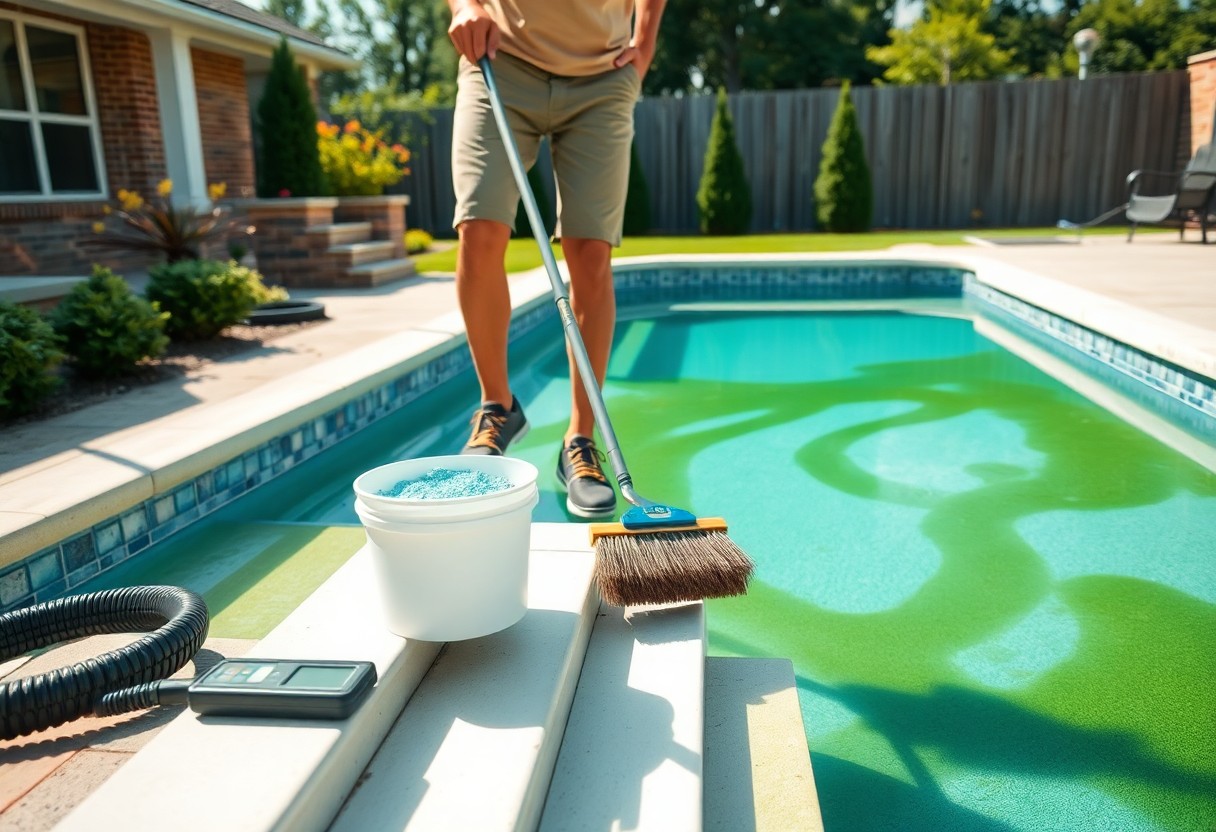
- Test and balance water (pH 7.2-7.6, stable alkalinity) before treatment, then shock the pool to raise free chlorine and kill algae.
- Thoroughly brush stained surfaces with the appropriate brush (nylon for vinyl/fiberglass, stainless for concrete/plaster) to dislodge algae.
- Apply an algaecide formulated for the algae type (green vs. black) and repeat treatments as directed until stains lighten.
- Run the filter continuously, backwash or clean the filter, and vacuum dead algae to waste to remove stain material.
- For persistent stains, use a specialized stain remover or carefully spot-treat with diluted muriatic acid per instructions, or hire a professional for deep cleaning.
Understanding Algae Stains in Pools
Types of Algae Commonly Found in Pools
You’ll most often encounter green algae (fast-spreading, appears in 24-48 hours with poor circulation), mustard/yellow algae (grainy, clings to plaster and steps), and black algae (deep-rooted, chlorine-resistant patches). You can track a bloom’s progress by water clarity and how easily the growth brushes off – greener growth usually loosens quickly while black spots persist. This helps you choose between routine shock, algaecide, or aggressive scrubbing and acid treatment.
- Green algae – looks like paint or fuzzy carpet; responds to shock and brushing.
- Mustard (yellow) algae – grainy dots on shallow surfaces; needs algaecide plus thorough brushing.
- Black algae – dark, pinhead colonies with deep roots; often requires acid wash or specialized products.
| Algae Type | Appearance & Typical Response |
|---|---|
| Green | Bright to dark green, cloudy water; shock to 10 ppm FC and brush. |
| Mustard/Yellow | Yellow-brown specks on plaster; treat with algaecide and aggressive brushing. |
| Black | Dark pinpoint colonies, resists chlorine; may require acid wash or specialty remover. |
| Blue-green (cyanobacteria) | Slippery film, blue-green tint; shock, algaecide, and extended filtration. |
Identifying Algae Stains vs. Other Stains
If a growth scrubs off with a firm brush and the water clears after shocking to 10 ppm free chlorine, you’re dealing with algae; it’s often slimy, fuzzy, or powdery and redistributes when disturbed. If the mark remains after vigorous brushing and oxidizing, suspect metals (iron, copper) or organic tannins from leaves, which embed into plaster and tile grout.
To narrow it down, brush a 1 ft² area for 30-60 seconds, vacuum or hose it away, then apply a shock dose and watch for change over 24 hours; no change points toward a non-algal stain. You can also test for metals with a pool store kit or use a 10% ascorbic acid swab: metals will often lighten or change color on contact while algae will not.
The Impact of Algae on Pool Health
Algae rapidly depletes free chlorine-light blooms can drive levels below 0.5 ppm within hours-so you’ll see reduced sanitizer effectiveness, cloudy water, and increased bacterial load. You may also face slippery surfaces that create a safety hazard, plus clogged filters and higher chemical and backwash frequency that raise maintenance costs.
Beyond immediate hygiene, persistent algae can stain plaster and degrade finishes, requiring spot acid washing or professional resurfacing in severe cases. Expect to use larger chemical doses (shock treatments often 5-10 ppm or higher temporarily) and to backwash or clean cartridges more frequently until filtration and sanitizer levels are restored.
Preventing Algae Growth
The Importance of Regular Maintenance
You should test water 2-3 times weekly and run your filter 8-12 hours daily during warm months; consistent circulation removes nutrients algae feed on. Brush walls and steps at least once a week and vacuum or backwash as needed, and clean skimmer and pump baskets every few days when algae risk is high. In Plano’s summer heat, increase testing frequency and filtration to avoid rapid outbreaks.
Keeping pH Levels Balanced
Keep pH between 7.2 and 7.6 and total alkalinity around 80-120 ppm so your sanitizer stays effective; free chlorine should sit at 1-3 ppm for routine control. If pH drifts above 7.8, you’ll notice reduced chlorine efficacy and higher algae risk, so test after storms, heavy bather loads, or when temperatures spike.
When you need to adjust pH, do it incrementally: add muriatic acid or sodium bisulfate in small doses, circulate for 4 hours, then retest before adding more. To raise pH, use sodium carbonate (soda ash) in measured amounts and allow full circulation; keeping alkalinity stable helps pH hold steady, reducing the need for frequent corrections.
Using Algaecides Effectively
View algaecides as a backup, not a replacement for proper chlorine and filtration; use a preventative algaecide every 7-14 days during high-risk periods per the label. Choose copper-based products for stubborn green algae and polyquat (quaternary ammonium) types for routine prevention, and monitor copper levels to stay below about 1 ppm to prevent staining.
For an active bloom, shock the pool to 8-10 ppm free chlorine, brush thoroughly, and then apply an algaecide per label directions-often a double dose for heavy infestations. Run the filter continuously, backwash or clean cartridges more frequently, and keep dosing and brushing until the filter runs clear for 48-72 hours; then resume regular preventive dosing.
Preparing for Stain Removal
Gathering Necessary Tools and Supplies
Have on hand a reliable liquid or strip test kit, pool brush, telescoping pole, vacuum, buckets, nitrile gloves, chemical-resistant goggles, and a respirator rated for acid/chlorine fumes. Stock shock (to reach a 10 ppm target when treating heavy algae), an algaecide, a metal sequestrant (1 pint per 10,000 gallons typical), pH up/down, and a muriatic acid container if you’ll be spot-treating stains.
Testing Water Chemistry Before Treatment
Before treating stains you should test free chlorine (target baseline 1-3 ppm), pH 7.2-7.6, total alkalinity 80-120 ppm, cyanuric acid 30-50 ppm, and metal levels (iron/copper ideally <0.2 ppm). Use a digital or liquid test kit for accuracy and note any abnormal readings so you can correct them before shocking or applying oxidizers.
High metals will oxidize and deposit as stains during shock; for example, if iron exceeds 0.3 ppm treat with a sequestrant or consider partial drain-and-fill. If CYA is over 70 ppm you’ll need much more chlorine to be effective, so lower CYA first or plan for extended shock (target 10 ppm or follow label instructions for breakpoint chlorination).
Safety Precautions When Handling Chemicals
Wear goggles, chemical-resistant gloves, and long sleeves whenever you handle shock, muriatic acid, or sequestrants, and always add acid to water-not water to acid. Work outdoors or in a well-ventilated area, keep a phone nearby, and never mix chlorine products with acids or ammonia-based cleaners to avoid toxic gas.
In case of skin contact flush with running water for 15 minutes and seek medical help for chemical burns; for eye exposure irrigate for at least 15 minutes and get emergency care. Neutralize small acid spills with baking soda, store oxidizers and acids in separate, labeled containers off the ground, and use a cartridge respirator with acid/chemical cartridges if you expect fumes.
Step-by-Step Guide to Removing Algae Stains
Step-by-Step Actions
| Step | Action / Details |
|---|---|
| 1. Test & adjust | Test pH and chlorine; set pH to 7.2-7.6 and total alkalinity to recommended range before treating. |
| 2. Brush | Brush walls/floor with appropriate brush (nylon for vinyl, stainless for concrete) to break surface algae. |
| 3. Shock | Apply shock to raise free chlorine; for heavy algae aim ~10 ppm. Example: 2-3 lb granular shock for a 20,000‑gal pool. |
| 4. Algaecide | Add algaecide per label after shock phase for stubborn stains; choose copper or quaternary based on pool history. |
| 5. Run filter | Run pump 24/7; vacuum to waste if cloudiness or heavy debris to prevent filter overload. |
| 6. Monitor | Backwash sand/DE when pressure is 8-10 psi above clean; test chlorine daily and retreat if stains persist. |
Brushing Techniques for Pool Walls and Floors
You should use a brush matched to your surface-soft nylon for vinyl/liner, stainless or stiff nylon for concrete and tile-and work methodically from the bottom up to dislodge mats of algae. Spend focused 10-15 minutes per zone, concentrating on corners, steps, and tile lines where biofilm forms. Vary your strokes (horizontal then vertical) and re-brush stubborn patches after chemical treatment to lift residual stains.
Applying Chemical Treatments
Begin by adjusting pH to 7.2-7.6 so chemicals work efficiently, then apply a chlorine shock to raise free chlorine – about 10 ppm for heavy green algae. For a 20,000‑gallon pool, that often equals roughly 2-3 pounds of granular shock; follow product labeling and dissolve if directed. After chlorine clears bulk algae, dose an algaecide per the label to control regrowth.
Wear gloves and goggles, and add chemicals with the pump running and returns on to distribute quickly; add granular shock to deep end slowly and avoid pre-dissolving unless the label permits. If your cyanuric acid (CYA) is high (>50 ppm), non-stabilized shock or higher chlorine levels may be needed because CYA binds free chlorine. Re-test free chlorine after 6-12 hours and repeat shock if visible algae or stains remain; keep the filter running continuously until clarity is restored.
Vacuuming and Filtering Techniques
When algae is dead or loose, vacuum slowly to waste to remove solids without fouling the filter; this is especially important for heavy blooms. Run the pump 24 hours a day during treatment and backwash sand/DE filters when pressure rises 8-10 psi above baseline. For cartridge filters, clean or replace cartridges once the water clears to restore flow.
For persistent staining, perform a vacuum‑to‑waste pass immediately after heavy brushing and chemical treatment, then backwash and recharge DE or clean cartridges. Expect to run the filter 48-72 hours after shocking; in one local case, a 25,000‑gal concrete pool cleared after 36 hours of continuous filtration plus two vacuum‑to‑waste passes and a DE recharge. Track filter pressure and water clarity, and repeat vacuuming cycles until the pool stays clear for 48 hours.
Post-Cleaning Actions
How to Rebalance Water Chemistry
Test your water immediately after cleaning and again after 4-8 hours; target free chlorine 1-3 ppm, pH 7.2-7.6, total alkalinity 80-120 ppm and cyanuric acid 30-50 ppm. If pH is high, add muriatic acid or sodium bisulfate; if low, add soda ash. Adjust alkalinity before pH when both are off, and raise or lower chlorine slowly-retest after each adjustment to avoid overshooting.
Monitoring Pool Conditions After Treatment
Test daily for at least seven days for free chlorine, pH and alkalinity, inspect filter pressure and water clarity, and brush problem areas each day; backwash when pressure is 8-10 psi above baseline and run the pump 8-12 hours (12-16 in hot months) to keep turnover consistent.
If algae shows signs of returning-green tint, slimy walls, or rapid chlorine drop-brush and vacuum to waste, shock again as needed and check cyanuric acid (high CYA can render chlorine ineffective). Also clean or chemically treat filters: replace DE or backwash sand filters and clean cartridges, since an overloaded filter commonly allows algae regrowth.
Tips for Long-term Algae Prevention
Keep a consistent maintenance schedule: maintain sanitizer and pH targets, run the pump daily for adequate turnover, brush walls weekly and vacuum as needed, and clean filters monthly or when pressure rises; The simple routine reduces algae outbreaks and maintenance surprises.
- Maintain free chlorine 1-3 ppm and pH 7.2-7.6.
- Run pump 8-12 hours daily (increase to 12-16 in summer) and backwash at +8-10 psi.
- Brush weekly, vacuum when debris appears, and inspect cyanuric acid 30-50 ppm.
Track trends in a log-record readings, treatments and filter pressures so you spot gradual declines before visible algae; treat phosphate spikes with a remover if levels exceed 100 ppb and replace worn filter elements to restore flow. The disciplined record-keeping makes proactive corrections simple.
- Keep a weekly log of test results and actions taken.
- Address phosphate or nutrient sources (fertilizer runoff, pool cover debris).
- Service or replace filters annually to maintain proper flow.
When to Call a Professional
Signs You May Need Expert Assistance
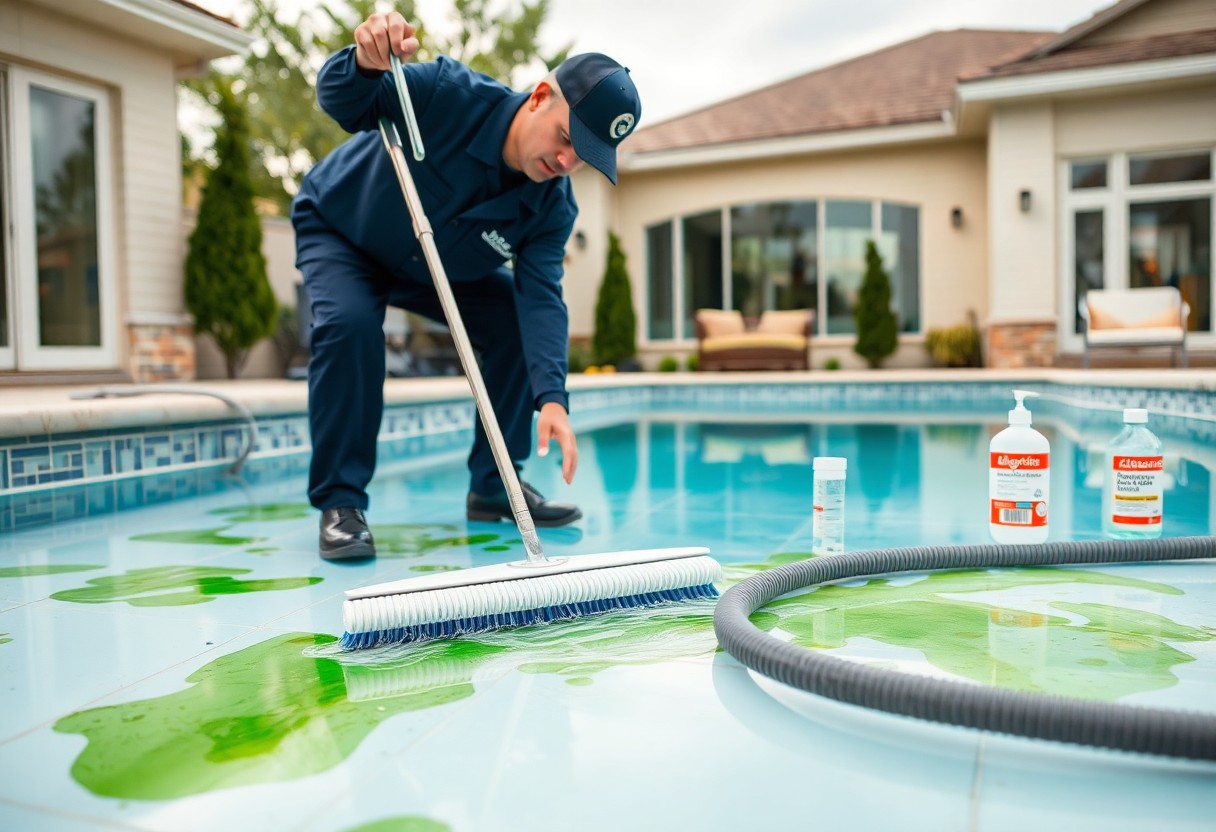
If algae covers more than half the walls or floor, stains persist after two shock treatments, water stays cloudy for over 48 hours, or you spot black or mustard algae that returns within a week, you should call a pro; also seek help if pH won’t stabilize, phosphate levels exceed ~100 µg/L, or plaster/fittings show discoloration or degradation that suggests underlying metal or organic staining.
Choosing the Right Pool Cleaning Service
You should hire a company that is licensed and insured, has a Certified Pool Operator (CPO) on staff, and at least five years’ local experience; ask for written treatment plans, 24-48 hour response times, before/after photos, and references showing successful metal-stain or black-algae remediations in pools similar to yours.
Go deeper by requesting specifics: which EPA-registered algaecides they use, whether they perform phosphate testing and sequestration, and if they offer acid wash or partial drain options; verify a service warranty (commonly 30-90 days), get itemized quotes, and prefer firms that document chemistry changes and provide a follow-up visit-one Plano company cleared persistent black algae in 48 hours using targeted sequestrants and a two-visit protocol, avoiding replastering.
Cost Considerations for Professional Help
Expect a diagnostic/service call of $75-$150, typical algae remediation between $200-$800, and severe cases (draining, acid wash, or plaster work) up to $1,500+; ongoing maintenance contracts range $80-$200 per month depending on pool size and service frequency.
Costs depend on pool volume, surface type (plaster is pricier to restore than vinyl or fiberglass), algae type, chemical usage, labor hours, and whether equipment rental or disposal is needed; always get at least two written estimates that break down chemicals, labor, and follow-up visits-for example, a 15×30 plaster pool with entrenched black algae often lands in the $400-$900 range when treatment and one follow-up are included.
To wrap up
So you can remove algae stains by testing and balancing your pool chemistry, shocking with chlorine, brushing stained areas vigorously, running the filter continuously, and using an algaecide or stain remover as directed; vacuum and backwash, then retest and repeat treatments until stains are gone to keep your pool clear and safe.
FAQ
Q: How can I tell if the stains in my Plano pool are algae or metal stains?
A: Color and behavior are the fastest clues: green/green-cloudy stains that brush away are algae; slimy or fuzzy green is free-floating algae; black spots that resist brushing are black algae; reddish-brown, rusty, or blue-green stains that don’t scrub off usually indicate iron, manganese, or copper. Use a metal test kit to confirm metals. Scrub a small area: if the stain comes off and the water clouds, it was likely algae; if the stain remains or reappears, it’s likely a metal deposit.
Q: What step-by-step process removes common green or mustard algae from a residential pool?
A: 1) Test and balance water: pH 7.2-7.6 and total alkalinity in range. 2) Brush all surfaces thoroughly (nylon brush for vinyl, stainless/boron for plaster). 3) Shock the pool with chlorine to raise free chlorine to a high level (target a strong shock or 10 ppm FCR for heavy blooms; follow product label). 4) Run the pump and filter continuously, backwash/clean the filter as it loads. 5) Vacuum settled algae to waste if possible. 6) Repeat shock/brush cycles daily until water clears. 7) Once clear and residual chlorine is normal, add a dose of a compatible algaecide for prevention and maintain regular sanitizer and circulation.
Q: How do I treat stubborn black algae or stains that won’t go away with normal shocking?
A: Black algae require aggressive mechanical and chemical action: scrub and chip the surface repeatedly with a stiff-bristled brush to break algal roots, use a chlorine tablet in a skimmer or plastic bagged tablet placed near the spot to deliver a concentrated dose, and apply a product formulated for black algae (follow label). Keep chlorine elevated and continue brushing daily for several days. If stains persist on plaster or aggregate, consult a professional for acid washing or surface repair; black algae can embed in porous finishes and sometimes needs resurfacing.
Q: What’s the correct approach for metal-caused stains (iron, manganese, copper) in Plano pools?
A: First test for metals. If metals are present: 1) Lower pH slightly and add a metal sequestrant or chelating product per label to dissolve and hold metals in solution. 2) Run the filter and continue circulation; filter and backwash frequently. 3) If stains remain on the surface, use a commercial stain remover specific to the metal (follow instructions) or a poultice for localized spots. 4) For heavy metal staining, drain and acid wash or resurface may be necessary-hire a pro. Prevent recurrence by treating fill water (use sequestrant) or using a pre-filter if well water is the source.
Q: How do I prevent algae stains and keep my Plano pool stain-free long term, and what safety precautions should I follow?
A: Maintain sanitizer (free chlorine 1-3 ppm or recommended level for your sanitizer), pH 7.2-7.6, and keep circulation at least 8-12 hours daily in summer. Brush weekly, clean filters regularly, remove debris promptly, and use a phosphate remover or maintain low phosphate levels if algae recur. Use routine algaecide in warm months and shock after heavy use or rains. Safety: always follow product labels, never mix chemicals, add chemicals to water (not water to chemicals), wear gloves and eye protection when handling acids or concentrated oxidizers, and ventilate when using muriatic acid. Call a pool professional for acid washes, major resurfacing, or if you’re unsure about treating metal stains.