You are likely seeing yellow water in your pool because seasonal pollen, iron or other metals, decaying organic matter, or early-stage algae are overwhelming your sanitizer and filtration; high pH, low chlorine, or a clogged filter make the problem worse. Test and balance chlorine, pH, and metals, clean or backwash filters, remove debris, and apply shock or algaecide as needed to clear the water and prevent recurrence during high-pollen months in Anna.
Key Takeaways:
- High seasonal pollen in Anna can coat the surface and clog filters, producing a yellow tint – skim, vacuum, run the filter, and use a clarifier.
- Dissolved metals (iron, manganese) from well or source water oxidize and color the pool – test for metals and treat with a sequestrant or filter removal.
- Low free chlorine or high combined chlorine plus organic load allows yellow algae or discoloration – test sanitizer levels and shock as needed.
- Poor filtration or a dirty/packed filter lets fine debris circulate and discolor water – clean or backwash the filter and extend pump run time.
- Storm runoff, leaves, and high phosphates introduce organics that stain or fuel algae – remove debris, use phosphate remover, and maintain regular water care.
Understanding Pool Water Chemistry
The Importance of pH Levels
Your pool pH should sit between about 7.2 and 7.6 to keep chlorine effective and swimmers comfortable; at pH above 7.8 chlorine becomes much less virucidal and you’ll see more eye irritation, scale and metal staining that can look yellow. Test daily in hot months, adjust down in 0.2-0.4 increments with muriatic acid or sodium bisulfate, and follow retest intervals of 4-6 hours until stable.
The Role of Chlorine
You want free chlorine around 1-3 ppm for typical pools and combined chlorine under 0.2 ppm; if combined chlorine reaches 1 ppm plan a shock to roughly 10 ppm (breakpoint = 10×combined) to oxidize chloramines. Note the HOCl/OCl- equilibrium (pKa ≈ 7.5) – more HOCl at lower pH means stronger sanitizing action, so pH and FC work together to prevent yellowing and algae.
Different chlorine forms matter: calcium hypochlorite and liquid bleach raise FC quickly, trichlor tabs add cyanuric acid (CYA) that stabilizes chlorine but requires higher FC; keep CYA near 30-50 ppm so you don’t need excessive FC. For example, with CYA ≈50 ppm aim for an active FC of about 3-5 ppm to control algae that causes yellow tinting.
Alkalinity and its Effects
Target total alkalinity (TA) of about 80-120 ppm to buffer pH swings; low TA lets pH bounce after you add acid or chlorine, and high TA (>140 ppm) can lead to “pH lock,” cloudy water and scale that traps metals and organics, contributing to yellowing. You can raise TA with sodium bicarbonate and lower it with measured muriatic acid doses, testing after each adjustment.
TA interacts with calcium hardness and pH: if your source water has TA around 150 ppm you’ll need staged acid additions to lower TA safely, then aerate to let pH rebound if it drops too far. In practice, lower TA by 10-20% per treatment, test after 4-8 hours, and monitor calcium hardness to avoid scaling once alkalinity is corrected.
Causes of Yellow Pool Water
High Levels of Algae
You’ll often see yellowing when diatoms or certain filamentous algae take hold; they reproduce rapidly in water 70-90°F and when free chlorine drops below about 1 ppm. In practice, a week of warm weather plus low sanitizer is enough to let a visible bloom develop, turning clear water to a yellow-green haze and leaving a slimy film on walls and steps.
Metal Contamination
You can get yellow or brown water from dissolved metals-iron and manganese are common offenders-introduced by well water, corroded pipes, or metal-based algaecides. Tests that show iron above ~0.3 ppm often correlate with staining and tinting, and you’ll notice color worsen after shocking if metals oxidize and precipitate.
You should treat metal problems with a sequence: test total metals, add a chelating sequestrant per label, run the filter continuously, and vacuum settled particles. If metal levels remain high (>0.3 ppm) or staining persists, a partial drain and refill or professional filtration backwash (sand/DE) may be necessary to restore clarity.
Organic Debris
Leaves, pollen, grass clippings and tannin-rich material can leach colors into your pool; heavy leaf fall or nearby trees often produce a tea-colored tint within days. You’ll notice the water looks duller and filters clog faster, especially after storms or extended periods without skimming and vacuuming.
To clear tannin-based yellowing, remove debris promptly, brush surfaces to dislodge stained film, then vacuum and run the filter continuously. Use a clarifier or flocculant to collect fine organics and consider a non-chlorine oxidizer to break down dissolved organics; repeated filtration cycles are often required for full recovery.
Chemical Imbalance
You’ll see discoloration when sanitizer and pH aren’t in range-low free chlorine, high combined chlorine (chloramines), or elevated pH reduce oxidizing power and let contaminants tint the water. Aim for free chlorine 1-3 ppm and pH 7.2-7.6 to keep your sanitizer effective and prevent yellowing from non-living organics and microorganisms.
Address imbalance by testing free and combined chlorine, then perform breakpoint chlorination-raising free chlorine to about 10× the combined chlorine level-to destroy chloramines. Also check cyanuric acid: levels above ~50 ppm blunt chlorine’s action and may require partial drain and refill to restore proper sanitizer performance.
Identifying Yellow Pool Water
Visual Signs of Yellowing
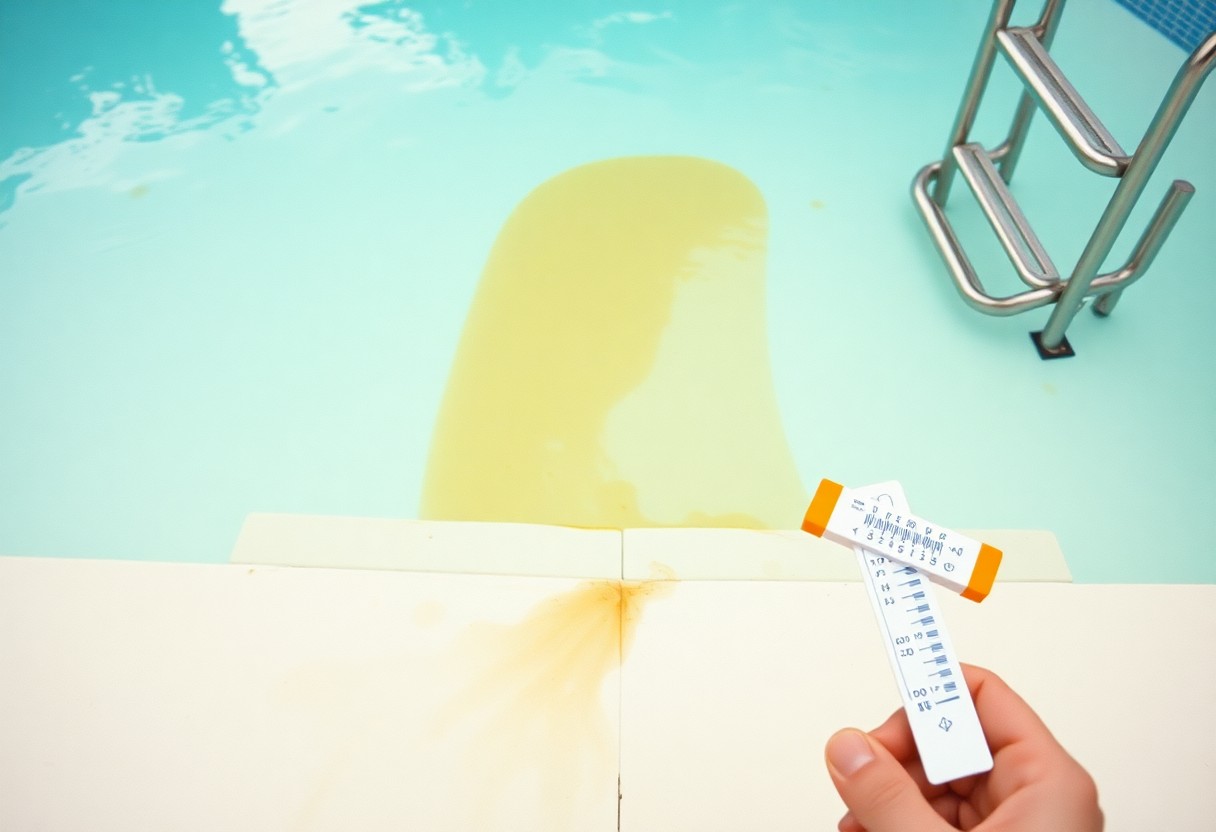
You’ll notice a tea-colored or yellow-brown tint to the water, often paired with reduced visibility-what used to be 6-8 feet clarity can drop to 2-4 feet. Expect yellow staining on plaster, steps, and vinyl liners, and sometimes slimy residue on ladders. Metal stains from iron or manganese typically appear as yellow-to-rust streaks, while organic debris can create a dull, murky yellow over large areas.
Testing Water Quality
You should test free chlorine, combined chlorine, pH, total alkalinity, cyanuric acid, and metal ions (iron, copper, manganese). Use a DPD liquid kit or colorimeter for the most reliable readings; test strips give quick trends but can be ±0.5-1 ppm off. Take a sample to your local pool store if you lack a reliable kit-many shops will run a full panel for you.
DPD titration kits measure free and combined chlorine separately, which helps you spot chloramines when combined chlorine exceeds 0.5 ppm. Metal test kits detect iron at levels as low as 0.02-0.1 ppm; an iron result above ~0.2-0.3 ppm often correlates with visible yellowing after oxidizer addition. Bring a fresh sample within 24 hours for accuracy and note CYA levels, since high CYA (>70-100 ppm) changes how much chlorine is effective.
Understanding Chemical Readings
You’ll interpret numbers against standard ranges: free chlorine 1-3 ppm, combined chlorine <0.5 ppm, pH 7.2-7.6, alkalinity 80-120 ppm, CYA 30-50 ppm. If free chlorine is low and combined chlorine is high, chloramines are likely causing discoloration or odor. Detectable iron or manganese even at 0.2-0.4 ppm can cause yellow-to-brown water or stains, especially after shocking.
When readings conflict, use context: a pH of 7.8 reduces hypochlorous acid proportion and lowers sanitizer effectiveness, so a free chlorine of 1 ppm at pH 7.8 is less protective than at pH 7.4. High CYA demands higher maintained free chlorine to control microbes; for example, pools with CYA above 80 ppm commonly require free chlorine in the 4-6 ppm range to stay clear. Match metal test results with visual stains to confirm metal-induced yellowing.
Prevention Strategies
Regular Maintenance Routines
You should skim daily, brush walls weekly, and vacuum at least once a week; run the filter 8-12 hours daily to keep suspended tannins from settling; backwash when pressure rises 8-10 psi above baseline, and empty skimmer and pump baskets every few days during leaf season to prevent organic buildup that causes yellowing.
Proper Water Chemistry Management
You must keep free chlorine 1-3 ppm, pH 7.2-7.6, total alkalinity 80-120 ppm and cyanuric acid 30-50 ppm; test at least twice weekly and log results, and shock after heavy rain or high bather load to oxidize combined chloramines.
Use test strips or a digital meter for a full panel weekly; apply liquid chlorine for routine dosing and granular shock per product label after contamination events; lower pH with sodium bisulfate or raise it with soda ash using manufacturer charts; if cyanuric acid climbs above ~80-100 ppm, drain and refill 25-50% to restore chlorine efficacy and reduce yellowing risk.
Clearing Debris and Contaminants
You should remove leaves and organic matter immediately with a leaf net and empty skimmer baskets daily during heavy shedding; delayed removal feeds algae and tannins that tint water yellow within days-use a solid cover or leaf net during storms to cut inputs.
Install a fine-mesh leaf net and run an automatic cleaner 3-5 times per week in high-debris periods; prune overhanging trees to reduce litter; use a metal sequestrant for stain-prone pools and apply a flocculant followed by vacuum-to-waste if particulate tannins persist, and clear pump strainers after storms to avoid reintroducing contaminants.
Treatment Options
Shock Treatments
You should test and adjust pH to 7.2-7.6 before shocking, then raise free chlorine to around 10 ppm (or 5-10× the combined chlorine) using calcium hypochlorite for fast oxidation or potassium monopersulfate as a non-chlorine alternative; run your pump 24 hours, retest, and only swim once free chlorine returns to the normal 1-3 ppm range-this method oxidizes pollen and organics that often cause yellowing.
Algaecides and Their Role
After a successful shock you can add an algaecide to stop regrowth: use polyquats (quaternary ammonium) for green algae and a copper-based product for mustard/yellow algae, keeping copper below about 1.0 ppm to avoid staining; always follow label directions and test metal levels before and after treatment.
Mechanically, copper algaecides interfere with algal enzymes while polyquats disrupt cell membranes; for example, treating a 20,000‑gallon pool with mustard algae often requires a targeted copper dose to reach 0.5-0.8 ppm and follow-up weekly polyquat maintenance at manufacturer rates-use a reliable copper test kit and avoid overdosing, since levels above ~1.2 ppm can stain plaster and vinyl.
Flocculants vs. Clarifiers
You’ll choose a flocculant when particles are too fine for the filter-floc binds debris into heavy flakes that settle so you can vacuum to waste-whereas clarifiers coagulate particles into filter‑catchable sizes for normal circulation; clarifiers are for routine clearing, flocculants for fast recovery after events like pollen storms.
Expect flocculation to take 6-24 hours then vacuum-to-waste (water loss is typical), while clarifiers generally need 24-48 hours of filtration and occasional backwashing; for instance, after a heavy Anna pollen event a 25,000‑gallon pool cleared visibly within 36 hours using floc plus vacuum-to-waste, whereas clarifier use on milder cloudiness restored clarity in 48 hours with minimal water loss.

When to Call a Professional
Signs You Need Expert Help
If yellowing persists after 24-48 hours of shock treatment, you see staining on plaster or vinyl, or your water tests show iron above ~0.3 ppm or combined chlorine over 0.5 ppm, call a pro; rapid pressure spikes in the filter (10+ psi above normal) or a salt cell malfunction are also red flags. You should also seek help when multiple problems coincide-pH out of range, cloudy water, and staining together usually mean specialized treatment and equipment are needed.
Choosing the Right Pool Service
Verify certifications like CPO (Certified Pool Operator) or NSPF credentials, check insurance and local licensing, and ask for at least three references or recent reviews. You should request a written scope, timeline, and guarantee for work tackling yellow water-specify testing for metals, CYA, and combined chlorine-and prefer companies that provide lab-grade test results and an action plan before treatment.
Dig deeper into methods and equipment when evaluating providers: ask how they remove metals (sequestrants vs. chelating agents), whether they perform filter diagnostics and deep-cleaning (DE replacement, sand bed agitation, cartridge cleaning), and if they use flocculants or clarifiers for fine particulates. You should also request a sample treatment checklist showing dosages for your pool size (e.g., how many pounds of granular chlorine for a 15,000‑gallon shock) and a timeline for expected water clarity-reputable techs will outline follow-up visits, post-treatment testing, and warranties on work performed.
Cost Considerations
Expect a service call of roughly $75-$150, a one-time yellow-water remediation from $200-$800 depending on severity, and metal stain removal around $100-$400; weekly maintenance plans typically range $80-$200 per month or $50-$150 per visit. You should get itemized estimates and compare what’s included-chemicals, labor hours, filter work, and follow-up tests-before committing.
Costs vary with pool volume, material, and the root cause: treating a 10,000-20,000 gallon pool for algae or organics may need 2-6 lbs of granular chlorine plus flocculant and a deep filter clean, while iron remediation could add $30-$100 in chemicals and $100-$300 in labor for chelation and vacuuming. You should also budget for potential repairs-DE grids or cartridges $150-$600, sand replacement $150-$400, or acid washing for stains $500-$2,000-and insist on an itemized invoice and a clear follow-up testing schedule.
Summing up
The yellowing of your pool in Anna most often comes from pollen and organic debris, metal stains (iron/copper) in local water, inadequate sanitizer, or poor filtration and circulation; you should test free and combined chlorine, pH and metal levels, shock and brush the pool, clean or backwash the filter, and treat metals with a sequestrant if needed to restore clear water quickly and prevent recurrence.
FAQ
Q: What are the most common reasons my pool water turns yellow in Anna?
A: Pollen and seasonal tree/plant debris, algae bloom (early stages often appear yellow), dissolved metals like iron or manganese from source water or corroding equipment, tannins from leaves and organic matter, and low sanitizer or poor filtration. Local pollen counts and recent rain can make yellowing more likely in Anna.
Q: How can I tell whether the yellow comes from pollen/organics, algae, or metals?
A: Test free and combined chlorine, pH, alkalinity, cyanuric acid and a metal test. Do a simple bottle test: put pool water in a clear bottle, add a strong dose of chlorine, shake and wait – if yellow clears it’s organic/pollen; if it turns brown or rusty it’s metals. Also inspect the filter (clogging suggests organics) and check surrounding trees, recent well water use, or fresh fill after rain.
Q: What is the step-by-step fix for yellow water caused by pollen or organic debris?
A: 1) Test and balance pH (7.2-7.6). 2) Shock the pool with chlorine to raise free chlorine quickly (follow label; aim for higher breakpoint when heavily contaminated). 3) Run the pump and filter continuously until clear, backwashing or cleaning the filter as needed. 4) Brush surfaces and vacuum settled material. 5) Use a clarifier if fine particles remain or a flocculant to settle them for vacuuming. 6) Empty skimmer and pump baskets and repeat testing until normal levels return.
Q: What should I do if iron or manganese is causing the yellow color?
A: Test metal levels first. Add a metal sequestrant/chelator according to product directions to keep dissolved metals in solution, then oxidize with chlorine or a non-chlorine oxidizer to precipitate metal particles and filter them out. Backwash/clean the filter frequently. For heavy metal staining, a metal remover product or partial drain-and-refill may be required; if your fill water has high metals, consider a pre-filter or treated source water.
Q: How can I prevent yellow water from returning in Anna?
A: Maintain proper sanitizer (typical free chlorine 1-3 ppm), keep pH and alkalinity in range, clean or backwash the filter regularly and run the pump enough hours for your pool size and usage. Remove leaves and debris promptly, use a cover during high pollen season, shock after heavy use or storms, and use a metal sequestrant if your source water has minerals. Test water weekly and address any changes immediately.