You may find your McKinney pool turning brown because metals like iron and manganese from well or municipal water oxidize when pH or chlorine is off, organic debris and leaves stain plaster, and certain algae or high tannin levels darken water; test for metals and organics, adjust pH, shock and sequester metals, brush and vacuum, and maintain consistent sanitizer to restore clear water quickly.
Key Takeaways:
- Brown water is often caused by dissolved metals (iron, manganese) from well or municipal water and corroding pool equipment that oxidize and stain.
- Decaying organic matter and tannins from leaves, grass, or nearby trees can turn water brown and stain surfaces.
- Brown or “mustard” algae thrive with low sanitizer levels and poor circulation, creating a brown film that resists light brushing.
- Imbalanced chemistry (low chlorine, high pH) and clogged or ineffective filtration allow metals, organics, and algae to accumulate.
- Test water for metals and sanitizer, remove debris, shock and brush, use a metal sequestrant or flocculant if needed, and service filters/equipment to clear and prevent browning.
Understanding Pool Discoloration
Common Causes of Brown Pool Water
You’ll most often see brown water from oxidized metals (iron, manganese) or tannins from leaves and mulch; iron levels above roughly 0.3 ppm commonly stain surfaces. Low free chlorine (below 1 ppm) and poor filtration let organic debris and fine silt accumulate, while failing to remove heavy leaf loads after storms can turn water tea-colored within 24-72 hours.
The Role of Pool Chemistry
Your sanitizer and pH control determine whether metals stay dissolved or oxidize into brown particles. Keep free chlorine at 1-3 ppm and pH near 7.4-7.6 so chlorine works efficiently; high combined chlorine or very high pH reduces oxidation control and lets algae or organic staining take hold.
When metals are present, you should test for iron/manganese and add a sequestrant before you shock; otherwise chlorine will oxidize metals and cause instant browning. A practical approach: add sequestrant per label, raise free chlorine to 5-10 ppm for 24 hours to oxidize organics, then run filtration and use flocculation or vacuum-to-waste for precipitated particles; repeat metal removal cycles if tests still show >0.3 ppm.
Environmental Factors
You’ll find brown water spikes after heavy rains, nearby landscaping, or if you fill from a manganese-rich well; tannins from oak or eucalyptus leaves and silt from yard runoff stain quickly. Wind-driven dust and construction activity can add fine particles that your filter struggles to catch, making the pool look brown even with normal chemistry.
- Fallen leaves and mulch leach tannins that color water rapidly.
- Surface runoff carries clay and organic matter into the pool.
- Any metals in your fill water, especially iron or manganese, will oxidize when exposed to chlorine and turn the water brown.
To prevent recurrence, you should run the pump longer after storms, use a leaf net during shedding seasons, and divert downspouts away from the pool. If you use well water, pre-fill testing for iron/manganese and using a pre-filter or sequestrant at fill will save you treatment time; also clean filters and backwash immediately after heavy debris loads to restore clarity.
- Install a leaf cover or automatic reel for high-debris months.
- Pre-filter fill water or treat it with a sequestrant if tests indicate metals.
- Any post-storm routine-skim, vacuum-to-waste, backwash and retest-minimizes how long brown water persists.
Analyzing Water Quality
Testing pH Levels
Your pool should sit between pH 7.2 and 7.6; test 2-3 times weekly and after heavy rain or big swim sessions. If pH reads 8.0, lower it with muriatic acid or sodium bisulfate; if it’s 7.0 or lower, raise it with soda ash (sodium carbonate). Small shifts of 0.2-0.4 units can change chlorine effectiveness dramatically, so log readings and adjust gradually to avoid overshooting.
Chlorine and Alkalinity Balance
Aim for free chlorine 1.0-3.0 ppm and total alkalinity 80-120 ppm. Low alkalinity lets your pH swing wildly, while high alkalinity can lock pH high and cause cloudy water. Monitor combined chlorine-if it exceeds 0.2 ppm you likely need to shock. Test daily during warm months or after heavy use to keep sanitization reliable.
When you shock, target breakpoint chlorination by raising free chlorine to about 10× the combined chlorine level to break chloramines; for example, if combined chlorine is 1 ppm, shock to ~10 ppm and maintain for several hours. Adjust alkalinity before pH when both are off: raise alkalinity with sodium bicarbonate, and lower it with diluted muriatic acid (applied while circulating). Use a pool calculator to dose chemicals precisely-overshooting can create long-lasting imbalances and extra work.
Calcium Hardness and Its Effects
Keep calcium hardness roughly 200-400 ppm for plaster pools (150-250 ppm for vinyl). Low hardness makes water aggressive and can etch plaster or corrode metal, while high hardness causes scale and cloudy water. Test monthly and after large refills; raise hardness with calcium chloride or lower it by partial dilution when levels exceed 400-500 ppm.
High calcium often precipitates when pH and alkalinity are elevated, producing white scale on steps and heaters; in McKinney’s hard-water areas you may see deposits on returns and tiles at >600 ppm. Conversely, if hardness drops below ~150 ppm your plaster can leach calcium, becoming rough and releasing minerals that stain. Manage persistent high levels by partial drain-and-fill, use sequestrants to control visible scale/mottle temporarily, and prioritize balanced pH/TA to minimize precipitation.
Algae Growth
Types of Algae Affecting Pools
You commonly face green, mustard (yellow), and black algae; green multiplies fastest (can double in 24-48 hours at 25-30°C) while mustard clings to plaster and black embeds in rough surfaces, requiring longer treatment; metal staining or dead algal residue can also produce brown discoloration when iron or tannins are present.
- Green: floats and spreads rapidly with low sanitizer.
- Mustard: fine, yellow particles that resist light brushing.
- Black: deep-rooted on steps and grout; needs aggressive scrubbing.
- Any outbreak should trigger phosphate testing (>100 ppb) and immediate shock and brushing.
| Green algae | You should shock to 3-10 ppm FC, brush daily, and run filtration 24-48 hours. |
| Mustard (yellow) | You should use an algaecide plus repeated brushing; vacuum fine particles and filter frequently. |
| Black algae | You should apply high-strength chlorine multiple times, wire-brush surfaces, and maintain 24-72 hours filtration. |
| Brown/discolored water | You should test for iron/tannins; oxidize organics with shock and add a metal sequestrant if metals are present. |
| Phosphate-fed biofilm | You should reduce phosphates (<100 ppb) with a remover, keep FC 1-3 ppm, and prevent regrowth with regular brushing. |
How Algae Causes Brown Water
You get brown water when algae die or when algae-associated organics and metals oxidize; dead algal cells release tannins and decayed material, while iron or manganese in the water oxidizes to ferric compounds, producing a brown tint-this often follows a drop in free chlorine below 1 ppm or after heavy leaf/debris input.
You should note the chemistry: when you superchlorinate to breakpoint (commonly raising FC into the 5-10 ppm range, sustained 24+ hours depending on severity) organic matter is oxidized and metals precipitate; then you run filtration continuously for 24-72 hours, test iron/manganese with a reagent kit, and apply a sequestrant or repeat oxidation cycles until clarity returns.
Preventative Measures Against Algae
You prevent outbreaks by keeping free chlorine at 1-3 ppm routinely, maintaining pH 7.2-7.6, running filters 8-12 hours daily, brushing 2-3 times weekly, and shocking after storms or heavy bather loads (raise FC to 5-10 ppm for a short treatment).
You should adopt a schedule: test water twice weekly, backwash or clean filters as pressure rises >8-10 psi over baseline, dose a monthly algaecide or phosphate remover when levels exceed 100 ppb, and avoid copper algaecides if metal staining is a concern-consistent small actions (brushing, filtration, sanitizer) prevent the large remediation steps that brown water demands.
Contaminants and Debris
Leaves and Organic Material
When leaves, pine needles, and grass clippings enter your pool they release tannins that can turn water tea-brown within 24-48 hours, especially in summer heat; oak and maple are high-tannin offenders. Small amounts boost chlorine demand and clog skimmer baskets and cartridge pores, reducing filtration efficiency. Skimming daily during storms and using a leaf net during fall prevents rapid discoloration and limits the need for shock treatments.
Metal Contaminants
Metals like iron, manganese, and copper often come from well water, corroded heaters, old plumbing, or copper-based algaecides and can cause brown, black, or blue-green staining. Iron levels above about 0.3 ppm commonly produce visible staining or discoloration, while copper tends to tint water turquoise. Identifying the metal source helps you choose sequestrants, oxidizers, or partial drain solutions.
Test your water specifically for Fe, Mn, and Cu before treating; many retail kits detect down to 0.1-0.2 ppm. If iron is under ~0.3 ppm a chelating sequestrant will keep it dissolved and prevent stains, but concentrations near or above 1.0 ppm usually require oxidation (shocking with chlorine or potassium permanganate), filtration of precipitates, and sometimes a partial drain and refill. Also adjust pH into the 7.2-7.6 range to optimize oxidation and filtration performance.
Importance of Regular Cleaning
Routine cleaning directly reduces both organic and metal-related discoloration: skim daily, brush walls weekly to dislodge settled matter, vacuum weekly, and clean cartridge filters every 2-4 weeks. For sand or DE filters, backwash when pressure rises 8-10 psi above baseline. Maintain pump run times of 8-12 hours per day in warm months to keep water moving and minimize sediment settling.
Proactive steps-using a leaf cover in fall, a leaf net during storms, and scheduling a deep clean before heavy leaf drop-cut the load entering your system. Inspect heaters and visible plumbing annually for corrosion that could leach metals, and consider sending a water sample to a lab if staining recurs despite good cleaning and filtration.
Filtration System Issues
Understanding Pool Filtration
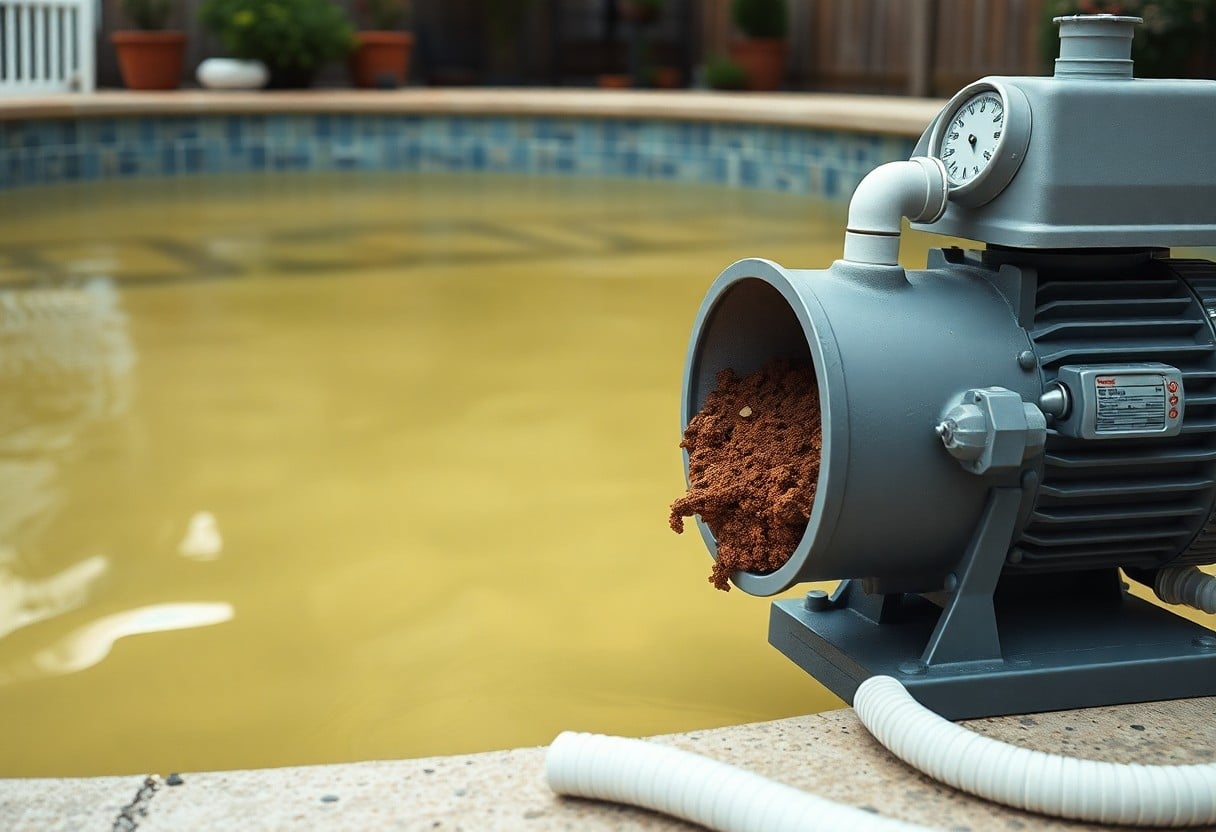
Your pool pump pushes water from the skimmer through the pump basket and into the filter media (sand, cartridge, or DE) to remove debris; aim for a full turnover every 6-8 hours so you catch fine particles before they settle. If you have a 25,000‑gallon pool, for example, a flow of about 50 GPM gives roughly a 8.3‑hour turnover. Check the filter type: DE filters trap down to ~2-5 microns, cartridges ~10-15 microns, sand ~20-40 microns.
Common Filtration Problems
Clogged skimmer or pump baskets, torn cartridge pleats, ripped DE grids, and air leaks in suction lines are frequent causes of brown water because they reduce flow or let fine dirt bypass the media. If your filter pressure rises more than 8-10 psi above the clean baseline or flow drops noticeably, you have a filtration issue that needs immediate attention.
For diagnostics, perform a 5‑gallon bucket test at the return to estimate GPM (5 gallons in 30 seconds = 10 GPM) and calculate turnover; low measured flow points to blockages or impeller clogging. With sand filters, heavy organic runoff after lawn work can overload the media-use a flocculant or run a clarifier, then backwash when pressure is 8-10 psi over clean. Cartridge users should remove and pressure‑wash cartridges every 3-12 months depending on bather load and nearby trees; a homeowner in McKinney with a 30,000‑gallon pool saw brown tint persist until a cracked cartridge was replaced, after which clarity returned in 48 hours.
When to Replace Filtration Equipment
Replace filter media or equipment when cleaning and backwashing no longer restore flow or pressure, when tanks crack or leak, or when parts (pump motor, seals, grids) are older than typical lifespans-pumps 7-12 years, filters 10-15 years depending on use. Also consider replacement if you see a consistent >30% drop in flow after maintenance.
Cost and performance factor into the decision: a replacement cartridge assembly often runs $200-$600, sand tank $300-$800, and a DE filter or multiport valve replacement can exceed $1,000. Upgrading to a variable‑speed pump can cut energy use by roughly 50-70% and improve turnover and filtration at lower speeds; in one local case swapping a 15‑year single‑speed pump for a 1.5 HP variable‑speed unit restored proper flow and eliminated recurring browning within two days. If pressure remains 8-10 psi over baseline after thorough cleaning and you still have poor clarity, replacement will usually be the fastest, most reliable fix.
Solutions to Restore Pool Clarity
Shock Treatment
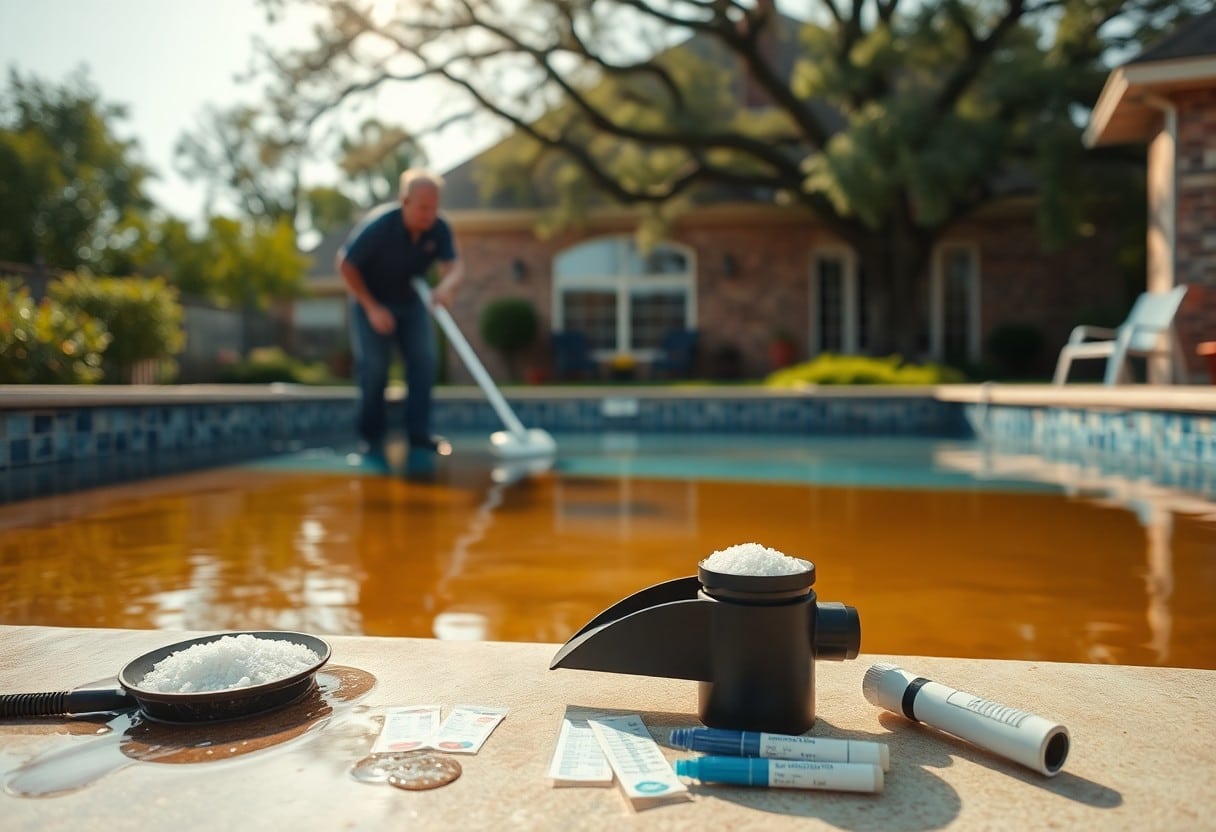
If algae or heavy organics caused the brown tint, you should shock the pool by raising free chlorine to roughly 10 ppm (about 3-5× your normal dose) and maintain that level until the water clears; for persistent blooms some technicians push to 15-20 ppm briefly. After dosing, run the pump continuously, brush surfaces every 6-12 hours, and wait to swim until free chlorine returns to the safe range (1-3 ppm).
Algaecides and Their Usage
You can follow shock with an algaecide to prevent regrowth: copper-based products target green algae, while polyquat (quaternary ammonium) formulas handle mustard and black stains better. Apply algaecide per label after chlorine drops below about 5 ppm, and always brush treated areas; avoid adding copper products if you suspect high iron without a sequestrant.
For best results test for metals before using copper algaecides-high iron plus copper can worsen staining. In cases of metal-induced brown water use a metal sequestrant (dose per label) and filter to remove precipitated metals, then add a non-metal algaecide like a polyquat weekly at maintenance rates to keep algae suppressed.
Regular Maintenance Routines
You should test chlorine, pH, and alkalinity at least twice weekly (target FC 1-3 ppm, pH 7.2-7.6, TA 80-120 ppm), skim daily, brush weekly, and vacuum as needed. Run the filter 8-12 hours per day in hot months, and backwash or clean cartridges when pressure climbs 8-10 psi above the clean baseline to maintain clarity and prevent brownouts.
Establish a simple schedule: daily skimming and pump check, weekly test/brush/vacuum and a monthly shock or shock after heavy use/rain. Inspect filter media annually-replace sand every 3-5 years or clean cartridge/DE elements per manufacturer-to avoid reduced filtration that commonly lets particles and metals redeposit and discolor water.
Final Words
Now that you know your McKinney pool’s brown water often comes from iron or manganese, organic debris, algae, or imbalanced chemistry, check your source water, filter, and sanitizer levels; oxidize and use a metal sequestrant if metals are present, and clean or backwash filters regularly. If staining or persistent discoloration continues, have a pro test your water and inspect equipment to protect your pool and save time.
FAQ
Q: Why is my McKinney pool turning brown?
A: Brown pool water in McKinney most commonly comes from one of three sources: dissolved metals (iron or manganese) in the fill or well water, tannins and organics from leaves/grass and storm runoff, or brown algae that thrive when sanitizer and circulation are low. Metals create a rusty or tea-colored tint and can leave stains on plaster or vinyl. Tannins give a tea- or cola-colored water but usually don’t stain surfaces. Brown algae form patches that often brush away but return if not fully treated.
Q: How can I tell whether the brown color is metals, tannins, or algae?
A: Test water for metals (iron, manganese, copper) using a pool store analysis or a home metal test kit; a positive metal test points to metal staining. Brush the walls: algae will scrub off into clumps; tannins won’t scrub off and won’t usually stain surfaces. If the color appeared immediately after refilling or a plumbing repair, metals are likely. If it followed heavy leaf/debris accumulation or storm runoff, tannins or organic load are likely. Persistent stains on plaster after brushing typically indicate metal staining.
Q: What’s the proper treatment if metals are causing the brown color?
A: First confirm metal levels, then balance pH and alkalinity. Add a metal sequestrant according to label directions to hold metals in solution, run the filter continuously, and monitor clarity. For severe cloudiness use a flocculant and vacuum to waste after settling. If metal stains have already formed on plaster or tile, use a metal stain remover product or consider professional acid-washing or spot treatment. Prevent recurrence by testing fill water, using a pre-filter or treating fill water, and inspecting heaters/pipes for corrosion.
Q: How do I fix brown water caused by tannins or brown algae?
A: For brown algae: shock the pool to a high free-chlorine level, brush surfaces vigorously to dislodge growth, vacuum to waste, and keep the pump running 24/7 until clear. Use an appropriate algaecide for stubborn outbreaks. For tannins/organic staining: remove as much debris as possible, use a clarifier or flocculant to settle fine organics and vacuum to waste, and run the filter continuously. In heavy tannin cases a partial drain and refill after treating the remaining water with a sequestrant/clarifier may be faster.
Q: How can I prevent my McKinney pool from turning brown again and when should I call a pro?
A: Prevent by maintaining proper sanitizer and pH, skimming and removing debris regularly, running and servicing the filter, testing fill water for metals before refilling, and using a metal sequestrant after fills or heavy storms. Shock after heavy bather load or storms and clean reusable filters/cartridges frequently. Call a pool service when staining persists after treatment, when metal levels are high and staining recurs, if you suspect equipment corrosion or plumbing leaks, or when an acid wash or professional stain removal is needed to restore surfaces.