You should never attempt structural shell repairs, major plumbing line fixes, gas or electrical work, or extensive replastering on your pool yourself. These jobs require licensed professionals with specialized equipment, permit knowledge, and diagnostic tools to protect your safety, preserve warranties, and avoid costly, hidden damage.
Key Takeaways:
- Structural shell and foundation repairs (large cracks, sinking, major leaks) – require engineers and professional equipment.
- Electrical work (bonding, wiring, pool lights, subpanels) – high voltage risk and code compliance demand licensed electricians.
- Gas systems and heaters (gas line connections, combustion appliance repairs) – risk of leaks, fire, carbon monoxide; use certified technicians.
- Major plumbing and suction-side repairs (broken main drains, buried line replacements, entrapment fixes) – safety and code considerations need professionals.
- Resurfacing, replastering, or full liner replacement – specialized materials, tools, and techniques ensure longevity and proper waterproofing.

Understanding Pool Repair
Types of Common Pool Repairs
You’ll encounter issues like leaks, pump failures, tile damage, liner tears, and surface wear; each has typical signs and cost ranges.
- Leaks – steady water loss, often $500-$5,000 to fix
- Pump/motor – noisy or no-flow, replacement $200-$1,200
- Tile/grout – cracking or loose tiles, $20-$50/lin. ft.
- Liner replacement – vinyl tears, life 7-12 years, $1,500-$4,000
- Plaster/resurfacing – rough or pitted finish, $4,000-$10,000
Perceiving which issue you face often depends on symptoms: steady water loss (≥1-2″ per week), grinding motors, visible cracks, fabric flaps in the water, or widespread plaster discoloration.
| Leak detection | Water loss ≥1-2″ per week; repairs $500-$5,000 |
| Pump/motor | Noisy or dead motor; lifespan 7-12 years; $200-$1,200 |
| Tile/grout | Loose/cracked tile; aesthetic and waterproofing fixes $20-$50/lin. ft. |
| Liner replacement | Vinyl tears or fading; replacement every 7-12 years; $1,500-$4,000 |
| Surface replastering | Rough/etching; lasts 8-15 years; $4,000-$10,000 |
When to Call a Professional
If you detect steady water loss, electrical faults, structural cracks, or a failing pump, call a pro rather than risking DIY fixes; pools losing more than 1″ per day or pumps older than 7 years often need specialist diagnostics. For example, an untreated hairline crack can escalate into an $8,000 shell repair within months.
When you call a professional, expect pressure testing, dye tests, and specialized leak detection equipment (acoustic or infrared) that you won’t have; technicians will also check bonding/grounding, perform motor amperage tests, and verify plumbing junctions. You should involve a licensed contractor for structural repairs, major replastering, liner replacements, or anything requiring permits, because professionals manage permits, warranty-backed parts, and compliance with local codes, often saving you time and preventing costly secondary damage.
Structural Repairs
Wall and Tile Damage
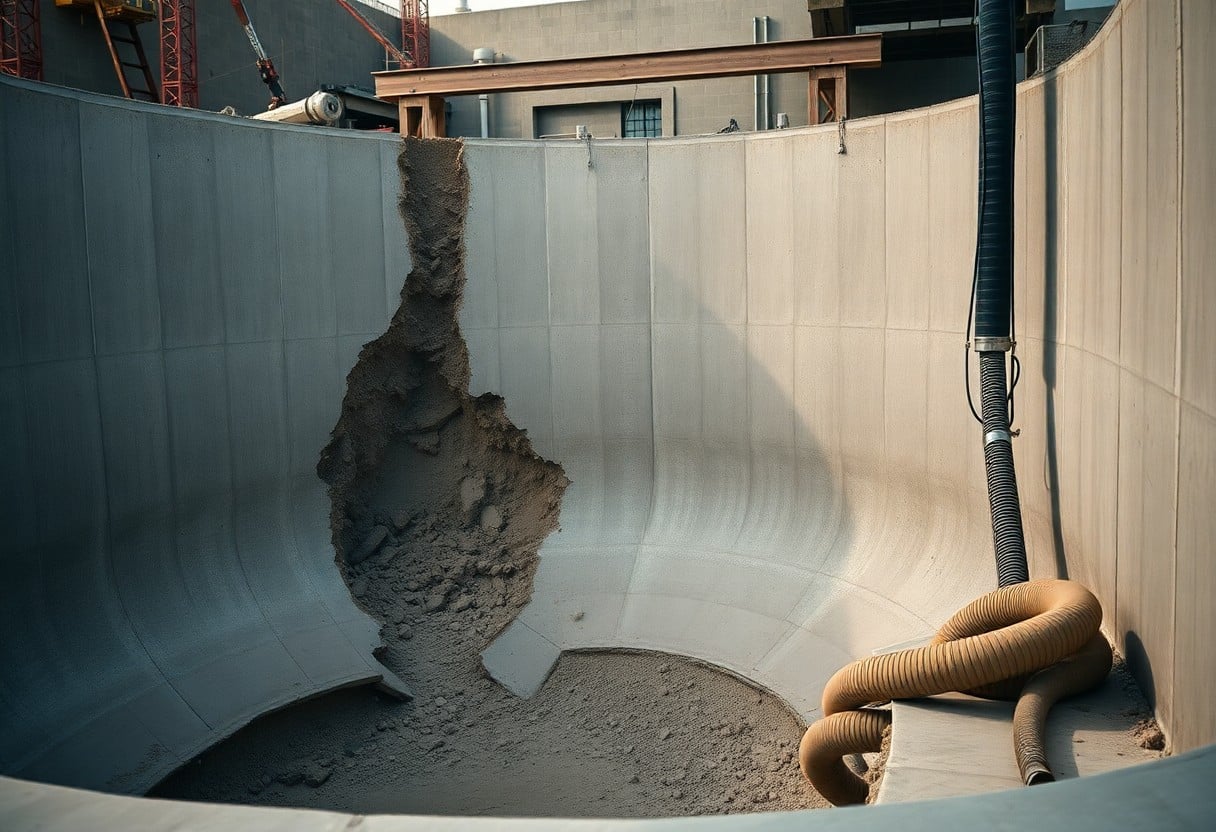
When tiles detach or you see bulging in gunite walls, water is already reaching the structure; hairline grout cracks can be cosmetic but spalls and delamination indicate corroding rebar and loss of bond. You should avoid DIY fixes for these because professionals use coring, rebar replacement and shotcrete or epoxy systems rated for submerged use-repairs for a 10-20 ft affected run commonly cost thousands, not dozens, and incorrect patching hides progressive failure.
Decking Issues
If your deck is heaving, settled more than 1/2 inch, or shows wide separation from the pool edge, it’s a structural problem tied to subgrade or drainage, not surface cosmetic repair. You risk uneven loading on the pool shell and trip hazards; pros evaluate sub-base compaction, drainage slope (recommended 1/8-1/4 in per foot away from the pool) and use slabjacking or replacement.
For example, tree roots often lift pavers while poor initial compaction causes concrete to settle within months; control joints should be spaced about 8-12 ft for a typical 4 in slab to reduce random cracking. A professional will excavate, recompact a 4-6 in crushed-stone base, install proper dowels/expansion joints and pour fiber-reinforced concrete or reset pavers-solutions that extend life 10-25 years versus patch repairs that fail in a season.
Crack Repairs
Small hairline cracks under about 1/16 in (1.5 mm) may be cosmetic, but once a crack reaches roughly 1/8 in (3 mm), leaks, soil migration and structural compromise become likely; you should not rely on surface sealants for wider or active leaks. Professionals perform crack mapping and use epoxy or hydrophobic polyurethane injections designed to bond concrete and resist hydrostatic pressure where DIY caulks will not.
A typical repair workflow includes removing delaminated material, routing the crack, injecting resin or polyurethane under controlled pressure, and monitoring for movement over weeks; for structural cracks they may add stitch bars, rebar replacement or a shotcrete overlay. Costs range from a few hundred dollars for a simple injection to several thousand for stitched or shotcreted repairs, but proper methods restore load transfer and stop progressive deterioration.
Plumbing and Filtration Systems
Leak Repair in Plumbing
You’ll spot plumbing leaks at skimmers, return fittings or buried 1.5″-2″ PVC runs; pressure-testing and dye tests locate them, but excavating and replacing schedule‑40 lines or corroded unions is complex. Professional repairs prevent repeated failures-expect trenching and replacement to run $500-$2,500 depending on depth and miles of pipe, and improper solvent-welds often fail under pump head stress.
Equipment Malfunction
You should not attempt major pump, heater or salt-system repairs yourself because these involve 120/240V wiring, sealed motors, and proprietary control boards; motor replacements typically cost $300-$900 and improper work can cause shock, fire, or voided warranties.
Technicians follow lockout/tagout, use multimeters and clamp meters to check voltage and amperage, inspect bearings and impellers, and test capacitors and seals; heat-pump or refrigeration work requires EPA-certified handling of refrigerant. Diagnostics often take 20-60 minutes, and labor rates run $75-$150/hour-errors by DIYers have been known to turn a $400 part replacement into a $1,200 electrical repair.
Filter Replacement
You need to match filter type (sand, DE, cartridge) and surface area to your pump’s flow and pool volume; for example, a 30,000‑gallon pool requires about 63 GPM for an 8‑hour turnover. Cartridge units run $150-$600, DE grids $200-$800, and sand systems $300-$1,200-incorrect choice lowers turnover and clarity.
When replacing filters, verify the filter’s maximum GPM and square‑foot media area so pressure stays low; aim to clean or backwash when pressure rises 8-10 psi above baseline. Sand often lasts 5-7 years, cartridges need periodic cleaning and replacement based on 150-400 hours of use, and mismatched fittings or bypassed laterals commonly cause unnoticed contamination and algae outbreaks.
Electrical Components
Pool Lighting Issues
If your underwater lights flicker, trip a GFCI, or show corrosion, you should not try to open the niche or rewire underwater fixtures yourself; many in-ground lights run on 12VAC via a transformer (older installs may be 120VAC) and NEC 680 requires proper GFCI protection and bonding. You can check the transformer label and GFCI status, but any lamp chamber leak, compromised cord jack, or degraded potting must be handled by a pro to avoid electric shock and code violations.
Pump and Motor Repairs
Motor failures often start with capacitors, bearings, or shaft-seal leaks; most single-family pool pumps are 0.75-2.0 HP and operate at 115/230V drawing 6-15 amps, so you should not open or rewire the motor if you lack a licensed electrician. Replacing seals or motors improperly can introduce water into the motor end bell, void warranties, and create fire or electrocution hazards.
When diagnosing, a technician will measure amp draw with a clamp meter, test line voltage under load, and check the start/run capacitor with a capacitance meter-data points that you shouldn’t improvise with basic tools. Pump wet-end damage from a failed shaft seal can ruin impellers and volutes; a typical motor replacement runs $300-$900 depending on HP and whether a VFD (variable frequency drive) is involved. Let a pro perform lockout/tagout, torque nameplate connections to spec, and verify bonding and ground continuity to meet code.
Automation System Maintenance
Automation hubs (Hayward OmniLogic, Pentair IntelliTouch, Jandy iAquaLink) interface low-voltage controls with 120/240V loads and networked devices; you should avoid opening control panels or swapping relays yourself because incorrect wiring can fry circuit boards or leave heating/lighting circuits energized. You can update schedules or basic settings, but leave firmware flashes, mains-side wiring, and surge suppression to certified technicians.
Field-service technicians will map control circuits, test the 24VAC transformer output, and inspect relay contact wear and wire terminations-typical failure modes include corroded terminal blocks, burned relay contacts, and failed communication modules. Replacing a main controller board can cost $400-$1,200 and often requires configuration backups and vendor-specific commissioning; professional service ensures safe line-voltage isolation, preserves system integrities, such as automation scenes and pool chemistry interlocks, and maintains warranty coverage.
Safety Compliance
Code Violations
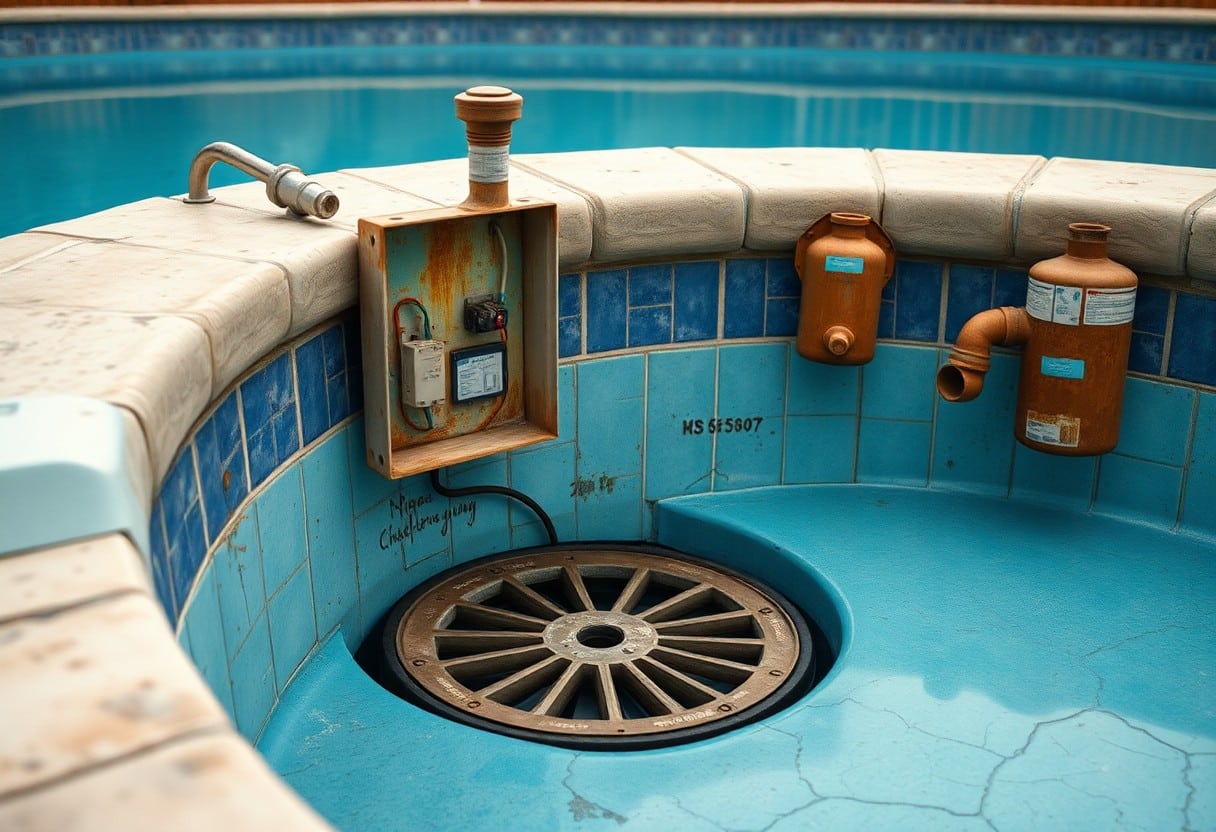
Local codes often mandate a 48-inch (4 ft) barrier, self-closing/self-latching gates, VGB-compliant anti-entrapment drain covers (Virginia Graeme Baker Pool & Spa Safety Act, 2008), and electrical work meeting NEC Article 680. If you bypass these rules by DIY wiring or non‑compliant fittings, your pool can fail inspection, trigger fines, and void insurance coverage-examples include denied claims after unpermitted electrical work and enforced retrofits following municipal inspections.
Safety Equipment Repairs
You should avoid DIY repairs on life‑safety items like safety covers (ASTM F1346), safety vacuum release systems (SVRS), pool alarms (UL-listed), and emergency shutoffs; manufacturers often require certified technicians to maintain certification and warranty. Improper repair can disable fail‑safe features and create legal exposure if an incident occurs.
Inspect latches, alarm sensors, and cover webbing monthly and schedule a certified service visit at least once a year; technicians can test SVRS activation times, verify drain cover torque and seating, and ensure electrical bonding and GFCI protection meet code. Using OEM parts and logged service records also protects you during inspections and insurance reviews.
Chemical Balancing
Pool Water Chemistry
You should maintain pH between 7.2-7.6, free chlorine at 1-3 ppm, total alkalinity 80-120 ppm, calcium hardness 200-400 ppm and cyanuric acid 30-50 ppm; test 2-3 times weekly and after heavy use or rain. Use a reliable kit or digital tester, log results, and calculate dose changes for your pool volume – small pools shift faster, so a 10,000‑gallon pool reacts differently than a 30,000‑gallon one.
Consequences of Improper Handling
If you mix chemicals or chase numbers blindly you can trigger immediate health and equipment failures: acid plus chlorine bleach produces chlorine gas that causes respiratory distress, pH below ~6.8 etches plaster and corrodes metal, while pH above ~7.8 promotes scale and cloudy water. Pumps, heaters and automation often fail prematurely when calcium or low pH accelerates corrosion.
Beyond safety, the financial and downtime impacts are tangible: a plaster replaster can cost $4,000-$12,000, heater replacement $1,000-$3,000, and a chlorine gas exposure may require ER care and reporting. You can expect 24-72 hours of unusable water after major corrections, so mishandling chemistry often means lost weekends, large repair bills and potential liability if swimmers are harmed.
Conclusion
With this in mind you should never attempt DIY fixes that threaten safety, pool integrity, or warranties: major shell or foundation cracks, full resurfacing or replastering, buried plumbing and complex leak detection, electrical or gas heater repairs, and extensive tile or coping replacement-these require licensed professionals with specialized tools and permits to protect your investment and ensure code compliance.
FAQ
Q: Structural shell failures – major cracks, sinking, bulging walls, or delamination
A: Structural failures in concrete, gunite, or fiberglass shells require professional assessment and repair. Fixes can involve full drain-down, rebar repair, shotcrete or structural epoxy, underpinning, or pool replacement; incorrect or partial DIY work can worsen soil movement, cause collapse, void warranties, and violate permits. Hire a licensed structural or pool contractor and obtain necessary inspections and permits.
Q: Buried plumbing and main line leaks
A: Leaks in buried suction or return lines, fittings, or the main drain typically need pressure testing, pipe locating, camera inspection, and excavation. Improper joints, slope, or materials can create recurring leaks, contamination, or pump damage; these repairs often require licensed pool technicians or plumbers with trenching equipment and local-code compliance.
Q: Electrical systems, bonding/grounding, and underwater lights
A: Any electrical work around a pool-submersible fixtures, junction boxes, timers, GFCI breakers, bonding and grounding-must be performed by a licensed electrician familiar with NEC and local codes. Mistakes risk electrocution, shock hazards, or fire; proper testing, conduit seals, and bonding grid continuity are vital and not safe for DIY.
Q: Gas heaters, gas line repairs, and combustion system work
A: Repairs to gas lines, fittings, regulators, or heater combustion systems should be done only by licensed gas technicians. Improper installation or testing can cause gas leaks, carbon monoxide poisoning, or explosion; certified techs perform pressure tests, ventilation checks, and local-code permitting.
Q: Main-drain/suction entrapment devices and safety upgrades
A: Replacing or upgrading main-drain covers, anti-entrapment devices, or modifying pool hydraulics to meet current ANSI/ASME/VAWA standards requires trained professionals. Incorrect installation or mismatched hydraulics can leave dangerous suction hazards; certified installers ensure compliance, correct flow testing, and documentation.