There’s often a misconception that a strong chlorine smell means you have too much chlorine; in fact it usually indicates high chloramines-combined chlorine formed when free chlorine binds with organic contaminants like sweat, urine, and sunscreen. Poor filtration, inadequate shock treatment, imbalanced pH, and heavy bather load let these irritants accumulate, so if you notice the smell, your pool needs superchlorination, better filtration, and improved hygiene to restore proper sanitation and comfort.
Key Takeaways:
- Strong chlorine smell is usually from chloramines-combined chlorine formed when free chlorine reacts with ammonia and organic contaminants (sweat, urine, cosmetics).
- High combined-chlorine levels and low free-chlorine residuals cause the odor and eye/skin irritation.
- Main sources are bather load and organics (urine, sweat, body oils, cosmetics) plus debris and contaminated makeup of source water.
- Poor circulation, filtration, incorrect pH, or insufficient sanitizing (not shocking) prevents chloramine removal.
- Warm air, indoor/enclosed pools, and delayed maintenance intensify the smell; treat by shocking (breakpoint chlorination), improving filtration, and reducing contaminants.
Understanding Chlorine in Pools
What is Chlorine?
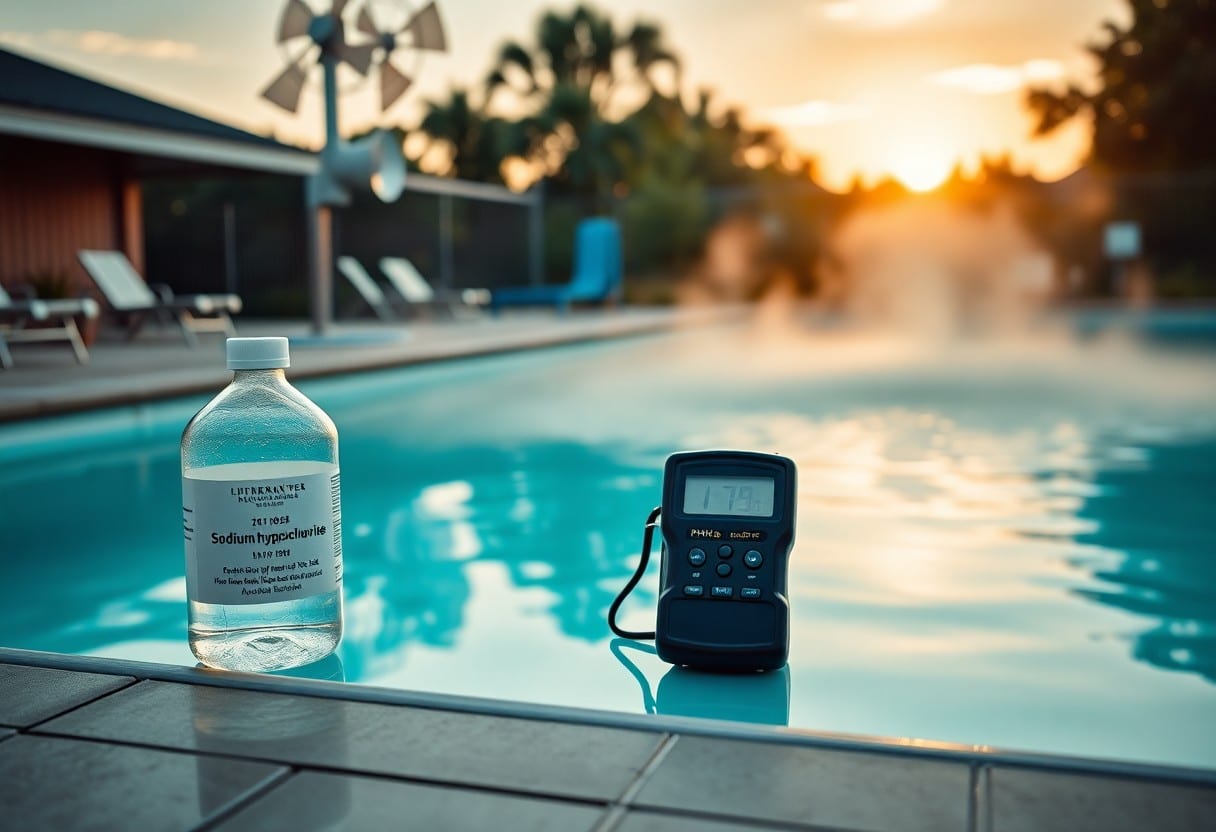
You encounter chlorine in pools as sodium hypochlorite (liquid), calcium hypochlorite (granular/powder) and stabilized trichloro tablets; each releases hypochlorous acid (HOCl), the active disinfectant. Free chlorine (FC) – the HOCl and hypochlorite available to kill microbes – is what you test for, while combined chlorine (chloramines) forms when FC reacts with nitrogenous waste and causes odor and irritation. Typical residential targets are 1-3 ppm FC.
Role of Chlorine in Pool Maintenance
You rely on chlorine to inactivate bacteria, viruses and algae and to oxidize body oils and sweat. Maintaining 1-3 ppm free chlorine suppresses common pathogens, and periodic shock treatments raising FC to 10 ppm or higher for several hours remove chloramines and heavy organic load after high bather use or contamination.
HOCl is far more effective than hypochlorite ion, and its ratio shifts with pH-about 50% HOCl at pH 7.5 but only ~20% by pH 8.0-so you’ll need higher FC when pH drifts up. Cyanuric acid (CYA) also binds chlorine: with CYA around 50 ppm you typically aim for 2-4 ppm FC outdoors, and you should test FC, pH and CYA together to decide dosing or when to shock.
Importance of Proper Chemical Balance
You should keep pH between 7.2 and 7.8, total alkalinity around 80-120 ppm and CYA roughly 30-50 ppm for outdoor pools. Aim for free chlorine 1-3 ppm and combined chlorine under 0.2 ppm-elevated combined chlorine is the common source of strong chlorine odor and swimmer irritation. Test at least twice weekly for private pools and daily for busy or public pools.
High pH reduces the HOCl fraction, effectively lowering sanitizer power-at pH 8.0 disinfecting ability can be 60-80% weaker than at pH 7.2-so you’ll see more chloramines and odors unless you correct pH and raise FC. Excess alkalinity above ~150 ppm causes scale and cloudiness, while alkalinity under 60 ppm leads to pH bounce requiring frequent acid additions. If CYA exceeds about 80 ppm, partial drain-and-refill is often the most practical way to restore effective chlorine action.
Reasons for Strong Chlorine Smell
Chloramines: The Culprit
You’re likely smelling chloramines-combined chlorine compounds formed when free chlorine reacts with ammonia and nitrogenous organics. Even combined chlorine above ~0.2 ppm can produce a strong odor and eye irritation, so if your pool smells and swimmers complain, test combined chlorine (total minus free) and treat accordingly.
Inadequate Chlorination
If your free chlorine falls below the recommended 1-3 ppm range, it can’t oxidize contaminants fast enough, so chloramines accumulate and you get that sharp smell; your pool needs a consistent free chlorine residual to prevent buildup.
When combined chlorine rises, you should perform breakpoint chlorination-raise free chlorine to roughly 10× the combined chlorine level (for example, 5 ppm combined needs about a 50 ppm oxidation dose over time) or apply a shock protocol recommended by the product; you should test daily and after heavy use to confirm free chlorine returns to 1-3 ppm.
High Bather Load
Many swimmers introduce sweat, urine traces, cosmetics and body oils, rapidly increasing nitrogenous load; when dozens of people use the pool in a short period, chloramines form faster than you can oxidize them, producing the smell you notice.
In practice, if a community pool receives 50-100 swimmers in two hours you should raise circulation, increase chlorination or shock afterward, and enforce pre-swim showering and restroom use to reduce nitrogen input and keep combined chlorine low.
Organic Contaminants
Leaves, grass, sunscreen, lotions and cosmetics add organic matter that consumes free chlorine and forms combined chlorine; you’ll detect stronger odors when total organic load-measured as TOC/DOC in some facilities-rises after heavy use or poor housekeeping.
For example, sunscreen ingredients like oxybenzone and body lotions increase chlorine demand; you should skim and vacuum daily, clean filters, use enzyme or floc treatments when needed, and test combined chlorine frequently to avoid buildup that causes the smell.
Environmental Factors
Temperature, pH, sunlight and ventilation all affect how chlorine behaves: warmer water speeds reactions, pH above ~7.8 reduces hypochlorous acid effectiveness, sunlight degrades free chlorine outdoors (use 30-50 ppm cyanuric acid), and poor indoor ventilation traps chloramine vapors near pool surfaces.
- Higher water temperatures accelerate chloramine formation and off-gassing.
- pH above 7.8 shifts chlorine to less active species and reduces disinfection.
- This keeps odorous chloramines concentrated where you and others will notice them quickly.
You should target pH 7.2-7.6 and free chlorine 1-3 ppm, ensure outdoor pools maintain 30-50 ppm cyanuric acid, and provide adequate HVAC for indoor pools; these steps reduce chloramine creation and your exposure to the smell.
- Indoor pools typically need about 4-6 air changes per hour to clear chloramine vapors.
- Excessive cyanuric acid (>100 ppm) can impair chlorine activity, so monitor CYA levels.
- This combination of chemical balance and ventilation helps prevent persistent chlorine odors.
Symptoms of High Chlorine Levels
Health Impact on Swimmers
When free chlorine climbs above the recommended 1-3 ppm and approaches 5 ppm or more, you’ll notice burning eyes, itchy skin, and nasal or throat irritation; swimmers with asthma or reactive airway disease often develop coughing, wheeze, or bronchospasm during and after exposure, and prolonged contact can dry and crack skin, increasing risk of infection.
Effects on Pool Equipment
High chlorine accelerates metal corrosion, causes vinyl liners and swimsuits to bleach, and makes rubber gaskets and O‑rings brittle, so you’ll see discolored ladders, pitting around fasteners, and failing seals far sooner than expected when levels stay elevated.
Because chlorine’s oxidative action intensifies at low pH (below ~7.2), you’ll find pumps, heaters, and heat exchangers develop scale, crevices and corrosion; for example, persistent free chlorine above 5 ppm combined with pH under 7.0 can shorten a heater’s element life from years to months and force repeated O‑ring replacements, costing hundreds in parts and labor.
Damage to Surrounding Areas
Splashed or evaporated chlorinated water will bleach fabrics, stain or pit metal fixtures, and harm nearby plants, so you’ll often spot faded cushions, rusty fasteners, and scorched grass or shrubs bordering the pool after repeated exposure.
Over time you’ll observe chloride residues etching concrete and degrading painted or sealed wood-patio surfaces can lose finish within a season if repeatedly splashed with water at 3-10 ppm; similarly, planted beds next to frequently splashed areas show leaf-tip burn and reduced vigor within weeks unless rinsed with fresh water.
Preventing Strong Chlorine Smell
Regular Testing of Water Chemistry
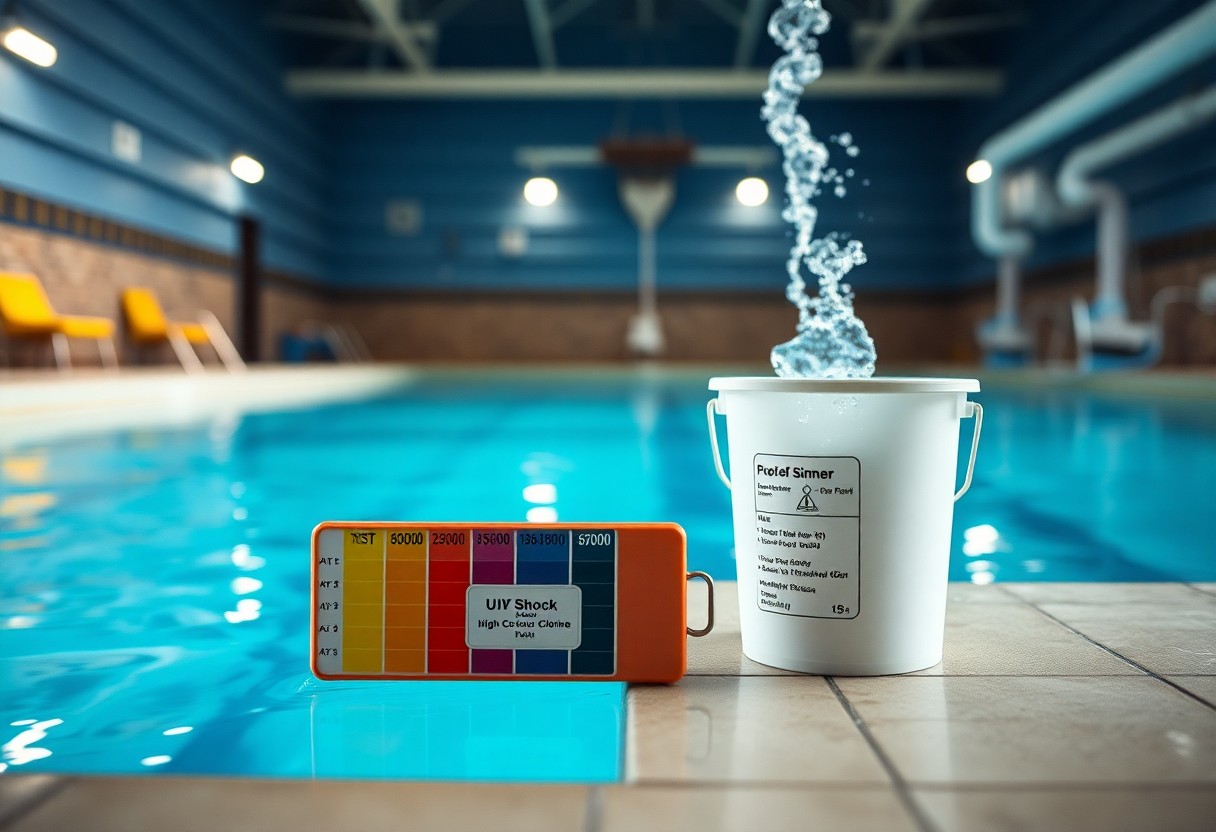
Test your pool water 2-3 times per week with test strips, liquid kits, or a digital meter; keep free chlorine at about 1-3 ppm and pH between 7.2 and 7.8, while keeping combined chlorine under 0.2-0.5 ppm to prevent chloramine buildup that causes the strong smell.
Shocking the Pool
When combined chlorine rises or after heavy bather load, shock your pool to perform breakpoint chlorination – raise free chlorine to roughly 10× the combined-chlorine level (often around 10 ppm) to oxidize chloramines; use stabilized or unstabilized shock per manufacturer instructions.
Apply shock in the evening with the pump running to distribute oxidizer, avoid swimming until free chlorine returns to the safe range (typically ≤3 ppm), and choose chlorine shocks for chloramine removal or non-chlorine oxidizers for faster reopen times; for routine maintenance shock weekly after heavy use or significant rainfall.
Ensuring Proper Filtration
Run your filter long enough to achieve one full turnover daily (commonly 8-12 hours), skim and empty skimmer baskets daily, and watch filter pressure – backwash or clean when pressure is about 8-10 psi above the clean baseline to keep contaminants from accumulating and forming chloramines.
Match maintenance to filter type: backwash sand filters when ΔP spikes and replace sand every 5-7 years, clean cartridge filters every 1-3 months depending on use, and replace DE grids as recommended; inspect pumps, valves, and flow rates monthly to ensure effective circulation and filtration.
Encouraging Good Hygiene Practices
Require showering with soap before entering, enforce restroom breaks, and mandate swim diapers for infants; reducing sweat, cosmetics, urine, and lotions cuts nitrogen-rich contaminants that react with chlorine to form smelly chloramines.
Post clear signage, provide rinsing stations, and train staff or household members to check compliance; after gastrointestinal illness instruct swimmers to stay out of the pool (per public-health guidance), since pathogens and bodily fluids greatly increase the need for shock treatment and prolonged filtration.
Developing a Cleaning Routine
Establish a schedule: daily skimming and basket cleaning, weekly testing, brushing and vacuuming, monthly filter inspections, and a log of chemical dosing and equipment checks to catch problems before they produce a strong chlorine odor.
Create a practical checklist: each morning skim and inspect equipment, midweek brush and test chemistry, weekend vacuum and deep-clean filters as needed; if you manage a public or commercial pool, keep written logs for staff handover and regulatory compliance to ensure consistent odor prevention.
Treatment for Excessive Chlorine Smell
Aeration Techniques
You can reduce chloramine odor by increasing gas exchange: run the circulation pump longer (aim for at least one full turnover daily, typically 6-8 hours for residential pools), angle return jets upward, add fountains or air injectors, and for indoor pools boost HVAC exhaust to 4-6 air changes per hour. Chloramines are volatile, so aggressive surface agitation and targeted air movement often cut smell within hours while you correct chemistry.
Using Neutralizing Agents
You may use neutralizers like sodium thiosulfate or ascorbic acid to remove free chlorine and immediate odor in emergencies or before draining. Commercial ascorbic sachets are commonly sized to treat 5,000-10,000 gallons; follow label directions, dose gradually, and test after application because neutralizing removes disinfectant protection and forces you to rechlorinate.
Neutralizers work rapidly-typically within minutes to an hour-and are useful for spill response or short-term odor control in small pools or parts of a larger system. Apply incrementally while testing free chlorine and pH; after neutralization you should restore free chlorine to target (1-3 ppm for pools) and verify combined chlorine is below 0.2 ppm before reopening. Avoid routine use as a substitute for proper oxidation or breakpoint treatment, and dispose of treated backwash according to local regulations.
Adjusting Chemical Levels
You should pursue breakpoint chlorination when combined chlorine exceeds about 0.2 ppm: raise free chlorine to roughly 10× the combined chlorine value (for example, if combined chlorine is 1.0 ppm, increase free chlorine toward ~10 ppm) and maintain until combined chlorine falls. Keep pH near 7.2-7.6 and check cyanuric acid-outdoor pools typically target 30-50 ppm-since high CYA reduces effective chlorine.
Choose the correct shock: calcium hypochlorite or sodium dichlor deliver chlorine needed to break chloramines, while non‑chlorine oxidizers (potassium peroxymonosulfate) won’t eliminate chloramines effectively. After shocking, run pumps with strong aeration and test combined chlorine after 4-8 hours; if levels remain elevated, repeat shock or combine with mechanical aeration. Also monitor total alkalinity and stabilize pH to maximize chlorine efficiency and prevent recurring odor.
Alternative Sanitization Methods
Saltwater Chlorination
You install a salt cell that electrolyzes pool salt (typically 2,500-4,000 ppm) to generate hypochlorous acid so you maintain a free-chlorine residual of about 1-3 ppm without handling chlorine bags; cells often last 3-7 years and cost roughly $300-900 to replace. You’ll see softer-feeling water and fewer chemical deliveries, but must manage cell scaling, higher stabilizer levels, and potential corrosion of metal fixtures over time.
UV and Ozone Treatments
You add a UV reactor or ozone generator to the recirculation line to oxidize organics and inactivate pathogens; UV breaks down chloramines and inactivates many chlorine-resistant organisms, while ozone is a stronger oxidant that reduces odor and total organic load. Both systems lower chlorine demand but do not provide a lasting residual, so you still keep a small free-chlorine level (often 0.5-1 ppm).
UV systems typically require lamp replacement annually at about $100-300 and are sized to deliver sufficient dose to inactivate bacteria and viruses; high-dose UV is especially effective against protozoa like Cryptosporidium. Ozone generators (installed for $1,000-4,000 in many pools) produce ozone by corona discharge and rapidly oxidize organics, but ozone’s short half-life and off‑gassing mean you need proper degassing/ventilation and a complementary sanitizer to maintain safety between treatments.
Benefits and Drawbacks of Alternatives
You’ll gain reduced chlorinous odor, lower routine chemical handling, and often clearer water; salt systems give a softer feel, UV/ozone cut combined chlorine and pathogen loads. Downsides include higher upfront cost, regular equipment maintenance (cells, lamps, ozone tubes), and the continued need for a residual sanitizer and balanced pH to prevent algae and biofilm.
In practice, facilities that combine alternatives with low-level chlorine see the best results: many commercial pools use ozone or UV to bring combined-chlorine down by 50-90% and then maintain 0.5-1 ppm free chlorine to ensure a residual. You should budget for periodic parts replacement, potential corrosion mitigation with salt systems, and ensure your filtration and chemical controls are tuned to work with whatever secondary system you choose.
Final Words
To wrap up, a strong chlorine smell usually means you have chloramines – combined chlorine formed when free chlorine reacts with sweat, urine, and other contaminants – or that your free chlorine is too low, circulation or filtration is inadequate, or pH is imbalanced; shocking the pool, improving filtration and testing regularly, and encouraging good bather hygiene will help you eliminate the odor and restore effective disinfection.
FAQ
Q: What actually causes a strong chlorine smell in pools?
A: The familiar “chlorine” odor usually comes from chloramines-compounds formed when free chlorine reacts with nitrogen-containing contaminants (urine, sweat, body oils, cosmetics, ammonia). Chloramines are volatile and irritating, so even low free-chlorine levels can coincide with a strong smell if combined chlorine is high. Test total and free chlorine; combined chlorine = total − free.
Q: Can too much chlorine create that strong smell?
A: Very high free-chlorine levels can produce a sharp chemical smell and irritation, but the persistent “pool smell” is more often chloramines. Over-chlorination typically results from recent heavy dosing or poor mixing and can be fixed by diluting the pool water or allowing time for chlorine to dissipate with good circulation and aeration.
Q: How do filtration, circulation, and pool chemistry affect the smell?
A: Poor filtration and inadequate turnover let organic load build up, increasing chloramine formation. Imbalanced pH reduces chlorine’s effectiveness (optimal pH ~7.2-7.6). Low free chlorine and high cyanuric acid (stabilizer) can also limit sanitizing power. Keep filters clean, run the pump enough for proper turnover, and maintain pH and free-chlorine in recommended ranges to minimize chloramine production.
Q: Do swimmers cause the problem and what preventive steps help?
A: Yes-urine, sweat, lotions, sunscreens, and diapers add nitrogenous and organic contaminants that combine with chlorine. Require pre-swim showers, enforce bathroom breaks and swim-diaper rules for young children, limit food/lotions in the pool area, and increase filtration and shock treatment after heavy bather loads to reduce odor buildup.
Q: How do I remove the strong chlorine smell and prevent it returning?
A: Measure free and combined chlorine first. If combined chlorine is elevated (commonly >0.2-0.5 ppm), perform breakpoint chlorination by adding enough chlorine to raise free chlorine to roughly ten times the combined-chlorine level (follow product instructions for dosing), then run filtration and aeration until combined levels drop. Maintain free chlorine in target range (typically 1-3 ppm for residential pools), keep pH 7.2-7.6, clean filters and skimmers, control bather load, and shock after heavy use. Avoid mixing chemicals improperly and follow manufacturer safety directions when dosing.