There’s often a combination of factors that let algae keep returning in your Frisco pool: inconsistent sanitizer levels, poor circulation from clogged filters or dead spots, imbalanced pH and alkalinity, inadequate filtration run times, organic debris feeding blooms, and high phosphates or warm Texas temperatures that speed growth-addressing each will help you prevent repeat outbreaks.
Key Takeaways:
- Warm Frisco climate and strong sunlight speed algae growth, especially in summer and after heat waves.
- Low or inconsistent free chlorine and failure to shock after heavy use or storms let algae establish and recur.
- Poor circulation, short pump run-times, clogged or old filters, and unbrushed surfaces create dead zones and biofilm that harbor spores.
- High phosphate and organic load (leaves, grass, sunscreen, lawn runoff) feed algae and reduce treatment effectiveness.
- Imbalanced chemistry (high pH, low alkalinity, incorrect cyanuric acid) lowers sanitizer efficacy and promotes repeat blooms.
Understanding Algae
Definition of Algae
Algae are simple photosynthetic organisms-ranging from single-celled green varieties to filamentous forms and cyanobacteria-that colonize pool surfaces when sanitizer, circulation, or filtration falter. You’ll see them as colored films, fuzzy patches, or slimy spots; they feed on nitrates, phosphates and organic debris, proliferate quickly in warm Frisco summers (75-95°F), and tolerate pH between about 7.2-8.2 when your free chlorine dips below effective levels.
Types of Algae Commonly Found in Pools
Green algae are the most common (~60-70% of outbreaks) and can double in 24-48 hours if chlorine is under 1 ppm. Mustard/yellow algae sticks to plaster and takes 3-7 days to clear; black algae forms deep anchoring spots and often requires aggressive brushing plus sustained high chlorine for 7-14 days. You’ll also encounter blue‑green (cyanobacteria) and biofilm-related growths that resist simple shock treatment.
- Green algae: bright green, floats or coats surfaces; responds to shock (target FC 10 ppm) and filtration within 24-72 hours.
- Mustard/yellow algae: sandy texture, clings to rough finishes; needs repeated brushing and algaecide treatment over several days.
- Black algae: dark, pitted colonies with root-like holdfasts; requires concentrated shock, specialty algaecide, and mechanical scrubbing.
- Blue‑green (cyanobacteria): slimy, can discolor water; treat with sustained high free chlorine and improved circulation.
- Thou must check CYA, pH, and run the filter 12-16 hours daily to prevent recurrence.
| Green algae | Appearance: bright green; Treatment: raise FC to 10 ppm, brush and run filter continuously; typical clear time 24-72 hrs. |
| Mustard/yellow | Appearance: yellow/brown sandy film; Treatment: brush to dislodge, weekly algaecide, FC 10-15 ppm until gone (3-7 days). |
| Black algae | Appearance: dark spots with pits; Treatment: vigorous scrubbing, shock to 20-30 ppm, copper or quaternary algaecide, repeat cycles (7-14+ days). |
| Blue‑green (cyanobacteria) | Appearance: slimy mats, often green/blue; Treatment: sustained high FC, improved circulation, address phosphates and organics. |
| Biofilm/Other | Appearance: pink/slimy or mixed films; Treatment: cleaning of surfaces, enzyme cleaners, shock and maintain proper sanitizer and filtration. |
In Frisco’s seasonal extremes you’ll often find repeated green blooms when free chlorine drops under 1 ppm and cyanuric acid exceeds 70 ppm; a local maintenance case showed a backyard pool cleared in 48 hours after lowering CYA from 90 to 30 ppm, shocking to 12 ppm FC, brushing daily and running the pump 16 hours. You should test FC, CYA and pH weekly, target maintenance FC 1-3 ppm (higher when CYA is elevated), and increase filtration time during hot spells to interrupt rapid reproduction cycles.
- Keep free chlorine within recommended ranges and test at least twice weekly during summer to catch early growth.
- Maintain CYA between 30-50 ppm for outdoor chlorinated pools so your chlorine remains effective.
- Run filters 12-16 hours daily in warm months and backwash or clean cartridges frequently to remove spores.
- Brush surfaces nightly at first sign of discoloration and treat affected areas directly before whole‑pool shock.
- Thou should document chemical readings and treatment steps so you can track patterns and prevent recurring outbreaks.
| Preventive measure | Action & timing (Frisco example) |
| Regular testing | Test FC, pH, CYA twice weekly; adjust immediately if FC <1 ppm or pH >7.6. |
| CYA control | Keep CYA 30-50 ppm; dilute or partially drain if CYA >80 ppm (high CYA reduces chlorine efficacy). |
| Filtration schedule | Run pump 12-16 hours/day in summer; clean or backwash when pressure rises 8-10 psi above baseline. |
| Mechanical maintenance | Brush and vacuum weekly; shock after heavy rain or high bather load to prevent nutrient buildup. |
| Record keeping | Log test results and treatments; review trends monthly to identify recurring weak points. |
Environmental Factors
- Climate Conditions in Frisco
- Water Temperature
- Sunlight Exposure
- Pool Location and Surroundings
Climate Conditions in Frisco
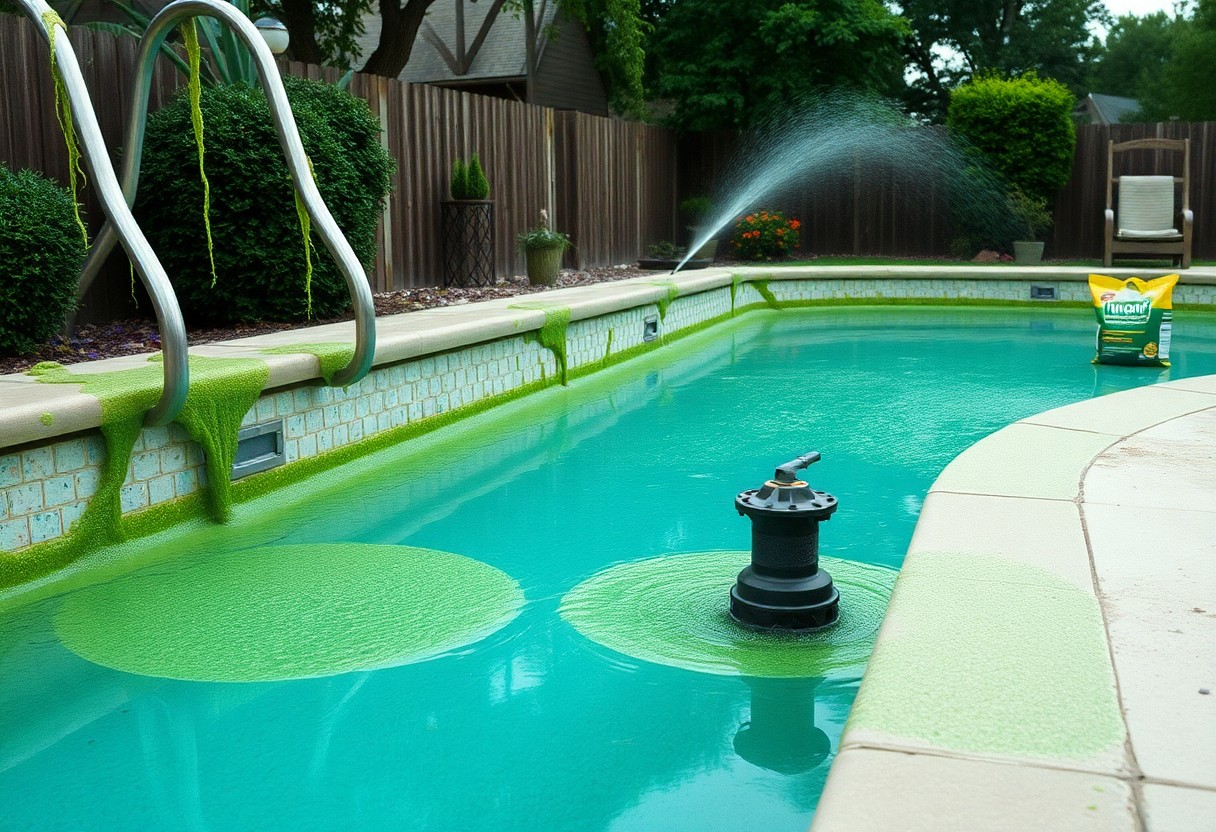
Frisco’s hot, humid summers with daily highs often between 95-100°F and frequent spring storms create prime conditions for algae; you’ll see blooms spike after a week of 85°F+ days combined with intermittent rainfall that washes nutrients into your pool, so monitor chemical levels closely during May-September.
Water Temperature
Your pool water in Frisco commonly sits between 80-90°F in summer, and temperatures above roughly 78°F accelerate algae metabolism and growth, meaning you must keep sanitizer and circulation up to prevent rapid blooms.
Water Temperature – Quick Reference
| Typical Frisco summer | 80-90°F – favors rapid algae growth |
| Action threshold | Above 78°F increase filtration 1-2 hours/day and check chlorine twice daily |
| Sanitizer target | Maintain free chlorine 1-3 ppm; raise temporarily when you see cloudiness |
When your water warms, chlorine demand rises and algae can establish within 24-48 hours if circulation is poor; you should run the pump longer (8-12 hours daily during heat waves), shock the pool when levels dip, and consider slightly higher routine maintenance during multi-day heat events to avoid repeat outbreaks.
Sunlight Exposure
If your pool gets direct sun 6-10+ hours daily, UV warms the water and degrades free chlorine, so you’ll need to monitor both temperature and stabilizer (cyanuric acid) to keep algae suppressed in those bright spots.
Sunlight Exposure – Quick Reference
| Unshaded exposure | 6-10+ hours – faster warming and chlorine loss |
| Stabilizer guideline | Target 30-50 ppm CYA for outdoor chlorinated pools |
| Management | Use covers, shade sails, or increase sanitizer and filtration during peak sun |
Direct sunlight not only raises temperature but breaks down free chlorine via photolysis, so you should test free chlorine midday and adjust CYA to balance protection against over-stabilization, while shading and covers cut both UV impact and algae pressure.
Pool Location and Surroundings
Pools sited within 10-20 feet of trees, turf, or mulch get constant nutrient loads from leaves, pollen and fertilizer runoff, and you’ll notice more frequent algae if debris and landscape drainage flow into your skimmer or shallow end.
Location & Surroundings – Quick Reference
| Nearby trees/vegetation | Leaf litter and pollen introduce organics and spores |
| Lawn/landscape runoff | Fertilizers add phosphates – algae food |
| Hardscape/placement | Low clearance increases debris; aim for 10-20 ft clearance where practical |
To reduce recurring blooms you should create buffer zones, trim overhangs, use leaf nets during pollen season, and manage irrigation to avoid runoff into the pool; if phosphates are persistent, test and use targeted removers before escalating chlorine dramatically.
The combination of warm water, strong sunlight and nearby vegetation makes Frisco pools repeat offenders for algae without proactive management.
Pool Chemistry
Importance of pH Levels
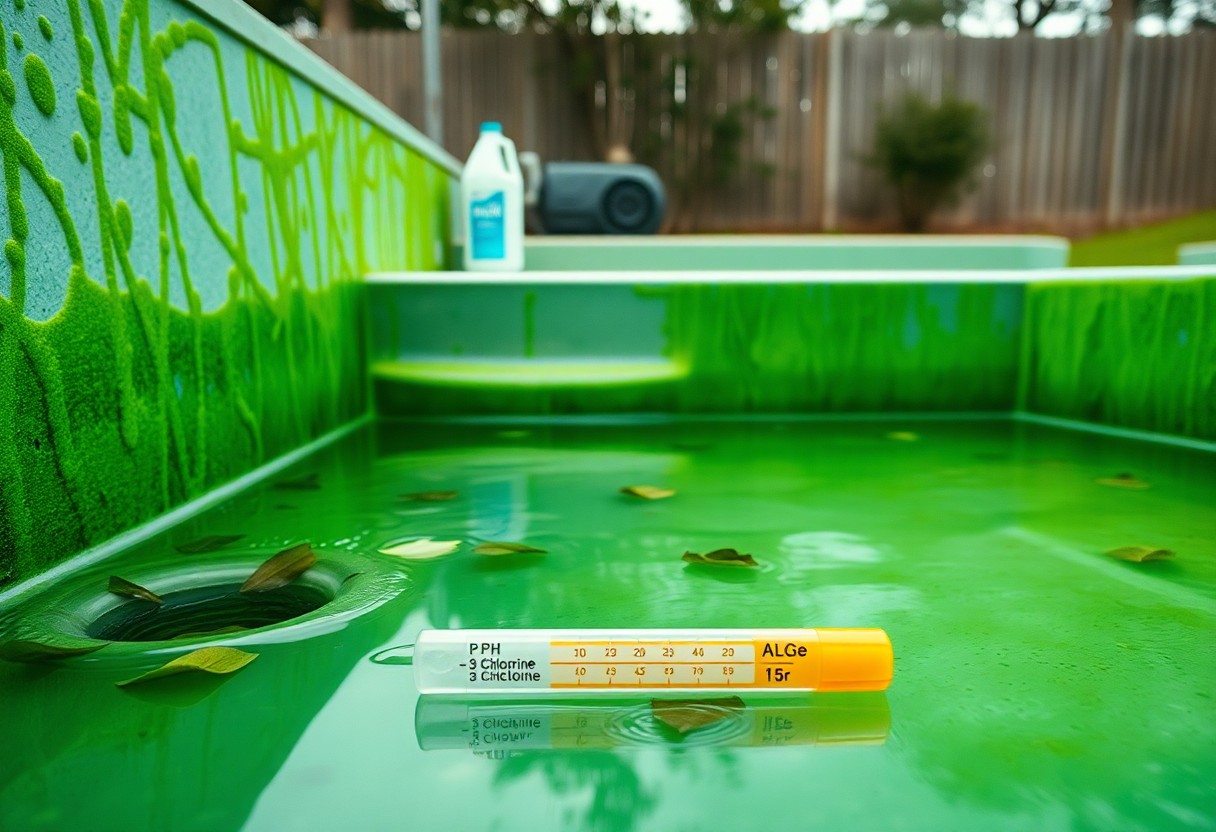
pH should sit between 7.2 and 7.6 for optimal chlorine performance and swimmer comfort; test your water 2-3 times weekly and after heavy rain or parties. If pH drifts above 7.8, scale and reduced sanitizer activity invite algae growth, while pH below 7.2 causes irritation and accelerates equipment corrosion-adjust with muriatic acid or sodium bisulfate to lower, soda ash to raise.
Chlorine Levels and Sanitation
Aim for free chlorine of 1-3 ppm in residential pools and test daily during hot weather or frequent use. You should shock weekly or after high bather loads-maintain good brushing and 8-12 hours of pump runtime daily so the chemical and mechanical systems remove algae spores before they take hold.
If algae appears despite normal free chlorine, check cyanuric acid (CYA) and combined chlorine: keep CYA around 30-50 ppm for outdoor pools and combined chlorine under 0.2 ppm. When combined chlorine rises or you see green water, raise free chlorine to 5-10 ppm (or follow breakpoint chlorination) and keep brushing and filtering until clarity returns; high CYA can necessitate partial drain-and-fill to restore chlorine effectiveness.
Balancing Alkalinity and Hardness
Maintain total alkalinity at 80-120 ppm to buffer pH swings, and target calcium hardness of about 200-400 ppm for plaster or gunite pools (vinyl liners tolerate lower). Test weekly; low alkalinity leads to pH bounce that undermines sanitizer action, while improper hardness affects surfaces and scale formation.
When alkalinity is low, add sodium bicarbonate in measured doses to raise it; if it’s high, use muriatic acid or sodium bisulfate to lower both alkalinity and pH carefully. For calcium hardness below 150 ppm add calcium chloride to protect plaster, and if hardness exceeds 400-600 ppm consider partial draining, a sequestrant, or professional water management to prevent scale that provides algae a foothold.
Pool Maintenance Routine
Importance of Regular Cleaning
Make vacuuming once a week, skimming daily, and brushing tile and walls twice weekly part of your schedule to prevent biofilm and algae spores from taking hold; empty skimmer and pump baskets at least twice weekly, and shock after heavy bather loads or storms to drop organic load quickly. Consistent physical cleaning reduces chemical demand and cuts the chance of recurring blooms in Frisco’s warm months.
Frequency of Water Testing
Test free chlorine and pH at least three times per week in summer, more often during heatwaves or after rain, aiming for 1-3 ppm chlorine and pH 7.2-7.6; check total alkalinity weekly and cyanuric acid monthly to keep sanitizer effective. Immediate testing after storms or large parties prevents surprises.
Use a reliable liquid titration kit (Taylor K-series) or a digital photometer for accurate readings-test strips can miss small deviations. Log results and act on trends: if free chlorine drifts below 1 ppm repeatedly, increase shock frequency or inspect filtration; if CYA rises above ~50 ppm, consider partial drain-and-refill to restore sanitizer efficiency. Daily checks are wise during algae outbreaks.
Filtering and Circulation Systems
Run your pump long enough to achieve one full turnover per day-typically 8-12 hours in Frisco-and clean or backwash filters on a schedule: skimmer baskets twice weekly, backwash sand/DE when pressure rises 8-10 psi above clean, and clean cartridges every 3-6 months. Proper circulation prevents stagnation pockets where algae begin.
For example, a 20,000-gallon pool with a 50 gpm pump turns over in ~6.7 hours, so aim for 8-10 hours run time; install a variable-speed pump to match flow and save energy while increasing run time affordably. Monitor filter pressure weekly, inspect pump strainer and leaf trap after storms, and balance flow between return jets and skimmers so you eliminate dead zones where algae prefer to grow.
Common Mistakes Leading to Algae Growth
Inadequate Shock Treatment
If you skip regular shock or under-dose, combined chlorine and organic load build quickly and allow algae to establish-especially in Frisco summers (85-95°F). You should shock after heavy use, storms, or when combined chlorine rises; for outbreaks aim for breakpoint chlorination (raise free chlorine roughly 10× the combined chlorine) and consider a standard dose such as 1 lb calcium hypochlorite per 10,000 gallons to boost free chlorine into the double digits until clear.
Neglecting Pool Covers
Leaving your pool uncovered invites leaves, pollen and sunlight that feed algae; in warm, nutrient-rich conditions you can see visible growth in 3-7 days after a storm or heavy pollen event. A cover reduces debris and light, lowering nutrient input and cutting the frequency you must treat or shock.
Use a solid or tight-fitting solar cover and remove surface debris before closing to avoid trapping organics against your liner. Inspect and clean the cover weekly during high pollen or fall leaf seasons, and after heavy rain test and rebalance your water-storm runoff often introduces high nutrient loads that will surge algae activity if left unchecked.
Ignoring Signs of Algae Formation
When you notice a faint green tint, slimy walls, yellow specks (mustard algae) or rising filter pressure, act immediately-delaying 48-72 hours can turn a small patch into a full bloom. Early intervention with brushing, testing and a targeted shock is far less work than treating an established bloom.
Start by testing free chlorine, pH and alkalinity; keep pH 7.2-7.6 so chlorine works efficiently, brush all surfaces to expose algae to oxidizer, run the filter continuously and backwash as needed. For stubborn or black algae you may need a specialized algaecide and professional mechanical cleaning or acid treatment, so early detection saves days of downtime and higher costs.
Preventative Measures
Regular Maintenance Schedules
You should test water weekly for pH 7.2-7.6 and free chlorine 1-3 ppm, skim daily, brush walls 2-3 times per week, vacuum or run your cleaner at least once weekly, and backwash or clean filters every 1-2 weeks depending on bather load. Shock the pool every 1-2 weeks or after heavy use/storms by raising chlorine to about 10 ppm for 8-12 hours to prevent recurring blooms during hot Frisco months.
Use of Algaecides
Use a maintenance algaecide weekly per the label and apply a curative algaecide at the first sign of growth; common options include quaternary ammonium for routine control and copper-based products for stubborn black or mustard algae. For active outbreaks, superchlorinate to roughly 10 ppm then follow with a curative product, always dosing by pool volume and manufacturer instructions.
You should rotate active ingredients seasonally to limit resistance-alternate polyquats with copper or biguanide-compatible formulas. You should also prefer chelated copper if staining is a concern, avoid overdosing quats to prevent foaming, and follow label swim/re-entry guidance; typically wait until free chlorine returns to the safe range (1-3 ppm) after shock before resuming normal treatments.
Sealing Cracks and Cleaning Surrounding Areas
Seal hairline cracks, tile joints and skimmer gaps promptly with pool-grade epoxy, polyurethane caulk or hydraulic cement for larger voids, since algae exploit even narrow crevices. Keep decking, gutters and skimmer baskets free of leaves and organic debris by cleaning weekly, and maintain landscaping setbacks so runoff and organic load into your pool are minimized.
You should inspect for fissures during low-water periods or after storms, use repair materials matched to your shell-epoxy for concrete/gunite, vinyl patch kits for liners, flexible sealants for grout-and allow proper cure times (epoxy 24-48 hours, hydraulic cement fully cures in 24-72 hours). Grade surrounding soil at a minimum 2% slope away from the pool, trim vegetation back 3-6 feet, and clear deck drains quarterly to reduce standing water and leaf accumulation that foster algae.

Final Words
Ultimately, recurring algae in Frisco pools occurs when you allow sanitizer and pH to drift, neglect filtration and circulation, and leave leaves, sunscreen and phosphates to feed growth; warm sunlight, heavy bather loads, hidden dead spots or biofilm let spores persist, so you must balance your water chemistry, run and clean filters, brush surfaces and remove organics consistently.
FAQ
Q: Why does algae keep coming back in Frisco pools even after I treat it?
A: Recurring algae usually means underlying issues: sanitizer levels are too low or tied up by combined chlorine, circulation and filtration are inadequate, or surfaces and equipment harbor biofilm that protects spores. Warm temperatures and sunlight in Frisco accelerate growth, and organic debris, leaves or high phosphate levels provide nutrients that let algae rebound quickly after treatment.
Q: How does Frisco’s climate make algae problems worse?
A: Hot summers, strong sunlight and periodic heavy rains create ideal conditions for algae: heat and UV speed reproduction, rain and runoff bring nutrients and can dilute stabilizer (CYA) or sanitizer levels, and extended swim seasons increase bather load and organic contamination. Those factors shorten the window between treatments and require more frequent maintenance.
Q: What chemical imbalances most often cause recurring algae?
A: Low free chlorine, high combined chlorine, improper pH (high pH reduces sanitizer effectiveness), incorrect cyanuric acid (either too low or excessively high), and elevated phosphates all allow algae to recover. Inadequate shock after contamination or storms leaves surviving spores; persistent CYA or chlorine mismanagement prevents maintaining an effective disinfectant residual.
Q: Can pool equipment or maintenance habits lead to repeated algae outbreaks?
A: Yes. Undersized or clogged filters, worn cartridges or sand not replaced, short pump run times, dead zones with poor return circulation, and unclean skimmers or ladders allow algae to hide and re-seed the water. Failure to brush walls, vacuum, and clean the filter after an algae event leaves spores and biofilm in place so algae returns.
Q: What practical steps stop recurring algae in Frisco pools?
A: Test water frequently and correct pH (7.2-7.6), alkalinity and CYA to recommended ranges; maintain free chlorine appropriate for CYA (commonly 1-4 ppm for routine use, higher when CYA is elevated) and shock after heavy use, storms or visible contamination. Run the pump longer in hot months (8-12+ hours), clean/inspect filters and skimmer baskets, brush and vacuum surfaces, use phosphate removers when levels are high, and apply a targeted algaecide or shock treatment to eliminate biofilm. For persistent or black algae, perform a thorough brush-and-shock regimen and deep filter cleaning or replacement.