With McKinney’s heat and occasional freezes, you should focus on consistent chemical balancing, frequent skimmer and filter cleaning, and routine pump and equipment inspections to prevent damage. You need to test pH, alkalinity, and sanitizer levels weekly, shock after heavy use or storms, vacuum and brush surfaces, maintain proper water level, and winterize or protect plumbing before freezes. Timely repairs and seasonal tune-ups keep your pool safe and efficient.
Key Takeaways:
- Routine cleaning: skim surface daily, brush walls and steps, and vacuum to prevent debris buildup and algae growth.
- Chemical balance: test and adjust chlorine, pH, alkalinity, and cyanuric acid weekly; shock after heavy use or storms, and monitor more frequently during hot McKinney summers.
- Filter and pump care: backwash or clean filters per manufacturer schedule, check pump pressure and flow, and replace worn parts to maintain circulation.
- Freeze and seasonal protection: use pool covers, set freeze protection for pumps/equipment during cold snaps, and follow spring opening/winterizing procedures.
- Inspections and repairs: regularly inspect for leaks, cracked tile or plaster, and faulty equipment or wiring; schedule professional service for major repairs and annual tune-ups.
Importance of Regular Maintenance
Health and Safety Considerations
Proper chemical balance and filtration keep pathogens out of your pool; aim for free chlorine at 1-3 ppm and pH between 7.2-7.8 per CDC guidance, and run filters 8-12 hours daily. If pressure climbs 8-10 psi above the clean reading, backwash or service the filter to restore flow. You should test water at least twice weekly and shock after heavy bather loads to reduce risks of Giardia or norovirus outbreaks tied to poorly maintained pools.
Longevity of Pool Equipment
Routine upkeep meaningfully extends equipment life: cleaning skimmer baskets, backwashing when pressure rises 8-10 psi, and replacing sand every ~5 years or cartridges every 1-2 years prevents strain on pumps and filters. You reduce the chance of early failures and spread replacement costs over time.
Neglecting scale, corrosion, or clogged impellers increases energy use and shortens service life; pump replacements typically range $400-$1,200 and heaters $1,500-$4,000. By keeping pH balanced, descaling heat exchangers as needed, and following manufacturer service intervals you can add years to pumps, heaters, and automation. For example, consistent filter maintenance often doubles filter life and improves flow, lowering electricity draw and repair frequency.
Enhanced Aesthetic Appeal
Clear water, bright tiles, and stain-free plaster boost curb appeal and daily enjoyment; maintain cyanuric acid around 30-50 ppm and pH near 7.2-7.6 to preserve clarity. You should perform weekly skimming, monthly brushing, and regular tile cleaning to prevent algae and staining that spoil appearance.
Left untreated, stains and scale may require acid washing or resurfacing, which can cost from a few hundred to several thousand dollars depending on scope. You’ll save on those large jobs by keeping up with routine cleaning-weekly skimming and monthly vacuuming-and scheduling polish or acid treatments every 3-7 years to keep tile and plaster looking new, improving nighttime lighting effects and resale appeal.
Weekly Maintenance Tasks
Skimming Debris from the Surface
You should skim the surface once or twice a week with an 18-24″ leaf net to remove leaves, insects, pollen and floating grass; a 15×30 pool often takes 5-10 minutes. Sweep slowly across the water in overlapping strokes, dump debris into yard waste, and pay special attention to corners and along the return jets where debris accumulates after wind events in McKinney.
Vacuuming the Pool Floor
Vacuum the floor weekly-manual or automatic-running 20-40 minutes depending on pool size; a 15×30 pool usually needs about 30 minutes. Use overlapping passes from shallow to deep end, slow steady speed to pick up fine sand and organic matter, and monitor filter pressure to avoid overloading the system during the job.
When vacuuming manually, prime the hose to eliminate air and vacuum in straight, overlapping lines; if pressure rises 8-10 psi over your clean baseline, stop and clean or backwash the filter. Keep pH at 7.2-7.6 and free chlorine at 1-3 ppm before vacuuming to reduce algae spread, and vacuum after storms or heavy swimmer use for best results.
Checking Water Levels
Check your water level weekly and keep it about halfway up the skimmer opening-typically 2-3 inches below the tile line on most pools. Too low and the pump can cavitate; too high and the skimmer won’t work efficiently. Use a hose to top off after heavy evaporation or splash-out common in hot McKinney summers.
Measure with a ruler at the skimmer throat to track weekly changes; expect evaporation of roughly ¼”-½” per day in peak summer, so you may need to add water weekly. If you have an automatic fill, inspect the float valve monthly and shut it off briefly while you test skimmer function to ensure fill settings are correct.
Cleaning the Skimmer and Pump Baskets
Turn off the pump and empty the skimmer and pump baskets weekly-this takes 3-5 minutes. Remove accumulated leaves, hair, and smaller debris, rinse baskets with a hose, inspect for cracks or missing tabs, and reseat them securely to maintain proper flow and protect the pump impeller.
After cleaning, check filter pressure and pump sound; persistent high pressure or unusual vibration can indicate a damaged basket or impeller blockage. Lubricate lid O-rings with silicone grease, replace cracked baskets promptly, and consider carrying a spare basket if your yard deposits heavy oak and cedar debris during seasonal shedding.

Chemical Balance and Testing
pH Level Management
Your pool pH should sit between 7.2 and 7.6; lower pH causes corrosion and swimmer eye irritation while higher pH cuts sanitizer effectiveness and causes cloudiness. Test pH 2-3 times per week in summer and after heavy rain or party days. To lower pH, use muriatic acid or sodium bisulfate; to raise it, add soda ash (sodium carbonate). Small, measured adjustments and retesting after 4-6 hours keep your pH stable and protect equipment and finishes.
Chlorine and Sanitizer Levels
Maintain free chlorine at about 1-3 ppm for most residential pools, and keep combined chlorine under 0.2 ppm. Outdoor pools commonly use cyanuric acid (CYA) in the 30-50 ppm range to slow UV loss; higher CYA raises the free-chlorine target. If combined chlorine rises, perform breakpoint chlorination or shock-bringing free chlorine temporarily up to around 10 ppm often clears organics and chloramines.
Monitor chlorine daily during hot weather or heavy use, and log readings. Sunlight can cut available chlorine quickly, so with a 20,000-gallon backyard pool you may aim for 2 ppm free chlorine with 30-40 ppm CYA as a baseline. Salt-chlorine generators require cell inspection/cleaning every 3-6 months and occasional manual shock after algae or high bather loads. If combined chlorine exceeds 0.2 ppm, shock and run the pump 8-12 hours while keeping swimmers out until levels drop to safe ranges.
Alkalinity and Hardness Checks
Keep total alkalinity at 80-120 ppm to buffer pH swings and protect surfaces; aim calcium hardness at 200-400 ppm for plaster pools (150-250 ppm for fiberglass or vinyl). Low alkalinity produces pH bounce, low hardness risks etching, and high hardness causes scale. Test TA and hardness weekly to biweekly, more often after major chemical corrections or fill/partial drain events.
To raise TA, sodium bicarbonate is the standard-about 1.5 lb per 10,000 gallons raises TA roughly 10 ppm-so dose incrementally and retest after circulation. Lowering TA is done with muriatic acid additions applied carefully and followed by aeration to stabilize pH. For low calcium hardness, add calcium chloride per product guidance; for high hardness, use sequestering agents and consider partial drain-and-refill when levels exceed the recommended range for your finish.
Using Test Kits and Strips
Use a quality DPD/titration kit or digital photometer for accurate free/chlorine, pH, TA, and CYA readings; test strips are fine for quick spot checks but can vary ±20%. Always sample from elbow-deep away from returns, and test at least twice a week during peak season. Keep a log of results and actions so trends guide your dosing decisions.
For precision, employ FAS-DPD or photometer kits (Taylor, LaMotte, LaMotte ColorQ) for chlorine to 0.1-0.5 ppm accuracy and titration kits for TA and hardness. Store strips sealed and dry-humidity degrades reagents. Calibrate handheld photometers monthly and cross-check with a professional water test quarterly or when persistent issues appear; that consistency prevents overcorrection and reduces chemical waste.
Monthly Maintenance Tasks
Deep Cleaning Pool Surfaces
You should brush tile lines, steps, and walls thoroughly and vacuum the floor to remove settled debris and biofilm; aim for a full surface scrub once a month, using a nylon brush for vinyl and fiberglass and a stainless-steel brush for concrete or gunite, then vacuum to waste if you dislodge large amounts of sediment to prevent filter overload.
Addressing Algae Growth
If you spot any green or slimy patches, shock the pool to raise free chlorine toward 8-10 ppm, brush affected areas vigorously, and run the pump continuously for 24-48 hours; follow with an algaecide labeled for your pool type to prevent immediate recurrence.
Algae varieties behave differently: green algae clears fastest with a single heavy shock, mustard (yellow) often needs repeated brushing plus a clarifier and an algaecide formulated for mustard, while black algae can require mechanical scrubbing of root pockets and multiple shocks over a week-track chlorine and pH closely during treatment to keep sanitation effective.
Inspecting and Maintaining Pool Equipment
Each month you should inspect pump seals, check for leakage at unions, empty skimmer and pump baskets, verify timers and automation settings, and listen for unusual pump or motor noises; log any changes in noise, vibration, or run-time to catch failing bearings, cracked impellers, or air leaks early.
When a pump amp draw rises more than about 15-20% above the nameplate or you hear grinding, plan replacement or service; test valves for proper flow direction, lubricate O-rings with silicone grease, replace brittle hoses, and verify heater ignition cycles and pressure switch operation to avoid expensive downtime during peak season.
Checking and Cleaning Filters
Monitor filter pressure weekly and backwash sand or DE filters when pressure climbs 8-10 psi above the clean baseline; for cartridge filters, remove and hose off pleats monthly and inspect for tears or collapsed cores to maintain turnover efficiency.
Deep-clean cartridges every 3 months by soaking in a manufacturer-approved cartridge cleaner for 4-12 hours, replace cartridges every 2-3 years depending on load and chemical exposure, and for DE filters inspect grids for rips and recharge DE after each backwash to ensure consistent micron-level filtration.
Seasonal Maintenance Considerations
Winterization Steps
You should lower the water level 4-6 inches below the skimmer, balance pH to 7.2-7.6 and free chlorine to 1-3 ppm, then add a winter algaecide per label. Blow out lines with a shop vac or compressor, plug returns and skimmer fittings, and add pool antifreeze to exposed plumbing as directed. Remove ladders and filters, and fit a solid cover or mesh with an air pillow; in McKinney where temps can dip near 20°F this reduces freeze damage and cover stress.
Preparing for Summer Use
When you open for summer, remove the cover and large debris, refill to mid-skimmer, reconnect pump and filter, then run filtration 8-12 hours/day. Test and adjust pH to 7.2-7.6 and total alkalinity to 80-120 ppm, and shock with 1-2 lb of chlorine shock per 10,000 gallons depending on contamination. Brush surfaces, vacuum, and retest the next day before heavy use.
Because McKinney summers often top 95°F, you’ll want to raise filtration and stabilization: aim for cyanuric acid (CYA) around 30-50 ppm to protect chlorine from UV loss. Calculate turnover by dividing pool gallons by pump GPM-e.g., a 20,000-gallon pool with a 50 GPM pump turns over in ~6.7 hours; target at least one full turnover per day (8-12 hours runtime) during peak season. Check chlorinator cells and salt levels, and inspect cover hardware and decks for sun damage before opening fully to guests.
Seasonal Equipment Checks
You should inspect pumps, filters, heaters, automation, and electrical connections each season: check pump baskets weekly, examine O-rings and unions for leaks, and note filter gauge pressure (sand/cartridge typically 10-20 psi). Backwash when pressure is 7-10 psi above baseline, test heater ignition and timers, and replace UV bulbs or salt cell parts per manufacturer intervals (often every 1-3 years).
Start by recording the clean-filter baseline pressure-if it reads 12 psi, plan to backwash around 19-22 psi. Measure pump flow (GPM) from pump curve or flow meter to confirm turnover times and troubleshoot low flow issues (clogged impeller, dirty cartridge). Clean salt chlorinator cells every 3-6 months depending on hardness; use manufacturer-recommended acid rinse for heavy scale. Replace failing pressure gauges or cracked unions promptly to avoid downtime during peak season.
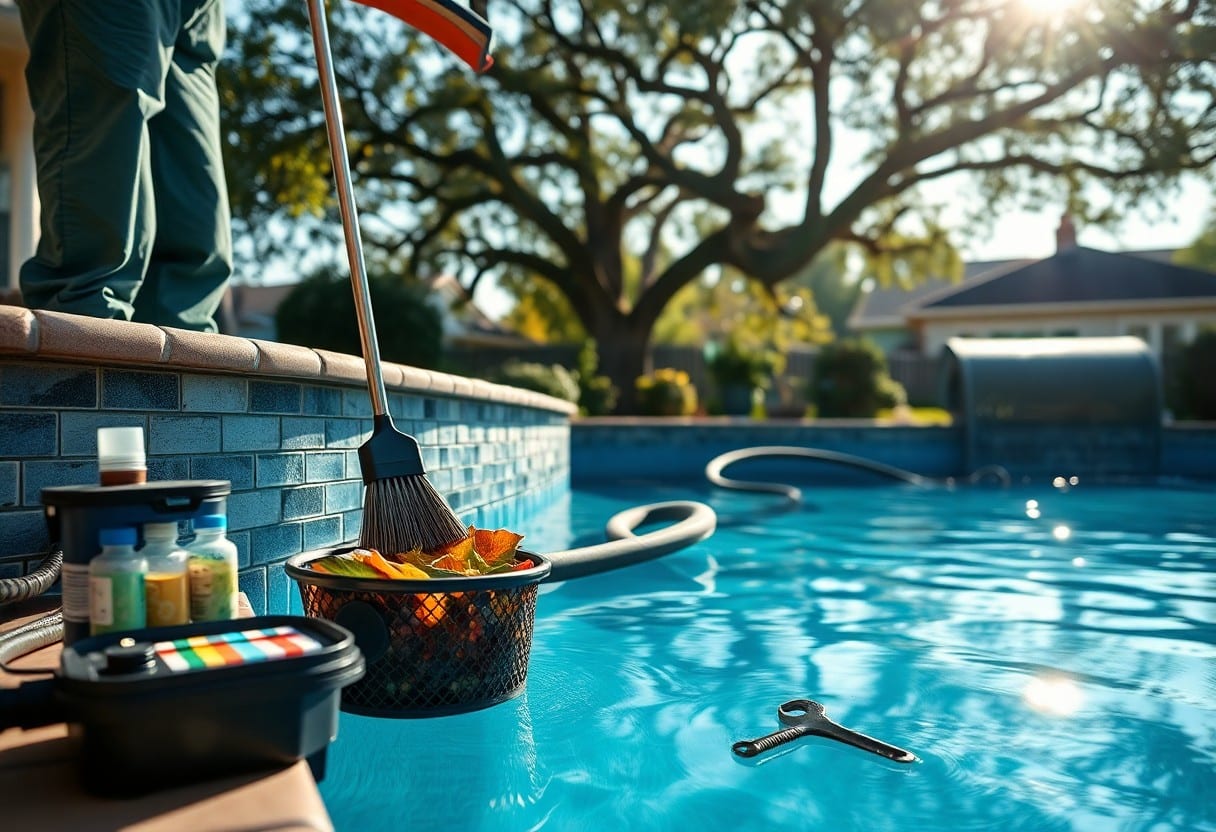
Leaf and Debris Removal
You should skim daily during heavy leaf fall, empty skimmer baskets after every storm, and use a leaf net for accumulated debris before it reaches the pump. Vacuum settled material weekly and treat with an enzymatic clarifier to break down organics; leaving leaves 24-48 hours can stain plaster and feed algae, especially with high summer heat.
Use a combination of tools: a 12-16 ft telescopic pole with a fine-mesh skimmer for surface leaves, a dedicated leaf canister on the suction line to protect your pump, and a robotic cleaner for bottom debris. If you have large shade trees like oaks or pecans common in McKinney, install a pool cover well before peak drop times and schedule a heavy debris removal session after every major wind event. Regular removal cuts filter backwash frequency and chemical use-many homeowners report reducing backwashes by ~30% with proactive skimming and a leaf canister.
Common Pool Problems and Solutions
Cloudy Water Issues
When your pool turns cloudy you should test free chlorine (aim 1-3 ppm) and pH (7.2-7.8) immediately, check combined chlorine and alkalinity, and inspect the filter-low flow or a dirty cartridge/sand/DE filter is often the cause. Run the pump 8-12 hours, backwash sand/DE filters when pressure rises 8-10 psi over clean, and use a clarifier or shock (raise free chlorine to 5-10 ppm) to clear suspended particles.
Equipment Malfunctions
If you notice low flow, strange noises, tripped breakers, or pressure spikes, start by checking skimmer and pump baskets, the pump lid O-ring, and the filter pressure gauge; many issues stem from clogged impellers, air leaks in suction lines, or a dirty filter. Typical residential pumps are 0.75-1.5 HP-if amperage is well above nameplate or pressure is 8-10 psi over normal, service is needed.
Diagnose further by isolating the pump: shut power, inspect the impeller for debris, verify proper priming and that suction lines are airtight, and compare motor amps to the plate rating with a clamp meter. For cartridge filters, remove and clean cartridges every 3-6 months; for sand filters, backwash and add new sand every 5-7 years; for DE filters, backwash then add fresh DE. Heater lockouts often indicate low flow or scale on the heat exchanger-flush the system and hire a technician for electrical or sealed-motor repairs.
Algae Blooms
When algae appear-green, yellow, or black-boost sanitation immediately: shock to raise free chlorine to 10-20 ppm depending on severity, add an appropriate algaecide, brush all surfaces, and run the filter 24-48 hours while vacuuming to waste. Warm water (80-90°F), high phosphates, and poor circulation accelerate growth, so address filtration and chemical imbalances quickly.
Different algae need different treatments: green algae respond well to shock and brushing, mustard/yellow algae require frequent vacuuming to waste and clarifier use, while black algae cling to plaster and often need wire brushing, extended high-chlorine contact, and sometimes acid brushing or professionalmedia treatment. Test phosphate levels-values above ~100 ppb often promote blooms-and use phosphate remover if needed; maintain continuous filtration until the pool stays clear for 48 hours.
Water Leaks
Excessive water loss beyond normal evaporation (about 1/4 inch per day) signals a leak; check for wet spots around equipment, unusually low pump basket levels, or water pooling near returns, skimmers, and the equipment pad. Perform a bucket test to separate evaporation from leaks and inspect visible fittings, unions, and O-rings before moving to pressure tests.
Locate hidden leaks by pressure-testing lines, using dye near fittings and seams, and inspecting the pump volute, skimmer throat, and return fittings; underground line leaks often show soggy ground or depressions. Simple fixes include tightening unions, replacing O-rings, or re-gluing PVC; expect DIY repairs for visible fittings to be low cost, while buried pipe or structural plaster repairs require professional diagnostics and typically cost more due to excavation or replastering.
Summing up
To wrap up, you should prioritize regular skimming, brushing, and vacuuming; routine testing and balancing of chlorine, pH, alkalinity, and stabilizer; weekly filter cleaning or backwashing and timely pump and heater inspections; shock treatments and algaecide as needed; and seasonal tasks like winterizing or startup service and tile/deck repairs to prevent bigger repairs. Consistent care keeps your McKinney pool safe and reliable.
FAQ
Q: What regular daily and weekly tasks should McKinney pool owners perform?
A: Skim leaves and debris daily during high-use seasons; empty skimmer and pump baskets at least once a week (more often after storms). Brush walls, steps and tile once a week to prevent biofilm and scale. Vacuum the pool weekly or as needed to remove settled debris. Check and top off water level so the skimmer operates properly. Test basic chemistry (chlorine, pH) 2-3 times a week in summer and at least once a week in cooler months; adjust as needed.
Q: How often should I test and balance pool chemistry, and what target ranges work best in McKinney?
A: Test free chlorine, pH, total alkalinity and cyanuric acid (stabilizer) regularly. Target ranges: free chlorine 1.0-3.0 ppm (higher with heavy bather load), pH 7.2-7.6, total alkalinity 80-120 ppm, cyanuric acid 30-50 ppm for outdoor chlorinated pools, calcium hardness 200-400 ppm (plaster) or 150-250 ppm (vinyl). Test chlorine and pH 2-3 times per week in summer; alkalinity and hardness monthly; CYA quarterly. Salt pool owners should also check salt cell output and salt level per the manufacturer (commonly 2700-3400 ppm) and clean the cell every 3-6 months if buildup occurs.
Q: What maintenance does the filtration and circulation system need?
A: Inspect the pump and filter weekly for leaks, unusual noises and correct pressure. Clean skimmer and pump baskets weekly; clear out hair and debris. Backwash sand or DE filters when the pressure gauge is 8-10 psi above clean starting pressure or as manufacturer directs; clean cartridge filters every 1-3 months depending on load. Run the pump long enough for at least one full turnover of pool volume daily (commonly 8-12 hours in hot weather; increase after heavy use or storms). Lubricate O-rings, replace worn seals, and schedule annual professional service to check valves, union fittings and the pressure gauge.
Q: How do I prevent and treat algae, cloudy water and other common problems in McKinney’s climate?
A: Maintain consistent sanitizer levels and pH; shock the pool weekly or after heavy rains, parties or high sunlight exposure to oxidize organics. Brush surfaces regularly and run the filter longer until water clears. Use an algaecide as a preventative during warm months or after fertilizer runoff from storms. For cloudy water, verify filtration is running correctly, brush and vacuum, test for combined chlorine and raise sanitizer level if needed, and consider a clarifier if fine particles remain. If algae bloom occurs, raise chlorine to shock levels and brush vigorously, then filter until clear.
Q: Which seasonal and professional maintenance tasks are important for McKinney pools?
A: Schedule a professional inspection in spring to check pump and motor condition, heater combustion and controls, filter integrity, and automation settings before the high season. Prepare for occasional freezes by protecting exposed equipment and using a freeze protection plan if temperatures drop below freezing. Close or winterize if leaving the pool unused for extended periods: lower water to recommended level, add winterizing chemicals, and protect lines and equipment. Call a pro for persistent chemistry imbalances, suspected leaks, heater failures, major equipment replacement, or if you detect unexplained pressure spikes or strong chemical odors.