Pool safety begins with planning and active supervision: you should designate a water watcher, secure fences and self-closing gates, keep lifesaving equipment and a charged phone nearby, maintain proper chemical balance and anti-entrapment covers, clear toys and slippery hazards from the deck, enforce that no one swims alone and limit alcohol, and ensure at least one person is trained in CPR-these steps help you protect family members and reduce risks during gatherings.
Key Takeaways:
- Assign a sober, attentive adult as a rotating water watcher to supervise swimmers continuously.
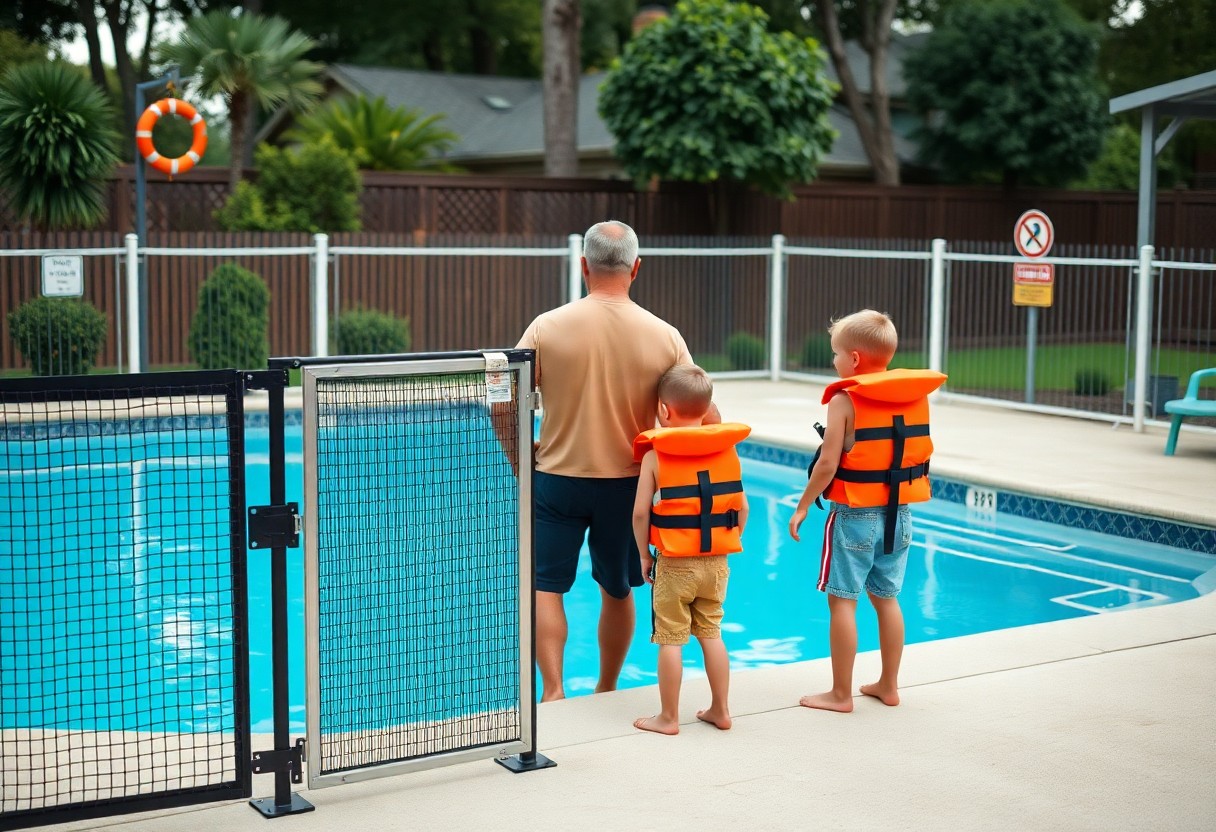
- Maintain secure barriers, self-closing/self-latching gates, and active pool alarms to prevent unsupervised access.
- Keep life-saving equipment (life ring, reaching pole) poolside and ensure at least one person is CPR-trained.
- Enforce clear rules: no running, no diving in shallow areas, no swimming alone, and require approved flotation for weak swimmers.
- Keep water clear and chemically balanced, cover or remove toys when not in use, and ensure compliant drain covers.
Importance of Pool Safety
Understanding Pool Risks
Drowning is the leading cause of unintentional injury death for children aged 1-4, and incidents can unfold in as little as 20-60 seconds; you should accept that proximity and constant supervision matter. Toddlers can slip under shallow water, and guests under the influence raise adult risk-alcohol is frequently present in fatal recreational-water incidents-so assigning sober supervisors and restricting running or rough play reduces common, fast-moving hazards.
Legal Responsibilities of Pool Owners
You must comply with local codes that often require a barrier-commonly a 48-inch fence with self-closing, self-latching gates-plus door alarms, compliant drain covers (per the federal VGB provisions where applicable), and visible depth signage. Maintaining chemical records, meeting local permitting and inspection rules, and keeping lifesaving equipment on-site helps you meet statutory and civil duties; failure can lead to fines, insurance claims, or liability suits.
Documenting inspections, repairs, and supervision plans strengthens your defense if an incident occurs: keep written maintenance logs, dated safety checks, and copies of certifications. Encourage at least one adult with current CPR/AED training (certifications typically expire every two years) to be present at gatherings, post emergency numbers poolside, and verify your homeowner policy covers pool-related liability to avoid unexpected financial exposure.
Preparing the Pool Area
Inspecting Pool Equipment
You should run the pump and heater for 15 minutes and inspect the pump, filter, skimmer, lights, ladder and drain covers for leaks, loose bolts or corrosion. Empty the pump strainer basket and compare filter pressure to your clean baseline – backwash when pressure rises about 8-10 psi above that baseline. Test GFCI breakers and pool lights; any intermittent noise or reduced flow means service before guests arrive.
Clearing Debris and Obstacles
You should skim surface debris every hour during parties and clear leaves, toys and wet towels from the deck to prevent slips. Trim overhanging branches and use a leaf net if trees shed; empty skimmer baskets and clean the pump strainer to maintain flow. Keep walkways at least 36 inches wide for unobstructed egress.
Bring a 16-20 inch nylon leaf skimmer and a pole-mounted brush for quick cleanups, and run an automatic cleaner or handheld vacuum overnight if you expect heavy use; robotic cleaners typically clear pool floors in 1-2 hours. Station a covered bin for wet towels and a toy corral to prevent trip hazards, and use a leaf net when trees are shedding heavily to reduce mid-party maintenance.
Setting Up Safety Barriers
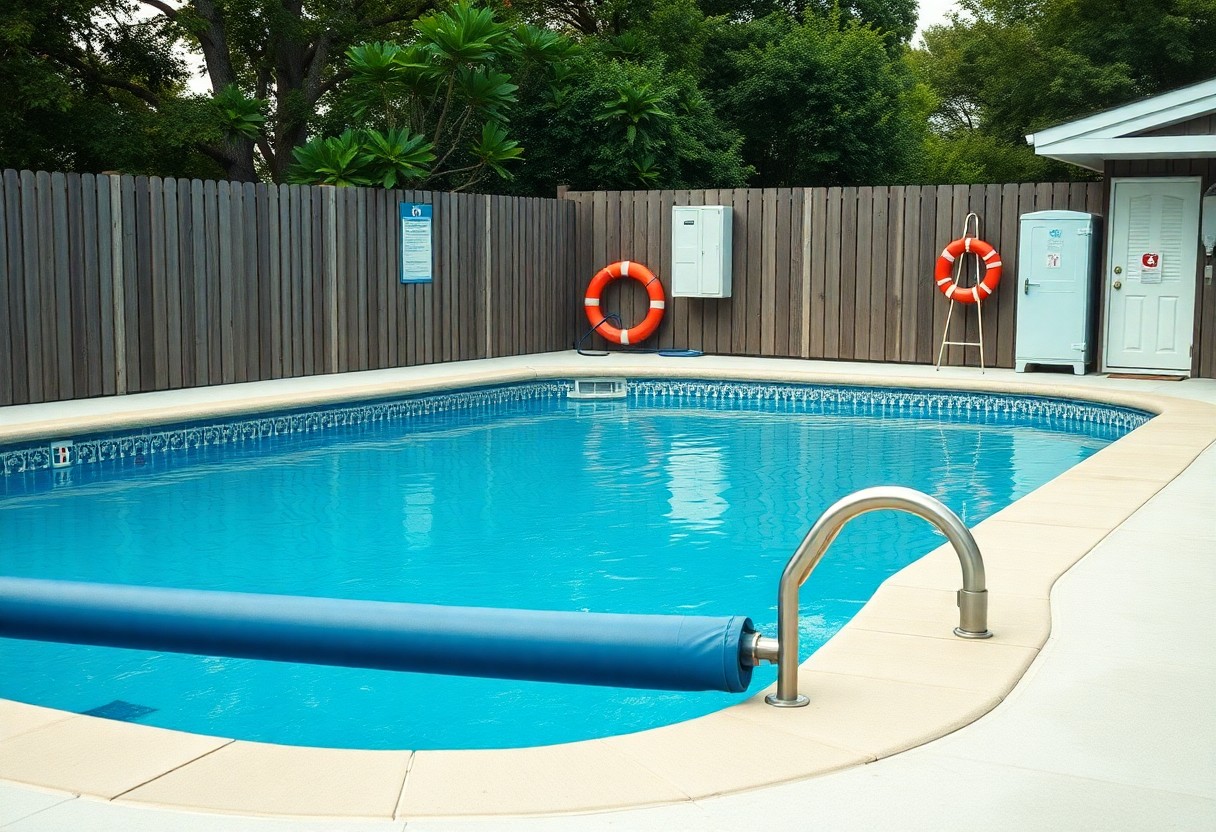
You should install a 48-inch (4 ft) fence with a self-closing, self-latching gate and consider adding a listed safety cover or alarm system. Position a life ring and a 12-15 foot reaching pole within 10 feet of the pool edge, and place temporary 4-foot safety panels around grills or play areas if needed for the event.
Mount gate latches at least 54 inches above ground or use a high-mounted interior release so small children cannot access them, and keep vertical picket spacing under 4 inches with no more than 4 inches clearance beneath the fence. Verify the gate closes fully from a 5-foot push and that alarms trigger on activation to ensure barriers meet local code and practical safety needs.
Establishing Rules for Pool Use
Adult Supervision Guidelines
Assign a named “water watcher” so you always have one adult actively supervising; for children under 5 or non-swimmers keep an adult within arm’s reach and aim for one adult per 2-3 weak swimmers. Rotate the watcher every 20-30 minutes, stow phones in a basket to avoid distraction, and ensure at least one adult present is CPR-certified and able to reach rescue equipment within 10 seconds.
Swimming Safety Rules for Children
Have children wear U.S. Coast Guard-approved life jackets if they can’t swim confidently, enforce a buddy system, and set clear swim-area boundaries with ropes or lane lines; require kids to demonstrate basic skills (swim one length and float) before allowing deep-water access.
Enroll children in formal lessons – studies show lessons can reduce drowning risk by up to 88% for ages 1-4 – and schedule periodic skill checks during gatherings. Fit life jackets snugly (no more than two fingers between chin and jacket), store floatation devices in a designated bin, and prohibit toys outside the designated play area to prevent impulsive dives; allow diving only where water is at least 9 feet deep.
Prohibiting Running and Rough Play
Ban running, pushing, and horseplay on the deck; mark no-running zones with cones and signs, remove loose toys from walkways, and apply a clear consequence system (first warning, then 10-15 minute timeout) enforced by the supervising adult.
Reduce slip and fall risk by keeping the deck dry with towels and squeegees, installing non-slip mats at common paths, and limiting high-energy games to the shallow end. Define rough play explicitly (no dunking, no standing on shoulders, no chasing at the edge), brief guests on the rules as they arrive, and revoke pool privileges for repeat offenders to maintain a safe environment for all ages.
Essential Safety Equipment
Life Jackets and Floatation Devices
You should keep U.S. Coast Guard-approved life jackets available in multiple sizes; for children pick PFDs with head support and secure straps, not inflatable toys. A properly fitted vest reduces risk during active play and when guests come and go, and you should have at least one child-sized and one adult-sized PFD near the shallow end for quick access.
First Aid Kits and Emergency Supplies
Store a waterproof first aid kit at pool level with sterile gauze, adhesive bandages, antiseptic wipes, disposable gloves, trauma dressings, scissors, a CPR mask, and instant cold packs; label contents and include a laminated emergency contact list with local EMS and pool address. Keep a charged phone or landline within reach and a flashlight with extra batteries in the same location.
Check kit contents monthly and after any use, replacing expired meds, used items, and frayed packaging; train at least two adults in adult/child/infant CPR and basic wound care so responders can act immediately. Consider adding an automated external defibrillator (AED) if your gatherings exceed 20 people regularly-position it for a 3-5 minute retrieval time and log maintenance dates on the kit.
Floating Rescue Equipment
Place a life ring (about 24″ diameter) with a 30-50 ft buoyant line and a 12-16 ft reaching pole or shepherd’s hook at multiple points around the pool edge so a device is never far away. A rescue tube or throwable ring is more effective than improvised items, and you should mount them in visible, unlocked holders for immediate use.
Inspect rescue gear monthly for UV damage, dry-rot, or frayed rope and replace any compromised pieces; coil lines neatly to prevent tangles and test pole extensions annually. Practice staple drills with family-one person retrieves the ring while another calls EMS-so everyone knows the throw, hold, and reach sequence without entering the water unless trained to perform aquatic rescue.
Emergency Preparedness
Creating an Emergency Action Plan
You should design a clear, written plan that assigns roles-who calls 911, who evacuates children, who retrieves the AED-and post it by the gate. Assign at least two sober adults as primary supervisors, include emergency numbers with your address and GPS coordinates, and keep a visible kit containing a rescue tube, shepherd’s crook, pocket mask, first-aid kit and thermal blanket. Practice the sequence once with family so everyone knows the meeting point and how to secure the pool in under a minute.
Teaching Key Safety Skills to Family Members
You should ensure at least two adults hold current CPR, AED and first-aid certification, with recertification every two years. Enroll children in formal swim lessons as early as age 1 and progress to stroke development and water-safety classes. Train family members in reach-and-throw rescues and use of a life hook, emphasizing that you should not enter the water unless trained. Keep certification cards and local instructor contacts with your emergency plan.
You should run hands-on practice so skills stick: time simulated reach-or-throw rescues using a 10-15 ft throw ring and practice retrieving a dummy with a pole. Teach children survival skills such as back-floating for 10-15 seconds and swimming to the steps, and schedule family refresher sessions-local Red Cross or YMCA courses often run 30-45 minute classes twice weekly-to build muscle memory and confidence.
Conducting Regular Safety Drills
You should schedule safety drills monthly and before any large gathering, covering scenarios like an unconscious swimmer, a non-swimmer in deep water, and a missing-child search. Assign who calls 911, who retrieves the AED, and who clears the area, then time your response with a stopwatch; aim to secure the pool and begin emergency care within 60 seconds. Log each drill with outcomes and corrective actions so your plan improves over time.
You should script drills in advance, rotate roles so every adult practices calling emergency services and using the AED, and run drills at different times-daylight and evening-to test lighting and visibility. Debrief immediately, record timestamps (call placed, AED on scene, first aid started) and update signage, latches or rescue gear based on the gaps you identify in each drill.
Monitoring Pool Activity
Assigning a Dedicated Lifeguard
Assign a sober, attentive adult-preferably someone certified in lifeguarding and CPR-to watch the pool for the entire gathering; aim for one guardian per 10-15 swimmers, and tighten to one adult per 3-5 children under 6. You can hire a professional lifeguard for larger events; trained responders double or triple survival odds in cardiac or drowning emergencies, so having one designated watcher reduces response time and keeps others free to manage food, gates, and non-swimming guests.
Utilizing Technology for Safety (e.g., Pool Alarms)
Use a combination of devices-perimeter gate alarms, door/window alarms, surface-wave or submersion sensors, and wearable child alarms-to alert you the instant someone enters the water; systems range from about $100 for basic gate alarms to $1,000+ for whole-pool detection. You should pair alarms with active supervision, test batteries before guests arrive, and check local codes, since some jurisdictions require pool alarms for residential pools.
Surface-wave alarms detect waves or disturbances across the pool and typically signal within seconds of an unexpected entry; submersion sensors monitor for sudden depth changes or lack of movement and are better at detecting silent sinkings. Gate and door alarms prevent unsupervised access, while wearable devices (wristbands or clip-on tags) add a layer for toddlers-expect a tradeoff: wearables reduce false positives but need charging and proper fit. Combine video cameras with motion alerts only where legal and acceptable to your guests, and log weekly tests-manufacturers often recommend monthly full-system checks and battery replacement schedules to avoid false confidence.
Limiting the Number of Guests
Limit how many people are in the water at once to reduce collisions, supervision gaps, and fatigue; for family pools, keeping in-pool swimmers to 8-15 at a time works well, and many public standards use about 15 sq ft of water surface per bather as a planning metric. You should post an occupancy sign, rotate swimmers into timed sessions, and enforce a clear count so you never lose track of who’s in the pool.
Plan rotations that stagger active swimmers with shore-based activities-set 20-30 minute swim sessions with 10-15 minute breaks for smaller gatherings. Zone the pool: designate a shallow area for novice swimmers and a deep end for confident adults, and issue colored wristbands or anklets for non-swimmers and children requiring one-on-one supervision. If you expect more than 20 guests, schedule two or three staggered swim blocks and hire at least one professional lifeguard per block to maintain safe ratios and reduce crowding.
Conclusion
Upon reflecting, you should enforce constant adult supervision, set clear pool rules, require life jackets for weak swimmers, designate a trained watcher, maintain proper water chemistry and barriers, use covers and alarms when not swimming, remove tripping hazards, and ensure at least one person on-site knows CPR-these steps protect your guests and let you host confidently and safely.

FAQ
Q: How should I supervise children and inexperienced swimmers during a family gathering?
A: Designate one or more responsible adults as active supervisors who keep eyes on the water at all times, use a rotation schedule so attention stays fresh, keep young children within arm’s reach, and avoid distractions such as phones or lengthy conversations while on duty.
Q: What pool barriers and site controls should I use to prevent unsupervised access?
A: Install a four-sided fence with self-closing, self-latching gates around the pool, use door and gate alarms, keep pool covers and safety nets in good condition, remove toys from the pool area when not in use to avoid attracting children, and ensure pool entry points are well lit and slip-resistant.
Q: Which flotation and rescue equipment should be available at a gathering?
A: Keep US Coast Guard-approved life jackets in appropriate sizes, a reaching pole, a ring buoy with a rope, and a fully stocked first aid kit at poolside; do not rely on inflatable toys as safety devices and ensure all equipment is accessible and in good repair.
Q: How should alcohol, food, and general behavior be managed around the pool?
A: Limit or prohibit alcohol for anyone supervising swimmers, encourage designated sober monitors, set aside a dry eating area to reduce slips and contamination, enforce no-running and no-diving rules where depth is shallow, and supervise children during bathroom and snack breaks to prevent accidental entry when unattended.
Q: What emergency preparations should I make before guests arrive?
A: Ensure at least one person present is trained in CPR and basic water rescue, post emergency phone numbers and pool depth markers, keep a charged phone poolside, check water clarity and chemical levels, identify the nearest AED and hospital route, and brief guests on safety rules and emergency procedures upon arrival.