cleaning your pool becomes necessary when you notice persistent cloudiness, green or slimy algae growth, dark stains or scale on surfaces, strong chemical or musty odors, or when filtration struggles despite routine maintenance; test results showing unstable pH, high combined chlorine, or elevated total dissolved solids also indicate a deeper clean is needed, and if you find frequent skin or eye irritation you should schedule professional deep cleaning promptly.
Key Takeaways:
- Persistent cloudiness, green tint, or visible algae growth despite regular treatment signals a deep cleaning is needed.
- Strong chlorine smell, high combined chlorine, or water chemistry that won’t stabilize after multiple adjustments indicates contamination requiring deep cleaning or water change.
- Surface stains, scale buildup, discolored grout, or slimy walls/floor mean the pool surfaces need professional cleaning and treatment.
- Frequent filter clogs, reduced circulation, heavy debris in the skimmer, or unusual pump noises point to filtration and equipment cleaning and inspection.
- After heavy storms, extended high use (parties), long seasonal shutdowns, or unexplained recurring problems, schedule a deep clean to restore water quality.
Understanding Pool Maintenance
Importance of Regular Cleaning
Keeping your pool free of leaves, debris and biofilm prevents stains, filter clogs and swimmer irritation; you should skim daily or at least 3 times weekly, brush walls and steps twice weekly, vacuum once a week, test water 2-3 times weekly, and run the filter 8-12 hours per day to maintain circulation and clarity.
Consequences of Neglecting Pool Care
If you delay cleaning, algae can bloom in 5-14 days in warm weather when free chlorine falls below 1 ppm, filters will foul and lose efficiency, pumps may overwork and fail, and stains or scaling set in-repair bills commonly run 2-5× higher than routine upkeep while swimmer health risks (GI upset, ear or skin infections) increase.
A typical escalation starts with low sanitizer and a clogged filter allowing organics to accumulate; your pool can turn green within a week and form a tenacious biofilm that resists standard shock. Professional restorations often range $300-$1,200, and replacing a damaged pump or motor can cost $500-$1,500, so early intervention usually saves both time and money.
Overview of Cleaning Methods
Basic cleaning methods you’ll use are skimming, brushing, manual or robotic vacuuming, chemical balancing and filter maintenance; vacuum weekly (or daily during heavy leaf fall), shock monthly or after storms/heavy use, backwash sand/DE filters every 1-2 weeks, and clean cartridge filters every 3 months to keep systems operating efficiently.
Robotic cleaners excel at removing sand and fine debris, while manual vacuums reach tight corners and walls; choose filters based on micron rating-sand ~20-40 µm, DE ~3-5 µm, cartridges ~10-50 µm-and maintain water chemistry: free chlorine 1-3 ppm, pH 7.2-7.6, total alkalinity 80-120 ppm, calcium hardness 200-400 ppm. Call a pro for persistent staining, repeated algae outbreaks, or mechanical failures.
Signs Your Pool Needs Deep Cleaning
Water Clarity Issues
If you can’t see the pool floor in a 4-foot area or the water stays cloudy after running the filter 8-12 hours and shocking, you likely need deep cleaning. Persistent turbidity often means fine particulates, dissolved organics, or a failing filter media; tests showing free chlorine below 1 ppm despite dosing, or visible bloom after a heavy rain, are strong indicators you should escalate beyond routine maintenance.
Surface Stains
Dark waterline rings, rusty spots, or black streaks on tile point to mineral or organic staining. Iron and manganese typically produce reddish-brown or black marks at concentrations above about 0.3-0.5 ppm, while algae or tannins leave green, brown, or olive stains that brushing alone won’t remove.
When stains persist after brushing and standard stain removers, deeper action is needed: localized acid washing, a chelating/sequestrant treatment, or professional stain extraction. For example, pools with calcium hardness over 400 ppm often develop scale rings that respond poorly to chlorine and require mechanical or chemical removal by a specialist.
Debris Accumulation
When you’re emptying skimmer baskets daily, vacuuming out cups of leaves each session, or finding a one-inch layer of organic matter on the floor after storms, deep cleaning is warranted. Consistent clogging that drives pump pressure 5-10 psi above baseline signals the circulation and filtration system is overloaded and won’t clear the pool effectively.
Left unchecked, heavy debris accelerates filter media clogging, shortens cartridge/DE life, and fuels chloramine buildup and algae outbreaks. In tree-lined yards in Anna, a single storm can deposit several pounds of leaves and needles in 24-48 hours, so scheduling a deep clean after such events prevents ongoing water-quality decline.
Seasonal Considerations
Spring Cleaning
Start by testing and balancing your water-pH 7.2-7.6, total alkalinity 80-120 ppm, calcium hardness 200-400 ppm-then shock to clear winter organics (target free chlorine ~10 ppm for 24 hours if algae or heavy contamination). Brush surfaces, vacuum settled debris, clean or backwash the filter, and run the pump 8-12 hours daily for the first week to re-establish turnover.
Summer Maintenance
Test your pool 2-3 times weekly, maintain free chlorine around 2-4 ppm, run the filter 10-12 hours per day, skim daily, and backwash or clean cartridges weekly when pressure rises 8-10 psi above baseline to prevent cloudy water and algae blooms.
With Anna’s hot summers accelerating chlorine loss, monitor cyanuric acid (stabilizer) at 30-50 ppm to limit UV depletion; if heavy use or storms occur, shock the pool and brush walls for 2-3 nights. Check pump pressure, empty skimmer baskets daily, and inspect the filter media monthly-sand filters typically need replacement or rebed every 5-7 years, cartridges cleaned every 1-3 months depending on load.
Autumn Preparedness
Begin clearing leaves with a leaf net and increase vacuuming frequency to twice weekly as trees shed; maintain chlorine 1-3 ppm and keep brushing to prevent tannin stains and algae that set in as temperatures fall below 70°F.
If you plan to close for winter, start two to four weeks before the first hard freeze: balance chemistry, treat with an algaecide per label, and gradually reduce pump run time while keeping turnover adequate to prevent stagnation. For pools staying open, adjust circulation to 6-8 hours daily and monitor stabilizer and alkalinity as rain and debris can alter levels quickly.
Winter Maintenance
Balance your water (pH 7.2-7.6, alkalinity 80-120 ppm) before lowering the level 4-6 inches below skimmers, add appropriate winter algaecide and enzyme products, blow out lines and plug returns if freezing is expected, then install a secure cover to limit debris and light exposure.
In climates where temperatures dip below freezing repeatedly, protect plumbing by either running the pump intermittently to keep water moving or using ground-level freeze protection and pool-rated antifreeze in lines; check the cover and a cover pump every 7-14 days and test water monthly to correct any imbalances before reopening in spring.
Routine vs. Deep Cleaning
Frequency of Routine Cleaning
You should test water 2-3 times per week, skim daily after heavy use, brush tiles and walls at least once weekly, vacuum 1-2 times per week, and backwash or clean filters every 1-2 weeks depending on pressure. Monthly, inspect pumps, heaters, and chemical feeders. For pools used by kids, pets, or frequent swimmers, increase vacuuming and chemical checks to prevent buildup and detect issues early.
What Constitutes Deep Cleaning
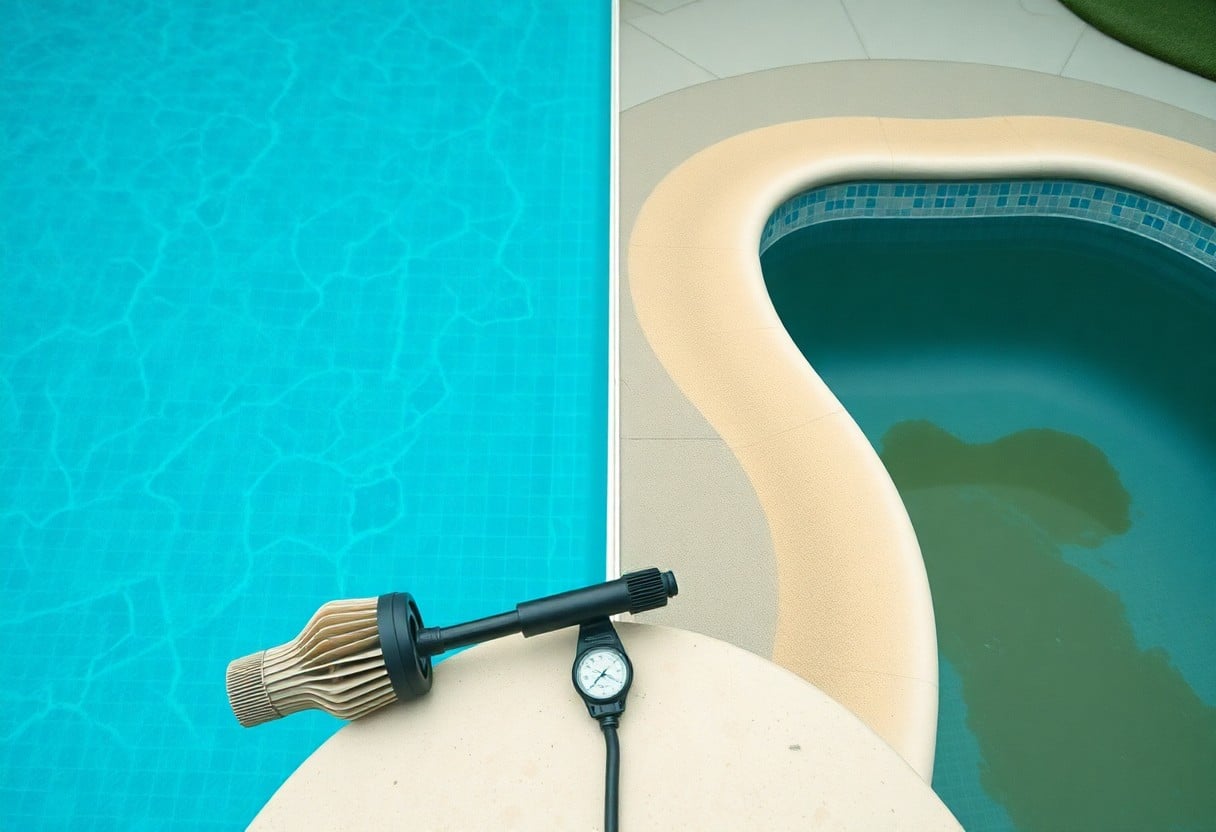
Deep cleaning is triggered by persistent problems: stains or scale on tile, recurring algae that won’t clear after 48-72 hours of shock, visible biofilm or slimy surfaces, strong chlorine demand, or lengthy vacancy and storm contamination. It goes beyond routine upkeep to remove embedded deposits and restore surface finish and water clarity.
Examples of deep-clean actions include acid washing or media replacement, drain-and-scrub to tackle set-in stains, professional-strength algaecide and enzyme treatments for biofilm, and metal sequestrants for iron or copper staining. You might need to raise free chlorine to 10-20 ppm for heavy algae remediation, replace plaster after years of wear, or hire a technician for tile regrouting and scale removal.
Differences in Techniques and Tools
Routine work uses a skimmer, telescoping pole, nylon brush, hand or robotic vacuum, test kit, and routine filter cleaning. Deep cleaning requires heavier equipment: pressure washers, wire brushes for tile, media replacement tools for sand/DE filters, professional stain removers, and chemical-grade products that often need trained handling.
For example, cartridge filters are cleaned and inspected every 6-12 months but replaced every 2-3 years, sand filters typically need media replacement every 5-7 years, and DE grids require manual backflushing and chemical soak. Tile scale may need acid application or mechanical scraping, while persistent organic build-up is best treated with enzyme blends and a professional-level shock protocol to fully break down biofilm.
DIY Deep Cleaning Techniques
Essential Tools Needed
You’ll want a telescoping pole (6-12 ft), nylon and stainless-steel brushes, a vacuum head and hose, skimmer, leaf rake, cartridge or DE filter cleaning tools, test strips or a digital meter, chlorine shock, algaecide, stain remover, rubber gloves, chemical-resistant goggles, and a shop vacuum for deck and pump-room debris; having replacement O-rings and a spare pump basket saves time during a single-session deep clean.
Step-by-Step Guide
Start by testing and balancing pH (7.2-7.6) and alkalinity, brush walls and steps 10-30 minutes per zone, vacuum settled debris, backwash or clean the filter when pressure rises 8-10 psi above baseline, apply a chlorine shock to reach ~10 ppm then run the pump 24 hours, treat stains or scale with targeted products and retest before reopening the pool (aim for free chlorine 1-3 ppm).
Step-by-Step Breakdown
| Step | Action / Tools & Timing |
| 1. Test & Balance | Test kit/meter; adjust alkalinity then pH (30-60 min) |
| 2. Skim & Brush | Skimmer + brush; 10-30 min per zone to dislodge algae |
| 3. Vacuum | Manual vacuum or robotic; 30-90 min depending on debris |
| 4. Filter Service | Backwash DE/sand or clean cartridge when ΔP ≥8-10 psi |
| 5. Shock | Chlorine shock to ~10 ppm; run pump 24 hrs, retest |
| 6. Stain/Scale Treatment | Use chelants or acid cleaners per label; isolate area if needed |
When treating scale, dilute muriatic acid 10:1 (water first in bucket), apply with a brush and rinse immediately; for metal stains use a sequestering chelant per label and run the pump 24-48 hours, logging pH and chlorine every 6-12 hours until levels stabilize within target ranges.
Safety Precautions
You must wear chemical-resistant gloves and goggles, never mix oxidizers with acids or household cleaners, keep chemicals in original containers away from heat, close the pump and electrical breakers before servicing equipment, and keep children and pets out of the area until free chlorine drops to 1-3 ppm and pH is stable.
Safety Actions
| Hazard | Action |
| Chemical mixing | Never combine products; add acid to water only; ventilate area |
| Skin/eye exposure | Flush 15 min with water; seek medical help if irritation persists |
| High filter pressure | Shut pump off before servicing; release pressure per manual |
| Post-shock swimming | Wait until free chlorine ≤3 ppm and pH 7.2-7.6 |
If a spill or exposure occurs, neutralize small acid spills with baking soda, ventilate the area, and call your local emergency number or Poison Control at 1‑800‑222‑1222 for guidance; document chemical lot numbers and timing of treatments in your maintenance log for traceability.
Hiring Professional Help
When to Call a Professional
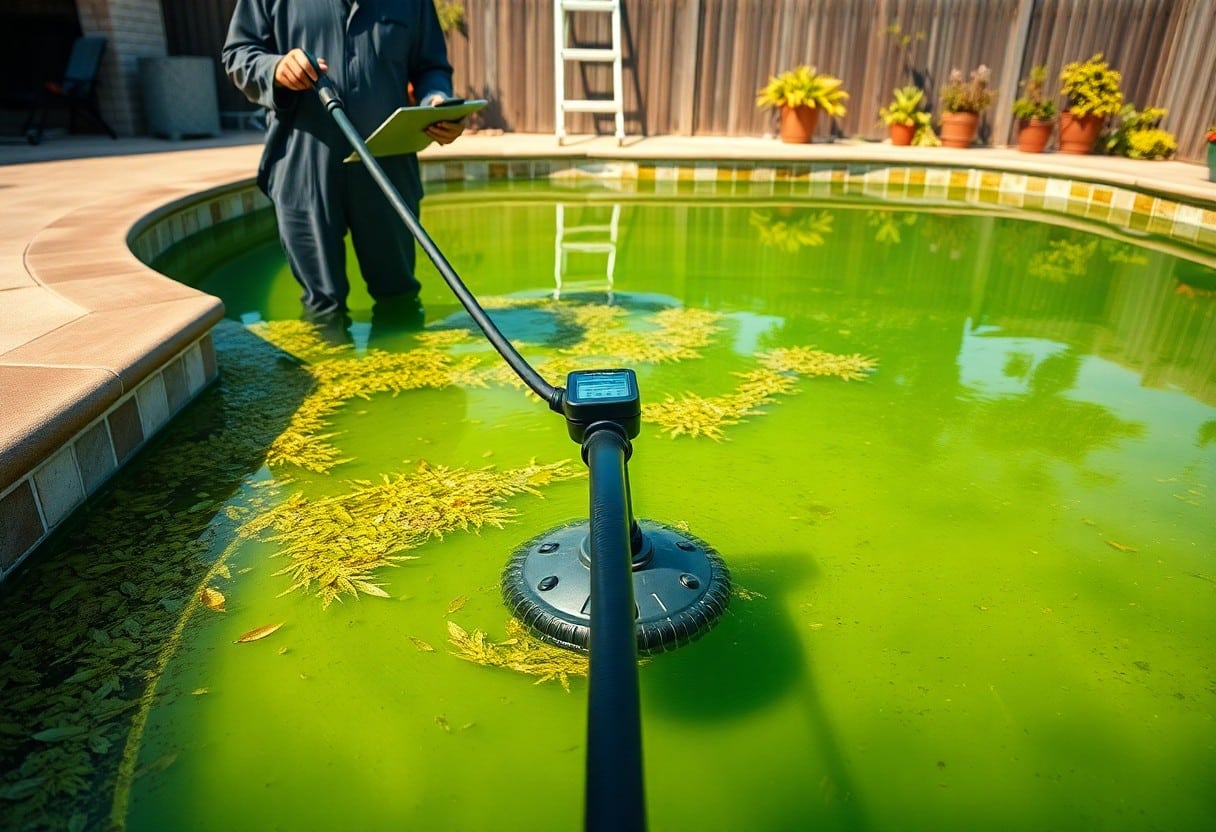
If you still have green or black algae after two shock treatments, stains that won’t scrub off, cloudy water for more than 72 hours, white scaling on over 25% of tile, persistent chemical swings, pump/filter failures, or leaks, call a pro. After heavy storms, long inactivity, or when routine weekly maintenance can’t restore balance within 24-72 hours, professional intervention is appropriate.
What to Expect from a Professional Service
A technician will perform a full inspection (usually 20-40 minutes), run water diagnostics like LSI and metals tests, clean or rebuild filters, scrub tile and grout, vacuum and backwash, and rebalance chemicals. For severe cases they may recommend spot treatments, acid washing, or drain-and-clean; typical deep-clean jobs take 3-8 hours and include before/after photos and a written estimate.
They’ll also evaluate equipment: pump flow, filter pressure, cartridge or DE condition, and automation settings. Expect media replacement or backwash if pressure is high. Ask for safety data sheets for chemicals, a workmanship warranty (commonly 30-90 days), proof of liability insurance, and clear instructions on post-service care to avoid recurring issues.
Cost Considerations
Light deep cleans generally run $150-350, full acid washes $400-1,200, filter rebuilds $150-600, and equipment repairs $100-800. Prices often rise 10-30% during peak season. Get at least two itemized quotes, verify labor and material breakdowns, and confirm any return-visit or stain-coverage guarantees before committing.
Size, surface type, access, and severity are the main cost drivers: a 15×30 ft plaster pool with heavy scaling commonly costs $500-800 for a deep clean, while vinyl-liner spot jobs may be $150-300. Expect extra charges if technicians must haul water, replace sand/DE, or perform structural repairs; ask about bundled annual plans or off-season discounts to lower long-term costs.
To wrap up
As a reminder you should schedule a deep cleaning when your pool shows persistent cloudiness, recurring algae or staining, a slimy or oily surface film, foul odors, frequent chemical imbalances, rising filter pressure or poor circulation, excessive debris buildup, or after long heavy use and seasonal neglect; these indicators mean routine maintenance isn’t enough and a professional or thorough deep clean will restore water clarity, sanitize surfaces, and protect your equipment.
FAQ
Q: What visible signs indicate my pool in Anna needs a deep cleaning?
A: Cloudy or discolored water, green or black algae patches, a scum line or oily film on the water surface, stubborn stains on plaster or tile, slippery steps or pool bottom, and persistent floating debris or sediment are all visible signs that a deep cleaning is needed.
Q: How can water test results tell me a deep cleaning is necessary?
A: If free chlorine drops quickly after dosing, combined chlorine stays high, cyanuric acid or phosphates are elevated, or pH and alkalinity swing despite treatment, the pool may have organic load, biofilm, or contamination that routine maintenance can’t fix-indicating a deep clean is required.
Q: How often should a pool in Anna get a deep cleaning?
A: Routine maintenance should be weekly; most pools benefit from a professional deep clean every 1-3 years. Pools with heavy bather load, lots of nearby trees or pollen, frequent algae issues, or minimal turnover may need annual deep cleaning. Also schedule a deep clean after severe storms, long closures, or major algae events.
Q: Which equipment or circulation problems mean it’s time for a deep cleaning?
A: Reduced flow, repeated filter clogging or excessive backwashing, high filter pressure that doesn’t normalize after cleaning, visible scale or rust on components, and persistent pump or heater issues can signal system contamination or buildup that a deep cleaning and equipment service should address.
Q: When should I hire a professional deep-cleaning service in Anna instead of doing it myself?
A: Hire a pro if algae covers large areas, stains and scale won’t respond to normal treatment, water chemistry won’t stabilize, the surface needs acid washing or refinishing, or you lack the time and tools. Ask providers for references, a written scope (tile scrubbing, stain treatment, filter service, chemical rebalance), and any local service credentials before booking.