
Many homeowners find sand settling in their pool because your filter’s media may be damaged or the laterals are broken, allowing sand to pass through; windblown grit, erosion from surrounding landscaping, or backwashing errors can also introduce abrasive particles. Inspect your sand filter, check for cracked plumbing or worn plaster, and clear debris after storms to prevent buildup-addressing these causes quickly helps keep your pool clear and equipment functioning properly.
Key Takeaways:
- Worn or damaged sand filter media or broken laterals can release sand into the pool – inspect the filter and replace media if needed.
- Faulty multiport/backwash valve or incorrect backwashing can send sand back into the pool – verify valve position and backwash procedure.
- Wind, nearby construction, landscaping, or swimmers tracking in debris can deposit sand on the bottom – vacuum regularly and rinse entrants.
- Deteriorating plaster or exposed aggregate finish can create gritty sediment that looks like sand – have a pool pro assess the surface for repair or resurfacing.
- Ground erosion or suction-side plumbing leaks can draw sand into the system – check for leaks and inspect return/suction lines and skimmer integrity.

Understanding Pool Composition
Types of Pool Bottoms
You’ll commonly encounter five bottom types: gunite/shotcrete (cement-based, used in roughly 60-70% of in-ground pools), fiberglass shells (prefab, 10-15% market share but rising), vinyl-lined floors (20-25% of installations), plastered/skim-coated concrete, and aggregate/pebble finishes that expose small stones for texture and durability. Each affects how and where sand settles, especially along seams, returns, and shallow slopes.
| Gunite / Shotcrete | Rigid cement shell; prone to plaster chips and aggregate exposure where sand can collect in cracks and depressions. |
| Fiberglass | Smooth factory finish; sand usually enters from external sources (wind, shoes) or failing equipment rather than the shell itself. |
| Vinyl-lined | Soft liner over sand or stone base; liner tears or shifting can reveal underlying sand beds or allow sand migration under the liner. |
| Plaster / Cement | Traditional finish that releases fine plaster dust during curing or wear; sand can mix with calcium particles and settle on the bottom. |
| Aggregate / Pebble | Exposed small stones (0.5-3 mm); loose pebbles or degraded grout can mimic sand accumulation along slopes and steps. |
- Gunite offers long-term structural options but can shed plaster particles over decades.
- Fiberglass reduces interior shedding yet still collects exterior sand from use and wind.
- Vinyl liners hide base materials that may include compacted sand or stone.
- Aggressive finishes show wear differently; you may see more visible granular debris.
- Recognizing sand’s origin-shell, liner base, or equipment-helps you target repairs and maintenance.
Common Materials Found in Pools
You often find sand, silt (<63 µm particles), plaster chips, organic debris (leaves, seeds), and mineral scale (calcium carbonate) on the bottom; sand grains typically range 0.0625-2 mm, while filter-media sand used in filters is commonly 0.45-0.55 mm. These materials settle in low-flow zones like steps, skimmers, and the main drain.
In practice, storm events can spike silt and organic loading within hours, while gradual mechanical failures-like cracked laterals-release filter sand over weeks to months. You should note particle size: silt clouds water and passes filters, whereas sand visibly accumulates and signals specific equipment or construction issues.
Role of Sand in Pool Maintenance
Sand is deliberately used as filter media to trap particles down to roughly 20-40 microns when properly graded (0.45-0.55 mm for #20 silica sand) and installed at media depths around 24-30 inches; however, sand on your pool floor usually indicates media migration, broken laterals, or compromised skimmer/drain seals rather than normal operation. You should track pressure rises-8-10 psi over baseline suggests backwashing is needed.
When sand accumulates, perform a simple diagnosis: backwash and observe if sand stops appearing; inspect the filter tank for damaged laterals or worn underdrain systems; and check multiport valve seals. You can expect to replace filter sand every 5-7 years in typical residential use, and professional lateral/underdrain repairs-often a few hundred dollars-are common fixes when media migration persists.
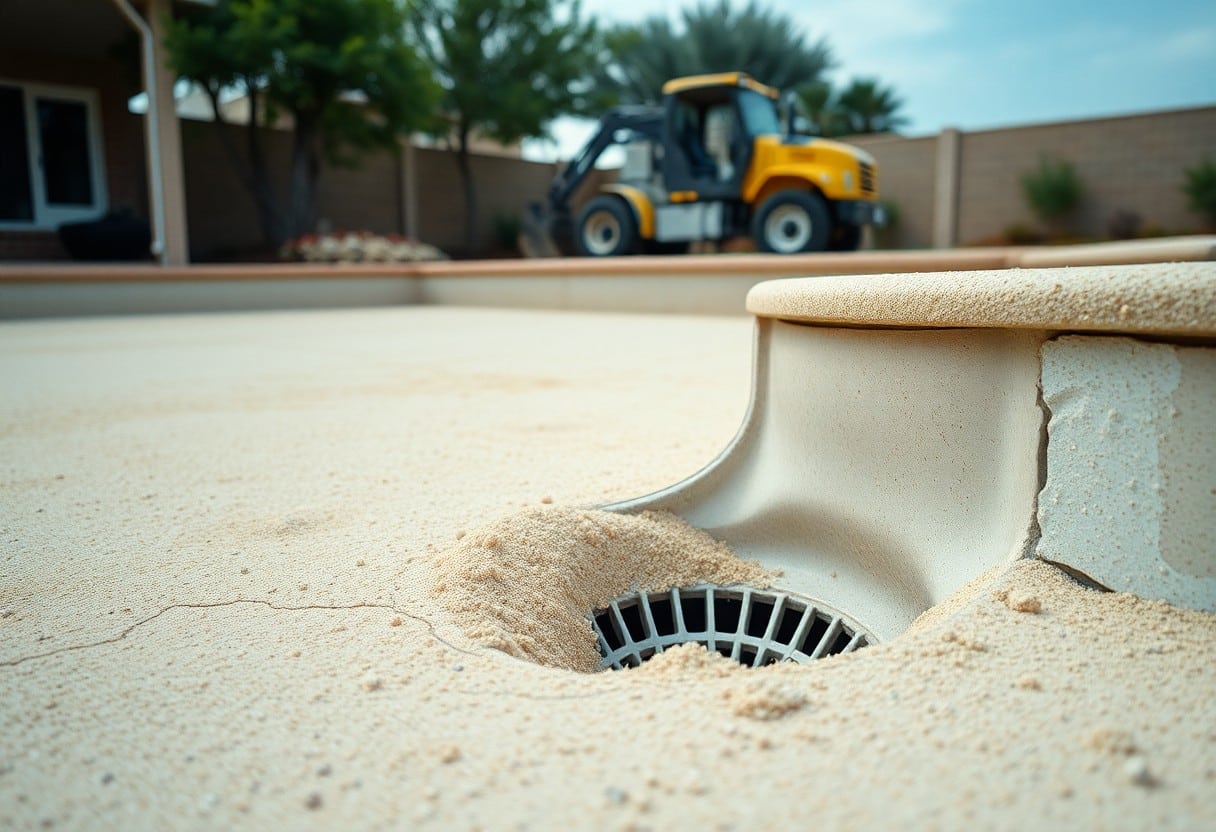
Causes of Sand Accumulation
Issues with the Pool Filter System
A failing sand filter or damaged laterals often sends media back into the pool; if you use 20×40 mesh silica (about 0.45-0.55 mm) and the laterals crack or the sand is undersized, you’ll see grains on the floor. Watch for a persistent rise of 8-10 psi over clean pressure, cloudy water despite normal chemistry, or sand after backwashing-these are clear signs your filter internals or media need inspection.
Groundwater Intrusion
When the water table rises or drainage is poor, hydrostatic pressure (about 0.433 psi per foot of water) can force silt and sand through hairline cracks or around plumbing sleeves; you’ll often notice sand after heavy rains or in low-lying yards with poor perimeter drainage. Pools set in sandy fills or near recent construction are especially vulnerable to this type of intrusion.
Common failure points you should check include cracked gunite, leaking return lines, and missing hydrostatic relief valves; a pressure test and a dye test around the floor and plumbing can locate the entry. Repairs range from epoxy injection and replacing compromised plumbing to installing a hydrostatic relief or improving exterior drainage and backfill to lower the local water table.
Erosion of the Pool Floor
Plaster or exposed aggregate that’s 8-12 years old may erode, letting the underlying sand or bedding material work upward into the pool-you’ll see fine grit collect in low spots and around drains. If your pool has thin plaster, delamination, or ongoing freeze-thaw cycles, the substrate can shed particles until the surface is repaired or replastered.
To diagnose erosion you can probe suspected soft spots with a screwdriver, take a small core, or note areas where tiles loosen; remediation typically involves removing delaminated plaster, stabilizing the substrate with cementitious fills or shotcrete, and applying a new finish to stop further migration of the bedding sand.
Debris and Contaminant Infiltration
Wind-blown sand, landscaping operations, roof runoff, and nearby construction commonly deposit grit into your pool-after heavy landscaping or a windy landscaping job you might scoop out anything from a cup (200-300 g) to several pounds of material. You’ll notice it accumulate along skimmer throats, steps, and the main drain if not addressed quickly.
Mitigation you should consider includes using a solid cover during work, installing skimmer socks or pre-filters, adding temporary windbreaks, and brushing and vacuuming after outdoor projects; keeping the area around the pool clean and running the pump during operations dramatically reduces how much debris settles on the floor.
Identifying Sand at the Bottom of Your Pool
Visual Indicators of Sand Presence
You’ll notice a uniform, gritty layer that sinks quickly and won’t float or break into clumps like leaves or algae; individual grains are visible at close range, typically ranging from 0.06-2.0 mm in diameter, and the deposit often collects near main drains, returns or the shallow end after filter backwash failures or plumbing leaks.
Differences Between Sand and Other Debris
You can separate sand from organic debris by texture and behavior: sand is granular and gritty between your fingers, won’t decompose or smell, and settles almost instantly, whereas algae makes slimy mats, leaves float before settling, and silt stays suspended longer and causes prolonged cloudiness.
Particle size and composition also help: sand (silica) is inert and abrasive, silt is much finer (often <0.0625 mm) and keeps water turbid, and metal precipitates like iron or manganese often show as rust-colored flakes or stains on surfaces. If you suspect your filter media failed, inspect laterals and backwash records-broken laterals or cracked sand can release large amounts of #20 silica (about 0.45-0.55 mm) into the pool.
Water Quality Testing
You should run a simple jar test and standard pool chemistry checks: collect a clear sample, let it sit for 5-10 minutes-sand will settle in seconds to a minute-then test pH (ideal 7.4-7.6), free chlorine (1-3 ppm) and calcium hardness (200-400 ppm) to rule out precipitation or scale that can mimic granular deposits.
For a more technical read, use a turbidimeter or measure total suspended solids (TSS) if available-sand will drop TSS quickly when settled, while silt keeps TSS elevated. Also monitor filter pressure: a sustained rise of 8-10 psi over clean pressure signals filter loading or broken media. If jar results show immediate heavy sediment and pressure stays high after backwash, vacuum to waste and inspect the filter media or call a technician to replace crushed sand or repair laterals.
Impact of Sand on Pool Health
Effects on Water Circulation
Sand settles into skimmers, pump baskets and impellers, abrading parts and restricting flow so your 1-3 HP pump works harder; you may see turnover time lengthen beyond the typical 6-8 hours and filter pressure climb above the normal 20-25 psi range. Persistent grit forces more frequent backwashing and can create dead zones near returns, reducing circulation efficiency and leaving pockets of untreated water where debris and algae begin to accumulate.
Influence on Chemical Balance
Sand increases turbidity and traps organic debris that consumes free chlorine, often forcing you to raise and frequently top up sanitizer levels-normal free chlorine of 1-3 ppm can need boosting to 2-4 ppm in dirty conditions. Turbidity also hides contaminants from UV and oxidizers, accelerating chloramine formation and making shock treatments or breakpoint chlorination necessary to restore proper oxidation demands.
Because filter sand itself is silica (typically 0.45-0.55 mm grains), the bigger chemical issue is the organics it holds: leaves, sunscreen and body oils create a steady chlorine demand. You should test total and free chlorine daily after a sand event and apply shock doses (short-term double-digit ppm if combined chlorine is high) alongside thorough vacuuming to reduce ongoing chemical consumption and stabilize pH and alkalinity.
Risks of Bacterial Growth
Sand creates a low-flow, nutrient-rich substrate where bacteria and biofilms establish quickly; studies and field reports show biofilm can form within 48-72 hours on settled sediment. When your sanitizer is depleted around gritty deposits, opportunistic organisms like Pseudomonas or fecal bacteria can multiply, increasing risks of ear infections, skin irritation and gastrointestinal illness for swimmers.
To limit those risks you should vacuum grit to waste, brush surfaces, maintain free chlorine at recommended levels and monitor combined chlorine (keep it under 0.5 ppm). If bacterial indicators remain elevated after cleaning, perform a shock treatment and consider professional filter inspection or sand replacement-typical filter sand is replaced every 3-5 years, sooner if contaminated.

Solutions and Prevention
Immediate Cleanup Techniques
Vacuum the sand to waste using a manual or shop-style pool vacuum for 30-45 minutes at low flow to avoid stirring fines into suspension; you should brush concentrated areas first and use a leaf rake for piles larger than a cup. Empty the pump and skimmer baskets, backwash if you have a filter but stop if sand is entering the filter, and consider a temporary pond vacuum or cartridge pre-filter to protect your system while you clean.
Long-term Maintenance Strategies
Replace sand in sand filters every 5-7 years and inspect laterals and laterals’ seals annually; if you continue to see sand, upgrade to a DE or high-efficiency cartridge filter to capture finer particles. Seal or repave exposed soil around the coping, install skimmer socks or a sand trap, and schedule backwash whenever filter pressure rises 8-10 psi above clean baseline to reduce media migration.
Because many Frisco pools sit on sandy subgrades, address the source: repair cracked return lines or broken lateral arms (typical repair costs $200-$600) and add a gravel collar or paver band to block migrating sand. You can also use a 100-200 micron pre-filter sock on the suction line during heavy renovation or landscaping nearby; documenting installations and filter pressure readings helps professionals diagnose repeat ingress faster.
Importance of Regular Inspections
Do quick checks monthly-scan the bottom after storms, inspect skimmer baskets weekly, and note filter pressure weekly so you spot an 8-10 psi rise early. You should visually inspect plaster or tile for hairline cracks and watch return fittings for grit; catching a failing lateral or loose skimmer gasket early prevents large sand buildups and costly downstream damage.
Schedule a professional inspection annually that includes pressure testing plumbing, a camera run for underground lines, and flow-rate (gpm) verification at the pump. Technicians can identify leaking laterals, worn laterals inside sand filters, or compromised return lines that DIY checks miss, and early repair often costs a few hundred dollars versus thousands for major remediation after prolonged sand intrusion.
When to Call a Professional
Signs You Need Expert Help
If sand keeps reappearing after backwashing or vacuuming, you need pro help. If filter pressure stays 8-10 psi above your clean baseline and backwashing doesn’t clear particles, suspect media failure or a cracked lateral. You should also call if you find sand in the pump basket, have cloudy water for 48-72 hours despite correct chemistry, notice plaster flaking, or detect leaks at the pump, filter or return lines.
Choosing the Right Pool Service
You should hire a licensed, insured company with at least 2-3 years’ experience and positive local reviews. Ask for APSP certification or state pool license, proof of insurance, a written estimate, and a parts/labor warranty of 30-90 days. Prefer providers who perform pressure and dye tests, inspect laterals, and can explain whether they’ll use #20 silica or alternative media.
When vetting firms, request references for jobs like sand replacement and lateral repair in Frisco or nearby suburbs. Ask for a written scope showing diagnostics (baseline pressure, dye/leak testing), estimated sand weight (common filters use 100-300 lb), specific parts/brands, and a completion timeline. Verify technicians will inspect and test laterals and standpipe-many sand issues come from damaged internals-and insist on before/after photos plus a documented workmanship warranty and stated response time.
Cost Considerations
Expect a diagnostic service call of $75-$150. Sand media replacement typically runs $150-$400 including 100-300 lb of silica sand and labor; lateral repairs can add $200-$600. Full filter replacement often starts around $500. Prices vary with filter size, accessibility, and local labor rates.
Costs depend on specifics: a 24″ filter using ~100 lb of sand lands at the low end, while 30-48″ filters using 200-300 lb push toward the high end. Technicians often bill $50-$100/hr; plumbing or pump repairs can add $150-$500. Emergency or same‑day visits may carry a 20-50% upcharge. You should get three itemized quotes, compare parts vs. labor, and confirm warranties to avoid repeat expenses.
Summing up
From above, you most likely see sand because your filter or plumbing is failing (worn laterals, damaged multiport valve, torn filter grid) or because external sources (wind, construction, swimmers) are introducing grit; backwash or vacuuming errors can also deposit sand on the floor. Inspect your filter tank, pump basket, and skimmer, perform a proper backwash, and replace filter media or repair broken parts to stop recurrence or call a pool technician if you’re unsure.
FAQ
Q: Why is there sand at the bottom of my Frisco pool?
A: Sand can come from several sources: a leaking or damaged sand filter (broken laterals or standpipe) that lets filter media escape into the pool; wind-blown sand or construction dust from nearby yards or streets; swimmers tracking sand in from landscaping, playgrounds or pool covers; and, less commonly, deterioration of the pool finish (pebble or aggregate finishes can shed grit). Local site conditions in Frisco-recent construction or landscaping projects and windy days-make wind-blown or tracked-in sand a common cause.
Q: How can I tell if the sand is coming from my sand filter?
A: Signs the filter is the source include sand reappearing soon after cleaning, cloudy water after the pump runs, sand collecting in the pump strainer or skimmer baskets, and inconsistent or high/low filter pressure. A practical test: backwash the filter to waste and observe the waste water-if you see sand in the backwash or the sand continues to appear in the pool afterward, the filter media or internal laterals are likely failing. Opening the filter tank and inspecting the laterals/standpipe will confirm internal damage.
Q: What immediate steps should I take when I find sand in the pool?
A: Turn off the pump to avoid grinding sand through the pump and equipment, then empty and inspect skimmer and pump baskets. Backwash the filter to waste several times to clear loose media. If sand continues to come through after backwashing, leave the pump off and open the filter for inspection or contact a technician. To protect the finish, avoid vigorous swimming that stirs sand into abrasions until it’s removed.
Q: How do I remove the sand from the pool without damaging equipment or wasting too much water?
A: For moderate amounts, use the pool vacuum set to “waste” so suction bypasses the filter and sends sand out of the system. Move sand into a concentrated pile and vacuum slowly to avoid stirring. For light amounts, a fine-mesh leaf rake or a handheld pool vacuum works. For very large volumes, multiple backwashes followed by vacuum-to-waste or a shop vac/submersible pump with a bag/filter are effective. Avoid vacuuming through the filter unless you are certain the filter media is intact.
Q: When should I call a professional and what repairs might be needed?
A: Call a pro if backwashing and vacuum-to-waste don’t stop the sand, if sand appears immediately after filter service, or if you find sand in the pump impeller or baskets. A technician will inspect and likely replace damaged laterals or the standpipe, replace the filter media, reseal or replace valve parts, and check for pool finish wear. If the finish is shedding aggregate, a resurfacing or patch repair may be recommended. Service costs vary by repair but a qualified tech can diagnose and provide an estimate.