There’s a straightforward process you can use to remove stains from your pool plaster: assess the stain type, test mild acid or specialized stain removers in a small area, scrub with a nylon brush, and follow with proper pH and chlorine balance to prevent recurrence; for stubborn or metal-based stains consider sequestering agents or professional evaluation to protect your plaster finish.
Key Takeaways:
- Identify the stain type (metals: rust/brown/black/green; organics: leaves/tannins; algae: green; calcium scale: white) to select the proper treatment.
- Balance pool chemistry (pH, total alkalinity, calcium hardness) before treating to improve product performance and prevent new stains.
- Use stain-specific products: metals-chelator or reducing agents (ascorbic acid, commercial metal removers) and sequestrants; organics/algae-brush, shock with chlorine, and apply algaecide or enzyme stain removers.
- Remove calcium scale or surface etching with a scale remover, diluted muriatic acid per label instructions, or gentle mechanical methods (pumice/polishing) for small spots.
- For deep or persistent stains consider an acid wash or professional plaster polishing; always follow product labels and safety precautions.
Understanding Pool Plaster Stains
Common Types of Stains
You’ll most often deal with organic tannin browns, metal stains (iron, copper, manganese), algae discoloration, calcium scaling, and oil/grease films; iron above ~0.3 ppm usually yields orange/brown rust, copper at ~0.2 ppm turns surfaces blue-green, and manganese can produce black or purple marks. Recognizing the stain color, pattern and where it appears on your plaster speeds correct treatment.
- Organic (tannins) – brown, diffuse
- Iron – orange/rust near drains or seams
- Copper – blue/green in shallow areas
- Manganese – black/purple specks
- Calcium/scale – white, crusty, rough patches
| Organic (tannins) | Brown tea-colored stains from leaves; common after heavy rain or poor skimming |
| Iron | Orange/brown deposits; often linked to well water or corroding equipment |
| Copper | Blue-green films; caused by algaecides, copper pipes, or high copper levels |
| Manganese | Black/purple spots; appears when manganese oxidizes in water or filter media |
| Calcium/scale | White, rough buildup; associated with hardness >400 ppm and pH above 7.6 |
Causes of Staining
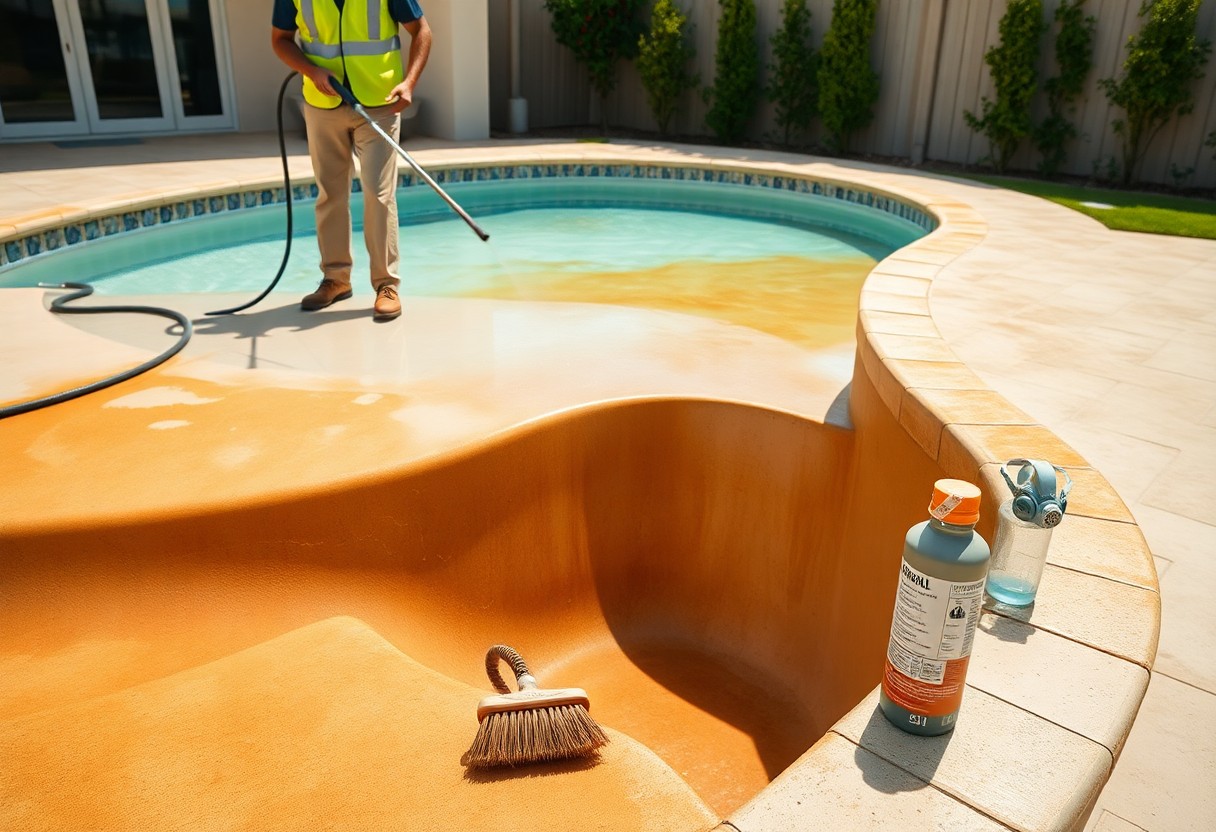
You get stains when imbalanced water chemistry, metal contamination, poor circulation, or organic load interact with porous plaster; pH above 7.6 and calcium hardness over ~400 ppm favor scaling, while low pH can leach plaster and mobilize metals like iron and copper. Frequent dead spots near returns and infrequent brushing also let deposits set.
For example, a pool with hardness at 650 ppm developed white crusting within three weeks after a heater shutdown; treating the water by lowering hardness below 400 ppm and maintaining pH 7.2-7.6 removed progress of scale, while a 0.5-1.0 ppm chlorine shock plus a metal sequestrant cleared iron stains over 48-72 hours in a documented service case. You should test metals with a reliable kit, run the filter 24-72 hours during treatment, and monitor results to avoid reformation.
Preparing for Stain Removal
Assessing the Severity of Stains
You’ll identify stain type by color, behavior and depth: brown/black that lightens with a few drops of 5-6% household bleach in 5-10 minutes is likely organic, red/orange suggests iron, blue-green points to copper. Then test with a nylon brush or pumice-surface discoloration usually scrubs off while embedded stains resist. Rate severity on a 1-5 scale (1 surface, 5 deeply embedded) to decide between spot treatment, sequestering agents, or an acid wash.
Gathering Necessary Supplies
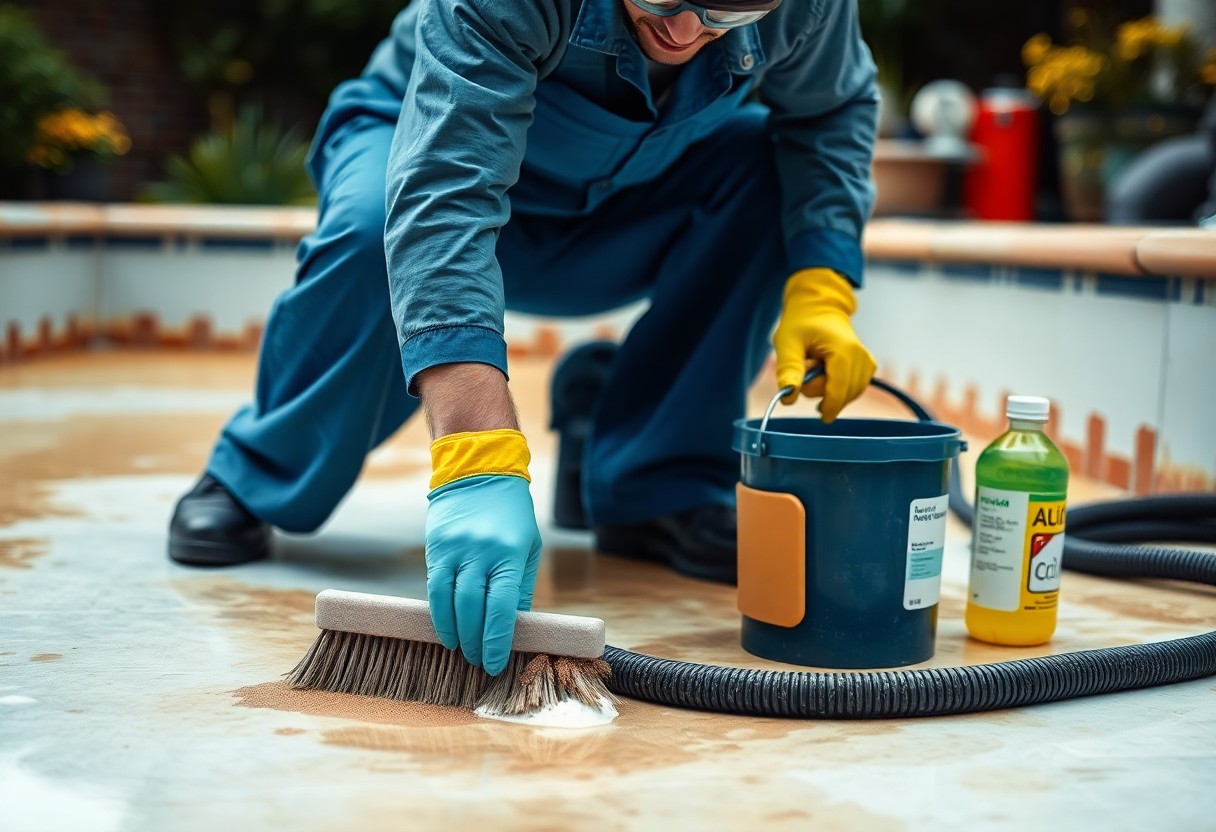
Gather PPE and tools: acid-resistant gloves, chemical goggles, a respirator rated for acid fumes, nylon brush, pumice stone, heavy-duty scrub pads, plastic buckets and a wet/dry vac or pump for lowering water. Add a reliable pH/metal test kit, metal sequestrant, ascorbic or oxalic acid stain remover, and a quart of muriatic acid if you expect heavy mineral scale. Keep baking soda on hand to neutralize spills.
Choose products by stain chemistry: use ascorbic acid or sodium metabisulfite for iron, oxalic acid or commercial rust removers for embedded rust, and chelating sequestrants (EDTA or polyphosphate-based) for dissolved metals. For extensive calcium or silica scale, a professional diluted muriatic acid wash-commonly 10-20 gallons for a residential pool-is often required; plan disposal and call a pro if stains cover over 20% of the surface or plaster is pitted.
Methods for Removing Stains
Natural Cleaning Solutions
You can often lift organic and light mineral stains with household remedies: apply white vinegar (5% acetic acid) diluted 1:1 for small rust spots, or spread a thick baking-soda paste (about 3:1 baking soda to water) for algae and scum, let sit 10-20 minutes, then scrub; for larger areas use an oxygen-based pool shock (sodium percarbonate) at the manufacturer’s dose-professionals commonly treat 10,000-gallon pools with 1-3 lb for stain removal-and run the filter until water clears.
Chemical Cleaners
For stubborn iron or manganese stains use oxalic-acid-based products (topical gels around 3-5%) and for heavy calcium or deep set stains professionals may use diluted muriatic (hydrochloric) acid at roughly 1:10-1:20 acid:water for spot treatments; always test a small patch, wear full PPE, and keep the area well ventilated when you work.
When you apply chemical cleaners, dose precisely and follow label timing: brush the treated area, allow 1-5 minutes for the chemistry to act, then neutralize and rinse thoroughly-use a baking-soda slurry to neutralize acid residues if needed, backwash or clean filters immediately, and recheck pool pH (aim for ~7.2-7.6) before reopening; for large or widespread staining, hire a pool pro to avoid surface etching or metal corrosion.
Physical Scrubbing Techniques
You should use nylon or polypropylene brushes-6-8 inches wide-scrubbing in 1-2 sq ft sections with moderate pressure and circular strokes; apply your chosen cleaner, let it dwell 5-10 minutes, then scrub and vacuum debris, repeating over several sessions for stubborn marks rather than aggressive single passes that can roughen plaster.
For deeper work, use a low-speed drill with a nylon brush attachment and work progressively from mild to stronger abrasives; avoid wire brushes or metal pads on plaster, inspect progress every 10-15 minutes to prevent wear, and clean or backwash your filter after each session to prevent re-depositing particles back onto the surface.
Preventing Future Stains
Regular Maintenance Practices
You should brush walls and steps weekly with a nylon brush to prevent scale and algae; target 10-15 minutes per pool, focusing on shady corners and tile lines. Skim debris daily, run the pump 8-12 hours (one full turnover minimum), and backwash filters when pressure rises 8-10 psi above baseline. Vacuum or use an automatic cleaner every 1-2 weeks and empty skimmer baskets after storms to cut organic buildup that fuels staining.
Proper Chemical Balance
Keep pH between 7.2-7.6, total alkalinity 80-120 ppm, and calcium hardness 200-400 ppm to reduce etching and scale that cause stains. You should test water 2-3 times weekly during heavy use and after rain; shock with about 1 lb of 73% calcium hypochlorite per 10,000 gallons when combined chlorine rises. Add a metal sequestrant monthly if iron or copper exceed 0.2 ppm.
You should use a reliable test kit (DPD for chlorine, liquid tests for pH/alkalinity/calcium) and log readings to spot trends; for example, if your pH drifts to 7.8 you’ll see calcium precipitation risk increase within weeks. When metals test above 0.2 ppm, treat with a sequestrant per label-typical starting dose is 1-2 ounces per 5,000 gallons-and follow with a phosphate remover if phosphate exceeds 100 ppb to limit algae that traps metals. Adjust alkalinity slowly, changing no more than 10-20 ppm per day to avoid overshoot.
When to Seek Professional Help
Signs You Need an Expert
If stains persist after 10-14 days of targeted treatment, or if you see black algae patches, deep gray/blue metal stains, visible etching, flaking plaster, or stains larger than 6 inches or covering more than 10% of the surface, call a pro. Also seek help when your water tests show iron above ~0.3 ppm or copper above ~0.2 ppm, when stains return repeatedly after brushing, or when you suspect structural damage or a leak.
Finding a Qualified Pool Technician
Choose technicians with PHTA certification or a state pool/plumbing contractor license, at least 3-5 years of pool-specific experience, liability insurance, and verifiable references. Ask for a written estimate, a clear scope of work, and before/after photos of similar stain jobs; prefer professionals who offer warranties and manufacturer-approved plaster repair if your pool is under warranty.
Request a diagnostic report that includes specific lab water tests (metals, pH, TA, cyanuric acid) and a remediation plan listing methods-metal sequestrants, chelants, acid wash, or replastering-with costs and timelines. For example, a reputable tech documented 0.5 ppm copper via lab analysis, replaced a corroding heat-exchanger anode, applied a sequestrant protocol, and eliminated staining within three weeks-evidence you should ask to see for any proposal.
Alternative Solutions
Pool Surface Alternatives
If you want to reduce staining without constant chemical tinkering, consider pebble aggregate (e.g., PebbleTec) which often lasts 15-20 years and greatly resists metal marks, or quartz finishes with 10-15 year lifespans; typical costs run about $7-15/ft² for pebble and $6-12/ft² for quartz. You can also switch to a fiberglass shell (20-30 years, $25,000-$70,000) or a vinyl liner (7-12 years, $3,000-$6,000) depending on budget and long-term goals.
Replastering Options
When you choose replastering, standard white cement plaster is the cheapest at roughly $4-8/ft² and lasts 7-10 years, while quartz-aggregate and pebble-aggregate options increase hardness and stain resistance to around 10-15 and 15-20 years respectively. You should expect a full drain, surface chip-out, bonding agent and trowel application, then a 7-28 day curing window with pH around 7.2-7.6 and calcium hardness near 200-400 ppm to protect the new finish.
During replaster, prioritize thorough surface prep: if stains penetrate below the surface or you see widespread etching, chip back to sound gunite or concrete and test for iron, copper and organics-metal test kits ($10-30) help you decide between sequestrants and full removal. You can ask your contractor to use polymer-modified mixtures or silicate densifiers to reduce porosity and lower stain uptake; many installers offer 3-5 year workmanship warranties, so request past job photos, references, and a written warranty before committing. If cost is a concern, spot replastering or a professional acid/abrasive restoration can extend life 2-4 years while you budget for a full redo.
Final Words
Summing up, you should identify the stain type, adjust water chemistry, brush and vacuum, then treat with oxidizers, pH-balanced cleaners, or sequestering agents for metal stains; stubborn plaster discoloration may need dilute acid rinses or a professional acid wash. Maintain proper water balance and regular cleaning to prevent recurrence and protect your plaster’s finish.
FAQ
Q: How can I identify what type of stain is on my pool plaster?
A: Check color, location and reaction to simple tests. Brown/tan stains at the waterline or where leaves contacted the surface are usually organic (leaf/tannin) and often lift with brushing and oxidation. Bright blue-green or teal stains signal copper; red-brown or orange stains indicate iron or rust. White, rough crusts are calcium scale. To test: scrub the area with a stiff nylon brush after shocking the pool-organic stains will often fade. Apply a small amount of a metal-specific stain remover or ascorbic acid (vitamin C) to one spot out of the water-if the stain lightens quickly it’s metal. For suspected scale, a mild acid will fizz on contact. Always test in a discreet spot first and follow product directions.
Q: What step-by-step methods work best for different stain types?
A: Organic/algae stains: brush the area vigorously with a nylon brush, shock the pool with chlorine or non-chlorine oxidizer, run the filter and vacuum. Repeat until gone. Copper stains: lower water to expose the stain if required, apply a copper-specific stain remover or a metal sequestrant per label, agitate with a pumice stone or soft abrasive pad (wet), rinse and rebalance water chemistry; follow with a metal sequestrant in the water if copper source remains. Iron/rust stains: use a rust-specific acid cleaner (sulfamic or a commercial rust remover) applied to the wet surface or with lowered water-scrub gently and rinse thoroughly; persistent iron may need a professional treatment. Calcium scale: apply a diluted muriatic acid solution or commercial scale remover to the affected area (small test area first), agitate to dissolve, neutralize and rinse; severe scaling may require an acid wash. For any stubborn, widespread or unknown stains, consider a professional assessment before aggressive measures.
Q: Can I use a pumice stone or muriatic acid on plaster without damaging it?
A: Pumice stone: safe for localized, small stains when used wet with light, controlled pressure-do not use on polished or colored finishes. Use a pumice specifically made for pools and avoid metal or highly abrasive tools that can gouge plaster. Muriatic acid: effective for scale and some stains but will etch plaster if overused. Always dilute according to label, apply only to the stain area, neutralize spilled acid, and perform a small test patch first. For large areas or repeated acid treatments, etching will thin and roughen the plaster and may require replastering or professional restoration.
Q: What safety and water-balance precautions should I follow during stain removal?
A: Wear chemical-resistant gloves, eye protection and, if using strong acids or powders, a respirator. Keep swimmers and pets away until the pool is safe. Never mix products (especially acids and chlorine) and always add acid to water, not water to acid. Lower the water level only when directed by the product label and avoid exposing pool equipment to concentrated chemicals. After treatment, test and restore pH, total alkalinity and calcium hardness to proper ranges before returning the pool to normal use. Neutralize and dispose of chemical waste according to local regulations.
Q: When should I call a professional or consider replastering?
A: Hire a professional if stains are widespread, deep-set, recurring after proper treatment, or if you’re uncomfortable handling strong chemicals. Professionals can perform full acid washes, diamond grinding/polishing or evaluate whether the plaster is deteriorating. Consider replastering if stains penetrate deeply, large areas are permanently discolored, or the surface is pitted and losing finish; replastering restores appearance and surface integrity but is a significant cost, so obtain multiple quotes and evaluations first.