Just because metal stains mar your pool in Anna doesn’t mean they can’t be fixed; you should test water for metals and pH, lower free chlorine, treat with a sequestering agent or stain remover designed for pools, brush and vacuum stained areas, run an oxidation treatment if needed, and replace or filter out metals with a metal-removing cartridge or chelating product while maintaining balanced chemistry to prevent recurrence.
Key Takeaways:
- Test pool water to identify metal type and levels (copper, iron, manganese) and check pH/alkalinity before treatment.
- Lower pH if needed, then treat with a metal sequestrant or a commercial metal stain remover; ascorbic acid can reduce copper stains.
- Brush stained areas, run the filter continuously and vacuum or backwash to remove precipitated metals and debris.
- For severe or set-in stains consider a professional acid wash or metal-removing filter media (ion exchange/metal trap).
- Prevent recurrence by maintaining proper pH/sanitizer, using monthly sequestrants, and testing fill water for metals.

Understanding Metal Stains in Pools
Common Types of Metal Stains
You’ll most often see orange-brown, blue-green, or black-purple staining that points to specific metals; iron and copper are the usual suspects, while manganese and zinc show less frequently. Tests commonly detect iron at 0.1-1.0 ppm before visible spotting and copper above ~0.2 ppm for blue-green rings. Assume that testing shows elevated metal levels whenever staining appears after filling or equipment work.
- Iron – orange to brown spots
- Copper – blue-green rings and scaling
- Manganese – dark black or purple stains
- Zinc – grayish or white smudges
- Chromium – yellow-green discoloration
| Iron | Orange/brown; from well water, corroded steel |
| Copper | Blue-green; from algaecides, copper pipes, heaters |
| Manganese | Black/purple; common in deep well water |
| Zinc | Gray/white smears; galvanised fittings or zinc anodes |
| Chromium | Yellow-green stains; industrial runoff or alloy corrosion |
Causes of Metal Stains
You encounter stains when dissolved metals oxidize and plate onto surfaces, often after shock treatments or pH swings; low pH (below ~7.2) and low chlorine let metals stay soluble, while oxidation (chlorine or shock) precipitates them onto plaster or vinyl. Well-water fills frequently introduce iron above 0.3 ppm, and corroded heaters or copper piping add metals directly into circulation.
You should inspect recent service actions-adding metal-based algaecides, reconnecting plumbing, or running heater cycles often precedes staining because thermal and chemical changes force metals out of solution. Sequestrants mask metals temporarily but won’t stop ongoing corrosion; fixing the source (replacing corroded anodes, repairing leaks, or treating source water with aeration/filtration) stops new deposits.
Identifying the Source of Stains
You can narrow sources by testing pool and fill water for iron, copper, and manganese (use kits or send samples for ICP testing), and by checking equipment: heaters, heat exchangers, lights, ladders, and metallic fittings are common culprits. Correlate staining onset with recent maintenance-fills, winterization, or algaecide use often reveal the origin.
You should run isolated checks: remove portable metal objects, shut off suspected equipment and observe stain progression, and take sequential water samples after filtration and after backwash; if pool water shows rising metal ppm after running the heater three hours straight, the heater is likely the source. Use these steps to prioritize repairs or source-water treatment before stain removal attempts.
Prevention of Metal Stains
Regular Pool Maintenance
You should keep skimming, brushing, and vacuuming weekly to prevent debris from decaying and releasing metals; run your pump 8-12 hours per day in summer for good circulation, and clean or backwash filters when pressure rises 8-10 psi above normal. Routine leaf removal and a monthly deep-clean of plaster or tile can cut metal buildup before it stains.
Water Testing and Balancing
Test your water at least once a week and after heavy rain or refilling; aim for pH 7.2-7.6, total alkalinity 80-120 ppm, calcium hardness 200-400 ppm, and free chlorine 1-3 ppm. Use a liquid kit or digital reader for accuracy and log results to spot trends before metals precipitate.
Include a metal test (iron, copper, manganese) monthly or whenever you see discoloration-many kits detect down to 0.02-0.05 ppm. If metals appear, add a sequestrant per label instructions and avoid high chlorine shocks until metals are chelated and filtered out; for a 15,000-gallon pool you’ll typically follow product dosing rates rather than guessing by eye.
Proper Pool Equipment Care
Inspect and service pumps, filters, heaters, and chlorinators regularly: replace corroded screws or metal fittings, clean skimmer baskets weekly, and use non-metallic tools where possible to limit new metal sources. Keep metal heat exchanger surfaces coated and seals replaced at the first sign of corrosion.
Backwash sand or DE filters every 4-6 weeks or when pressure climbs 8-10 psi; clean cartridge elements with a degreaser every 2-3 months. Check pump union o-rings and replace rusty clamps promptly. If your system includes metal components (heaters, solar panels), consult the manufacturer about sacrificial anodes or compatible coatings to reduce metal leaching into the water.
Cleaning Supplies and Tools
Recommended Chemicals for Stain Removal
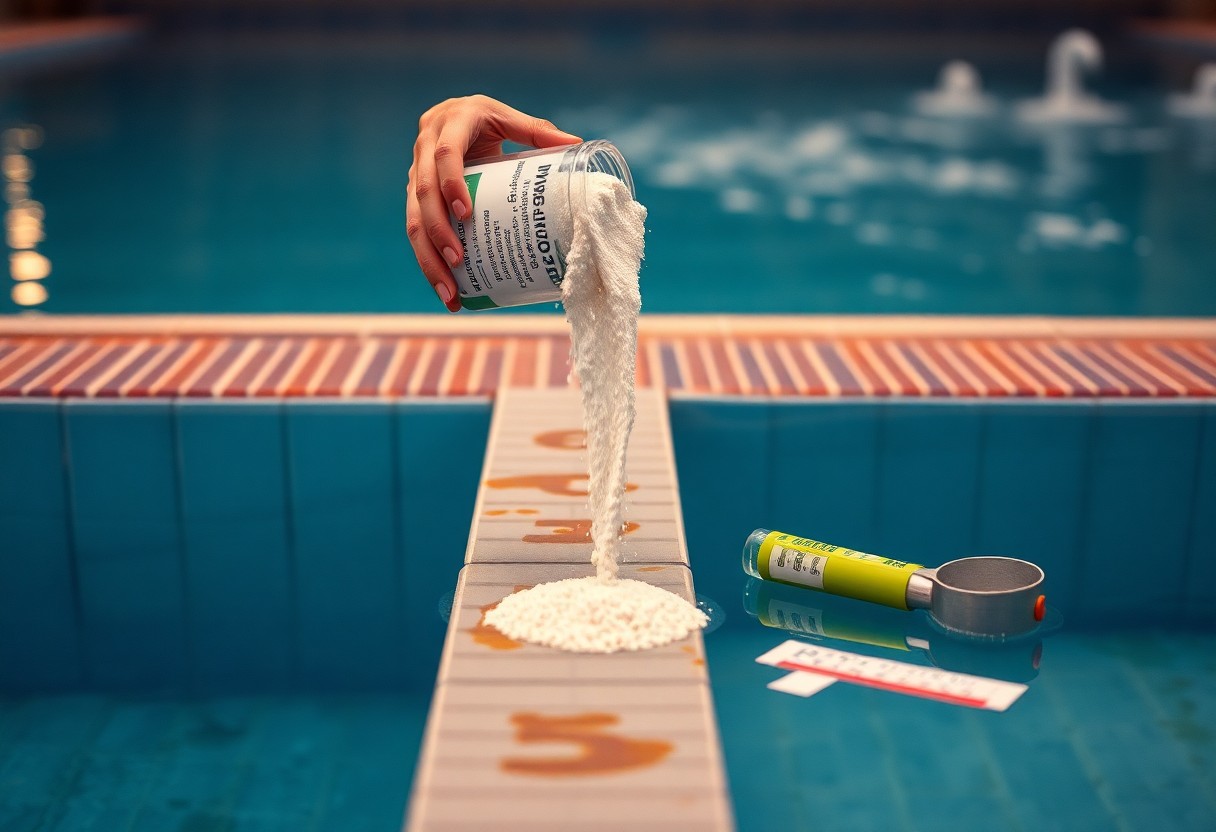
You’ll usually rely on a metal sequestrant (phosphonate-based) to hold dissolved iron or copper in solution, ascorbic acid (vitamin C) tablets for spot-bleaching visible stains, and a commercial stain-and-scale remover (sulfamic or citric acid formulations) for stubborn deposits. Keep pool pH between 7.2-7.6 and free chlorine 1-3 ppm during treatment; for a 20,000-gallon pool initial sequestrant doses commonly follow label guidance (often 8-16 fl oz per 10,000 gallons).
Tools Needed for Effective Cleaning
Stock a 10-16 ft telescopic pole, a selection of brushes (nylon for vinyl, stainless for concrete), a pumice stone for localized plaster stains, a manual or automatic vacuum, a garden sprayer for applying spot treatments, and an accurate test kit that reads pH and metals down to 0.1 ppm.
Match brush type to the surface to avoid damage: use soft nylon on vinyl liners, medium-stiff nylon on pebble or plaster, and stainless-steel only on rough concrete. When working a stain, agitate gently with the appropriate brush, apply ascorbic tablets or spray, then vacuum settled particles and run the filter 24-48 hours; backwash or clean cartridges after heavy load to restore flow and prevent redepositing metals.
Safety Gear and Precautions
Wear chemical-resistant gloves (nitrile), ANSI-rated splash goggles, and closed-toe shoes; use a chemical-resistant apron or boots when handling acids. Work outdoors or in a well-ventilated area, keep chemicals separate (never mix acids and chlorine), have clean water and baking soda nearby for neutralization, and keep children and pets away from treated areas.
Choose gloves based on the product: nitrile for general chemicals, neoprene for strong acids; goggles should meet ANSI Z87.1 standards. For heavy fume work, use a half-mask respirator with acid-gas/organic-vapor cartridges. In case of skin or eye exposure flush with water for 15 minutes and seek medical attention, and always store chemicals locked, upright, and in their original labeled containers.
Removal Techniques
Using Sequestrants for Metal Stains
You use sequestrants to bind iron and copper into soluble complexes so they pass through your filter instead of plating out on surfaces; apply a commercial product per label, run the pump 24-72 hours, and maintain weekly dosing until source issues are fixed. This method is effective for metal levels under about 0.3 ppm and is best paired with brushing and filtration to lift fresh, mild stains.
Acids and Their Application
You turn to acids-muriatic (hydrochloric) or sulfamic-when stains are entrenched; spot-treatment can work on vinyl or fiberglass, while plaster often needs a professional acid wash. Always dilute and handle with PPE, neutralize after treatment, and rebalance water chemistry before swimming.
If you attempt a localized acid treatment, lower the water only as needed to access the stain, always add acid to water when mixing, and use a plastic brush and chemical-resistant gloves and goggles. After application rinse thoroughly and neutralize with soda ash or sodium bicarbonate, then test and adjust pH and alkalinity; professionals performing full acid washes typically remove roughly 1/32-1/16 inch of plaster to eliminate deep iron staining.
Natural Remedies for Gentle Stain Removal
You can use ascorbic acid (vitamin C), citric acid, or lemon juice for gentle stain reduction on vinyl and fiberglass; crush a 500-1,000 mg vitamin C tablet or dissolve citric acid, apply to the spot, agitate gently, then vacuum residue-repeat short treatments rather than a single aggressive attempt.
You’ll find ascorbic acid reduces oxidized copper by chemically reducing it; for small copper spots on vinyl, dissolving a 500-1,000 mg tablet and holding the solution on the stain 10-20 minutes often lightens the mark. Citric acid chelates metals more strongly but should be followed by a sequestrant to prevent recurrence; these methods are safer and slower than acid washing and work best for localized, minor stains.
Specific Stain Removal Methods
Iron Stains
You can spot-treat iron stains with ascorbic acid or a commercial iron stain remover: apply directly to the stain, brush for 1-2 minutes, let sit 15-60 minutes, then vacuum to waste. For whole-pool remediation most technicians dose about 1-2 lb per 10,000 gallons; test metal levels first-iron staining commonly appears above ~0.3 ppm. Follow product label and retest after treatment to confirm removal.
Copper Stains
When copper causes blue-green or teal staining you’ll often get fastest results with ascorbic acid for spot removal and a chelating sequestering agent for ongoing control; spot doses are quick, while full-pool chelation follows label directions (typical single-dose ranges vary by product). If copper exceeds 0.8-1.0 ppm you may need partial drain and refill to lower concentration.
Pay attention to recent treatments-copper-based algaecides or source-water spikes are common causes. You should measure copper with a reliable test kit; in one 15,000-gallon case, a 1 lb ascorbic spot treatment removed persistent rings within 12-24 hours, then a sequestering program prevented recurrence over the season.
Manganese Stains
Manganese produces dark purple-to-black stains that resist mild treatments; you should use a reducing stain remover (sodium hydrosulfite-based or concentrated ascorbic formulas) applied directly, brushed, and allowed longer dwell times, often requiring repeat treatments for deep set stains. Test levels-visible staining can occur at very low concentrations, near 0.1-0.2 ppm.
For severe plaster penetration plan for multi-step remediation: you may need two treatments spaced days apart, maintain pH near 7.0 during treatment, and in extreme cases consider professional plaster sanding or an acid-wash. A 30,000-gallon plaster pool required two 48-hour sodium hydrosulfite treatments to restore finish in a documented field example.
Post-Cleaning Maintenance
Routine Monitoring of Water Quality
You should test pH and free chlorine at least twice weekly and shock or adjust as needed to keep pH 7.2-7.6 and free chlorine 1-3 ppm; check total alkalinity 80-120 ppm and calcium hardness 200-400 ppm monthly. Run a metal-specific test or send a sample to a lab every 30-60 days, especially after a refill or heavy rain, and log results so you can spot gradual rises in iron or copper before they redeposit on plaster or tile.
Addressing Underlying Issues
If metals return despite proper chemistry, investigate your source water and equipment: well water often tests >0.3 ppm iron or manganese, old heat exchangers and corroded metal fittings can leach copper, and buried copper lines accelerate staining. Install a pre-fill 5-micron cartridge or whole-house filter for known high-metal supplies, replace corroded components, and check heater anodes to reduce ongoing metal input into your pool.
To verify sources, collect a fresh sample from the fill hose and have it analyzed for iron, copper and manganese; values above 0.2-0.3 ppm typically require treatment prior to filling. If municipal reports show elevated metals, consider point-of-entry filtration (carbon, ion exchange or reverse osmosis) – RO can reduce metals to <0.05 ppm - or install a dedicated iron filter on your well with backwash capability. Also inspect plaster and tile: porous finishes trap metals more readily, so restoring smooth seals or reglazing can reduce future staining and extend the efficacy of sequestrants and normal sanitization.
Tips for Longer Lasting Pool Cleanliness
You should run the pump long enough to achieve at least one full turnover daily (commonly 8-12 hours for many backyard pools), brush walls and tile weekly, and clean skimmer baskets every 3-7 days; backwash or clean filters when pressure rises 8-10 psi above clean. Perceiving a faint tint early and acting fast prevents metal particles from binding to the surface and forming stubborn stains.
- Brush tile and steps weekly to prevent micro-deposits.
- Maintain continuous circulation during heat waves or heavy debris events.
- Test metals monthly and after refills or storms.
- Keep filter pressure within manufacturer specs.
In practice, small operational changes make big differences: one Anna homeowner reduced recurring iron spots by installing a 5‑micron prefilter before filling, dosing a sequestrant monthly, and increasing run time to 12 hours daily during summer; stains stopped reappearing within two months. Perceiving early discoloration and acting with targeted filtration or sequestration often avoids costly surface repairs and keeps chemical use efficient.
- Install prefill filtration if your source is a well.
- Use sequestrant monthly or after heavy rain per product directions.
- Increase turnover during algae-prone months.
- Log water tests to detect trends before stains form.
Summing up
Upon reflecting on removing metal stains from your pool in Anna, you should test and balance your water, apply a metal sequestrant, treat stains with a specialized stain remover or gently brush after lowering chlorine, run your filter to clear particles, and consult a local pool professional for persistent issues to identify the source and prevent recurrence.
FAQ
Q: What causes metal stains in my pool in Anna?
A: Metal stains in Anna pools usually come from dissolved iron, copper or manganese in source water (well fills or municipal supply), corrosion of heaters, heat exchangers, pumps, or metal fixtures, and use of copper-based algaecides. High sanitizer/oxidizer levels convert dissolved metals into insoluble colored forms that deposit on plaster, vinyl and tile. Local ground water in Anna can be high in iron or manganese depending on the neighborhood; test your fill water if you refill from a private source.
Q: How do I test and identify which metal is staining my pool?
A: Use a pool store or certified lab to test for iron, copper and manganese concentrations. Home test kits that measure iron and copper are also available. Visual cues help: green/blue stains usually indicate copper, reddish-brown indicates iron (rust), and black indicates manganese or organics with metals. If in doubt, bring a water sample and a small stained tile or piece of finish to a local Anna pool service for confirmation.
Q: What step-by-step method can I use to remove metal stains myself?
A: 1) Test water and identify the metal. 2) Lower free chlorine (chlorine reacts with metals). 3) Brush stained areas to loosen deposits. 4) Apply a metal-specific stain remover or an ascorbic acid solution directly to the stain; follow product label dosing. 5) Allow contact time, then brush and vacuum residue to waste (do not return to pool). 6) Add a metal sequestrant/chelating agent per label to hold dissolved metals in solution. 7) Run filtration, backwash and clean or replace cartridges to remove captured metal. 8) Rebalance pH (7.2-7.6) and sanitizer levels. Repeat treatment for stubborn stains and hire a pro for deep plaster or widespread staining.
Q: Which products work best in Anna and what safety steps should I follow?
A: Effective options include ascorbic acid (vitamin C) for spot treatment, commercial stain removers (products labeled for iron/copper/manganese), sodium bisulfite/metabisulfite for reducing iron, and metal sequestrants to prevent re-staining. Use gloves and eye protection, follow label instructions, do not mix stain removers with chlorine, and lower chlorine before applying reducing agents. After treatment, properly dispose of vacuumed waste per local regulations and thoroughly rinse/clean filters.
Q: How can I prevent metal stains from returning in Anna’s conditions?
A: Test fill water for metals before adding it to the pool; if high, use a pre-filter, ion-exchange softener or municipal source. Maintain stable water balance (pH, alkalinity, calcium) and proper sanitizer levels, regularly add a metal sequestrant according to product directions when metals are present, avoid copper-based algaecides, inspect and replace corroded equipment and heater parts, and clean filters regularly. For consistent issues, consider periodic professional testing or installing a whole-house iron-removal system for fill water in Anna.