
Frisco, you can cut your pool energy bill by switching to a variable-speed pump with a programmable schedule, using an insulated or solar cover, lowering heater setpoints and using a heat-pump or solar heater, installing LED pool lights and smart controls, maintaining filters and circulation to prevent wasted run time, and sealing leaks to keep systems efficient.
Key Takeaways:
- Install a variable-speed pool pump and run it at the lowest effective speed with a daily schedule; reducing RPMs and run time can cut energy use significantly.
- Use a solar or thermal pool cover whenever the pool is idle to reduce evaporation and heat loss, lowering heating and chemical costs.
- Replace pool lights with LED fixtures and add timers or smart controls to limit lighting and pump operation to off-peak hours when rates are lower.
- Switch to an energy-efficient heat pump or solar heater, lower the water setpoint by a few degrees, and insulate pipes and equipment to minimize heat loss.
- Keep routine maintenance (clean filters, fix leaks, optimize pump settings) and check local utility rebates or incentives for pumps, heaters, and solar upgrades.
Understanding Pool Energy Consumption
How Pool Equipment Affects Energy Usage
Pumps and heaters are the biggest drivers of your bill: pumps often account for 40-60% of pool energy use, especially if a 1-2 HP single‑speed motor runs 8-12 hours daily. Switching to a variable‑speed pump can cut that consumption by 50-90%. Heaters also dominate costs-electric heat pumps typically deliver coefficients of performance (COP) of 3-6, far outperforming resistive electric heating-so your heating method and runtime directly dictate kWh and fuel demand.
Common Energy-Intensive Pool Features
Features such as spa jets, waterfalls, high‑flow automatic cleaners, and heated spas greatly increase energy draw by requiring higher flow rates or longer pump runtimes. Spa systems may need 5-10× the flow of normal filtration, and waterfalls add hydraulic head that raises pump kW draw. Even lighting matters: swapping 300W halogens for 20-50W LEDs typically cuts lighting energy by 80-90%.
To reduce the drain from these features, you can schedule them selectively and use a variable‑speed pump: run low‑speed filtration continuously and only ramp up for spa or waterfall use. Installing a dedicated booster pump for cleaners or a separate circulation loop for waterfalls limits how often the main pump must run at high speed. Limiting feature runtime to 1-3 hours per day, using thermostatic spa controls, and adding a solar or thermal cover to cut heater runtime are practical steps that often shave hundreds of kWh and significant dollars from annual bills.
Implementing Energy-Efficient Equipment
Choosing Energy Star Rated Pumps
You should prioritize ENERGY STAR-rated replacement pumps with permanent magnet motors and multiple speed settings; they typically reduce energy use 30-70% versus old single‑speed units. Match pump flow to your plumbing and skimmer/return layout-oversized pumps waste power-so size by required gallons per minute (GPM) rather than horsepower. For a 20,000‑gallon pool, a right‑sized ENERGY STAR pump running longer at low speed often costs less per month than a short run on a single‑speed model.
Benefits of Variable Speed Pumps
You’ll see major savings by running a variable speed pump at lower RPMs for filtration and only bumping speed for features like cleaners or heaters; many owners report annual savings of $300-$800 depending on electricity rates and run time. Variable models let you schedule low‑speed long runs that improve circulation while cutting wattage dramatically compared with continuous single‑speed operation.
The physics explains why: pump power drops roughly with the cube of speed (affinity laws), so cutting speed to 50% can reduce hydraulic power to about 12.5%. In practice that means a 1.5‑HP single‑speed drawing ~1,100-1,500 W can be replaced by a variable‑speed setup drawing 300-600 W for normal circulation. You can program multi‑speed schedules-overnight low flow, mid‑day circulation, high flow for vacuuming-and integrate with automation for heat pump or chlorinator sync. Typical payback is 1-4 years, and many utilities offer rebates that shorten that timeline.
Using Energy-Efficient Heaters
You can cut heating costs by switching to a pool heat pump or high‑efficiency condensing gas heater instead of older electric resistance units; heat pumps often deliver COPs of 4-7 (400-700% efficiency), meaning they use far less electricity per BTU. Size the heater to pool surface area and seasonal usage, and pair it with a well‑fitted cover to minimize nightly losses.
For example, a heat pump with a COP of 5 supplies five units of heat per unit of electricity, so it typically costs a fifth of what electric resistance heating would. If you heat year‑round or maintain higher setpoints, expect payback in 2-5 years versus legacy heaters. Combine the heater with a solar blanket (can cut overnight heat loss up to 50-70%) and set schedules so the heater runs during off‑peak hours or when the heat pump is most efficient, maximizing performance and lowering your Frisco electricity bill.

Optimizing Pool Usage
Best Practices for Pool Operating Hours
Schedule filtration and pump run-times during your utility’s off-peak hours and aim for 6-8 hours of filtration daily; if you have a variable-speed pump, run it longer at lower RPMs-that often cuts energy use 50-70% versus a single-speed pump. In Frisco’s warmer months you can reduce run-time to 3-4 hours and rely on sunlight; in cooler periods concentrate filtration into a single overnight block to match lower electricity rates.
Reducing Pool Heating Time
Heat only when you plan to swim: program the heater to come on 1-2 hours before planned use if you have a gas heater, or 2-4 hours for a heat pump. Use a solar or thermal blanket whenever the pool is idle-covers can cut overnight heat loss by roughly 50-70%-so you can shorten daily heater run-time without dropping comfort.
If you use a heat pump, set a modest setback of 3-5°F during non-use and schedule a timed boost rather than holding a constant high temperature; for gas heaters, rely on shorter, targeted preheat windows since they can raise temps faster. Combine an automatic cover, a smart controller that learns your routines, and a 1-2 hour preheat schedule for most weekend swims to cut heating bills by a commonly reported 20-40% depending on your system.
Encouraging Shorter Swim Sessions
Plan swims in 20-30 minute blocks and use a visible timer or pool-side schedule so users know session lengths; shorter sessions let you reduce preheat windows and avoid running the heater all afternoon. Offer incentives like staggered reservations for family members or timed swim lanes so you keep the pool warm only when actively used rather than continuously.
Implement simple habits: set automatic pool-side alarms that shut the heater off after the scheduled block, offer quick warm-up stretches to reduce the perceived need for longer swims, and provide a heated shallow area or solar ring for kids so the main pool stays off longer. If typical sessions drop from 60 to 30 minutes, your required daily heating window often shrinks proportionally, producing meaningful savings.
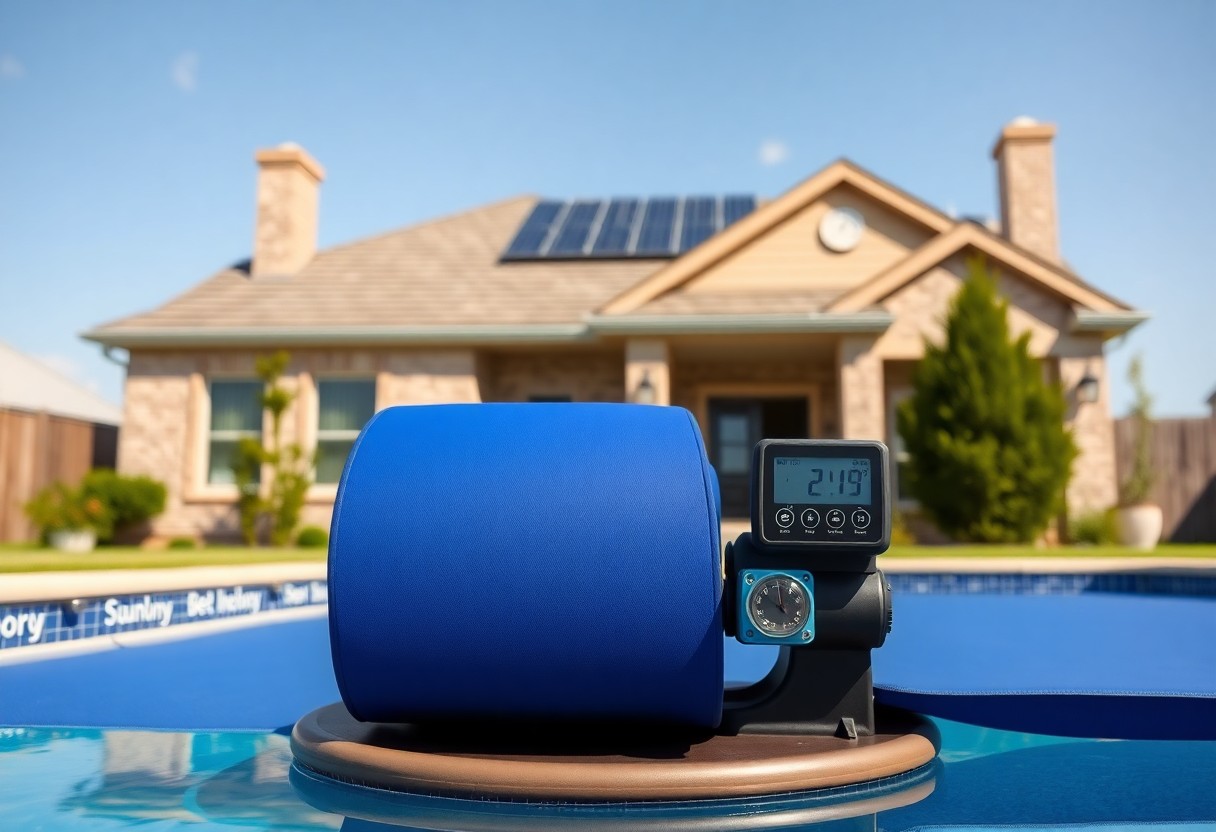
Enhancing Pool Cover Usage
Types of Pool Covers and Their Energy Benefits
You can choose solar (bubble) blankets, solid safety covers, automatic reel covers, thermal/insulated covers, and liquid solar films; each reduces evaporation and heat loss differently, commonly cutting evaporation 70-90% and lowering heating costs roughly 30-50% when used routinely.
| Solar (bubble) blanket | Captures sunlight, reduces evaporation ~70%, adds passive heating. |
| Solid safety cover | Blocks evaporation nearly completely, minimizes heat loss and debris load. |
| Automatic reel cover | Delivers quick deployment, cuts evaporation 80-90% and saves operator time. |
| Thermal/insulated cover | Extra insulation layer; best for night heat retention and higher R-value. |
| Liquid solar film | Temporary evaporation barrier; easy to apply, modest heat retention between 10-30%. |
- Solar blankets: low cost per square foot and strong daytime gains.
- Automatic covers: ideal if you need frequent on/off access and top convenience.
- Solid covers: best for long-term winter storage and maximum evaporation control.
- This mix of options lets you match budget, convenience, and the 30-50% heating-savings target.
Proper Cover Maintenance for Longevity
You should rinse and brush your cover monthly, inspect seams and fasteners every three months, remove pooled water after storms with a cover pump, and apply a UV protectant annually to extend service life by 2-5 years.
When cleaning, use mild detergent and a soft brush, avoid pressure washers and harsh solvents, let the cover dry fully before rolling to prevent mildew, store rolled in shade off concrete, patch small tears promptly with manufacturer kits, and replace corroded anchors or worn straps within 12 months to avoid progressive damage.
How to Use Covers Effectively
You should deploy the cover whenever the pool is unused-overnight and during multi-hour daytime gaps; covering for 8-12 hours daily maximizes evaporation reduction, and automatic systems help achieve consistent use without much effort.
Operate the heater and setpoints with the cover in mind: lower heater setpoint by 3-5°F or reduce runtime by 30-50% while covered, maintain minimum circulation per local code to protect water quality, remove debris before closing to avoid staining, and use a cover pump to keep pooled water off the surface.
Encouraging a Natural Environment
Landscaping for Shade and Wind Protection
Evaporation causes roughly 60-70% of a pool’s heat loss, so you should place windbreaks and shade strategically: a 6-8 ft hedge or fence 10-15 ft upwind can cut wind speed and evaporation by about 30-50%, while deciduous trees on the west side reduce late-afternoon heat gain and debris. Combining a windbreak with a cover often yields the biggest drop in heater runtime.
The Role of Trees and Shrubs in Energy Savings
You can use trees and shrubs for both shade and wind control: evergreens on the north side block cold winds, deciduous trees on the south/west give summer shade but allow winter sun. Mature canopy can lower localized air temperatures 2-8°F, and keeping trees 15-30 ft from the pool limits root and leaf problems.
For Frisco, choose native species like cedar elm, Shumard oak or yaupon holly for low maintenance; plant evergreens as a continuous screen on the north side and stagger deciduous trees on the west to break afternoon sun. Space shrubs 4-10 ft from the coping to reduce debris while still slowing wind; routine pruning and a leaf-control system can cut weekly skimming time and prevent filter load that otherwise increases pump run hours. A properly designed planting scheme can lower seasonal heating costs by roughly 10-25% depending on exposure.
Utilizing Natural Features to Reduce Heating Needs
You should orient thermal-mass features-south- or southwest-facing stone walls, dark patios, or berms-so they absorb daytime heat and radiate it at night, typically raising pool-adjacent air temps 1-3°F; pairing those features with a solar cover (which can reduce evaporation heat loss up to 95%) reduces heater cycles noticeably.
Practical builds: a 3-4 ft masonry wall placed 3-6 ft from the pool on the south side, or a 2-4 ft berm on the north, gives the best trade-off of sun capture and wind blocking. Use 6-12 in. thick stone or concrete with a dark finish for greater heat storage, and combine with a safety-rated solar blanket to lock in gains. In many Frisco installations this combination cuts winter heater runtime by about 10-20% versus an uncovered, exposed pool.
Regular Maintenance for Maximum Efficiency
Importance of Regular Equipment Servicing
You should inspect and service pumps, filters, and heaters on a schedule: check pump baskets monthly, clean or backwash filters when pressure rises 8-10 psi above baseline, and have motors and bearings serviced annually. Proper servicing prevents flow restrictions that force your pump to run longer; for example, a dirty filter can increase runtime by hours per week, pushing your energy use up noticeably during Frisco’s long swim season.
How Pool Cleaners Affect Energy Costs
Robotic cleaners typically draw 150-300 watts from household power and run independently, while suction or pressure cleaners use your pool pump or a booster pump (0.75-1.5 HP ≈ 560-1,120 W). If you use a booster pump for two hours daily, that adds roughly 1.1-2.2 kWh per day to your bill, so the cleaner type and runtime directly change your energy profile.
To estimate cost, multiply the device wattage by hours used and divide by 1,000 for kWh: a 1 HP (746 W) booster running 2 hours/day uses 1.492 kWh/day ≈ 45 kWh/month. At $0.14/kWh that’s about $6.30/month; if you switch to a 200 W robotic running 2 hours, you drop to 0.4 kWh/day ≈ 12 kWh/month. You can cut costs further by scheduling runs during off-peak rates and using timers or smart plugs.
Tips for Maintaining Water Chemistry
Test weekly and keep pH 7.2-7.6, free chlorine 1-3 ppm, total alkalinity 80-120 ppm, and cyanuric acid 30-50 ppm. Balanced water reduces scale and corrosion, lowers the frequency of backwashes, and prevents cloudy water that forces longer filter cycles-saving both water and electricity during Frisco’s high-usage months.
- Test with a reliable kit or digital tester weekly to catch drift early.
- Adjust pH with sodium bicarbonate or muriatic acid in small increments.
- Use stabilized chlorine and shock after heavy use or storms.
- Any large swings warrant pausing heater use until water is balanced to avoid wasting energy on reheating.
Automated feeders, inline chlorinators, or a salt-chlorine system can keep levels steadier and reduce manual dosing mistakes that force extra filtration. Backwashing typically wastes about 500-1,000 gallons per event, so keeping chemistry stable cuts backwash frequency and the need to refill and reheat, which directly lowers your combined water and energy costs.
- Consider an automatic feeder or ORP controller to maintain steady sanitizer levels.
- Calibrate your test kit monthly and log changes so you spot trends fast.
- Perform partial water changes only when necessary to avoid unnecessary reheating.
- Any persistent imbalance should trigger a professional water analysis to avoid repeated corrective cycles that raise your bill.
To wrap up
Presently you can cut your Frisco pool energy bill by replacing single-speed pumps with a variable-speed model, running pumps during off-peak hours, lowering heater setpoints and using a solar or heat-pump heater, keeping a tight pool cover, optimizing filtration cycles, switching to LED lighting, maintaining proper chemical balance to reduce run times, and scheduling regular equipment tune-ups to ensure peak efficiency.
FAQ
Q: What equipment upgrades give the biggest reduction in pool energy use?
A: Replacing a single-speed pump with a variable-speed (VSP) or inverter-driven pump yields the largest savings – often 50-90% on pump electricity by running at lower RPMs for longer. Upgrade pool lights to LEDs (use 70-90% less energy). If you heat the pool, switch from a gas or electric resistance heater to a high-efficiency heat pump or add a solar pool heater to preheat water; heat pumps deliver multiple units of heat for each unit of electricity consumed. Also insulate exposed piping and install a programmable automation controller so equipment runs only when needed.
Q: How should I schedule pump and heater run times in Frisco to lower bills?
A: Run the pump at the lowest speed that still achieves the required turnover and skimming (many pools meet turnover with 6-10 hours at low speed). Shift run times to off-peak electric-rate hours if your provider offers time-of-use pricing. For heating, use solar or heat pumps to heat during the warmest part of the day for best efficiency; use setback temperatures overnight and avoid continuous high-temperature settings. Use timers or a pool controller to coordinate pump speed, heater cycles, and solar cover use to minimize simultaneous high-power loads.
Q: Do pool covers and solar blankets really make a difference on energy bills?
A: Yes. Covers reduce evaporation (the biggest source of heat loss), cut radiant and convective heat losses overnight, and lessen chemical loss. A solar blanket can raise daytime water temperature and reduce heater run time; a good thermal cover used nightly can reduce heating energy needs by a substantial amount. Covers also reduce water top-offs and chemical use, indirectly lowering energy for pumps and equipment maintenance.
Q: What maintenance practices lower energy consumption without buying new gear?
A: Keep filters clean and properly sized, backwash only when pressure indicates, and clean skimmer and pump baskets to reduce flow resistance. Balance water chemistry to prevent scale and clogged equipment. Check for leaks, inspect and repair damaged seals or valves, and ensure proper pool water level to avoid cavitation. Optimizing hydraulic efficiency lets you run the pump less or at lower speeds while maintaining water quality.
Q: Are there incentives, audits, or professionals in Frisco to help reduce pool energy costs?
A: Many utilities, municipalities, and manufacturers offer rebates or incentives for variable-speed pumps, heat pumps, and solar systems – check local programs and energy-efficiency rebates. Hire a certified pool professional or an energy auditor who can perform a hydraulic and load analysis, size equipment correctly, and recommend controls and setpoints tailored to your pool, usage patterns, and Frisco’s seasonal climate. Comparing bids and verifying installer credentials helps ensure maximum long-term savings.