Most pool owners in Frisco need a clear, practical winterization plan to protect pumps, filters, heaters, and plumbing from freeze damage and mineral buildup, and you should drain or winterize lines, stabilize water chemistry, insulate exposed equipment, use a quality pool cover, and schedule professional inspections before freeze events so your system survives cold snaps and is ready for spring reopening.
Key Takeaways:
- Balance water chemistry and shock the pool before closing to prevent algae growth and equipment corrosion.
- Shut off power and drain pumps, filters, heaters and chlorinators; remove drain plugs and store small equipment indoors.
- Blow out plumbing lines or add pool-grade antifreeze to lines that can’t be fully drained to prevent freezing and cracking.
- Cover the pool with a secure winter/safety cover and insulate exposed pipes and equipment with heat tape or insulated blankets.
- During cold snaps, run the pump intermittently or enable freeze-protection settings, check equipment periodically, and hire a pro if unsure.
Understanding the Importance of Winterizing Pool Equipment
The Risks of Improper Winterization
Failing to winterize leaves water in pumps, heaters, valves, and PVC where freezing temperatures below 32°F can expand and crack housings, burst lines, or warp seals; in Frisco, single-night dips into the 20s have produced dozens of service calls after cold snaps. You may face sudden motor failure, contaminated filtration, or slow leaks that go unnoticed until they require emergency repair.
Costs Associated with Equipment Damage
Repair and replacement costs can be steep: a pool pump typically runs $500-$1,200, a heater $800-$3,000, and pipe repairs often $100-$600 per run; you’ll also pay labor, which can add $150-$400 per service visit. You should factor these figures when weighing the price of proper winterizing versus reactive fixes.
Beyond immediate replacement costs, damage can cascade into higher long-term expenses: a cracked pump housing can allow debris into the motor, shortening its life by 2-5 years and increasing your annual energy use by up to 10-15% if components run inefficiently. Insurance policies sometimes deny claims if damage results from neglect, and emergency winter repairs during a regional freeze can cost 25-50% more than scheduled maintenance. By comparing a typical professional winterizing service ($100-$300) to potential multi-thousand-dollar replacements, the financial benefit becomes clear.
Benefits of Protecting Your Investment
Protecting your equipment reduces repair frequency, preserves warranties, and helps maintain efficient operation-leading to lower energy bills and steadier water quality. You’ll avoid the logistical headaches of emergency replacements during a cold snap and keep resale value high when your system shows documented, seasonal care.
When you winterize properly, you extend component life-manufacturers estimate well-maintained pumps and heaters can last 5-10 years or more, versus shortened lifespans after freeze damage-and you safeguard performance metrics like flow rate and filtration efficiency. In practical terms, annual winterization can save you thousands over a decade by preventing avoidable failures, reducing emergency callouts, and ensuring warranties remain valid for major components.
Assessing Your Pool Equipment
Types of Pool Equipment You Need to Protect
Identify pumps, filters, heaters, automation panels, and exposed plumbing as priority items; you should treat pumps and motors to prevent seizure when water freezes, protect filters from cracking, and shield electronics from moisture. This helps you prioritize winterization tasks.
- Pumps and motors – drain, remove drain plugs, and consider indoor storage for small units
- Filters (sand, cartridge, DE) – backwash, clean or remove cartridges and store dry
- Heaters and heat pumps – isolate, drain condensate lines, and schedule service if 2+ years since last inspection
- Automation/control panels – remove batteries, disconnect power, and store sensitive boards indoors
- Plumbing and valves – blow out lines to 40-60 psi and insulate exposed piping
| Equipment | Winter action / risk |
|---|---|
| Pump & motor | Drain housing, remove plugs, store removable components to avoid bearing freeze |
| Filter (cartridge/DE/sand) | Backwash/clean, remove cartridges or media if indicated to prevent cracks and microbial growth |
| Heater / heat pump | Disconnect per manual, drain water lines, and schedule service if last serviced >2 years ago |
| Automation & controls | Remove batteries, cover or store control boards, log settings to restore in spring |
| Plumbing & valves | Blow out lines to 40-60 psi, cap returns, and insulate exposed runs and unions |
Evaluating Condition Before Winter
You should run a full system check: note filter pressure, inspect seals and unions, test pump amperage, and log visible leaks or corrosion; if filter pressure is 8-10 psi above baseline, plan a service visit. Then replace worn O‑rings and tighten clamps to reduce freeze-related failures.
For example, measure pump amperage-12-14 A is typical for a 1.5 HP pump on 240 V; readings above 16 A often indicate bearing wear and should prompt replacement to avoid motor seizure during intermittent freezing. You can record baseline numbers now to compare in spring.
Creating an Inventory of Equipment
You should list each component with model, serial number, purchase date, last service date, and photo of wiring/valve positions so you can restore settings quickly; this reduces time and errors when ordering parts or hiring technicians.
You should use a spreadsheet or phone app that includes manufacturer contact, part numbers (e.g., Hayward SP1090), and notes like “pump installed 2018, warranty expired”; storing a cloud copy helped one Frisco homeowner avoid a $450 misorder during a 2022 winter service call.
Steps to Winterize Pool Equipment
Cleaning Your Equipment
Empty skimmer and pump baskets, vacuum loose debris and brush walls so debris won’t clog lines over winter; backwash DE/ sand filters until discharge runs clear and, for cartridges, soak in a commercial filter cleaner 8-12 hours then rinse at 1,000-1,500 psi-equivalent (pressure washer setting) to restore flow; wipe salt-cell plates or heater heat exchangers and remove any scale or algae you see to reduce corrosion during storage.
Draining Water from Equipment
Shut power at the breaker, open the filter air relief to relieve pressure, then remove drain plugs on pump, filter and heater so gravity evacuates most water; use a wet/dry vac to pull remaining water from pump strainer and lower filter housing, and insert winterizing plugs into returns and skimmers to hold lines dry.
If you prefer a blow-out, use an air compressor set between 30-50 psi and blow each return and waste line for 10-15 seconds until only air emerges, working one line at a time and closing the valve before moving on; follow by filling low pockets with pool-grade propylene glycol antifreeze per the antifreeze label (do not use automotive ethylene glycol) and cap all ports securely.
Protecting Components from Freezing
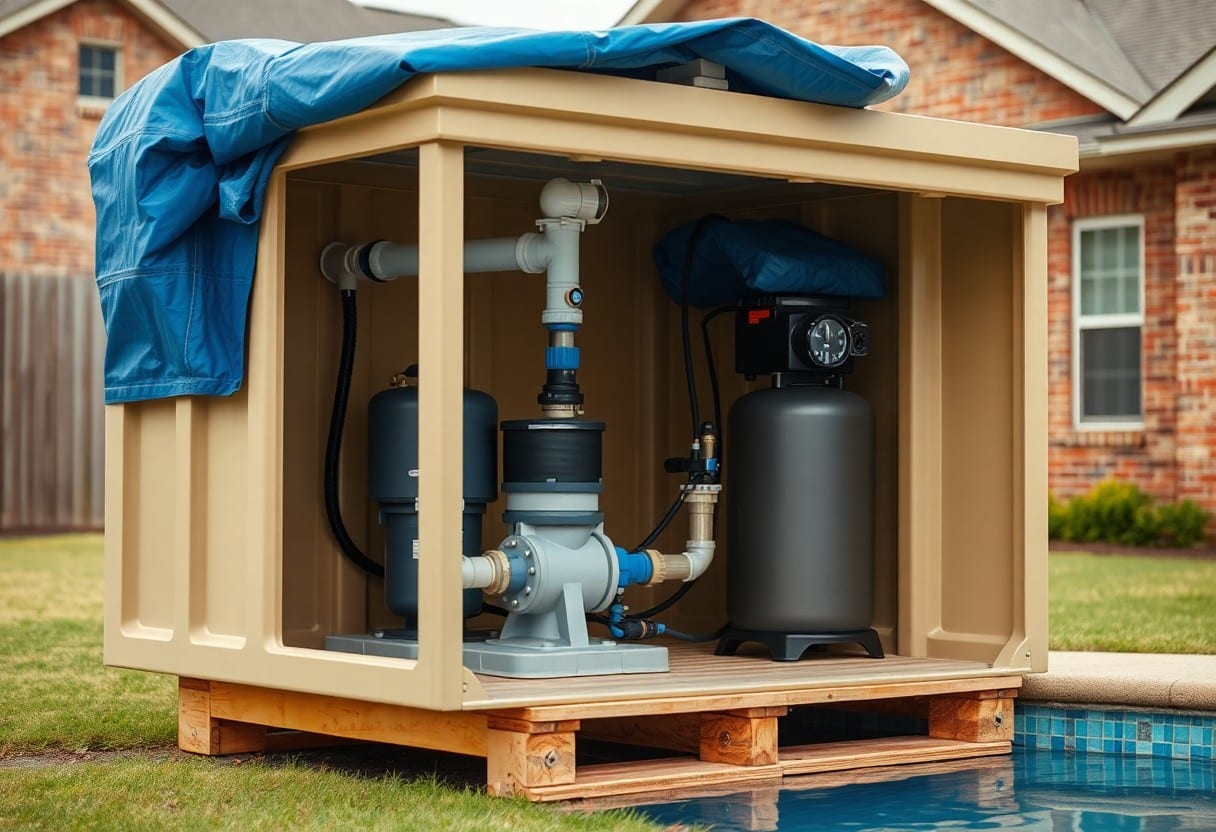
Wrap exposed PVC and metal fittings with 1″ closed-cell foam insulation and secure with waterproof tape or zip ties every 6-8 inches; cover pumps, filters and motors with a breathable, waterproof equipment cover and move electronic controllers or timers indoors to prevent freeze damage and condensation-related failures.
For greater protection, run a thermostatically controlled heat cable along vulnerable pipe runs-set to activate around 40°F-and wrap it under the foam insulation; zip-tie the cable every 12 inches, seal joints with exterior tape, and elevate equipment on a 4-6″ pad so melting ice and runoff don’t pool around housings.
Covering and Storing Pool Equipment
Choosing the Right Covers
Pick breathable, UV-resistant covers for pumps, filters, and heaters-marine-grade 600D polyester with a PU coating resists sun and sheds water while allowing ventilation; avoid tight polyethylene that traps moisture and accelerates corrosion. Use vented pump covers and straps with stainless-steel buckles, and choose covers rated 3-5 years for Frisco sun exposure. For salt systems, select covers with corrosion-resistant liners and allow access panels for occasional inspections without fully removing the cover.
Storing Equipment Properly
Drain all water from pumps, filters and heaters, then store small parts like cartridges, O-rings and sensors indoors at 50-70°F on shelves or pallets to keep them dry; place silica gel packs in boxes and label each item. Remove batteries and store them separately, and keep chemicals upright in original containers in a ventilated, lockable cabinet above floor level.
When winterizing larger items, backwash and fully drain DE and sand filters, remove and dry cartridges, and cap unions and electrical connections with waterproof caps. For pump motors, store in a climate-controlled garage or basement on a pallet to avoid ground moisture; keep shafts protected from dust and rotate impellers manually once before storage to prevent seal sticking. If you have a pool heater or gas components, follow the manufacturer’s manual and consider professional disconnection for extended indoor storage.
Using Insulation for Added Protection
Wrap exposed pipes, valves and unions with closed-cell foam insulation 1/2-1 inch thick and secure with UV-rated tape; add a removable weatherproof jacket over critical areas for extra protection. For vulnerable equipment, install thermostat-controlled heat tape that activates below about 40°F to prevent freeze damage during cold snaps. Insulate above-ground lines and use foam sleeves on valves to maintain flow and protect fittings during nights in the 20s-30s°F range.
For maximum protection, combine 1-inch closed-cell pipe insulation with an aluminum-backed jacketing on south- and west-facing runs to reflect radiant heat, and seal seams with foil tape. Apply insulation to multiport valves, chlorinators and salt cells, and secure heat cable along the length of exposed pipe at manufacturer-recommended spacing (many heat tapes draw 5-10 W/ft depending on model). Inspect insulation and tape after the first cold night and replace or reinforce any areas showing gaps or UV degradation.
Chemicals and Pool Maintenance
Balancing Water Chemistry Before Winter
Start by testing and adjusting your pH to 7.4-7.6, total alkalinity to 80-120 ppm and calcium hardness to 200-400 ppm; aim for free chlorine around 1-3 ppm and cyanuric acid 30-50 ppm for outdoor pools. After balancing, run the filter 24 hours and retest-if algae or high combined chlorine appears, shock the pool before proceeding with winter treatments.
Using Winterizing Chemicals
Shock the pool to a breakpoint level (roughly 10 ppm free chlorine) to eliminate organics, then add a long‑lasting algaecide and enzyme treatment to control future buildup; follow manufacturer dosing for your gallonage. You can also use a metal sequestrant if you have high iron or copper in your source water to prevent staining during colder stagnation periods.
Sequence matters: balance chemistry first, superchlorinate and allow 24-48 hours of circulation, then add algaecide and enzyme. For example, in a 10,000‑gallon pool one pound of 65-70% calcium hypochlorite typically raises free chlorine near the 10 ppm shock target; after stabilization, maintain a 1-3 ppm residual if temperatures permit. Avoid continuous floating chlorinators during long closures-tablets can over‑stabilize and promote staining-so rely on periodic monitoring or a professional winter service.
Importance of Proper Chemical Storage
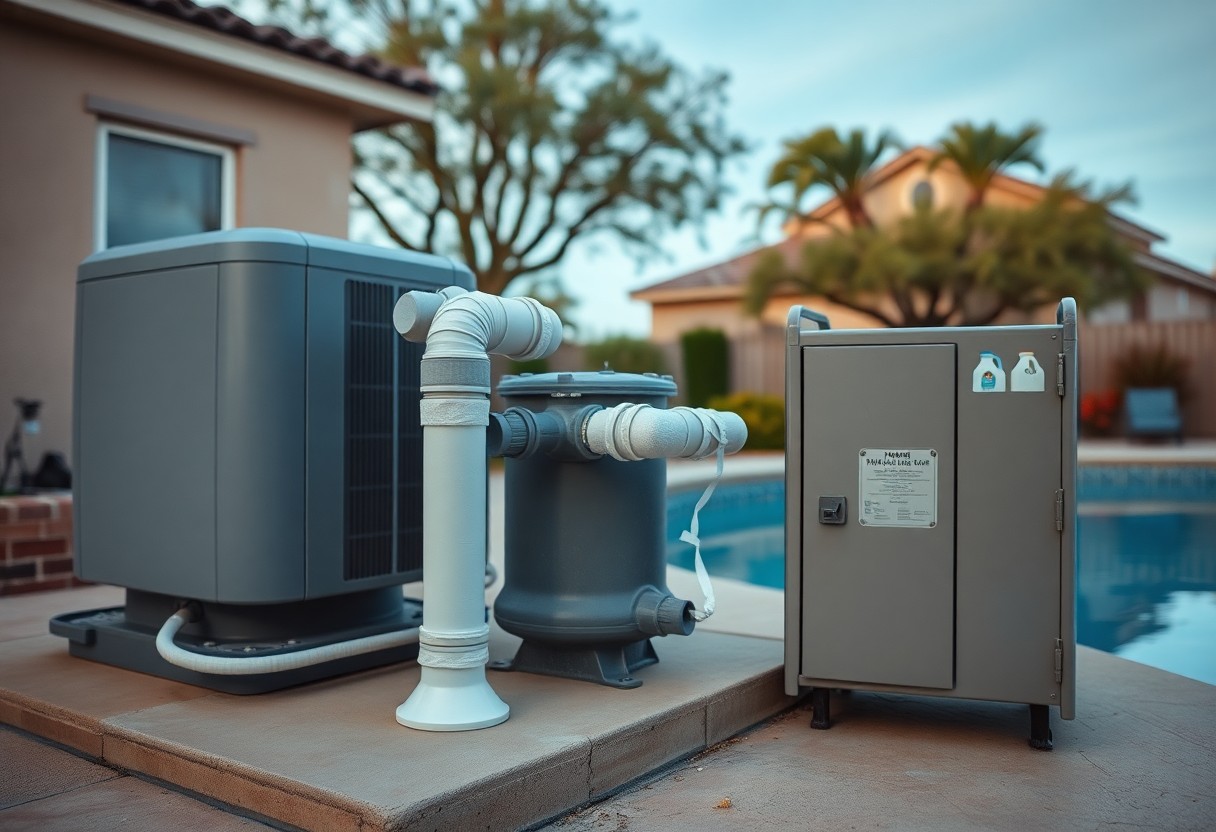
Store your pool chemicals in their original, labeled containers in a cool, dry, well‑ventilated area out of direct sunlight and away from children and pets; a temperature range near 50-80°F is ideal. Keep oxidizers (chlorine, calcium hypochlorite) separate from acids and organic materials to prevent dangerous reactions, and never store chemicals on the ground where moisture can accumulate.
Take extra precautions: place products on open shelving with spill containment, inspect containers for caking or leaks monthly, and keep material safety data sheets accessible. Note that liquid chlorine degrades within months while stabilized tablets retain potency longer-so rotate stock and dispose of expired or compromised chemicals per local hazardous‑waste guidelines to avoid reduced effectiveness or hazardous decomposition during winter storage.
Post-Winter Spring Preparation
Inspecting Equipment After Winter
When you inspect equipment after winter, prioritize visible damage and baseline comparisons: check pump lids and O-rings for cracks, verify filter pressure gauge against the fall reading (typical clean range 10-20 psi), and look for corrosion on heaters, valves, or strainers. You should run a 1-2 minute power-on test to detect unusual noises or vibration, photograph any issues for technician reference, and note any soft spots or hairline cracks in PVC fittings.
Steps for Re-Commissioning Equipment
You should start by clearing debris from skimmer and pump baskets and reconnecting drain plugs, then refill the pump housing before priming. Open valves slowly, bleed air from lines, and bring the pump up to full speed for 5-10 minutes while watching pressure; if pressure climbs 8-10 psi above your baseline, backwash or clean the cartridge. Also verify automation schedules, chemical feeders, and heater ignition before leaving the system unattended.
Before full startup, verify your electrical connections at the disconnect and pump motor are tight and dry, test the GFCI/trip breaker under load, and listen for bearing noise or excessive vibration during a brief run; motors older than 7-10 years often need bearing service or replacement. Replace hardened O-rings and seals with pool-grade silicone-lubricated parts, confirm union fittings are snug, and record new baseline pressure, flow and runtime so you can detect deviations during the season.
Preventative Maintenance Tips
You should schedule routine tasks: weekly skimmer cleaning, monthly cartridge inspections, quarterly chemical audits, and an annual professional tune-up. Use a drop test kit to keep free chlorine at 1-3 ppm and pH between 7.2-7.6, maintain cyanuric acid near 30-50 ppm for outdoor pools, and log maintenance dates so you track part lifespans and warranty windows.
- Clean pump and skimmer baskets every 7 days to prevent cavitation.
- Backwash sand filters when pressure is 8-10 psi above your clean baseline.
- Replace UV lamp annually or after 9,000-12,000 hours of operation.
- Assume that any persistent leak, noisy bearing, or irregular pressure needs professional evaluation rather than DIY fixes.
You should rotate consumables proactively: replace shaft seals and O-rings every 3-5 years depending on use, inspect PVC unions after freeze cycles, and service salt cells every 2-3 seasons to avoid scale buildup. Monitor turnover time-if it increases more than 20% versus your baseline, inspect for obstructions or a failing impeller, and keep a written parts inventory so you can swap worn components quickly.
- Keep a starter kit: spare lids, O-rings, hose clamps, and a multi-tool.
- Log baseline metrics: pump runtime, filter pressure, and weekly chemical levels.
- Schedule professional service in spring and fall for valves, heaters, and automation systems.
- Assume that regular small replacements prevent emergency failures and costly downtime.
Final Words
Considering all points, you can protect your pool equipment in Frisco by winterizing systems: shut off and drain pumps, filter, and heaters; insulate exposed pipes and valves; store removable equipment indoors; use a rigid cover to prevent debris and freeze damage; maintain proper chemical balance and shock before closing; and schedule a professional inspection to ensure everything is secured for freezing nights and occasional warm spells.
FAQ
Q: Should I winterize my pool in Frisco?
A: Frisco can see occasional freezes and hard freezes during winter nights. If temperatures are forecast to approach or dip below 32°F for multiple hours, winterizing reduces the risk of freeze damage. Basic winterizing steps: clean the pool, balance water chemistry, lower the water level if required by your pool type, drain or protect equipment and plumbing, and install a quality winter cover.
Q: How do I protect the pump, filter, and heater?
A: Turn off and lock out electrical power before servicing. Drain pump baskets, remove and store cartridges or clean and dry cartridge elements, and backwash sand/DE filters and drain housings. Follow the heater manufacturer’s procedure to drain water from the heat exchanger and control components; for gas heaters, shut the fuel supply if instructed. Store small removable parts indoors and cover exterior equipment with a breathable, weatherproof cover to prevent moisture buildup.
Q: What should I do to prevent frozen or burst plumbing and skimmers?
A: Use a shop-vac or compressor to blow out lines and then plug skimmers and returns, or add pool-grade propylene-glycol antifreeze to lines and skimmer pockets (do not use automotive antifreeze). Insulate exposed pipes and valves with foam pipe insulation and, where appropriate, outdoor-rated heat tape installed per manufacturer instructions. Consider installing automatic freeze sensors or a freeze-protection timer on the pump if freezes are frequent; consult a pro before relying on running the pump as the sole protection method.
Q: Is a pool cover necessary and which type is best for Frisco winters?
A: A sturdy winter cover is highly recommended. Solid covers provide the best protection against debris, evaporation and light freeze protection; mesh covers allow water to pass through while keeping debris out and reduce snow/ice load. Secure the cover per the manufacturer’s system (anchors, water bags, or straps), keep the cover clear of heavy standing water with a cover pump, and inspect attachment points periodically through the season.
Q: What chemical care should I perform before and during winter to protect equipment and water quality?
A: Balance pH, total alkalinity and calcium hardness within recommended ranges, then shock the pool to reduce organic load before closing. Add a long-lasting algaecide or enzyme treatment to limit algae and organics while the pool is idle. Maintain a minimal sanitizer residual if leaving the pool open, and test the water at intervals during warm spells. Treat for metals if your source water has high metal content to avoid staining on return-to-service.