pool maintenance and habitat reduction should be your priority: you should keep water circulating, remove standing water from planters and drains, maintain proper chlorine and filtration, install screens or fans, consider larvicides in stagnant features and introduce mosquito-eating fish in decorative ponds to reduce breeding and minimize adult mosquitoes around your pool area.
Key Takeaways:
- Eliminate standing water around the yard – dump containers, fix drainage, clean gutters and pool covers.
- Keep pool water treated and circulating; run the pump daily and use a fitted cover when idle.
- Treat or remove nearby breeding habitats – apply larvicide in ponds/ornamental water and fill low spots that hold water.
- Reduce adult mosquitoes with physical barriers and airflow – install screens or netting, prune dense vegetation, and use outdoor fans.
- Use targeted controls if needed – EPA-registered repellents, mosquito traps, or professional perimeter treatments.
Understanding Mosquito Behavior
Life Cycle of Mosquitoes
Eggs hatch in standing water within 24-72 hours for many species, then pass through larva and pupa stages over 4-14 days before emerging as adults; seasonal length varies by climate, with multiple generations per summer in warm regions. You can interrupt this cycle by removing stagnant water, emptying skimmers and pool covers, and maintaining circulation since even small puddles or buckets can produce hundreds of adults from one season’s eggs.
Common Species Near Pools
Culex, Aedes (albopictus and aegypti) and Anopheles are the usual suspects around pools: Culex prefers dusk/dawn and lays egg rafts in stagnant water, Aedes bites during the day and breeds in small containers and wet covers, while Anopheles favors clean, shallow water and bites at night. You should note species behavior when planning control-time-of-day biting patterns determine when you’ll be most exposed.
Targeting larvae differs by species: Aedes eggs can survive dry spells for months, so you must remove dry habitats like pool covers and plant saucers; Culex populations often spike in clogged skimmers or slow-moving drains, so improving flow and using Bti larvicide in neglected pockets can reduce numbers quickly. You’ll get better results by matching actions to species’ breeding habits.
Attractants for Mosquitoes
CO2 plumes (detectable 20-50 meters), body heat, lactic acid in sweat, dark clothing and standing water are top attractants; some species are drawn to specific light wavelengths, and vegetation near pool edges provides resting sites. You should minimize these cues around your pool area to lower biting pressure, especially during peak activity times for the species you’re dealing with.
Practical steps tie directly to attractants: running a fan over seating areas disperses CO2 and can cut mosquito landings substantially, while removing water-holding items every 48 hours prevents larval development. You’ll also reduce attraction by avoiding heavy fragrances, keeping pool lights shielded or using yellow bulbs, and trimming dense foliage adjacent to the pool.
Physical Pool Maintenance
Regular Water Treatment
Test your water 2-3 times weekly and keep pH between 7.2 and 7.6 with free chlorine at 1-3 ppm, and cyanuric acid around 30-50 ppm to stabilize sanitizer. Shock the pool weekly or after heavy use and apply algaecide at the first sign of cloudiness; consistent sanitizer levels stop mosquito larvae from surviving in skimmer baskets, shallow returns, and pool edges.
Filter and Pump Maintenance
Empty skimmer and pump baskets weekly and note the clean-filter pressure as your baseline; backwash sand/DE filters when pressure rises 8-10 psi above that baseline and clean cartridge filters every 3-6 months. Run the pump long enough to achieve one turnover-typically every 8-12 hours-so water near walls and steps doesn’t stagnate and attract mosquitoes.
After a clean, record the filter pressure to know when backwashing is needed; when it rises 8-10 psi, switch the multiport valve to backwash with the pump off, then run until the sight glass shows clear water, rinse, and return the valve to filter. For DE filters, recharge with new powder per the manufacturer after backwash. Inspect the pump strainer lid and impeller quarterly, lubricate O-rings with silicone grease, and tighten unions to prevent air leaks that reduce flow. To confirm turnover time, use: turnover (hours) = pool volume (gallons) / (pump flow in gpm × 60); adjusting run time or pump speed based on that calculation keeps circulation effective against mosquito breeding.
Covering the Pool Properly
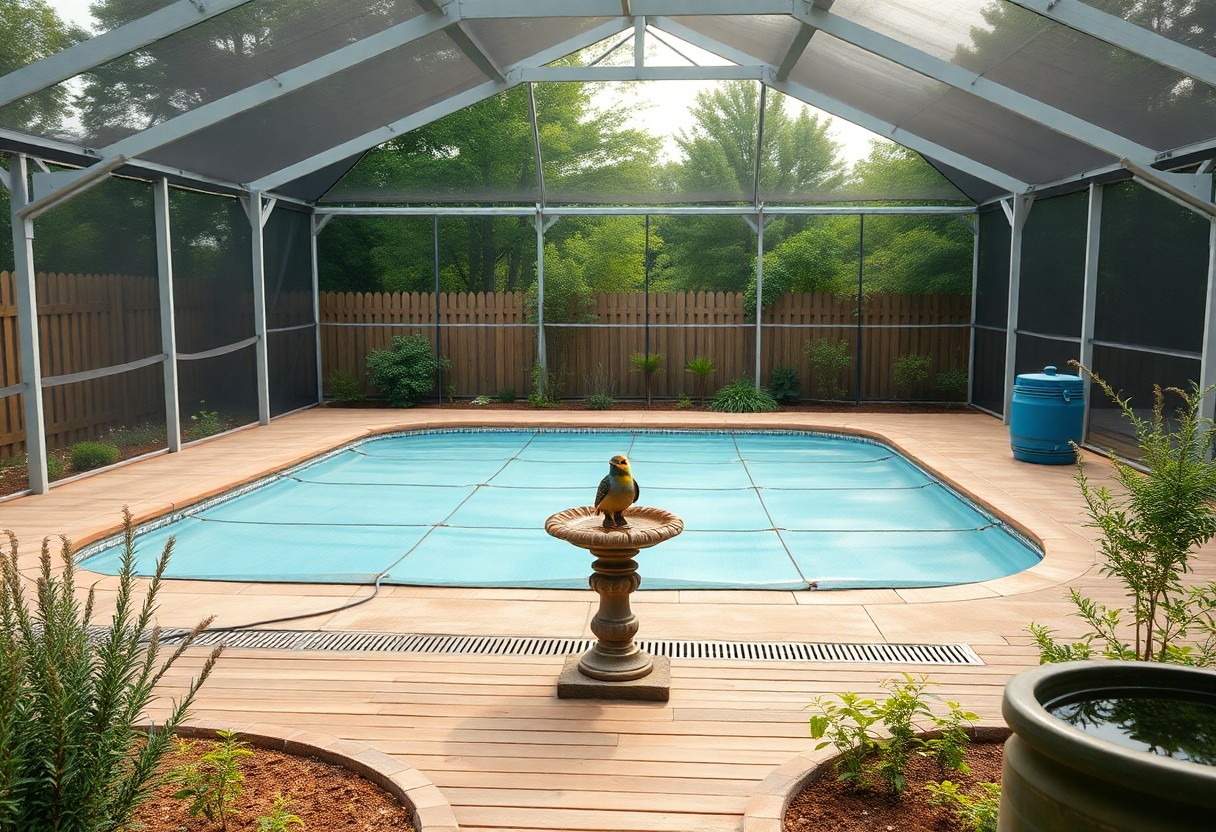
Use a solid safety or thermal cover when the pool is idle to block mosquito access; clear pooled water from covers within 48 hours since eggs can hatch in warm conditions. Secure the edges and check tension so water doesn’t settle in low spots where larvae could develop.
Choose the cover type based on use: solid covers prevent adult access and light, while mesh covers drain rainwater but can still hold small puddles. If you use a solid cover, deploy a small cover pump or slope the cover toward a drain to remove rain quickly; with mesh, sweep debris off weekly and check for sagging. Inspect anchors, straps, and spring tension every season, and store covers dry and clean when not in use to avoid creating alternate breeding sites in folded, waterlogged material.
Landscaping for Mosquito Control
Choosing Mosquito-Repellent Plants
You can plant citronella (Cymbopogon), lavender, rosemary, marigolds, basil and lemon balm near seating to help mask human scent; catnip (Nepeta) contains nepetalactone and some lab studies found catnip oil can be up to ten times more effective than DEET at repelling certain species. Place potted herbs 2-3 feet from chairs and crush leaves occasionally to release oils, but don’t rely on plants alone for complete protection.
Maintaining Lawn and Garden
You should mow at 2.5-3 inches to encourage dense turf, trim shrubs and prune low branches to boost airflow, and remove leaf litter and excess thatch (>0.5 inch) that traps moisture. Edge beds and use gravel or crushed-stone borders to limit damp microhabitats, and adjust irrigation so you’re not creating persistent wet spots with evening watering.
If you have persistent soggy areas, aerate the lawn annually and add 0.25-0.5 inch topdressing or sand to improve infiltration, then regrade low spots so the yard slopes 1-2% away from the pool. You can also install a French drain or dry well for depressions, repair broken sprinkler heads, and set irrigation to run early morning to reduce surface moisture overnight.
Eliminating Standing Water in Surrounding Areas
You must inspect weekly and remove any containers, clogged gutters, tarps or toys that hold water; even a bottle cap or tablespoon of water can support Aedes breeding. Use tight lids on rain barrels, drill drainage holes in planters and toys, and keep pool covers free of pooled water; adding a small fountain or aerator to birdbaths helps prevent larvae.
If you can’t remove standing water, treat it: drop Bti (Bacillus thuringiensis israelensis) dunks into gutters, planters and rain barrels-larvae typically die within 24-48 hours-or introduce mosquito fish (Gambusia spp.) in ornamental ponds where allowed. Also install gutter guards, extend downspouts at least 5 feet from foundations, and refresh birdbath water every 2-3 days to break the mosquito lifecycle.
Chemical Control Measures
Use of Mosquito Repellents
You should use EPA-registered repellents such as DEET (10-30%) or picaridin (10-20%) on exposed skin; both provide multi-hour protection depending on concentration. Apply sunscreen first if needed, then repellent, and reapply after swimming or heavy sweating per the product label. For clothing, treat garments or use factory-treated gear with permethrin-apply permethrin only to fabric, not skin, and follow wash-life guidance on the label.
Insecticides and Adulticides
You can target adult mosquitoes with residual pyrethroid sprays (e.g., permethrin, deltamethrin, bifenthrin) applied to vegetation and structures, while using larvicides like Bti dunks in standing water to prevent emergence. ULV fogging offers rapid, short-term knockdown for nuisance populations around pools, but results typically last hours to days unless paired with source control.
When planning treatments, consider product persistence: many residual barrier sprays provide 2-4 weeks of control under typical outdoor conditions, whereas Bti granules or dunks suppress larvae in small containers for up to ~30 days. Choose products labeled for the specific site (landscaping vs. aquatic), rotate active ingredients to reduce resistance, and document product names, application rates, and dates for future programs.
Safe Application Practices
You must follow label directions precisely: wear recommended PPE, avoid direct application into pool water, and keep people and pets out of treated areas until the product is dry or the label-specified re-entry interval has passed. Use spot treatments on foliage and shaded resting sites rather than broadcast sprays over the pool surface.
For larger or repeated treatments, hire a licensed applicator who will observe setback distances to aquatic zones, comply with local pesticide ordinances, and provide safety data sheets. Also track weather-apply when wind is under about 5 mph and at dusk or dawn for best adulticide effectiveness while minimizing drift and non-target exposure.
Natural and Alternative Solutions
Essential Oils and Natural Repellents
You can use citronella, oil of lemon eucalyptus (PMD), geraniol and lavender as site-based repellents: citronella candles protect a small 4-6 ft radius for about 1-2 hours, while PMD sprays at 20-30% concentration often extend protection to 3+ hours. Apply diluted oils to skin or diffuse around seating; test a patch for irritation and follow product directions. Combine diffusers with physical barriers for best results.
Introducing Mosquito Predators
You can reduce larvae by adding natural predators: Gambusia (mosquitofish) consume mosquito larvae-often dozens to over 100 per fish daily-dragonfly nymphs patrol ponds, and bats or swallows take flying adults at night or dawn. Install bat boxes, preserve native hedgerows for birds, and create shallow pond margins to support aquatic predators, but avoid moving fish into wild waterways without checking local rules.
For practical steps, mount bat houses 12-20 feet high on a pole or building, facing southeast with clear flight paths; that increases occupancy. Build pond features with gravel shelves and emergent plants (e.g., pickerelweed, rushes) to favor dragonfly breeding and amphibians. If you stock mosquitofish in an isolated ornamental pond, follow local stocking guidelines and monitor water quality-predator introductions are effective only when habitat supports them.
Use of Mosquito Traps
You can deploy CO2, propane (e.g., Mosquito Magnet), BG-Sentinel, or gravid traps to target adult females: place traps 20-30 ft downwind of your pool area, hidden from view, and run them continuously during peak season. Expect upfront costs from roughly $80 for small units to $800+ for propane systems; maintain weekly to keep catch rates high.
Maximize trap performance by matching trap type to species-gravid traps lure Aedes container-breeders, BG-Sentinel targets day‑biting Aedes with human‑scent lures, and CO2/proane systems attract many species. Replace lures per manufacturer (often 2-4 weeks), empty catch containers weekly, and use multiple traps spaced around property margins to reduce reinvasion from neighboring habitats. Combine trapping with larval control for best results.
Behavior and Lifestyle Adjustments
Best Times to Use the Pool
If you can, avoid swimming during peak mosquito activity: many Culex species are most active from about 30 minutes before sunset to two hours after, and again around dawn; Aedes species often bite during early morning and late afternoon. Scheduling swims mid-morning (9-11 a.m.) or mid-afternoon (1-4 p.m.) typically reduces encounters, and if you must be out at dusk use topical repellent on exposed skin.
Attire to Reduce Mosquito Attraction
You should wear light-colored, loose-fitting clothing with long sleeves and pants when not actually in the water; white, tan, or khaki reflects heat and makes you less visible to mosquitoes. Choose tightly woven fabrics and consider factory-permethrin-treated garments (effective through many washes, often 20-70). Keep wet swim cover-ups off until you dry off, since moisture increases biting activity.
For added protection, treat socks and cuffs with permethrin (applied to clothing only) and tuck pants into socks to block mosquitoes from reaching skin; apply a skin repellent such as 20-30% DEET or 10-20% picaridin to exposed areas. Synthetic fabrics like polyester dry faster than cotton and reduce attraction; in high‑infestation areas use a lightweight head net or mesh jacket for extended outdoor tasks.
Outdoor Lighting Choices
You’ll lower mosquito attraction by choosing warm-spectrum, low-UV lights: amber or yellow “bug” LEDs and low-pressure sodium bulbs draw far fewer insects than white LEDs or mercury-vapor lamps. Aim for bulbs with color temperatures below 3,000 K and buy fixtures marketed as low‑insect or “warm amber” to reduce bites around seating and pool edges.
Position lights to pull insects away from gathering spots-mount brighter fixtures 10-20 feet from the pool and use downward-directed, shielded sconces to limit skyward illumination. Combine timers or motion sensors with dimmers so lights are off or at low output during peak mosquito hours, and replace bulbs labeled as high-UV (blacklight, bright blue-white) which attract significantly more pests.
To wrap up
With this in mind, you can significantly reduce mosquitoes by eliminating standing water, keeping your pool properly treated and covered when idle, and using aeration or larvicides like BTI in nearby drains and containers. Trim vegetation, remove debris, and position fans or targeted traps around seating areas. Combine topical repellents for people with periodic professional treatments for persistent infestations to keep your pool area comfortable and low-risk.
FAQ
Q: What attracts mosquitoes to my pool area?
A: Mosquitoes are drawn to standing water, damp vegetation and shaded resting spots. Pool covers that collect rain, clogged gutters, planters, birdbaths, toys and low spots in the landscape that hold water all serve as breeding sites. Dense shrubs and tall grasses around the pool provide cool, humid shelter. Nighttime lighting and organic debris in pool skimmers or along the waterline also increase attraction.
Q: How can I eliminate mosquito breeding sites around the pool?
A: Remove or frequently empty any containers that hold water, keep gutters and drains clear, and ensure the pool pump and filter provide good circulation (run them several hours daily or continuously during peak season). Keep pool covers taut and free of standing rainwater by adding drainage holes or using a cover pump. Empty and clean skimmer baskets, birdbaths and pool toys weekly. Grade the deck and surrounding landscape to avoid puddling, and repair leaks or low spots that collect water.
Q: Are larvicides or chemical treatments safe and effective near a pool?
A: Products that target larvae, such as Bti (Bacillus thuringiensis israelensis) or methoprene, are effective when applied to small, non-chlorinated standing-water sites (e.g., catch basins, gutters, ornamental ponds) and are available in “dunk” or briquette forms. Only use products labeled for the specific site and follow label directions; many larvicides are not intended for direct use in swimming pools. For adult mosquitoes, registered barrier sprays applied to vegetation by licensed applicators can reduce populations; keep treated foliage and surfaces dry and follow safety intervals before allowing pool use.
Q: Will planting mosquito-repellent plants or using natural repellents around the pool keep mosquitoes away?
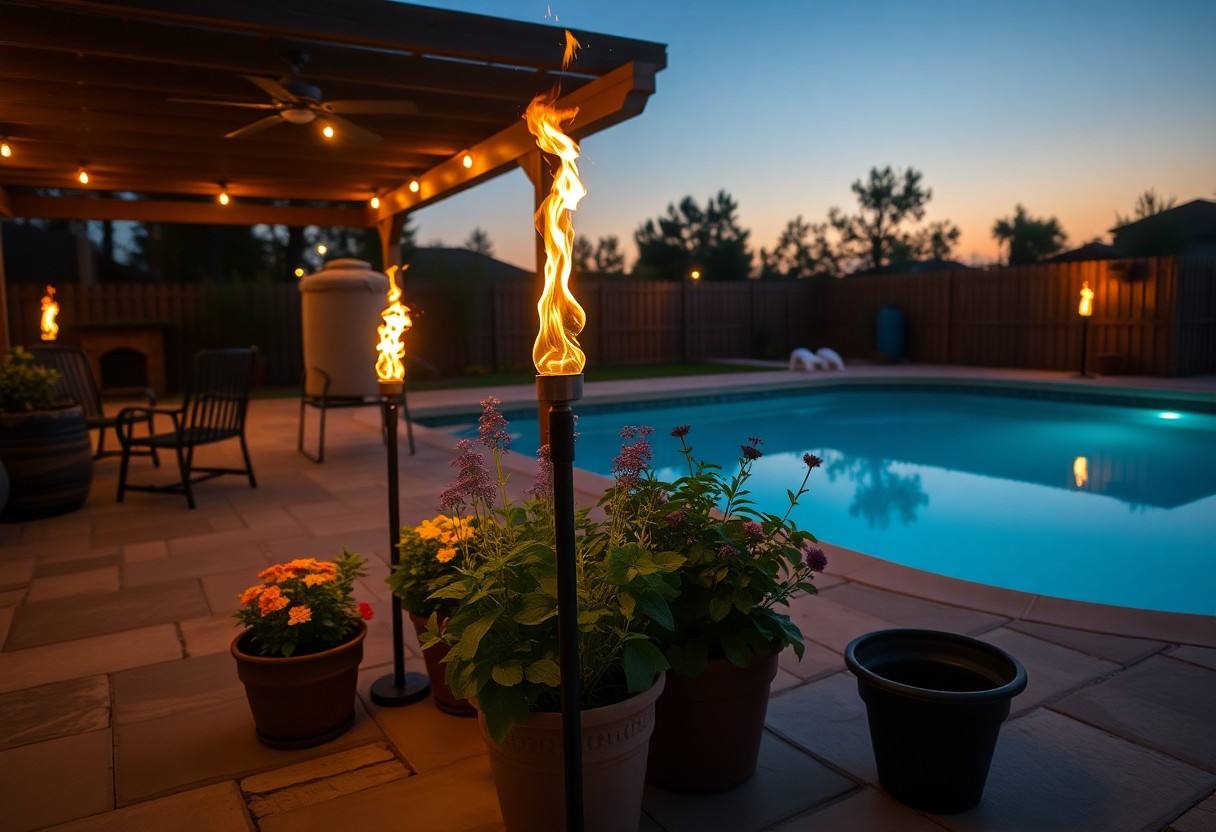
A: Plants like citronella, lavender, rosemary and basil have some repellent properties, but they provide limited protection when used alone because their scent disperses quickly outdoors. Citronella candles and torches and topical repellents (DEET, picaridin, oil of lemon eucalyptus) can reduce biting locally. Fans over seating areas are very effective at keeping mosquitoes away because the airflow disrupts their flight. Use plants and natural options as supplemental measures alongside source reduction and mechanical controls.
Q: What long-term maintenance and prevention plan best reduces mosquitoes around a pool?
A: Adopt an integrated approach: run filtration and circulation regularly; maintain proper sanitizer levels and clean skimmers; inspect for and remove standing water weekly; treat persistent breeding spots with appropriate larvicides; keep vegetation trimmed and remove dense hiding spots; install screens, patio enclosures or ceiling fans for seating areas; use yellow or warm-spectrum lights to reduce attraction; consider professional seasonal barrier treatments and install bat or native bird houses to encourage predators. Schedule major checks in early spring and continue routine inspections throughout mosquito season.