
Many pools in Anna get swamped with leaves from oaks and hackberries during fall and windy days, but you can minimize clogs by using a tight-fitting leaf net, running your pump and skimmer longer during shedding seasons, installing gutter guards and pool screens, trimming nearby branches, and skimming daily or using an automatic pool cleaner; combining these steps keeps filters clear and reduces maintenance while protecting your circulation system.
Key Takeaways:
- Use a solid pool cover or leaf net when the pool is not in use to block falling leaves and cut cleanup time.
- Trim and thin trees and shrubs around the pool; remove overhanging branches and rake yard debris regularly.
- Skim daily during leaf season, empty skimmer baskets and pump strainers often, and clean or backwash filters as needed.
- Install a surface skimmer, leaf trap, or automatic/robotic leaf vacuum to capture debris before it reaches the circulation system.
- Plan extra maintenance before windy or stormy periods and coordinate seasonal cleanings with a pool service if needed.
Understanding the Problem
Why Leaves Clog Pools
You’ll find leaves clog pools by accumulating on the surface, in skimmers, and along returns; they block flow, reduce filtration efficiency, and accelerate organic decay that unbalances chlorine and pH. In Anna, wind gusts and neighborhood tree density can turn a few leaves into a heavy load within 48-72 hours, forcing more frequent basket emptying and filter backwashes. Small debris can also slip past skimmers and settle on the floor, creating hotspots for algae growth.
Common Types of Leaves and Their Characteristics
You should expect oak, pecan, maple, elm, and pine to behave differently: broad, flat leaves like maple and pecan float then sink as they soak; oak leaves are leathery and slow to break down; elm fragments quickly into fines; pine needles tangle and form mats that resist skimming. These traits change how often you need to skim, how filters clog, and which prevention method works best for your pool.
- Oak – leathery, large, sink slowly, high tannin content.
- Pecan – broad, heavier, create dense surface coverage.
- Maple – wide and soft, break into fragments when wet.
- Elm – small fragments that pass through skimmers easily.
- Assume that pine needles shed year-round and form dense mats that foul filters quickly.
| Oak | Leathery, high tannins; slow decomposition, stains possible |
| Pecan | Large, heavy leaves; rapid surface coverage and sinkage |
| Maple | Soft, fragments easily; creates fine debris in filters |
| Elm | Small, brittle pieces that bypass skimmers |
| Pine | Needles form interlocking mats that resist skimming |
Your experience will vary by species density and proximity of trees: oak and pecan near a pool often require daily skimming during peak fall, while pine stands cause recurring filter clogs. For example, homeowners with mature pecan trees in Anna report skimmer baskets filling twice a week in October; replacing coarse skimmer screens with finer mesh and pre-filtering suction cleaners reduced filter loads by roughly 30% over a season.
- Oak – focused on tannin cleanup and frequent surface removal.
- Pecan – prioritize quick skimming and solids removal before sinking.
- Maple – use finer skimmer nets and inspect pump baskets often.
- Elm – consider leaf traps ahead of the pump to catch fines.
- Assume that matching prevention to leaf type cuts maintenance time most effectively.
| Oak | Frequent surface skimming; tannin-targeted shock treatments |
| Pecan | Daily removal in peak season; leaf catcher on cleaner suction |
| Maple | Fine mesh skimmer bags; regular filter checks |
| Elm | Pre-filter baskets and vacuuming to remove fines |
| Pine | Needle nets and frequent backwashing; manual needle removal |
Seasonal Patterns of Leaf Fall in Anna
You should plan for peak leaf fall from late October through early December in Anna, with 60-80% of annual deciduous drop occurring in a 6-8 week window. Spring produces lighter, species-specific shedding-cedar elm and hackberry may drop in late spring-while sporadic wind events in March or October can produce sudden surges that overwhelm routine skimming schedules.
During peak weeks expect skimmer baskets to fill within 24-72 hours and surface coverage to increase by two to three times compared with summer; therefore you’ll need daily skimming, more frequent filter inspections, and possibly interim backwashes. If you have multiple mature trees within 30-50 feet of your pool, prepare for weekly manual vacuuming and consider temporary covers or windbreaks to reduce the worst of the influx.
Assessing Your Pool Area
Evaluating Landscaping and Surroundings
Map the yard within a 20-30 foot radius of your pool, noting trees, hedges, beds, and hardscapes; quantify deciduous versus evergreen cover (for example, a row of 4 oaks on the east side) to estimate leaf load-properties with 3-5 mature deciduous trees within 30 feet often shed 5-15 lbs of leaves weekly in peak season-then plan barriers, pruning, or replacement plantings accordingly.
Identifying Leaf Sources: Trees and Plants Nearby
Identify species and distance: oaks, maples, pecans, and sweetgums drop the most debris, while pines and palms shed year-round; tag any trees within 10-30 feet of the pool and note their peak drop months (in Anna many maples and pecans peak Oct-Dec) to prioritize removal or targeted pruning.
Go deeper by cataloging each problematic specimen with photos, trunk distance, and estimated weekly leaf volume-measure distance from dripline to water edge, since trees with driplines overlapping the pool often account for 60-80% of debris; consider replacing high-shedding species within 15 feet with lower-shed alternatives like live oak cultivars or ornamental grasses to cut maintenance by half over five years.
Pool Design and Leaf Catchment
Inspect pool shape, skimmer placement, and surrounding slope: irregular shapes and dead corners trap leaves, and skimmers located only on one side leave the opposite edge collecting debris; note prevailing winds and patio pitch to predict where leaves concentrate during storms.
Then evaluate upgrades: adding a second skimmer when pool length exceeds ~30 feet, installing a leaf trap or suction-side canister upstream of the pump, or switching to perimeter gutters/overflow systems can reduce manual skimming by 30-70%; for smaller budgets, use a fine-mesh leaf net or automatic robotic leaf collector targeted at known dead zones to capture most surface debris before it sinks.
Preventative Measures
Regular Maintenance Schedule
You should skim your pool 5-10 minutes daily during leaf season and empty skimmer baskets 2-3 times per week; vacuum at least once a week and increase to twice weekly when drop is heavy. Check filter pressure and backwash or clean cartridges when pressure climbs 8-10 psi above the clean baseline. Schedule a 20-30 minute deeper clean every two weeks to remove settled debris before it stains or clogs plumbing.
Leaf Barriers and Nets
You can cut debris entry dramatically by using a fitted leaf net or mesh cover over the water surface-choose 1/8-1/4″ mesh to stop most leaves while letting rain through. Combine a leaf net with a safety or automatic cover if you want both debris protection and safety; nets work best when installed before peak fall and cleared of accumulated leaves weekly to avoid excess weight.
When installing, anchor nets every 3-4 feet and keep tension uniform to prevent sagging; use a telescopic pole and leaf rake to pull leaves off the net into a yard waste bag instead of letting them sit. If you prefer automated solutions, expect installation costs roughly $3,000-$10,000 depending on pool size and system; the trade-off is less daily maintenance and faster seasonal turnover. For heavier tree loads, pair nets with a detachable winter cover so you can remove trapped debris easily.
Landscaping Adjustments
You should reassess nearby plantings: move high-shedding trees 10-20 feet away from the pool edge or create a 5-10 foot low-maintenance buffer using gravel, mulch, or hardscaping. Prune tree canopies twice a year to raise lower branches 8-12 feet above the pool and thin crowns to reduce leaf drop into the water during storms.
Choose landscaping that intercepts leaves before they reach the pool-install a hedge or solid fence as a windbreak 6-8 feet tall on the prevailing-wind side to trap debris, and plant low-shedding species or evergreens closest to the deck. If removing trees isn’t an option, place a row of guttered catchment beds or a French drain strip 3-5 feet wide to collect windblown leaves, making cleanup faster and preventing debris from reaching skimmers.
Pool Cover Options
Types of Pool Covers
You can choose solar, mesh, solid vinyl, or automatic covers; costs range from about $50 for basic solar to $6,000+ for high-end automatics, and each performs differently against Anna’s heavy leaf fall.
- Solar: low cost, reduces evaporation
- Mesh safety: drains water, blocks leaves
- Solid safety: maximum debris exclusion
- Automatic: fastest deployment, premium price
Knowing which trade-offs you accept will speed selection and reduce weekly skimming time.
| Cover Type | Best For |
|---|---|
| Solar | Cost-conscious owners, evaporation/heat gain |
| Mesh safety | Leaf-heavy yards that need drainage |
| Solid vinyl safety | Maximum debris exclusion and winterizing |
| Automatic | Frequent swimmers, convenience, long-term investment |
Benefits of Using a Pool Cover
You reduce debris, cut evaporation by roughly 70-95% depending on type, and lower heating and chemical costs; solar covers often raise water 6-10°F, and many homeowners report 80-95% less weekly skimming when a cover is used.
In Anna’s seasonal leaf cycles, a mesh or solid cover can keep most leaf matter out of the skimmer and reduce pump runtime by up to 30%-that translates to lower energy bills and fewer chemical adjustments, so you spend less time on maintenance and more time enjoying your pool.
Installation and Maintenance Tips
You should measure precisely, check anchor compatibility, and inspect straps and seams each season to avoid failures;
- Measure pool dimensions to 1/4″ for tighter fit
- Inspect anchor points and replace corroded hardware annually
- Use a cover pump after storms to prevent water pooling
Perceiving proper fit and routine checks will prevent leaf ingress and extend cover life.
When installing, have a helper for tensioning, lay covers flat to prevent tears, and store covers in shade when off-pool;
- Hire a pro for automatic system setup
- Brush off large debris before rolling the cover
- Fold loosely to avoid permanent creases
Perceiving a seasonal maintenance schedule (spring/fall inspections plus post-storm checks) keeps your cover effective and your pool clearer.
Cleaning Tools and Equipment
Recommended Pool Skimmers
You should use a heavy-duty telescopic pole (8-16 ft) with a deep, fine-mesh net (1-2 mm openings) and an aluminum frame to capture leaves before they sink; choose a net rated for large debris that holds 5-10 gallons to cut trips to the trash. For frequent leaf fall, add a dedicated leaf rake with a reinforced bag and quick-release clamp so you can clear the surface in under 10 minutes per session.
Vacuum Systems for Leaf Removal
You can pick between suction-side (uses your pump, 40-80 GPM), pressure-side (requires a 0.75-1.5 HP booster pump and throws debris into an external bag), and robotic cleaners (independent power, filters to ~2-5 microns); pressure-side is best for heavy, wet leaves while suction-side handles light loads if you run your pump longer.
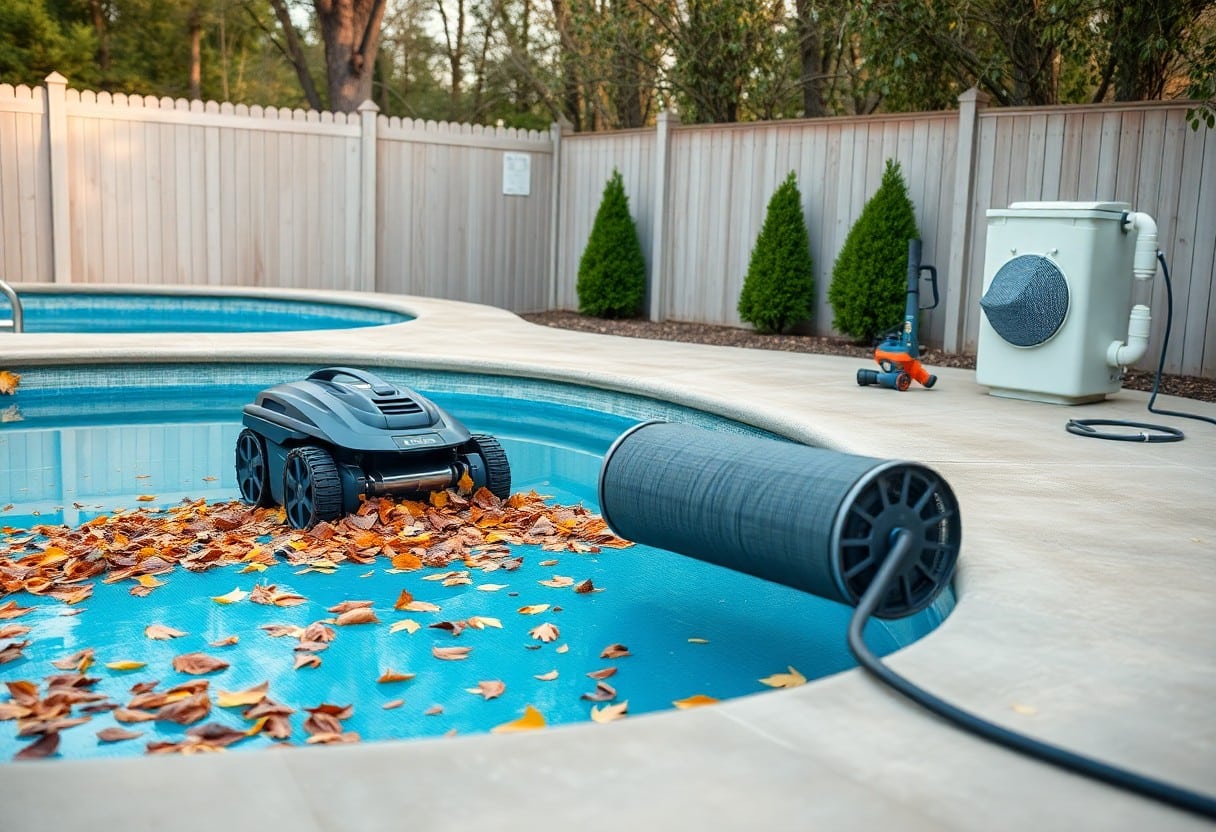
Operationally, pressure-side units collect larger volumes-bag capacities typically 10-25 liters-so you empty less often, but factor in the booster pump energy use and a seasonal maintenance check. Robotic cleaners run on timers (2-4 hours/day recommended during peak leaf season), lower pool-system strain, and offer superior fine-debris filtration, but you’ll pay more up front and should clean their cartridges weekly.
Automatic Leaf Cleanup Solutions
You can install surface-skimming attachments, inline leaf canisters on return lines, or automated leaf nets that sit over the pool; inline canisters protect your pump from clogging and typically hold 5-20 liters of debris, while surface skimmers reduce manual skimming by running continuously when your circulation system is on.
For integration, hook automatic devices to your pool timer or a smart controller so they run during off-peak electricity hours; schedule 2-6 hour cycles depending on leaf load, empty canisters weekly during fall, and inspect seals monthly to prevent bypass that would let leaves reach your pump or main filter.
Local Regulations and Resources
Understanding Local Laws on Leaf Disposal
Check the City of Anna Public Works and Collin County solid-waste rules before you dispose of leaves: many municipalities require yard waste in approved kraft bags or green carts, forbid pile placement in streets or storm drains, and set seasonal curbside collection dates. You should verify pickup schedules, accepted container sizes (commonly 20-96 gallons), and any holiday or storm-related changes on the city website to avoid pickup refusal or fines.
Hiring Professional Help: When and How
If leaves keep overwhelming your pool, engage a pool or landscape service offering seasonal leaf removal; typical local costs range about $80-200 per month for recurring pool care and $50-150 for single deep-cleans depending on debris and travel. Ask for proof of liability insurance, references, and confirmation they include skimmer/filter checks and legal waste disposal in their scope.
Vet candidates by requesting a written scope that lists frequency, exact tasks (skimming, vacuuming, filter cleaning/backwash, net removal), and storm-response turnaround times; require a certificate of insurance and a local business license number, and compare at least three bids. You should also check online reviews (BBB, Google), ask neighbors for recent referrals, and include a short cancellation clause and one- or two-week trial to confirm quality before committing to a seasonal contract.
Community Resources for Pool Maintenance
Use Anna’s Public Works, Collin County resources, and your HOA for yard-waste pickup schedules and local leaf-drop events; pool-supply stores and neighborhood groups on Nextdoor or Facebook frequently post vetted service recommendations and seasonal tips that reduce debris entering pools. You can also find city-sponsored cleanup days to divert leaves from streets and drains.
Contact the Collin County Texas A&M AgriLife Extension or local Master Gardener programs for guidance on leaf composting and landscape strategies that lower leaf fall, and check with pool retailers or community swim clubs for preferred local technicians who handle heavy fall leaves. You should also subscribe to city alerts and HOA newsletters so you catch special yard-waste collection dates and volunteer clean-up opportunities.
Seasonal Strategies
Preparing for Autumn and Winter
Trim trees and limbs so overhang is at least 10-15 feet from the pool to cut major leaf fall; you should empty skimmer and pump baskets daily during heavy leaf drop and use a solid safety cover or leaf net-covers can block up to 90% of debris-to limit cleaning. Rake and remove leaves from surrounding landscaping weekly, and schedule a filter deep clean before the first hard freeze to avoid clogged media while you reduce pump run-time for winter.
Spring Cleaning Techniques
Start by removing the cover slowly, skimming accumulated debris from the top before it reaches the water, then test and balance pH, alkalinity and stabilizer; backwash or clean your filter, run the pump 12-24 hours a day for the first 48 hours, and shock to clear lingering organics if chlorine is below 2 ppm.
After uncovering, manually remove large debris with a leaf net, brush walls and steps to loosen algae or pollen, then vacuum-begin with an automatic vacuum for general cleanup and finish with a manual vacuum for corners; target free chlorine 3-5 ppm for standard maintenance or perform a shock treatment raising free chlorine to ~10 ppm for 24 hours when you encounter visible algae. Also inspect pump seals and hoses, replace worn cartridges or backwash DE filters until discharge runs clear, and record baseline filter pressure so you know when to service.
Summer Maintenance Tips
You should run the pump 8-12 hours daily depending on heat and bather load, test chemicals twice weekly during heat waves, keep free chlorine between 1-3 ppm and pH 7.2-7.6, and empty skimmer baskets every 1-3 days; maintain a 30-50 ppm cyanuric acid level if using stabilized chlorine to protect against UV loss.
- Skim surface debris each morning to prevent leaves from sinking and decaying.
- Backwash or clean your filter when pressure rises 8-10 psi above baseline.
- After heavy storms or wind events, run a prolonged filtration cycle and inspect the pump and skimmer for blockages.
During prolonged 90°F+ stretches, increase filtration to 12-16 hours and test alkalinity and calcium hardness weekly because evaporation concentrates minerals; add algaecide as a preventive measure when you see phosphates above 100 ppb, and adjust chlorine dosage when bather load spikes-raise run time or add 0.5-1 ppm chlorine after large pool parties. Keep a simple log of tests and actions so you can correlate filter pressure and chemical needs to specific weather or usage patterns.
- Schedule a weekly full chemical profile and record readings so you detect trends early.
- Clean or replace cartridge elements every 4-8 weeks if you filter more during summer peak use.
- After extended leaf fall or major debris events, vacuum thoroughly and consider a brief shock cycle to reset water quality.
Final Words
Following this you can prevent leaves from clogging your pool in Anna by using a fitted pool cover or leaf net, skimming daily and running automatic skimmers, trimming or relocating trees near your pool, installing gutter guards, emptying pump baskets and cleaning filters regularly during leaf season, and extending circulation run times; consistent maintenance and the right equipment will keep your drains clear and protect your system.
FAQ
Q: What pool cover options work best to keep leaves out in Anna?
A: Use a combination of a fitted solid or automatic safety cover plus a mesh leaf net for heavy-shedding periods. Solid or automatic covers block all debris and reduce maintenance while mesh leaf nets are lighter and easy to remove of collected leaves. For year-round convenience, a properly installed automatic cover is best; for seasonal protection, place a mesh leaf net over a winter cover to prevent standing debris and reduce weight. Ensure covers drain and are tensioned to avoid ponding.
Q: How often should I clean skimmer baskets and filters during leaf season?
A: Empty skimmer and pump baskets daily or after every windy/stormy day while trees are shedding. Check the pressure gauge on sand/DE filters and backwash when pressure is 8-10 psi above the clean reading; clean cartridge filters every 2-4 weeks or sooner if flow drops. Inspect and clear hair and lint traps, skimmer socks, and any pre-filters after large leaf events to keep suction lines from clogging.
Q: What landscaping or tree management reduces leaves falling into the pool?
A: Prune branches that overhang the pool and thin nearby trees to reduce leaf volume; remove or relocate high-shedding species if feasible. Install low-maintenance, low-shedding plants near the pool perimeter, add hedges or a windbreak to limit airborne debris, and keep gutters and downspouts clear so runoff doesn’t wash leaves into the pool area.
Q: Are there accessories or upgrades that trap leaves before they reach the pump?
A: Yes-install a suction-side or skimmer-mounted leaf canister/leaf trap, use a skimmer sock or basket with finer mesh, and add a large-capacity pump strainer if you frequently see big debris. Automatic surface skimmers, robotic leaf vacuums with debris canisters, and manual leaf rakes with fine mesh are also effective. Have suction-line canisters installed by a pool technician to ensure proper fit and pump protection.
Q: What daily or weekly routine minimizes leaf clogs in my pool?
A: During high-shed season: quick-skim the surface each day, empty skimmer and pump baskets daily, run the pump longer (add 2-4 hours/day or aim for 8-12 total hours depending on pool size and debris), and brush/vacuum as needed to prevent accumulation. After storms, remove debris immediately and inspect the filter and pump for clogs. Use a cover whenever the pool is not in use and schedule a professional service for filter deep-cleaning before and after the heaviest leaf periods.