Frisco pool owners often face the frustrating problem of green water, which can be attributed to several factors including algae growth, poor filtration, and imbalanced chemicals. When your pool becomes green, it indicates that the water isn’t being properly sanitized, leading to an environment where algae thrive. Regular testing and maintenance of your pool water, along with adequate circulation and filtration, are necessary to keep your pool clear and safe for swimming. This guide will provide you with the necessary steps to diagnose and address the issue effectively.
Key Takeaways:
- Algae growth often causes a pool to turn green, typically due to poor sanitation or water imbalances.
- Insufficient chlorine levels allow algae to thrive, necessitating regular testing and maintenance of pool chemistry.
- Environmental factors, such as debris and leaves, can contribute to water contamination and algae blooms.
- Regular cleaning and proper filtration are imperative in preventing green water in pools.
- In Frisco, warm temperatures and sunlight can accelerate algae growth, making vigilant pool care important in summer months.
Understanding Pool Algae
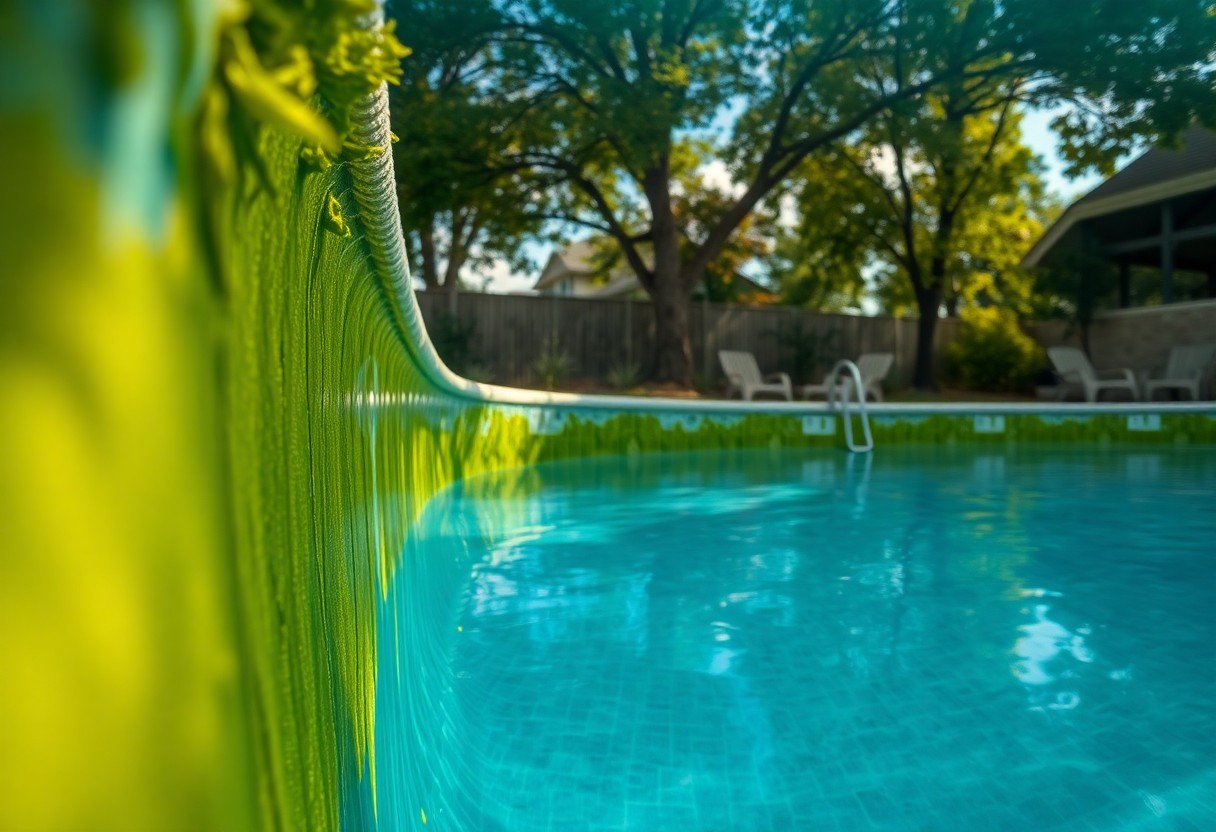
Algae is a common issue that can turn your pool water green, compromising both aesthetics and hygiene. This pesky organism thrives in warm conditions and can multiply rapidly if not controlled. Regular maintenance and proper water chemistry are crucial to prevent algae blooms. Understanding the types, causes, and effective treatments for algae is key to maintaining a pristine swimming environment.
Types of Algae
Several types of algae can infiltrate your pool, each with its specific characteristics.
- Green Algae: The most common and easiest to eliminate.
- Black Algae: More resistant, requiring vigorous scrubbing to remove.
- Mustard Algae: Resembles yellow stains and thrives in low-chlorine environments.
- Blue-Green Algae: A cyanobacteria that can produce toxins.
- Filamentous Algae: Long strands that can cling to surfaces.
This variety highlights the importance of identifying the type of algae present for effective treatment.
| Type of Algae | Characteristics |
| Green Algae | Most easy to treat; often blooms during warm months. |
| Black Algae | Requires scrubbing; forms stubborn dark spots. |
| Mustard Algae | Pale yellow; thrives in poorly circulated water. |
| Blue-Green Algae | Toxic variant that can pose health risks. |
| Filamentous Algae | Long, stringy growth that clogs filters. |
Causes of Algae Growth
Several factors contribute to algae growth in your pool, with water chemistry being paramount. Low chlorine levels, high pH, and inadequate circulation create an environment ripe for algae to flourish. Poor filtration systems and debris accumulation can also foster algae proliferation, making it easier for them to latch onto surfaces. Understanding these causes helps you implement effective prevention strategies.
Inadequate chlorination is often the primary culprit, as algae can thrive in water with insufficient sanitizer. Your pool’s pH levels must also be monitored; high levels can inhibit chlorine’s effectiveness. Additionally, stagnant water and debris provide a breeding ground for algae. Regular cleaning and ensuring proper water circulation are critical to preventing growth and maintaining a healthy swimming environment.
Factors Contributing to Green Pools
Several factors can lead to your pool turning green, primarily stemming from environmental conditions and maintenance practices. Regular upkeep is necessary to prevent algae growth, as the following elements may contribute to the issue:
- Inadequate cleaning and maintenance
- Improper chemical balancing
- Poor water circulation and filtration
- Debris accumulation
- High temperatures and sunlight exposure
Knowing how to manage these factors can help maintain clear pool water. For more details, check out Why is my Pool Green and How to Fix It.
Chemical Imbalances
Maintaining balanced pool chemicals is necessary, as discrepancies can lead to algae proliferation. If your chlorine levels are too low, or the pH levels are not within the ideal range of 7.2 to 7.8, it creates an environment conducive to algae growth, turning your pool green. Regular testing and adjustments are necessary to keep these levels stable.
Poor Filtration and Circulation
Inefficient filtration and circulation are significant contributors to a green pool. When water does not circulate properly, stagnant areas can breed algae and other contaminants, making it difficult for your pool chemicals to function effectively. Make sure that your filtration system is clean and operational, and run it long enough each day to ensure thorough water movement.
Inadequate circulation not only allows algae to thrive but can also prevent necessary chemicals from dispersing evenly throughout the pool. Running your pump for at least 8-12 hours a day during peak swimming seasons can significantly help maintain clear water. Additionally, regular backwashing and cleaning of your filter are necessary. Assessing pump settings and ensuring operational efficiency can drastically reduce algae growth and keep your pool inviting.
Preventive Measures
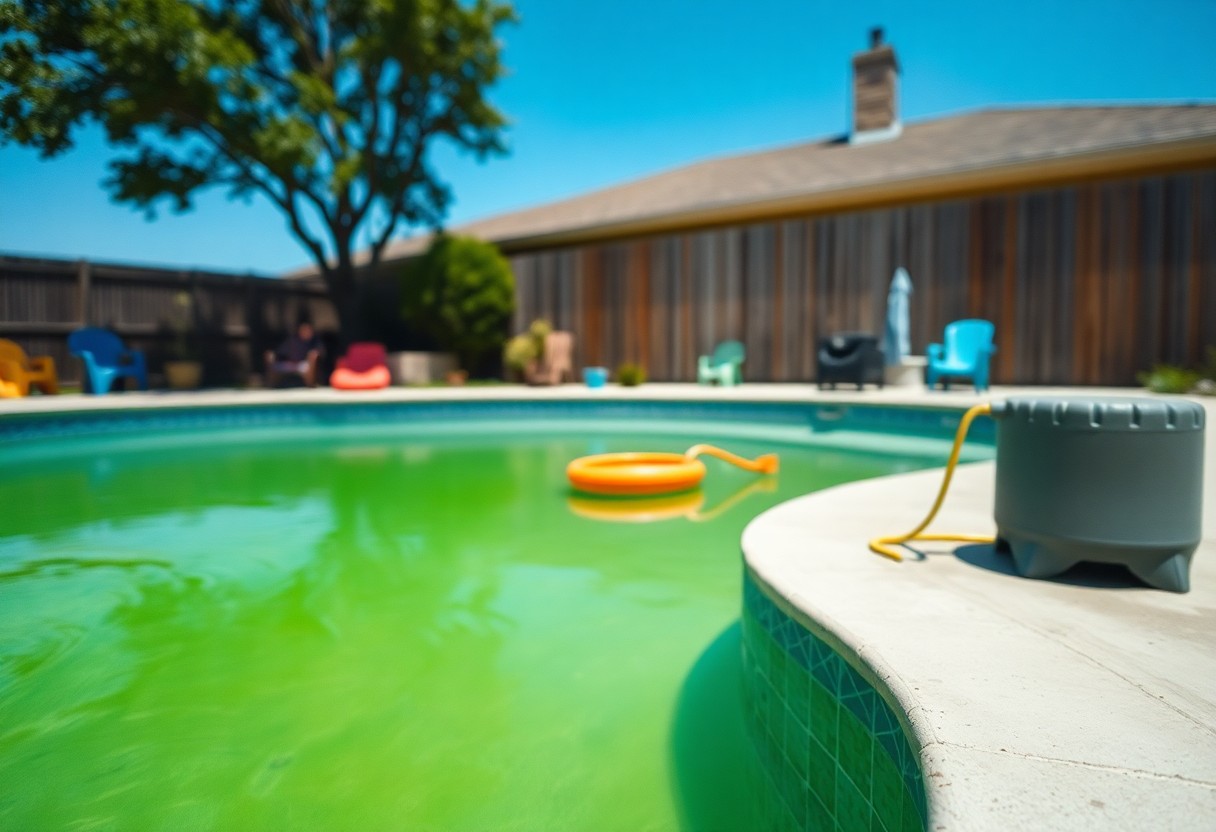
Addressing the issue of green pool water involves implementing effective preventive measures. Regularly maintaining your pool and staying on top of its chemical balance can save you time, effort, and additional costs associated with algae treatments. A proactive approach ensures that your water remains clear and inviting, allowing for uninterrupted enjoyment of your swimming oasis.
Regular Maintenance
Your pool requires diligent maintenance to avert algae growth and cloudiness. Weekly tasks should include skimming debris, brushing walls, and vacuuming the floor. Additionally, checking and cleaning the filters will enhance water circulation, reducing the chance of algae establishment. Committing to these practices will keep your pool in optimal condition.
Ideal Chemical Levels
Maintaining ideal chemical levels is fundamental in preventing algae blooms. Regular checks of pH, chlorine, and alkalinity ensure the water is protected against unwanted bacteria and microorganisms. Aim for a pH level between 7.2 and 7.6, a free chlorine level of 1-3 ppm, and alkalinity between 80-120 ppm to create an environment unsuitable for algae.
Keeping your pool’s chemical levels balanced not only enhances water clarity but also promotes swimmer safety. Unbalanced water can lead to skin irritation or eye discomfort, making it vital to test your water weekly using a reliable kit. Proper sanitization levels help inhibit algae growth and maintain a welcoming swimming experience. Additionally, track the levels over time to identify patterns, enabling you to adjust treatments proactively before problems arise.
Treating Green Pool Water
Addressing green pool water requires a multi-step approach to restore clarity and cleanliness. Begin by assessing chlorine levels and pH balance, as proper chemical balance is paramount. For detailed guidance, check out Green-to-Clean Pool Recovery in Prosper, Frisco, Celina …. Proper shock treatment and the use of algaecides will significantly expedite the recovery process, ensuring your pool regains its inviting, blue appearance.
Shock Treatment
Shock treatment eliminates contaminants and algae blooms effectively. You should apply a granular or liquid chlorine shock, targeting a chlorine level of 10-20 ppm. This intense chlorine exposure will break down organic matter that contributes to the green discoloration. After 24 hours, retest the water and adjust the chlorine as needed to maintain clarity.
Algaecides and Cleaning
Algaecides are specialized chemicals designed to control and prevent algae growth. Using an algaecide following shock treatment can enhance the recovery process. Select a product appropriate for your specific algae type-whether it’s green, black, or yellow. After applying, ensure thorough brushing and vacuuming of your pool surfaces to remove dead algae and debris, promoting cleaner water.
Applying algaecides after shocking your pool not only helps in killing remaining algae but also prevents future blooms. Effective algaecides are formulated to disrupt algae growth cycles, often targeting different strains. It’s crucial to distribute them evenly and allow sufficient time for the product to work, ideally during your pool’s low-activity hours. Regular brushing and filtration enhancement alongside chemical treatments will accelerate recovery, ensuring that your pool returns to a pristine state.
When to Call a Professional
Signs You Need Expert Help
In many cases, green pool water can be resolved with basic maintenance, but certain indicators suggest it’s time to call a professional. If you’ve tried shock treatments, algaecides, and regular cleaning for over a week without seeing improvement, or if your pool’s filter seems to be malfunctioning, it’s wise to seek expert assistance. Additionally, persistent algae growth despite maintaining chlorine levels might indicate underlying issues such as imbalanced pH levels or a failing filtration system. Professionals have the tools and expertise to diagnose and resolve these problems effectively.
Final Words
Summing up, if your pool is turning green in Frisco, it’s likely due to algae growth caused by inadequate sanitation or imbalanced water chemistry. To restore your pool, ensure you maintain proper chlorine levels, regularly clean your filter, and monitor pH and alkalinity. Additionally, consider shock treatments and proper circulation to prevent future occurrences. Taking these steps will help keep your pool clear and inviting.
FAQ
Q: What causes my pool to turn green in Frisco?
A: A pool can turn green due to algae growth, which often occurs when the water lacks proper sanitation, insufficient chlorine levels, or poor circulation and filtration.
Q: How can I prevent my pool from turning green?
A: Regularly check and maintain chlorine levels, clean the pool filter, and ensure proper circulation. Regularly brushing the walls and floor helps prevent algae buildup.
Q: What should I do if my pool is already green?
A: Shock the pool with chlorine, remove any visible algae with a pole brush, and run the filter continuously until the water clears. It may also be necessary to test and balance the water chemistry.
Q: Can leaves and debris contribute to a green pool?
A: Yes, organic matter like leaves and debris can decompose in the water, providing nutrients for algae growth, further contributing to the pool’s green color.
Q: How does the weather in Frisco affect my pool’s color?
A: Hot weather and increased sunlight can promote algae growth, especially if the pool is not adequately maintained. Rain can also dilute chlorine levels, making pools more susceptible to turning green.