
Safety starts when you secure equipment and reduce hazards before storms hit Anna: lower your pool water level slightly, remove or secure covers, store loose furniture and toys, and unplug and elevate electrical devices. Install and maintain reliable drain covers, keep gutters and drains clear to prevent flooding, and after the storm check your chemical balance, inspect for debris or damage, and only re-enter or power up systems once you confirm conditions are safe.
Key Takeaways:
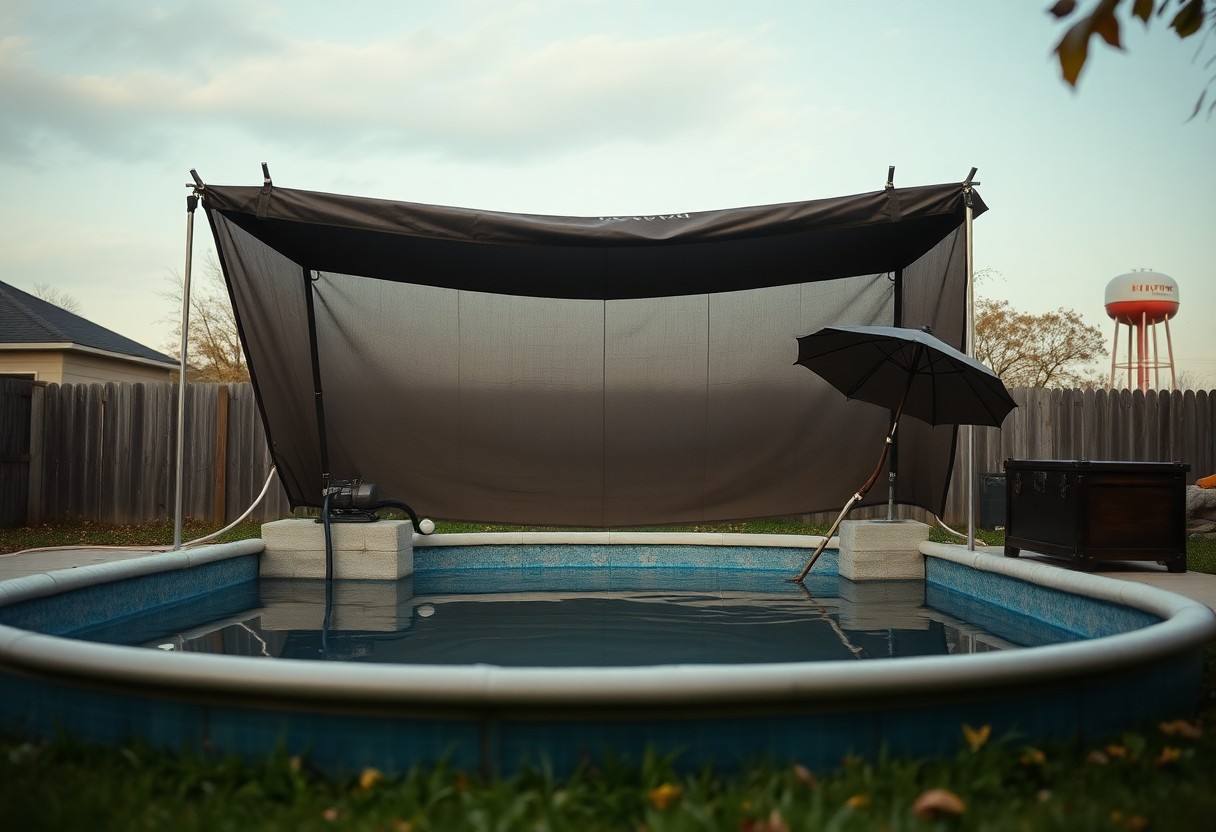
- Secure or store all loose outdoor items (furniture, floats, umbrellas) to prevent wind-driven debris from entering or damaging the pool.
- Turn off and unplug pool electrical equipment; shut breakers during lightning and elevate or secure pumps/filters if flooding is possible.
- Do not swim during thunderstorms; wait 30 minutes after the last thunder or lightning before using the pool again.
- Use a sturdy safety cover or net to limit debris, and store pool chemicals in a dry, elevated, ventilated place in sealed containers.
- After the storm, remove debris, inspect for damage, test and rebalance water chemistry, and call a licensed technician for electrical or structural repairs.
Understanding the Risks
Common Storm Hazards
In Anna, storms often bring gusts of 40-70 mph, hail up to 1-2 inches, and rainfall rates exceeding 1-2 inches per hour; you should expect flying debris that can puncture covers, topple furniture into the pool, and damage pumps or filters. Downed trees and power outages frequently cause broken fences and unsecured skimmers, while heavy winds can lift mesh covers and allow leaves and sediment to overload your filtration system.
Impact of Lightning on Pools
When lightning strikes nearby, water becomes a conductor and electrical current can travel across the surface for tens of feet, putting anyone in or near the pool at immediate risk; lightning is linked to roughly 20-30 U.S. deaths annually, so you must clear the pool area and seek shelter. Metal ladders, handrails, and pool lighting can channel current, increasing shock risk even if the strike is not directly on the water.
Proper bonding and grounding of pool equipment reduces stray-voltage hazards, and local codes (NEC Article 680) require equipment ground-fault protection and bonding around pools. After thunder, follow the 30-minute rule-wait at least 30 minutes from the last observed lightning or thunder before you or your family re-enter the water-and have a licensed electrician inspect any equipment that experienced a strike or surge.
Flooding and Water Contamination
Floodwaters bring sediments, sewage, pesticides, and bacteria such as E. coli into pools, rapidly overwhelming filters and upsetting pH and chlorine levels; you may see turbidity, foul odors, or visible debris immediately after runoff enters the basin. High turbidity reduces sanitizer effectiveness, so testing total chlorine, free chlorine, pH, and cyanuric acid is imperative before reuse, and filters will likely need multiple backwashes or media replacement.
If floodwater entered your pool, target a free-chlorine level of about 10 ppm and maintain it for 24 hours as an initial shock protocol, then test for combined chlorine and clarity; if water remains cloudy or the filter/pump ingested silt, drain, clean, and refill may be necessary. Also document contamination and equipment damage for your insurer and consult a certified pool operator or local health department for site-specific guidance.
Pre-Storm Preparations
Securing Pool Equipment
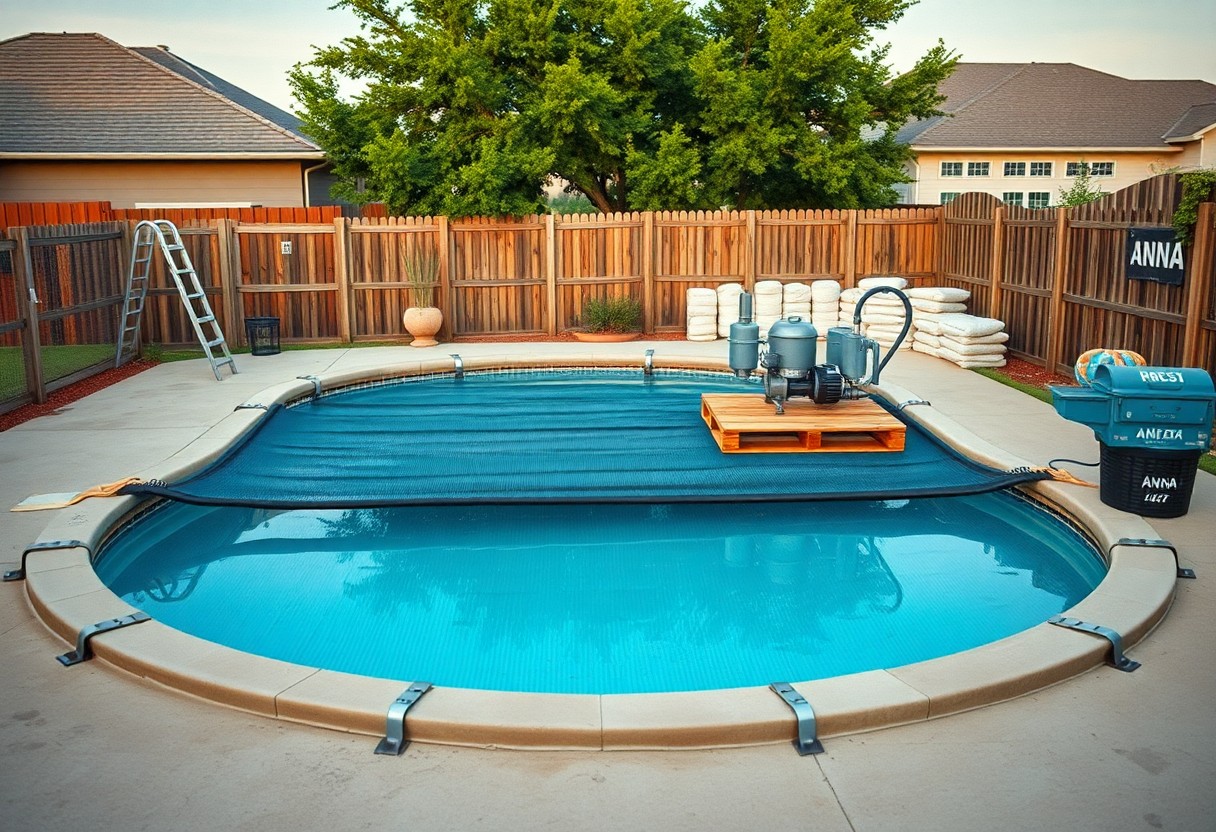
You should disconnect and elevate pumps, heaters and timers off the ground and shut power at the pool breaker to avoid electrical damage; secure filters, ladders and automatic cover boxes with 2-3 ratchet straps anchored to concrete or heavy fixtures, and store small items like floats, test kits and vacuum heads indoors. During high winds, even a loose skimmer lid can become a projectile, so fasten or remove anything that can move.
Clearing the Surrounding Area
Move patio furniture, umbrellas, grills and potted plants into a garage or shed, or place them at least 15-20 feet away from the pool and tie stacked chairs together; remove toys and safety equipment from decks and clear pathways to drains so runoff doesn’t dump debris into skimmers.
For larger items you can’t store, anchor them: use ground anchors or heavy-duty straps on benches and BBQs, and weigh down planters with sandbags. Trim branches within about 15-20 feet of the pool-dead limbs and loose limbs pose the biggest risk-and clear gutters and downspouts within a 30-foot radius so stormwater drains away from the pool deck rather than washing leaves and mulch into the skimmer.
Checking Pool Water Levels
If heavy rain is expected, lower your pool water 4-6 inches below the skimmer face to provide capacity for runoff; you can use a submersible pump or the pool’s waste line if available, and verify level with a tape measure or ruler at the skimmer throat to avoid overfilling.
Also disable any automatic fill systems before you adjust levels, then re-check after each inch removed-dropping too far below tile can expose suction lines and risk airlock or equipment damage. After lowering, inspect skimmer baskets and seals, and if you expect storm surge or flooding, consider capping return inlets and switching pumps off at the breaker until water clears to prevent backflow and motor damage.
Protective Measures During Storms
Evacuating the Pool Area
If thunder is within 30 seconds or an evacuation order is issued, you should clear the pool, deck, and surrounding yard immediately; move people, pets, pool toys, and loose furniture indoors and stay inside a substantial building or vehicle, keeping at least 50 feet from downed power lines and avoiding trees and metal fences until official all-clear is given.
Turning Off Electrical Systems
Before leaving or if flooding is imminent, shut off the pool pump, heater, automation controller, underwater lights, and any landscape lighting at the dedicated breakers; only approach the main panel if the area is dry and safe, and label breakers so you can cut power quickly under pressure.
GFCI protection trips at roughly 4-6 mA and is designed to stop shocks, but you should still flip the pool circuit breaker at the main panel to prevent equipment damage and electrocution from surge or submerged wiring; if wiring or junction boxes show water entry or corrosion, do not restore power-call a licensed electrician and use a transfer switch when connecting generators to avoid backfeed into utility lines.
Using Pool Covers
Deploy a properly anchored safety or mesh cover to limit debris, hull uplift, and contamination; if wind forecasts exceed about 35-40 mph, remove lightweight solar covers and store them secure, then use a cover pump to remove pooled rainwater after the storm to prevent excess load.
Mesh covers let water drain through, reducing wind sail and the need for constant pumping, while solid covers block sunlight and keep out fine debris but typically require manual or electric pumps for standing water; use anchors spaced roughly every 3-4 feet, inspect straps and hardware for rust before storms, and replace any worn components to keep the cover effective under heavy rain or wind.
Post-Storm Safety Checks
Inspecting for Damage
Walk the entire pool area and inspect your decking, coping, rails, ladder anchors, pump housing and lights for movement or visible breaks; if you find cracks wider than 1/4″ or sinking deck sections, photograph them and call a licensed pool contractor. Check the skimmer and pump lids for hairline fractures and verify electrical junction boxes remain dry-exposed wiring or tripped GFCIs indicate you should keep power off and contact an electrician before restarting equipment.
Testing Water Quality
Test your water within 24 hours using a liquid test kit or accurate digital reader: aim for pH 7.2-7.6 and free chlorine 1-3 ppm; if combined chlorine exceeds 0.5 ppm or water is cloudy, plan to shock. Note that storm runoff often raises organics and nitrates, so track chlorine demand and avoid swimming until levels stabilize.
For corrective steps, measure total alkalinity (80-120 ppm) and cyanuric acid (30-50 ppm); if algae appears or combined chlorine is high, perform breakpoint chlorination-raise free chlorine to about 10× the combined chlorine level or apply 1 lb of calcium hypochlorite per 10,000 gallons as an initial shock guideline, then retest every 6-12 hours until free chlorine returns to target and clarity improves.
Cleaning Debris
Remove floating leaves and branches with a leaf skimmer, then empty skimmer and pump baskets to prevent suction loss; use a pool brush to dislodge material clinging to walls and run the pump continuously while vacuuming settled debris. If you spot large limbs or sediment in the deep end, remove them promptly to avoid strain on the pump and filter.
If filter pressure rises about 8-10 psi above your clean-start reading, backwash or clean cartridges; for sand filters, backwash until run-off is clear, and for cartridge filters, hose down pleats or replace if torn. When debris is heavy, vacuum to waste to prevent re-circulating contaminants and check the pump strainer frequently while the cleanup runs.
Emergency Protocols
First Aid for Storm-Related Injuries
If someone is bleeding, apply direct pressure with a clean cloth for 10-15 minutes and elevate the wound; for severe cuts get emergency care. If a person is unconscious, check airway and breathing and call 911 immediately; start hands‑only CPR at 100-120 compressions per minute and 2 inches depth for adults. Avoid touching anyone who may have had an electrical shock until power is off, and treat hypothermia by removing wet clothes and warming slowly.
Reporting Hazards to Authorities
Report life‑threatening hazards-downed power lines, live wires in the pool, structural collapse-to 911 right away; for non‑urgent issues contact your municipal public works or county emergency management and your utility company. Document hazards with time‑stamped photos, the pool address or GPS coordinates, and any witness names before crews arrive to speed response and follow‑up.
When you call, be concise: give your name, exact address, nature of the hazard, whether anyone is injured, and any immediate risks (e.g., “tree limb pierced pool cover, exposed wire in water”). Ask for an incident or ticket number, note the dispatcher’s name, and send your photos by email if the agency provides one. Follow up with the utility if power is involved and with public works for debris removal so records exist for permits or insurance claims.
Insurance Considerations
Photograph all damage immediately, notify your insurer within 24-72 hours, and mitigate further loss (for example, cover exposed equipment) while saving receipts for temporary repairs. Keep a detailed inventory of damaged items and serial numbers for pumps and heaters to speed claims processing and avoid denied coverage for neglect.
Check whether your homeowner policy (often HO‑3) covers wind, hail, and equipment damage; flood and storm‑surge require a separate NFIP or private flood policy. Note typical deductibles range from $500-$2,500 and some areas have a separate “named‑storm” deductible. Get at least two licensed repair estimates, keep all invoices, and ask your adjuster if emergency repairs up to a specified limit (commonly $500-$2,000) are pre‑authorized to prevent claim disputes.
Long-term Safety Strategies
Installing Lightning Protection Systems
You should install a certified lightning protection system-air terminals, down conductors and a grounding network-designed and spaced per NFPA 780 and UL 96A; average lightning currents are on the order of 30 kA, so proper bonding to the pool equipotential grid and surge protection on pumps and heaters reduces risk to people and controls. Hire a licensed lightning contractor to perform a rolling-sphere assessment and tie into your pool’s existing grounding/bonding scheme.
Regular Maintenance Tips
You must keep a predictable maintenance rhythm: test water chemistry twice weekly in peak season (free chlorine 1-3 ppm, pH 7.2-7.8), clear skimmer baskets weekly, backwash or clean filters when pressure rises 8-10 psi above baseline, inspect covers and gate latches monthly, and schedule pump/filter servicing annually.
- Weekly: remove debris, check skimmers and clean pump baskets.
- Monthly: inspect fence gates, anchors, and cover tie-downs; verify chemical storage is secure.
- Annually: service motors, check bonding conductors, and replace worn seals and hoses.
- Assume that you log dates and findings in a maintenance record for quick reference after storms.
You should keep spare parts and an emergency kit on hand-o-rings, replacement fuses, a backup chlorination tablet supply and a submersible sump pump; replace filter media every 3-5 years depending on usage, and have a licensed electrician verify bonding and GFCI protection every 1-3 years to ensure electrical integrity after repeated storms.
- Store spare o-rings, pump lids, and a basic tool kit near the equipment pad.
- Rotate and replace UV and salt-cell components per manufacturer schedules (typically yearly for UV bulbs, 3-7 years for salt cells).
- Assume that any structural damage or compromised bonding is repaired by a licensed professional within 30 days.
Community Awareness Programs
You can reduce neighborhood-wide pool risk by organizing a storm-response plan with your HOA or neighbors: share a contact list, agree on who deploys covers and secures gates, run two readiness drills a year, and create a shared inventory of tarps, straps and a portable generator for emergency pump power.
In practice, coordinate a pre-storm checklist, assign teams for cover deployment and equipment shutdown, and post a visible emergency procedure near the pool; communities that formalize roles and run semiannual drills typically recover faster and spend less on post-storm repairs.
- Distribute emergency contact cards and build a shared digital roster for after-hours coordination.
- Schedule two neighborhood storm drills annually-one before storm season and one mid-season.
- Assume that everyone signs the roster and understands their assigned storm-responsibility before severe weather arrives.
Final Words
To wrap up, when storms strike in Anna you should secure poolside furniture and equipment, install or tension a safety cover, turn off and unplug pool electrical components at the breaker, lower water slightly to reduce overflow if heavy rain is forecast, store chemicals in a dry, elevated place, and keep children and pets away until conditions and water quality are checked. After the storm, test and balance the water before reopening your pool.
FAQ
Q: How should I secure pool equipment and outdoor furniture in Anna before a storm?
A: Move lightweight furniture, floats, toys and potted plants indoors or into a garage. Remove or secure ladders, diving boards and removable handrails. Unplug pumps, heaters and automatic cleaners and, if safe to do so, elevate them on blocks or move them to higher ground to avoid flood damage. Anchor or take off solid pool covers if heavy rain is expected-solid covers can collect water and collapse unless they have a functioning pump or support system. Close and lock pool gates to keep children and pets away during the storm.
Q: What should I do about my pool’s water level and chemical balance before and after a storm in Anna?
A: Before heavy rainfall, lower the water level slightly (typically 4-6 inches) to allow for runoff without overflowing surrounding areas. Store chlorine and other chemicals in a dry, elevated location away from possible floodwater. After the storm, test pH, free chlorine, alkalinity and cyanuric acid as soon as debris is cleared. Heavy rain will dilute sanitizers and can change pH; shock the pool with an appropriate dose of chlorine and run the filter until levels stabilize. If floodwater entered the pool or sewage contamination is suspected, treat as hazardous: drain, disinfect, and contact a pool professional or local health department for guidance.
Q: How do I protect electrical systems and pool equipment from lightning and flooding?
A: Turn off and unplug pool pumps, heaters and timers at the breaker before the storm if local forecasts show a significant threat and it is safe to do so. Install GFCI protection for outdoor outlets and have a licensed electrician raise electrical components or add disconnect switches if your property is flood-prone. Never touch electrical equipment that is wet or submerged; wait for a qualified technician to inspect and re-energize systems. During lightning, stay out of the pool and away from water until the storm passes.
Q: How can I minimize debris and structural damage from high winds in Anna?
A: Trim overhanging branches and remove dead limbs well before storm season. Secure loose fencing, remove or tie down pool covers that could become airborne, and use heavy-duty pool cover anchors for safety covers. Keep skimmer baskets and drains clear so the filter can handle increased debris. After the storm, inspect coping, tiles, liners, decking and fences for cracks, displacement or punctures; small problems escalate quickly if left unaddressed.
Q: What are the first steps to take after a storm to make my pool safe for use again in Anna?
A: Only approach the pool once local advisories declare it safe. Remove large debris with rakes or nets, then run the pump and filter to clear fine material. Test and correct water chemistry (pH, chlorine, alkalinity) and shock if necessary. Check all equipment and electrical panels for water intrusion and enlist a professional for repairs if you find damage. Photograph damage for insurance, keep records of repairs, and consider scheduling a pro inspection before allowing swimmers, especially if the pool was submerged or major equipment was affected.