With a tripping breaker, you need to identify whether your pump is drawing excess current from motor problems, a failing capacitor, clogged impeller, wiring faults, or a ground-fault/GFCI trip caused by moisture or corrosion; voltage drops, inadequate circuit sizing, or a weak breaker can also cause repeated trips, so you should inspect wiring, test motor draw, check for debris, and consult a licensed electrician or pool technician to diagnose and correct the underlying electrical or mechanical issue.
Key Takeaways:
- Mismatched breaker or wiring: breaker size or conductor gauge may be too small for the pump’s full-load/starting amperage, causing trips.
- Mechanical overload: clogged impeller, closed valves, or a dirty filter force the motor to draw excessive current and trip the breaker.
- Electrical faults and moisture: loose connections, corroded terminals, ground faults or water intrusion can short the circuit or trip GFCI/AFCI devices.
- Failing pump components: bad start/run capacitor, worn bearings, or an overheating motor increase current draw and trigger breaker trips.
- Faulty or undersized breaker and safety devices: aged breakers or improper breaker type may need replacement or professional diagnosis.
Understanding Pool Pump Functionality
Components of a Pool Pump
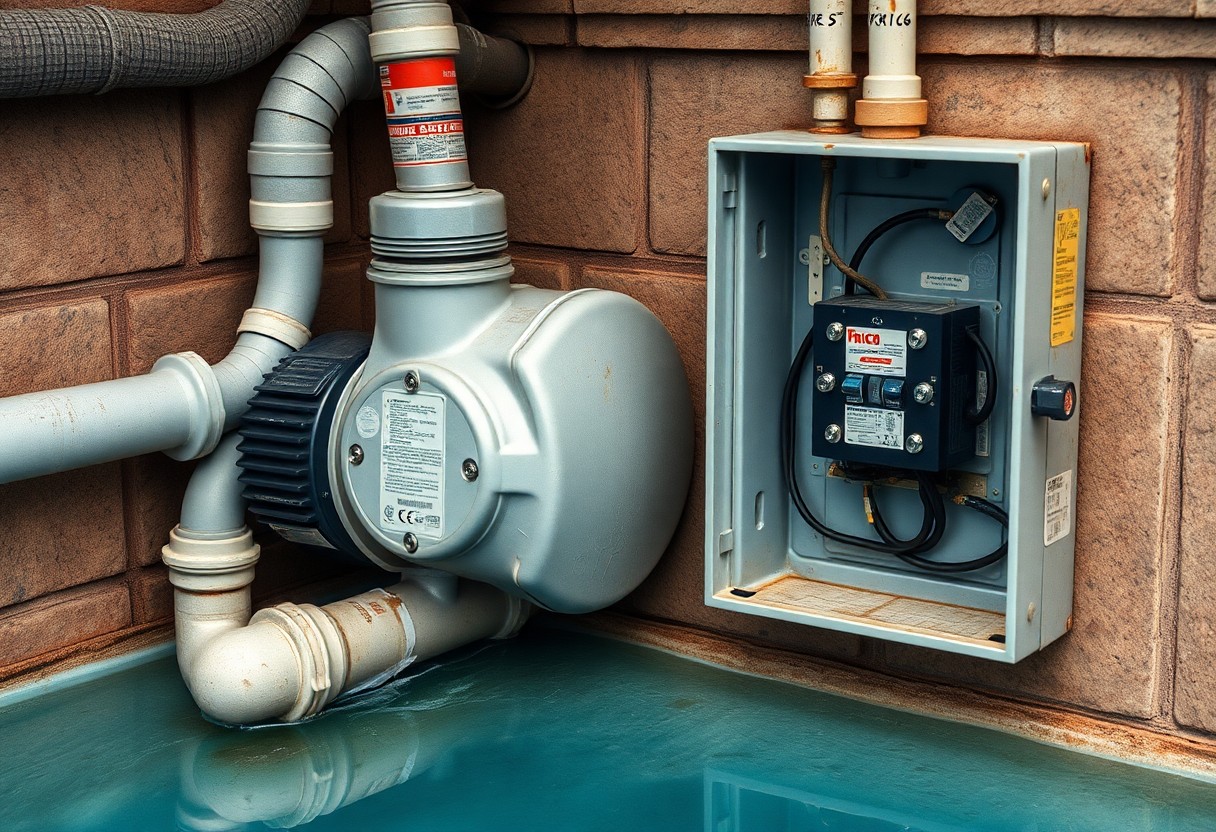
You’ll find a motor (single‑ or three‑phase, often 0.5-2.0 HP), an impeller and diffuser housed in the volute, a strainer basket and lid on the suction side, a shaft seal and bearings, plus electrical controls (starter, capacitor/contactor or VFD on variable‑speed units). Filters, heaters and check valves sit downstream but affect pump load; a clogged strainer or failing seal are common causes of elevated amp draw and breaker trips.
How a Pool Pump Operates
The motor spins the impeller to create low pressure at the suction port so water is drawn from skimmers and drains, pushed through the filter and returned to the pool; flow (GPM) depends on RPM and system head. For example, a 20,000‑gallon pool pushed at 50 GPM achieves a full turnover in roughly 6.7 hours, so reduced flow directly impacts turnover time and chemistry control.
Hydraulic details matter: head from piping, valves and a dirty filter raises resistance and reduces GPM, while the pump’s curve shows how flow falls as head increases. Apply affinity laws: if you double RPM, flow roughly doubles, head quadruples and required power increases about eightfold-so a small speed change can spike amps. Electrical faults such as a failing start capacitor, shorted winding or locked rotor also elevate current and trip breakers even if hydraulic conditions look normal.
Importance of Regular Maintenance
You should clean the strainer basket weekly, backwash or clean filters per manufacturer intervals, inspect shaft seals and O‑rings, and monitor motor amperage monthly with a clamp meter. Simple maintenance keeps system head low and prevents the extra load that commonly causes breakers to trip.
Specifics help: clear debris from skimmers and pump lids weekly, backwash sand/DE filters when pressure rises 7-10 psi above clean, and replace cartridge elements per the vendor or when media shows wear. Test motor amps against the nameplate-if you see more than a 10-20% increase, investigate bearings, seals or electrical issues. Upgrading to a variable‑speed pump can cut energy use 50-75% and reduce thermal/electrical stress that leads to repeated breaker trips.
Common Reasons for Breaker Trips
Overloading the Circuit
If your pump shares a 20A circuit with lights or a heater, you can easily exceed capacity when the pump (a 1-2 HP unit) draws 8-16A running and a higher inrush at startup; you’ll see the breaker trip immediately after the pump kicks on or when another device starts, indicating the circuit is overloaded and needs redistribution or a dedicated 240V line.
Faulty Wiring Issues
Loose connections, corroded terminals, or undersized wiring cause intermittent trips and heat; you may notice a warm breaker, flickering pump lights, or a burning odor, and in Frisco’s humid conditions corrosion accelerates, so wiring faults often show up as recurring, unpredictable breaker trips.
When you inspect further, test for voltage drop under load (more than 5-8% drop indicates a problem), check wire gauge for the breaker rating (12 AWG for 20A, 10 AWG for 30A), and look for pitted terminals at the motor and inside the disconnect; electricians frequently find loose lug screws or rodent-damaged insulation that raises resistance and trips the breaker.
Motor Malfunction
Worn bearings, a failing start capacitor, or internal winding short in the pump motor will increase current draw and trip the breaker; you’ll hear humming, notice slow ramp-up, or see amperage exceed the motor’s nameplate rating (often 10-20A), signaling motor-related trips rather than electrical panel problems.
Diagnose by measuring locked-rotor and running amps: a locked-rotor current many times above rated or running amps 20-50% over nameplate points to internal faults; technicians also test insulation resistance (megger) and capacitor microfarad values-common failures in older pumps in Frisco typically stem from bearings contaminated by sand or varnish breakdown in windings.
Blocked or Dirty Filters
A clogged cartridge or DE filter raises system pressure and forces the pump to work harder, causing higher amperage and thermal trips; you’ll see pressure spikes of 5-15 psi above normal and reduced flow, and routine backwashing or cleaning every 1-4 weeks depending on pool use prevents these breaker trips.
Measure pressure: if your normal operating pressure is 10-15 psi, values consistently above 20-25 psi indicate a restriction; follow with a flow test-if flow drops 20-40% while amps climb, clean or replace the filter element and check the skimmer/basket for debris to restore normal load on the pump.
Impeller Problems
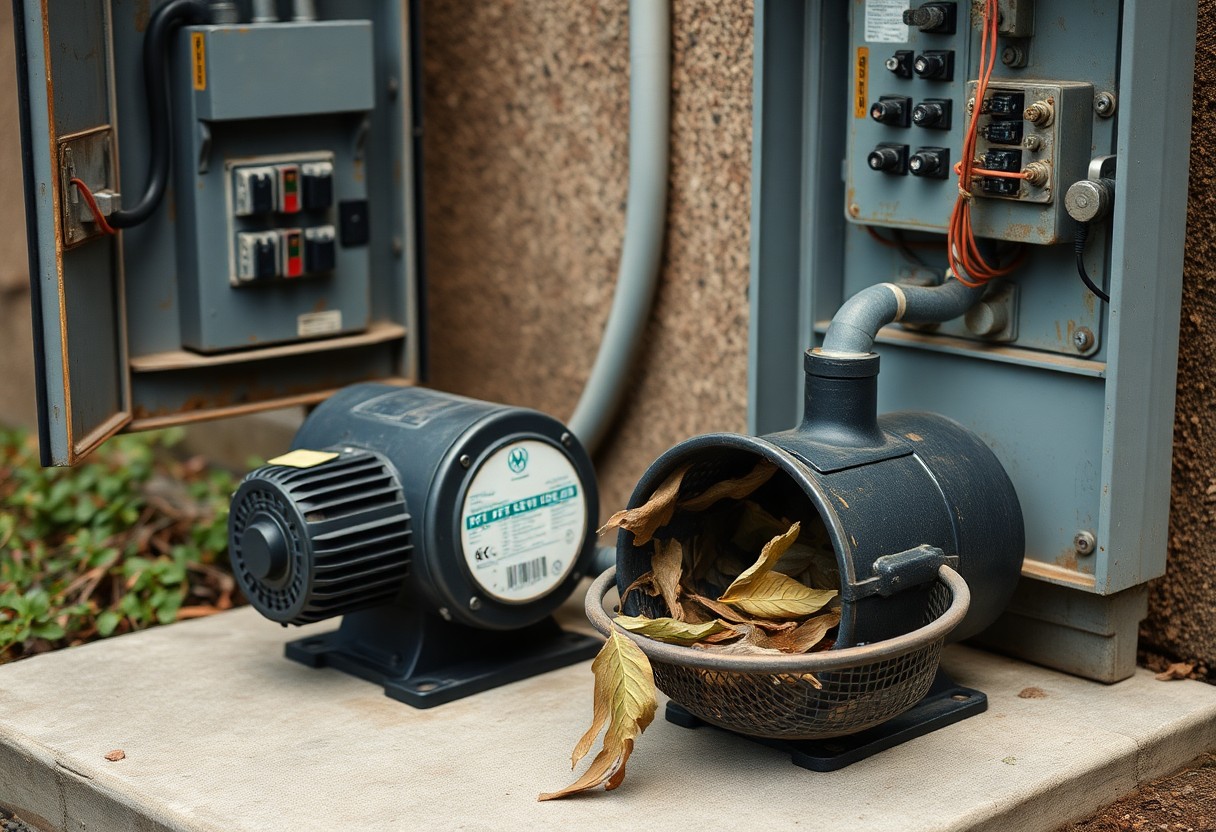
Obstructions or worn impellers reduce flow and cause cavitation, which raises current draw and triggers breaker trips; common culprits are toys, leaves, or scale buildup lodged in the impeller housing that you can often see after removing the pump strainer lid or hair and lint basket.
Inspect by shutting power, opening the pump basket, and spinning the impeller by hand-resistance, scraping, or visible debris indicates a problem; if the impeller fins are eroded or severely clogged you’ll see up to a 30-50% flow reduction and should replace the impeller or clear blockages to prevent repeated tripping.
Electrical Issues
Insufficient Power Supply
If your pump is on a weak or undersized service, voltage sag can make the motor draw excessive current and trip the breaker; many residential pumps run on 230V and a 1-2 HP motor needs roughly 8-20 A, with starting inrush often 5-8× the full‑load amps, so a neighboring heavy load or a feeder voltage below ~220V can push the breaker past its limit.
Incorrect Breaker Size
If the overcurrent device is too small for the pump’s nameplate full‑load amps, routine starting or brief overloads will trip it; breakers for pool pumps commonly range from 20 A for small units up to 50 A for larger motors, and mismatches between breaker rating and motor FLA cause repeat nuisance trips.
More info: use the motor nameplate FLA and apply NEC sizing practices (branch‑circuit conductors often sized at 125% of motor FLA per NEC 430.22) when selecting breaker and wire. Also check whether a time‑delay or motor‑rated breaker or starter is specified-standard fast‑acting breakers won’t tolerate motor inrush as well as an HACR or time‑delay device.
Ground Fault Circuit Interrupter (GFCI)
GFCI protection trips when it detects leakage currents as small as about 4-6 mA; moisture, degraded insulation, or conductive contamination on the motor or conduit can create tiny ground faults that repeatedly trip the GFCI even though the pump itself otherwise seems fine.
More info: isolate the pump by unplugging or disconnecting loads to see if the GFCI still trips, and use an insulation‑resistance tester to look for leakage; if the GFCI is old or located downstream of other equipment, replacing or relocating a faulty device often resolves nuisance trips while maintaining required protection per local code.
Damage to Electrical Lines
Physical damage-rodent chewing, abrasion, UV‑degraded jacket, corroded connections, or water intrusion-raises resistance or creates intermittent shorts that will trip a breaker under load; you may notice scorch marks, brittle cable, or tripping only when the pump runs at higher speeds.
More info: perform a visual inspection and megohm (insulation) test-values below about 1 MΩ on a 500 V test often indicate moisture or compromised insulation-and measure voltage at the motor under load to detect excessive drop; repairing damaged conductors, replacing corroded connectors, or upsizing long runs will stop trips caused by line faults.
Environmental Factors
- Frisco summers regularly hit 95-100°F, which pushes pump motors and starters past their cooling limits and can trip thermal overloads during peak afternoon use.
- Cold snaps into the 20s stiffen bearings and thicken lubricants, raising startup current and increasing nuisance trips on older pumps.
- Imbalanced water-pH out of 7.2-7.6, alkalinity outside 80-120 ppm, or CYA and calcium outside recommended ranges-speeds corrosion of seals and electrical components, creating leakage paths and ground faults.
- Leaves, grass, and sunscreen build-up in skimmers and impellers reduce flow, raise amp draw, and force breakers to trip under heavy load.
- This mix of temperature extremes, chemistry issues, and debris is what most often causes repeated breaker trips in Frisco pools.
Excessive Heat or Cold
When temperatures climb above 95-100°F, your pump motor loses airflow cooling and internal thermal protectors can trip; conversely, winter lows in the 20s make bearings and seals stiff so startup current spikes 10-30%, especially on older single-speed units, increasing the chance the breaker will trip during initial run-up.
Pool Water Chemistry
If your pH drifts outside the 7.2-7.6 band or total alkalinity falls well below 80 ppm or above 120 ppm, metal parts and electrical connections corrode faster, increasing conductivity and the risk of ground-fault trips; keep free chlorine around 1-3 ppm and test weekly after storms or heavy use.
High calcium hardness (aim for 200-400 ppm) and elevated total dissolved solids (TDS) raise water conductivity and can hide developing electrical leakage that trips GFCI-protected circuits; cyanuric acid above 50-80 ppm can force you to shock more often, and accumulated sanitizers or metals accelerate motor winding insulation breakdown, so track these numbers and treat before they force an electrical fault.
Debris Accumulation
Clogged skimmer baskets, a full pump strainer, or an impeller blocked by leaves and hair cuts flow and causes the pump to work harder-amp draw can climb noticeably after storms or heavy leaf fall-leading to short cycling and breaker trips if you don’t clear debris promptly.
Inspect and empty skimmer baskets after every strong wind or storm, clean the pump strainer and check the lid O‑ring for leaks, and monitor filter pressure-backwash when pressure rises 8-10 psi over baseline; technicians commonly see a 15-25% amp increase from intake restrictions, and routine debris control prevents that extra load from tripping breakers.
Troubleshooting Steps
Inspecting the Pump Circuit
You should verify the breaker rating against the pump nameplate FLA and measure current with a clamp meter while the pump runs; many 1-2 HP pumps draw roughly 8-18 A at 230 V. If the breaker size (for example 15-20 A) is repeatedly reached or exceeded, the breaker will trip. Also note whether the trip is slow (thermal/overload) or instantaneous/GFCI, which points to leakage or arc faults.
Checking Wiring Connections
You should inspect terminals at the pump, subpanel and breaker for loose, corroded or burnt connections and check that the two hots and ground on a 230 V system are secure; loose lugs raise resistance and heat. Use a multimeter to confirm voltage under load and look for visible insulation damage or brown/blackening at contacts.
When you tighten connections, follow the motor or panel torque specs when available; absent specs, snug and recheck after a short run. Clean corrosion with a wire brush, apply dielectric grease to prevent future corrosion, and replace conductors with melted insulation. Measure insulation resistance with a megger-values under about 1 MΩ typically indicate moisture or deterioration and usually require rewiring or component replacement.
Evaluating the Motor and Capacitor
You should listen for humming, a slow start, or unusual vibration and measure start-up and running amps with a clamp meter; a failing start capacitor often causes high inrush or failure to reach RPM. Compare running amperage to the pump’s FLA-if running amps exceed FLA by more than 10-15%, the motor may be overheating and tripping the breaker.
To test the capacitor you should first discharge it safely and measure capacitance with a meter-replace it if the reading is below roughly 60-70% of the rated µF. You can also check motor windings with an ohmmeter for imbalance and use a megger for insulation-winding insulation below about 1 MΩ suggests moisture or winding failure. Excessive locked-rotor amps or noisy bearings usually point to motor service or replacement.
Cleaning or Replacing Filters and Impellers
You should monitor filter pressure and flow-if the pressure gauge is 8-10 psi above normal or you notice reduced flow, the pump is working harder and may trip the breaker. Clean skimmer baskets, filter cartridges, and strainer baskets, and inspect the impeller for hair and debris that can choke flow.
When you service the pump, shut power and remove the volute to inspect the impeller for hair, toys or plastic; small obstructions can reduce flow and increase amperage significantly. If cleaning doesn’t restore performance, compare measured head and flow to the pump curve for your model-impellers damaged or worn can reduce efficiency by 20-40% and should be replaced to prevent repeat tripping and motor overheating.
When to Seek Professional Help
Recognizing the Signs of Major Issues
If your pump trips the breaker every time it starts, emits a burning smell, shows visible arcing or smoke, or leaks water onto electrical components, stop using it and call a pro; repeated trips more than twice a month, motor humming without starting, or amp draw consistently 10-15% above the nameplate are strong indicators of a serious electrical or motor fault that needs trained diagnosis.
Choosing a Qualified Pool Technician
Ask for technicians with CPO or PHTA-related certifications, proof of state or local licensing where required, general liability insurance, and experience with variable‑speed pumps and surge-related failures; request references for jobs performed in Frisco, written estimates, and a diagnostic that includes amp draw, insulation resistance, and GFCI testing.
When vetting candidates, verify license numbers and call your city permit office if work will involve rewiring or a new service; expect a professional diagnostic to include measured amp draw, rotor/stator testing, and leakage checks and to cost $75-$150 in many markets. Also request a written scope listing parts, labor hours, warranty terms (typically 90 days to 1 year for repairs, 1-3 years for new pumps), and brand experience-technicians who routinely work with manufacturers like Hayward, Pentair, and Sta‑Rite will be familiar with common failure modes.
Understanding Repair vs. Replacement
If the motor is older than 8-12 years, repairs are frequent, or a single repair exceeds roughly 40-60% of a new pump’s cost, replacement usually makes more sense; also consider switching to a variable‑speed pump for energy savings if you run the system many hours-VSPs often cut energy use substantially compared with older single‑speed units.
Compare costs and lifecycle: a motor rebuild or replacement often runs $300-$800, while a new-style pump package can be $600-$1,500 depending on horsepower and features. Calculate payback by multiplying your pump’s kilowatt draw by your hourly run time and local kWh rate-if upgrading to a VSP reduces annual energy spend enough to recoup the premium within 2-4 years, replacement is the smarter investment; otherwise a targeted repair may keep you operational until a planned upgrade.
Conclusion
The most common reasons your pool pump in Frisco keeps tripping the breaker are electrical faults, motor overload from a clogged impeller or dirty filter, bad start/run capacitors or bearings, damaged wiring or ground faults, and an undersized or failing breaker; high ambient heat or corroded connections can worsen the problem. You should inspect the pump basket and filter, check wiring and capacitors, and hire a licensed electrician or pool technician to diagnose and repair safely.
FAQ
Q: Why does my pool pump keep tripping the breaker in Frisco?
A: Common causes include an overloaded or failing motor, a short or ground fault in the motor wiring, a bad start or run capacitor, clogged impeller or filter causing the motor to overwork, water intrusion into the motor, a weak or aging breaker, an incorrectly sized breaker or shared circuit, and nuisance trips from GFCI/AFCI devices. Local factors such as high summer temperatures, humidity, and occasional voltage fluctuations in Frisco can worsen these issues.
Q: How can I tell whether the pump motor, the breaker, or the wiring is at fault?
A: Note how the breaker trips: an instant trip usually indicates a short or ground fault; a delayed trip often means overload/overheating. Smell burnt insulation or inspect for visible wire damage. Use a clamp ammeter to measure start and run amps against the motor nameplate. If amps exceed the nameplate, the motor or hydraulic load is the likely cause. If the motor draws normal amps but the breaker trips, the breaker or wiring (loose connection/ground fault) is suspect. For insulation and continuity checks use a megohmmeter and have an electrician perform panel tests if uncertain.
Q: Does Frisco’s climate or local power supply increase the chance of breaker trips?
A: Yes. High ambient temperatures raise motor operating temperature and starting current, increasing the risk of overload trips. Humidity and summer storms can allow water into electrical connections or the motor, causing ground faults. Local voltage dips or surges can stress capacitors and motor windings. Older homes or improperly sized service in parts of Frisco may also lead to shared or undersized circuits that trip under pump load.
Q: What safe maintenance and DIY checks can I do before calling a technician?
A: Turn power off at the breaker before touching anything. Clean skimmer and pump baskets, clear debris from the impeller/pump strainer, and check/clean the filter to reduce hydraulic load. Inspect the pump housing, motor for water leaks, and the pump lid O-ring for a good seal. Reset the GFCI/AFCI receptacle after verifying no moisture. If you have a clamp meter, measure running amps. Do not open the motor or attempt capacitor or internal electrical repairs unless qualified.
Q: When should I call a licensed electrician or pool technician in Frisco?
A: Call a professional if the breaker trips immediately, trips repeatedly after basic cleaning, there is a burning smell or visible damage, the motor hums but won’t start, the motor gets excessively hot, amperage readings exceed the motor nameplate, or if the issue appears to be in the panel or wiring. Also hire a licensed pro to replace breakers, test insulation, repair wiring, replace capacitors or motors, and to ensure the pump is on a correctly sized dedicated circuit per local code.