You are likely facing common issues like blocked return fittings, a failing pump or impeller, closed or misadjusted valves, air leaks in the circulation line, or clogged filters and skimmers; local hard water or mineral buildup in McKinney can also restrict flow-inspect and clean fittings, backwash or replace filters, check pump operation and pressure, confirm valves are open and watch for air bubbles, and consult a licensed technician if electrical or pump repairs are needed.

Key Takeaways:
- Pump or power issue – check that the pump is running, breakers/GFCI aren’t tripped, and the motor has power.
- Valve or plumbing position – open return valves and verify multiport valves and automated valves are correctly set.
- Clogged filter, skimmer, or impeller – debris or buildup can block flow; inspect and clean the skimmer basket, pump basket, and filter.
- Air in the system or low water level – airlocks from low water or a loose pump lid can stop jet flow; bleed air and top up the pool.
- Scaling, damaged jets, or leaks – Texas hard water can cause calcium buildup; inspect jets, return fittings, pipes, and seals for damage or scaling.
Understanding Pool Jets
What Are Pool Jets?
You’ll find pool jets (return fittings) mounted in the pool walls to push filtered water back into the basin; they include adjustable eyeballs, directional nozzles and high‑flow spa jets. Most connect to 1.5-2″ plumbing and typically deliver about 10-40 gallons per minute each, depending on pump horsepower, pipe diameter and valve settings, helping with circulation, chemical distribution and creating swim currents.
How Do Pool Jets Work?
Water is pulled by your pump through skimmers and main drains, forced through the filter and heater, then routed out through return lines and the jets, which convert pressure into a directed stream; a 1-2 HP pump commonly produces 30-90 GPM, so with three returns at 60 GPM total you’d expect roughly 20 GPM per jet. Balancing valves let you shift flow between returns and features.
Pressure, pipe size and fittings determine jet performance: narrower or longer lines increase head loss and cut flow, while a partially closed valve or a clogged impeller can drop output 20-50%. You can test by measuring pump pressure and flow, isolating lines with valves, or swapping a suspected faulty return to see if velocity changes-practical checks that reveal whether the issue is hydraulic, mechanical or debris-related.
Common Issues with Pool Jets
Clogs and Blockages
Debris in your skimmer, pump basket, or impeller often cuts jet flow by 30-50%; leaves, hair, and sand are the usual culprits. You can check the pump basket and skimmer monthly, clear visible obstructions, and use a leaf rake or backwash the sand filter to restore flow. If one jet is weak, remove the eyeball and run a small wire or compressed air through the return line to dislodge scale or calcium buildup.
Equipment Malfunction
Pump or valve failures cause uneven or no jet flow even when plumbing is clear; common issues include a failed pump motor, bad capacitor, stuck multiport valve, or worn impeller. You’ll notice humming, tripped breakers, or heat at the motor; a clamp-on ammeter and visual inspection of unions can narrow the fault to electrical or hydraulic components.
Motors on residential pools are typically 0.75-1.5 HP, and a failing motor often draws higher current or intermittently trips a 15-30 A breaker. You should check the pump lid O-ring and suction-side unions for leaks, test the capacitor with a meter (replacement often costs $15-$50), and inspect the impeller for hair and grit; a partially clogged impeller can reduce output by up to 40%. For electrical faults, verify voltage at the motor terminals and hire a licensed electrician if readings are out of spec.
Air Lock Problems
Air trapped in your circulation lines causes sputtering jets, reduced pressure, and a gurgling pump lid; this commonly happens after servicing the pump or when water drops below the skimmer. You can identify an air lock by steady air bubbles at the pump basket and intermittent jet operation, often affecting only returns on the suction side.
To purge air, stop the pump, open the pump lid and bleed valve on the filter if equipped, then reassemble and run the pump while slightly loosening the return-side union to let trapped air escape; tighten once a steady stream of water appears. If air returns, check skimmer weirs and suction fittings for hairline cracks or loose unions, and confirm the pump strainer lid O-ring seals properly-air typically re-enters through worn seals or low water conditions.
Water Level Fluctuations
Low water reduces skimmer feed and can cause the pump to cavitate, dropping jet power; high water may flood skimmers and alter flow balance. Keep your pool level about 1-2 inches above the skimmer midpoint so suction stays steady and jets maintain consistent pressure during normal use.
After heavy use or evaporation, you might need to add 100-500 gallons depending on pool size to restore proper level; for reference, a 15,000-gallon pool rises roughly 0.1 inch per 15-20 gallons added. If your pool frequently fluctuates, inspect the auto-fill float, check for leaks around fittings, and monitor during backwash cycles-correcting level swings prevents recurring cavitation and preserves pump life.
Diagnosing Pool Jet Issues
Visual Inspections
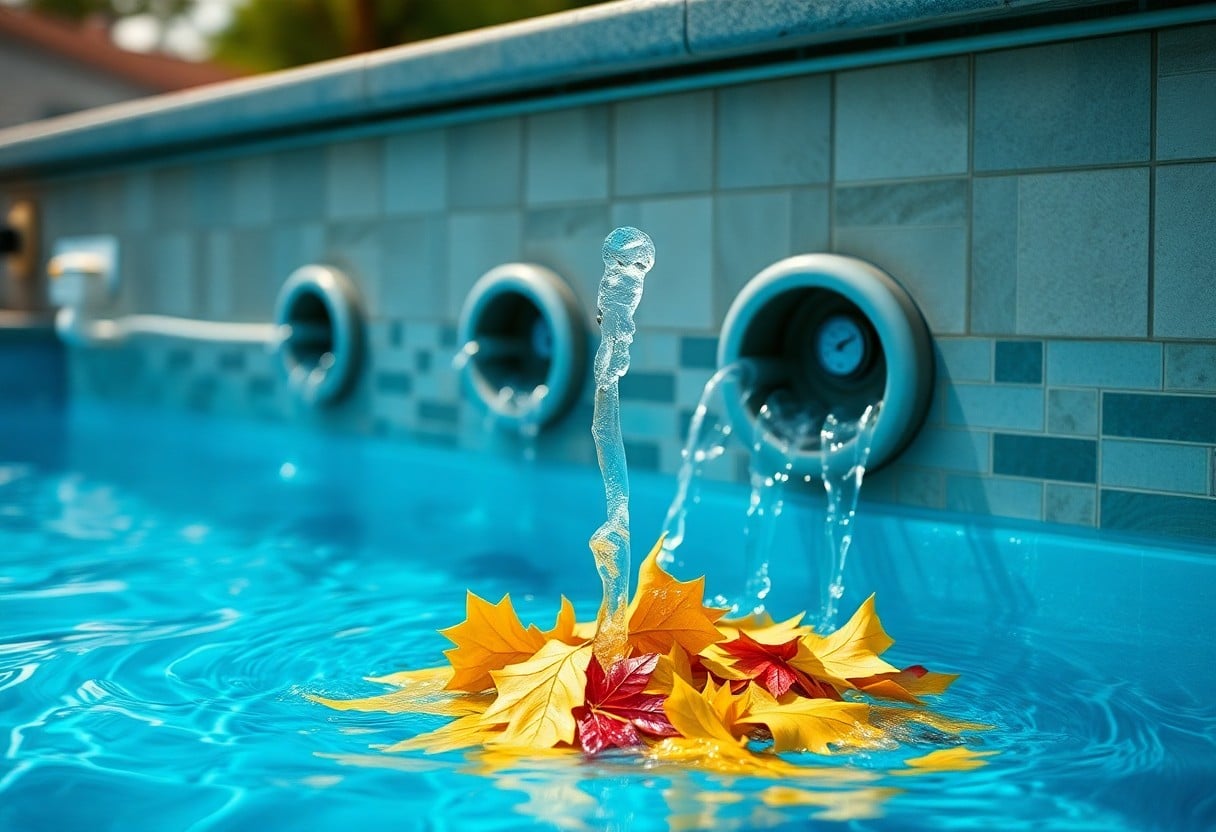
You should scan return fittings, jets and visible plumbing for hairline cracks, mineral buildup or loose eyeballs; algae or white scale around returns often indicates reduced flow from calcification, and trapped leaves or toys in the return throat can cut flow by 30-50%. Also check skimmer baskets and suction lines for blockages and look for steady streams of air bubbles at returns-visible air means a suction leak or low water level.
Checking the Pump and Filter
Start at the pump: confirm the lid O-ring seals, clear the pump and skimmer baskets, and note the filter pressure gauge. If filter pressure is about 8-10 psi above the baseline clean reading, perform a backwash or cartridge clean; persistent high pressure with weak jets points to a clogged pump impeller or restricted suction.
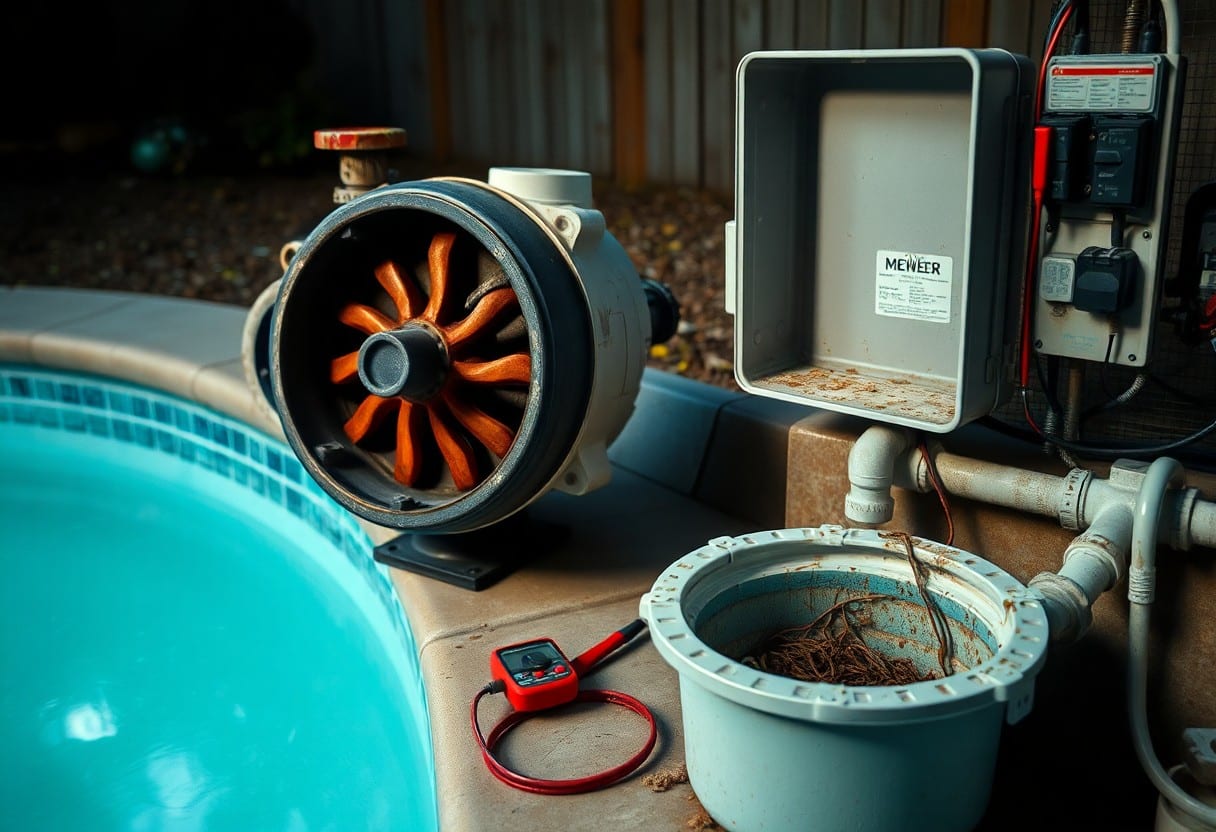
To inspect the impeller, shut power, open the pump strainer, remove the basket and use a flashlight to check for hair, leaves or sunscreen that can jam the vanes. You can also check for air at the pump lid or hairline cracks on the suction side by running the pump and watching for continuous air bubbles in the strainer-air ingestion reduces flow dramatically. If the motor hums but the impeller won’t spin, the shaft or bearings may be failing and should be serviced by a technician.
Assessing Water Flow and Pressure
Gauge jet strength by sight and simple measurement: use a 5‑gallon bucket and time how long a single jet fills it, then convert to GPM with (gallons×60)/seconds; many residential pumps deliver 40-80 GPM, so a single weak return under ~10-15 GPM suggests restriction. Check valves and partially closed returns-closed valves can cut flow to the affected jets.
For troubleshooting, close all but one return to see if that jet regains full velocity-if it does, debris or collapsed pipe to other returns is likely. Use the pressure gauge differential across the filter as a diagnostic: steady low pressure with poor flow indicates suction-side issues (clogged skimmer, suction leak), while high pressure with poor flow indicates restriction on the return side or a dirty filter element.
Listening for Unusual Sounds
Pay attention to the pump and returns: a gurgling or sputtering noise at the pump usually indicates air entering the system, a high‑pitched whine can signal cavitation from restricted suction, and grinding or humming often means motor or bearing wear. Noises often precede visible performance loss, so note when they started relative to system changes.
Isolate sounds by turning the pump off, then on, and by opening/closing return valves one at a time while you listen; this helps locate whether noise originates on the suction or return side. Always kill power before probing the motor housing-bearing failure often presents as a metallic grinding under load, while impeller obstructions create a rasping sound and sudden drops in GPM. If you hear electrical buzzing or persistent grinding, arrange professional service to avoid motor damage.
Troubleshooting Steps
Clearing Clogs
If your returns are weak, start by clearing skimmer and pump baskets, then backwash or clean the filter cartridge; debris in the impeller or main drain can cut flow by up to 50%. You can remove the pump strainer lid, inspect the impeller cavity for leaves and hair, and use a garden hose to flush the plumbing through the skimmer and return lines to dislodge compacted debris.
Repairing or Replacing Equipment
When you hear a loud hum, see oil or water leaks, or the pump won’t build pressure, inspect the motor, seals, shaft, and impeller; a seized bearing or worn seal often reduces jet output. Check filter pressure against the “clean” baseline and note if it’s 8-10 psi higher, indicating service or replacement may be needed.
For repairs you can replace O-rings, shaft seals, and impellers yourself with basic tools; motor or multiport valve replacement is usually a pro job. Expect pump replacement in the $400-$1,200 range depending on model, and confirm electrical connections meet code-use a licensed electrician for rewiring or grounding issues and consider upgrading to a variable-speed pump to improve flow control and efficiency.
Resolving Air Locks
Air trapped on the suction side starves the pump and makes returns sputter; purge air by turning off the pump, opening the filter air-relief valve, and slowly loosening the pump strainer lid until water, not air, flows for 1-2 minutes. Then tighten fittings and restart with returns open to flush remaining air.
If air returns after purging, check all suction-side fittings, skimmer gaskets, and the pump basket lid O-ring for leaks; a loose union or cracked pipe can draw air continuously. You can prime stubborn lines using the skimmer vacuum method or a wet-dry shop vac on the skimmer to restore full suction before running the pump long-term.
Adjusting Water Levels
Your pool water should sit about halfway up the skimmer opening; if it’s lower the pump will pull air, if higher the skimmer won’t draw surface water properly. Top off with a hose until the level is stable at mid-skimmer, then run the pump and watch return flow for improvement.
After adjustment, monitor during normal use and heavy bather load-water can drop 1-2 inches from splashout and evap. If your pool repeatedly runs low, inspect the auto-fill, check for leaks around fittings or the pump, and verify backwash procedure isn’t wasting excessive water; a properly set water level keeps skimmer performance and jet pressure consistent.
Maintenance Tips for Pool Jets
- Inspect jet faces monthly for scale, debris, or misalignment
- Clean skimmer baskets weekly and filter cartridges every 4-6 weeks
- Flush lines after winter and before reopening; backwash sand/DE filters per manufacturer
- Maintain water: pH 7.2-7.6, free chlorine 1-3 ppm, alkalinity 80-120 ppm
- Book a professional inspection annually or if flow drops more than 20-25%
Regular Cleaning Procedures
You should remove and wipe jet eyeballs monthly, using a soft brush and a 1:1 white vinegar/water soak for calcium buildup; run the pump 15-30 minutes afterward to clear loosened debris; empty skimmer and pump baskets weekly, and inspect the pump strainer pot for trapped leaves or toys that reduce flow.
Seasonal Maintenance Checklist
At spring opening and fall closing, you’ll inspect unions for leaks, lubricate O-rings with silicone, test multiport valve positions, and verify the pump primes and holds pressure; replace cracked hoses and tighten loose fittings to prevent seasonal failures.
During spring startup, measure baseline pump pressure and note run time-if pressure spikes 8-10 psi above normal or flow feels 20-25% reduced, remove the pump volute to check for impeller blockage; for winterizing, blow out lines or use non-toxic antifreeze in exposed plumbing and store removable jets indoors to prevent freeze damage.
Professional Inspections
You should schedule a licensed technician at least once a year to test flow rates, inspect the pump motor and bearings, verify valve operation, and perform leak detection using dye tests or pressure decay methods to catch hidden issues before they worsen.
Technicians typically spend 45-90 minutes diagnosing problems and may use a flow meter or camera to inspect lines; if they find a flow shortfall, expect them to check impeller wear, suction leaks, and electrical amperage (compare to the motor’s nameplate) to determine whether repair or replacement is needed.
Importance of Water Chemistry
You’ll prevent jet blockages and corrosion by keeping pH between 7.2-7.6, free chlorine at 1-3 ppm, total alkalinity 80-120 ppm, calcium hardness roughly 200-400 ppm, and cyanuric acid 30-50 ppm for outdoor pools to stabilize sanitizer levels.
High pH or calcium hardness above 400 ppm accelerates scale formation inside jet throats and impellers, while low alkalinity causes pH swings that corrode metal fittings; test your water weekly during heavy use and adjust with sodium bisulfate, muriatic acid, sodium bicarbonate, or calcium chloride as needed. Knowing these targets and testing frequently keeps jets flowing and reduces the chance of costly plumbing repairs.
When to Call a Professional
Identifying Complex Issues
If jets stay weak after you clear skimmers, clean the pump basket, and prime the pump twice, you’re likely facing a complex fault such as a cracked suction line, failed pump impeller, stuck check valve, or motor electrical issue; persistent air in the lines, grinding noises, frequent breaker trips, or sudden water loss are other red flags that typically require diagnostic tools and pressure testing a pro will provide.
Cost-Benefit Analysis of Professional Help
Expect a diagnostic/call-out fee of about $75-$150, routine repairs in the $150-$500 range, and major items like pump replacement at $600-$1,200 or variable-speed units $900-$2,000; weigh that against downtime, potential pool damage, and energy savings-upgrading a failing single-speed pump to a variable-speed often cuts energy use substantially, shortening payback over a few years.
When you run the numbers, factor labor warranties, parts life, and energy savings: for example, replacing a 1.5 HP single-speed pump with a variable-speed unit can reduce run-costs by roughly 40-70% depending on your schedule, which may recover install cost in 2-4 years in McKinney’s long swim season; ask for itemized estimates, projected energy savings, and expected part lifespans to compare true lifecycle costs rather than just the upfront price.
Finding the Right Pool Technician
Search for technicians with Certified Pool Operator (CPO) credentials, manufacturer certifications (Hayward, Pentair, Jandy), liability insurance, and local McKinney references; require written estimates, parts/labor warranties, and at least three recent customer references or 4+ star reviews before you hire.
Dig deeper by asking about specific experience with your issue-suction leaks, multi-jet manifolds, automation systems and variable-speed pumps-confirm they’ll provide an itemized invoice with part model numbers, check whether diagnostic fees are waived if you approve repairs, and verify insurance and a written warranty (common terms: 1 year on parts, 30-90 days on labor); this minimizes surprises and ensures accountability on follow-up diagnostics or warranty calls.

Final Words
Summing up, if your pool jets aren’t working in McKinney you should check for clogged returns or skimmer baskets, closed or misaligned valves, air in the circulation line, a failing pump or impeller, and mineral buildup from hard water; local debris after storms and seasonal temperature changes can worsen blockages. Inspect filters and pressure, verify pump priming and electrical connections, and contact a licensed pool technician for persistent issues to ensure safe, effective repairs and restore proper flow to your pool.
FAQ
Q: Why are none of my pool jets working at all in McKinney?
A: The most common causes are a closed return valve, a stopped pump, or a blocked suction line. Verify the pump is running and the multiport valve is set to “Filter” or “Circulate.” Check that all return/eyeball valves are open and the pump basket and skimmer baskets are clear of debris. If the pump runs but there’s no flow, the impeller may be clogged or the suction line may have an air leak or obstruction; inspect the pump lid O-ring and suction fittings for leaks and call a pro if the impeller or plumbing needs service.
Q: Why are my jets producing weak flow instead of a strong stream?
A: Weak flow usually indicates a dirty or clogged filter, partially closed valves, or a pump problem. Check the filter pressure gauge-high pressure means the filter needs backwashing or cleaning (DE/cartridge maintenance); low pressure suggests pump or suction issues. Open all return valves fully, clear skimmer and pump baskets, and confirm the pump basket and impeller are free of debris. If the problem persists, the pump motor could be failing or the plumbing could be restricted; consider professional diagnosis.
Q: Some jets work but others don’t-what should I check?
A: Isolated non-working jets are often caused by closed diverter/return valves, blocked lines, or a stuck eyeball fitting. Locate and open any local diverter valves between returns; remove the eyeball face and probe the return with a flexible brush or compressed water to dislodge calcium or debris. Calcium scaling from hard water (common in North Texas) can restrict individual lines-chemical descaling or a service call to clear pipes may be required.
Q: My jets are sputtering and blowing air-what causes that and how do I fix it?
A: Sputtering indicates air entering the circulation system. Check pool water level and ensure it’s above the skimmer mouth, inspect and tighten the pump lid O-ring, and examine suction-side fittings, unions, and the skimmer weir for cracks or loose clamps. If the skimmer or pump basket shows air at startup or the pump loses prime, locate the leak on the suction side and replace seals or cracked fittings; persistent or hard-to-find leaks usually require a pool technician with pressure-testing equipment.
Q: After winterizing or a storm in McKinney my jets don’t work-could weather be the cause?
A: Yes. Freeze events can crack lines, valves, or return fittings; heavy storms can clog lines with debris or dislodge valves. Inspect visible returns and plumbing for cracks or leaks, check the pump and filter for debris introduced during the storm, and verify all valves are in the correct positions. If you suspect freeze damage or submerged valves, turn off the system and contact a qualified pool service to pressure-test and repair damaged pipes or fittings.