Many times your pool heater in Anna won’t stay on because of thermostat miscalibration, faulty ignition or pilot, interrupted gas or electrical supply, low water flow from clogged filters or pump issues, pressure/flow switches tripping, or safety sensors reacting to chemical imbalance or cold air. You should inspect each component systematically or call a qualified technician to diagnose sensor faults, gas valves, and control board issues to restore reliable operation.
Key Takeaways:
- Thermostat/controller issues: incorrect setpoints, timers, or a faulty temperature sensor can make the heater turn off prematurely-verify settings and check the controller for error codes.
- Low water flow or pressure: clogged filter, closed valves, or a weak pump reduce flow and trigger safety shutoffs-inspect/clean the filter, open valves, and confirm pump operation.
- Ignition, gas, or electrical interruptions: pilot/igniter failure, gas supply problems, or tripped breakers can stop the heater-check gas valves, power supply, and ignition components.
- Safety switches and limit sensors tripping: pressure/flow switches, high-limit sensors, or faulty switches can force shutdown-identify any tripped safety device and address the underlying cause.
- Local conditions and heat-exchanger issues: cold snaps (freeze protection), hard water scale, or corrosion on the heat exchanger can cause overheating or shutdown-inspect the exchanger and maintain water chemistry.
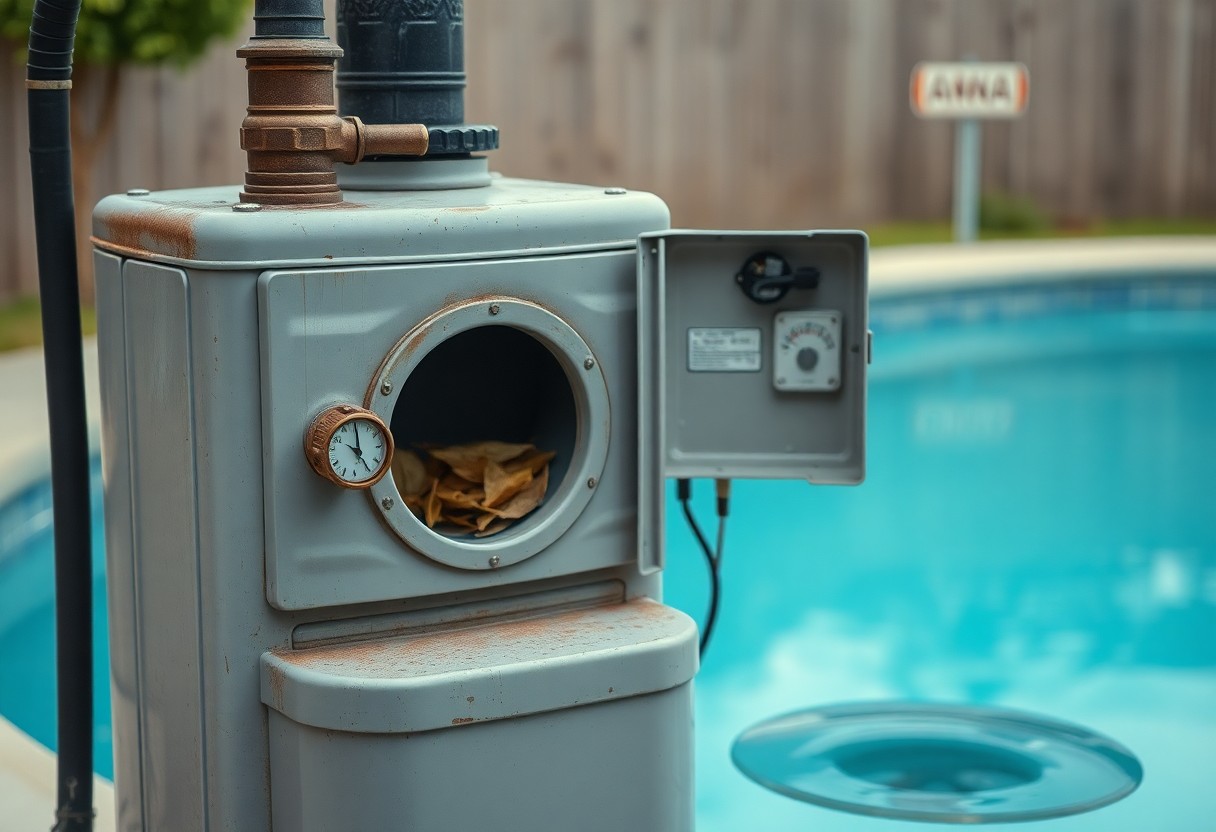
Common Reasons for Pool Heater Shutdown
Thermostat Issues
If your heater shuts off prematurely, the thermostat sensor or setpoint is often the cause; a faulty probe, loose wiring, or an incorrect differential can make the heater think the pool reached temperature. You should check that the set temperature matches your target (for example 82-86°F for comfortable swimming) and verify the probe reads within ±1-2°F using a hand thermometer placed near the return.
Filter Problems
A dirty or clogged filter raises system pressure and reduces flow, triggering safety switches that shut the heater down; you may see filter pressure climb 8-12 psi above normal or notice poor suction at skimmers. Clean or backwash your DE/cartridge/sand filter per the manufacturer-often every 4-6 weeks in summer-and confirm pressure returns to the normal operating range.
For a deeper check, measure static and running pressures: a spike of more than 10 psi from the clean baseline commonly indicates a restriction. In Anna’s hard-water conditions, scale buildup on cartridges and DE grids is common-so disassemble and inspect element pleats, replace O-rings, and run a chemical soak if flow doesn’t recover. Also verify multiport valves are not partially closed and that laterals or manifolds aren’t damaged.
Electrical Supply Interruptions
Intermittent power, tripped breakers, or a weak incoming voltage will shut the heater off; you might see the control panel blink, or a breaker labeled “pool” tripped in your load center. Check the GFCI/breaker and any visible wiring, and note whether the heater cuts out during storms or when large loads in the house run (AC, dryer).
Investigate by measuring voltage at the heater terminals under load-many electric models require steady 208-240V and a dedicated 30-50A breaker depending on BTU/kW rating; gas models still need stable 120V for controls. Loose lugs, corroded terminals, or an undersized circuit will cause repeat shutdowns. If you find voltage sag below manufacturer specs or frequent GFCI trips, contact a licensed electrician to inspect connections and panel capacity.
Low Water Flow
Low flow trips the flow switch or causes heat exchanger overheating, so the heater will shut for protection; symptoms include cold returns, pump cavitation noise, or the flow switch clicking off. Check pump operation, clean skimmer and pump baskets, and ensure valves to the heater are fully open to restore the required flow.
For troubleshooting, compare your pool’s measured flow against the heater’s required GPM (many residential heaters need roughly 40-60 GPM for smaller units; consult your model sheet). Test the pump speed and impeller-a worn impeller or air leak in suction will cut flow. Use a flow meter or calculate GPM from pump head/pressure data, and if flow remains low after cleaning, inspect suction plumbing for blockages or collapsed lines and consider increasing pump RPM or servicing the pump.
Types of Pool Heaters
| Gas Pool Heater | 200,000-400,000 BTU units; fastest temp recovery for drive-up weekends |
| Electric Heat Pump | COP 3-7; lowest operating cost in mild climates, performance drops <50°F |
| Solar Pool Heater | Collector area typically 50-100% of pool surface; near-zero fuel cost, weather-dependent |
| Heat Exchanger | Works with home boiler or geothermal; use titanium for saltwater systems |
| Hybrid/Variable Systems | Combine solar, heat pump, and gas for seasonal flexibility |
- Gas: fastest to raise temperature for occasional use
- Heat pump: most efficient per kWh in warm seasons
- Solar: lowest long‑term operating cost when roof/site is suitable
- Heat exchanger: integrates with existing boilers or geothermal loops
Gas Pool Heaters
Gas heaters deliver rapid heating-typical units in residential pools range 200,000-400,000 BTU, so you can raise water temperature several degrees in a few hours; you’ll rely on natural gas or propane and will see higher fuel costs during extended use, but they’re the go-to when you need quick recovery before a weekend swim.
Electric Heat Pumps
You get high seasonal efficiency with heat pumps-coefficients of performance often sit between 3 and 7-meaning they move 3-7 times more heat energy than the electricity they consume; they’re ideal in Anna’s mild months, but output falls off as ambient air drops below about 50°F.
Manufacturers rate heat-pump output at specific wet‑bulb and dry‑bulb conditions; for example, a 100,000 BTU-equivalent heat pump will produce its rated heat only at optimal air temps, so you should size conservatively (often 50-100% of the pool’s heat loss) and use a cover to retain gains-this keeps run-times manageable and electrical costs lower than gas for comparable seasonal use.
Solar Pool Heaters
Solar systems use roof-mounted or ground collectors; you typically size collectors at roughly 50-100% of pool surface area so you see meaningful temperature lifts in spring and summer, and operating costs drop to near zero once panels are installed.
Performance hinges on orientation, tilt, and shading-south-facing arrays with minimal shade produce the best results in Anna; expect system lifespans of 10-20 years for polymer collectors and lower maintenance than mechanical heaters, though you’ll need plumbing space for the solar loop and a switching valve or controller to route water when sunlight is available.
Heat Exchangers
Heat exchangers let you tap a home boiler or geothermal loop to heat pool water without mixing fluids; you’ll typically use a plate or shell-and-tube exchanger-titanium plates are recommended for saltwater pools to resist corrosion.
Integration requires matching flow rates and temperatures: boilers usually operate at higher temperatures and supply steady heat through the exchanger, making this a reliable option for year-round warmth if you already have a compatible heat source; factor in installation complexity and plumbing runs when comparing lifecycle costs to standalone heaters.
After reviewing these types, use the troubleshooting checklist below to pinpoint why your heater won’t stay on.
Common Symptoms of Pool Heater Problems
Inconsistent Heating
You may see your water swing 5-15°F away from the setpoint, or the heater reach set temperature then shut down while pool temp keeps falling. Causes often include low flow (below ~20-40 GPM for many units), a failing thermostat or sensor, scale on the heat exchanger reducing transfer efficiency, or intermittent gas supply; check flow rate, sensor readings and visible scale buildup to narrow the fault.
Error Codes and Alerts
Your control panel may flash error codes or audible alerts that force shutdown; these typically indicate ignition failure, sensor faults, low-flow or over-temperature conditions. Codes vary by brand but always map to the manual, and many systems lock out after repeated failed ignitions or safety trips-note when the code appears (startup vs steady-state) to help diagnosis.
Dive deeper by recording the exact code, time of occurrence and operating conditions: ignition faults often cycle for 30-90 seconds before an E/I error, while flow/sensor codes commonly occur when flow drops under the model’s minimum (often 20-40 GPM) or when a thermistor reads off by several degrees. Use the manual’s troubleshooting table and, if needed, share the code with your service tech.
Unusual Noises
You might hear rattling, popping, hissing or a high‑pitched squeal from the heater; rattles often mean loose panels or combustion box bolts, popping can signal scale flaking inside the heat exchanger, and squeals usually point to a failing blower or pump bearing. Note whether noises happen at startup, under load or continuously to isolate mechanical versus combustion issues.
Hissing during operation can indicate improper combustion or a small gas leak and warrants immediate attention; persistent popping or knocking is commonly caused by heavy scale creating hot spots that spall off, while a grinding or high‑pitched tone usually traces to a motor bearing needing replacement-identify the sound source by briefly isolating components (pump off, blower off) before attempting repairs.
Water Leakage
You may spot puddles, dampness around unions, wet insulation, or visible dripping from the heat exchanger, pressure relief valve or pipe joints; even slow weeping can lower system pressure and trigger low‑flow or sensor faults. Inspect unions, O‑rings and visible rust or scale near the exchanger as initial checks.
To pinpoint a leak, dry the area and run the pump briefly to see where water first appears, or use a dye test at suspected joints. Leaks at the heat exchanger often show corrosion or metal flakes in the water and usually require exchanger repair or replacement, while small union leaks are frequently solved by replacing O‑rings and retorquing fittings.
Troubleshooting Steps for Pool Heater Issues
Checking the Thermostat Settings
Your thermostat may be set lower than you think or using a 1-2°F differential; set the target to 78-82°F for comfortable swimming and verify the displayed water temperature matches a handheld thermometer placed in the return. Replace weak batteries, ensure the control is in HEAT mode (not AUTO/COOL), and move the sensor away from direct sunlight or hot pipes-misplaced sensors can report temps 5-10°F off and cycle the heater prematurely.
Inspecting the Filter and Pump
Check your filter pressure gauge-clean filters typically read 10-15 psi; if pressure is 8-10 psi above your baseline, backwash or clean cartridges. Confirm the pump basket and skimmer are clear, the impeller spins, and the pump delivers expected flow: many heaters need 20-30 gallons per minute (GPM) to engage the flow switch.
If your flow is low, inspect the suction side for air leaks, collapsed hoses, or a clogged impeller-air causes cavitation and large drops in flow. Use a flowmeter or compare pressure differential across the filter to estimate GPM; for example, a 30,000-gallon pool on 1.5″ plumbing should see 40-60 GPM. Clean DE grids, replace cartridges annually, and backwash sand filters when pressure rises 8-10 psi over clean; persistent low flow often points to worn pump bearings or a blocked heater bypass valve that requires a pro.
Ensuring Proper Electrical Connections
Verify that your breakers and GFCI devices haven’t tripped and that the breaker supplying the heater is sized correctly-heat pumps often need 30-60 amps at 240V, while gas-heater controls use 120V at 15-20 amps. Turn power off before you inspect terminals, and check for loose wires, burnt connectors, or corrosion that can interrupt power and cause the unit to cycle off.
When you test with a multimeter, confirm line voltage at the heater: L1-L2 should read about 240VAC for electric heaters and heat pumps, and L1-N about 120VAC for control circuits. Watch for voltage drops under load-more than a 10% drop indicates wiring or supply issues-and tighten lug connections to manufacturer torque specs; see a licensed electrician if you observe arcing, blackened insulation, or repeated GFCI trips.
Examining Water Levels
Keep your pool water level at roughly half to two-thirds up the skimmer opening-too low and the pump draws air, too high and surface skimming fails. Low water frequently causes the flow switch or pressure sensor to open and shut the heater; fill to the correct level and watch for air bubbles at returns as an indicator of improper suction.
If you have an autofill, verify your float valve functions; a failing float can let levels drop below the skimmer during heavy use or evaporation. Also inspect for clogged skimmer weirs, cracked suction lines, or visible cavitation in the pump housing-these reduce net positive suction head (NPSH) and can trip heater safety devices. In pools with waterfalls or spas, check valve positions that can divert flow away from the heater, and set them so the heater receives full circulation when it’s running.
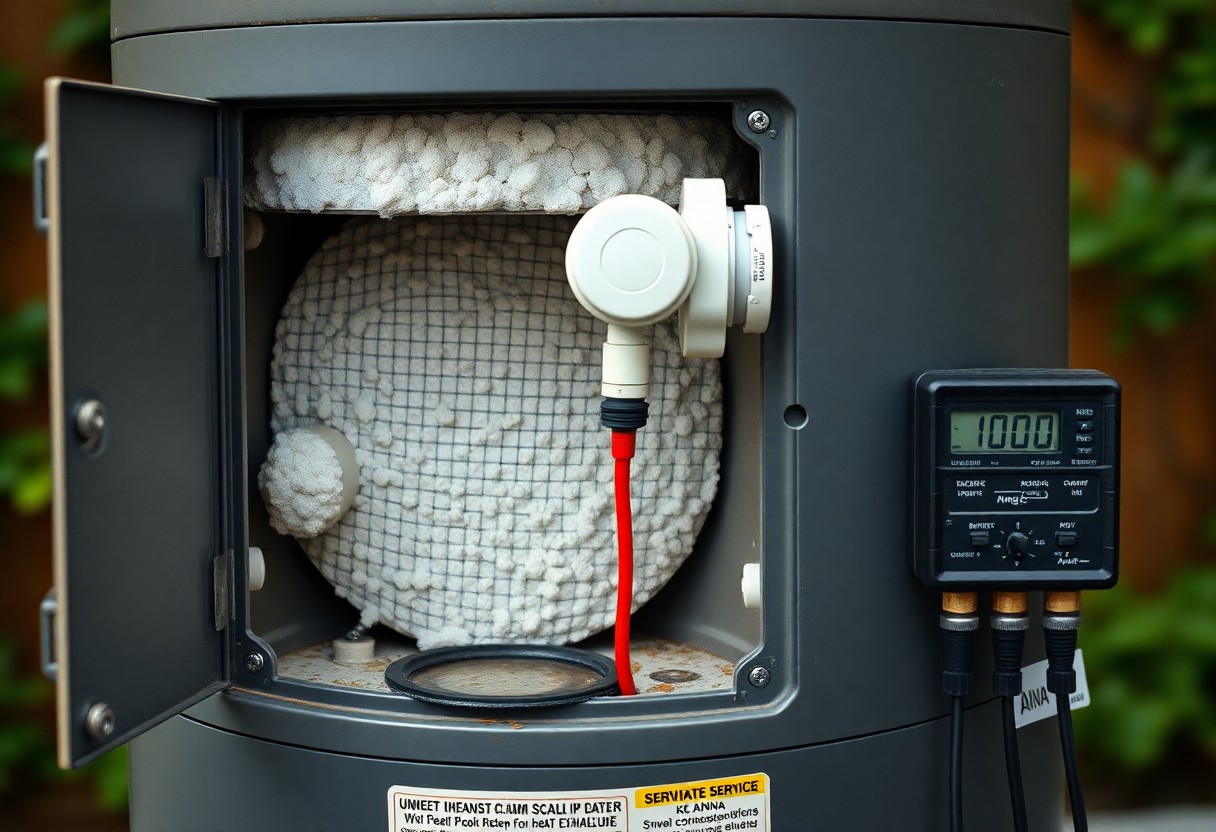
Maintenance Tips to Prevent Heater Shutdown
- Empty skimmer baskets weekly and clear debris from pump strainers.
- Clean or backwash filters every 1-2 weeks during heavy use; replace cartridges every 1-3 years.
- Test water chemistry weekly: pH 7.2-7.6, alkalinity 80-120 ppm, calcium hardness 200-400 ppm.
- Inspect burners, vents, and electrical connections monthly for corrosion or loose terminals.
- Log error codes and runtime hours; call a technician for recurring faults or visible leaks.
Regular Cleaning and Maintenance
You should empty skimmer baskets weekly, clean or backwash filters every 1-2 weeks under heavy use, and inspect the pump strainer monthly; test water chemistry weekly targeting pH 7.2-7.6, alkalinity 80-120 ppm and calcium hardness 200-400 ppm to limit scale and corrosion that force heaters to shut down.
Seasonal Inspections
Before winter and at season start, perform a full inspection: verify thermostat calibration, observe the ignition sequence for 3-5 start attempts, check the heat exchanger for scale or leaks, and scan the control board for error codes; schedule a pro if you find corrosion or repeated faults.
When you inspect, follow a checklist-record startup times and error codes, photograph corrosion points, measure temperature rise across the heater (expect roughly 10-20°F under steady state) and compare to the manual, and confirm venting clearance and combustion air supply; have a certified technician check gas pressure and CO levels annually on gas units.
Protecting Against Freezing
When temperatures approach 40°F, run circulation and enable built-in freeze protection or set the pump to cycle to maintain flow; drain the heat exchanger and isolation valves if you fully winterize to avoid cracked exchangers that cause shutdowns.
For full winterization, shut power and gas per the manual, open drain and relief valves, and clear vents; electric heaters need dry wiring and unobstructed vents, while gas models also require intact flues-install freeze sensors tied to your controller to automatically start circulation at thresholds you set.
Upgrading Components
Replacing outdated thermostats with digital controllers, installing a variable-speed pump, or upgrading to a titanium heat exchanger reduces failures-variable-speed pumps can cut circulation energy by 50-70% and lower pressure-related shutdowns; add low-water cutoffs and reliable flow switches to prevent no-flow trips.
Costs vary: variable-speed pumps typically run $600-$1,200 installed, titanium exchangers $800-$2,500, and smart controllers $200-$600; prioritize components that show repeated faults (ignition modules, pressure switches, flow sensors) and track run-hours to calculate payback before major upgrades.
Knowing which inspections and upgrades deliver the biggest uptime improvements helps you prioritize maintenance and avoid unexpected shutdowns.
Professional Assistance for Pool Heater Issues
When to Call a Technician
If your heater cycles off within 10-15 minutes, shows persistent error codes, emits a gas or exhaust odor, or fails to produce heat after 30-60 minutes of run time you should call a pro. Also contact a technician when the unit is older than 10-15 years, you see visible corrosion or leaks, or pilot/ignition problems recur after simple resets-these signs often indicate safety or combustion issues that need licensed service.
Choosing a Qualified Service Provider
Vet technicians by license and experience: for gas heaters you want a state-licensed gas/plumbing technician; for heat pumps look for EPA refrigerant certification and HVAC accreditation. Ask for brand-specific experience (Hayward, Pentair, Raypak), at least three local references, proof of insurance, and written estimates before work begins.
Demand a written diagnostic that lists fault codes, parts needed, and a clear labor rate. Typical diagnostic fees run $75-$150, labor $80-$120/hr; a reputable shop will offer a parts warranty (30-90 days) and be willing to pull permits when required. Check BBB/Google reviews and confirm they’ve repaired your heater model recently.
Cost Considerations for Repairs
Expect a diagnostic fee of $75-$150, common part repairs like igniters or valves to cost $100-$600, and major components such as heat exchangers to range $500-$1,500. Labor often runs $75-$125/hr; full heater replacements typically fall between $2,500 and $6,000 depending on fuel type and capacity.
Seasonal demand can raise rates-emergency or weekend calls may add 25-50% to labor. For example, replacing a gas valve might be $300 in parts plus two hours labor, while a control board swap could be $200-$600 plus labor. Get two to three quotes and insist on itemized estimates to compare like-for-like.
Warranty and Service Plans
Manufacturer warranties commonly cover parts for 1-5 years (heat exchangers sometimes longer) but rarely cover labor, so verify registration requirements and transferability. You can buy service plans from $150-$400/year that include annual tune-ups, priority scheduling, and discounts on parts and labor.
Read plan fine print: check response time commitments, what components are excluded (freeze, corrosion, or chemical abuse often aren’t covered), and whether routine maintenance is required to keep the warranty valid. Keeping a maintenance log and submitting service records promptly will strengthen any claim or warranty repair request.
To wrap up
As a reminder, if your pool heater in Anna won’t stay on, you likely face power or gas supply interruptions, thermostat or control module faults, ignition/pilot failures, safety switches (pressure/flow/high-limit) tripping, clogged filters or pump issues, or wiring and sensor problems; check breakers, gas valves, filters, pump operation, and error codes, clear obstructions, and if the issue persists have a licensed technician inspect gas connections, controls, and safety switches to restore reliable operation.
FAQ
Q: Why does my pool heater ignite but then shut off after a few minutes?
A: Short runs after ignition are often caused by inadequate water flow or a faulty flow/pressure switch. Check that the circulation pump is running, skimmer and pump baskets are clean, valves to and from the heater are fully open, and the filter isn’t clogged. Air pockets in the system can also cause the flow switch to open; purge air by running the pump and loosening air relief valves on the filter. If flow and plumbing are fine, the flow sensor or pressure switch may be failing and should be tested or replaced by a technician.
Q: Why won’t my gas heater stay lit or the pilot/ignition keeps going out?
A: Persistent pilot or ignition failures point to gas supply or burner/ignition issues. Verify the gas supply valve is open and the propane/tank pressure is adequate, inspect the regulator and supply line for leaks or restrictions, and ensure venting isn’t blocked. Electronic igniters, thermocouples, or flame sensors can wear out or get sooted; cleaning burners and sensors may help but replacement is often required. If you detect gas odor, shut the system off and call a licensed technician immediately.
Q: Why does the heater cycle rapidly or shut off as soon as it reaches the set temperature?
A: Rapid cycling can be caused by a mislocated or malfunctioning thermostat sensor, an overly small differential setting, or poor heat transfer due to scale in the heat exchanger. Confirm the temperature probe is installed properly and not sitting in direct flow or sunlight, increase the thermostat differential if adjustable, and inspect the heat exchanger for scale buildup that reduces thermal transfer. Persistent short cycling can also indicate an oversized heater for the pool or a control board fault-diagnostic codes from the controller will help pinpoint the issue.
Q: Could electrical or safety devices be forcing my heater to stop unexpectedly?
A: Yes-tripped breakers, loose wiring, blown fuses, or activated safety switches (high-limit, low-water-pressure, freeze protection) will shut the unit down. Check the breaker panel and any external disconnects, examine the heater’s display for fault codes, and inspect visible wiring connections for corrosion or looseness. Safety sensors that regularly trip should be tested and replaced as needed; complex electrical problems require a qualified service technician or electrician.
Q: How do local conditions in Anna affect my pool heater staying on?
A: Local climate and water conditions in Anna can contribute: hard water causes scale that clogs the heat exchanger, cold nights increase run cycles, wind and evaporative cooling make the heater work harder, and debris from nearby landscaping can reduce pump performance. Test and balance water chemistry to prevent scaling, schedule periodic descaling of the heat exchanger, use a pool cover to reduce heat loss, and protect the heater and plumbing from wind. If issues persist, have a pro evaluate installation, venting, and combustion settings for your elevation and local conditions.