You often find your pool filter clogged in Murphy due to local challenges like heavy runoff, falling leaves and pine straw, or seasonal algae from chemical imbalance; inadequate backwashing, a worn or improperly sized filter medium, high bather load, and poor skimming or vacuuming practices can also trap debris-inspect your pump pressure, clean baskets, backwash or replace media, and adjust chemicals to restore flow and clarity.
Key Takeaways:
- Heavy debris and seasonal leaf/pine pollen loads in Murphy overwhelm skimmers and rapidly clog the filter.
- Infrequent backwashing or overdue cartridge/sand/DE maintenance lets particles accumulate and raises filter pressure.
- Damaged or worn filter media (torn cartridges, DE grid damage, sand channeling) reduces effectiveness and clogs faster.
- Poor water chemistry and algae or organic buildup create slimy deposits that block filter media.
- Circulation issues-clogged skimmer baskets, pump impeller problems, or partially closed valves-lead to low flow and premature filter clogging.
Understanding Pool Filters
What is a Pool Filter?
Your pool filter is the main mechanical barrier in your circulation system that traps leaves, dirt, oils and particles so your sanitizer can work effectively; it sits after the pump and before returns, handling debris sizes that vary by filter type (sand ~20-40 µm, cartridge ~10-15 µm, DE ~3-5 µm). You’ll notice reduced flow, cloudy water, or higher chemical demand when the filter is overloaded or clogged.
- Handles solid removal from the circulation loop.
- Works continuously while the pump runs to protect your pool chemistry.
- Assume that regular checks of pressure and visible debris help you avoid major clogs.
| Component | Function |
| Pump | Pushes water through the filter media |
| Skimmer | Collects surface debris before filtration |
| Filter media | Traps particles at specified micron ratings |
| Pressure gauge | Indicates when cleaning or backwash is needed |
Types of Pool Filters
You’ll typically choose between sand, cartridge, and DE filters: sand filters are low-maintenance and good for larger debris; cartridge filters give finer filtration and easier cleaning without backwashing; DE filters deliver the finest clarity but need careful handling and periodic media replacement. Your local conditions in Murphy-trees, pollen, or heavy use-will influence which type best minimizes clogs and maintenance time.
For example, sand filters often require backwashing every 1-2 weeks under heavy load and last 5-7 years, cartridges usually need chemical cleaning twice per season and can last 3-5 years, while DE grids require backwashing plus recharging with 1-2 lbs of DE after deep cleaning and can provide 3-5 µm filtration; you should match filter choice to swimmer load, debris type, and pump size to avoid frequent clogs.
- Sand: simple, tolerates coarse debris, lower upfront cost.
- Cartridge: captures finer particles, lower water waste, higher surface area.
- Assume that heavy foliage or frequent use pushes you toward DE or cartridge to reduce clogging frequency.
| Attribute | Typical Value / Impact |
| Particle capture | Sand ~20-40 µm; Cartridge ~10-15 µm; DE ~3-5 µm |
| Maintenance cadence | Backwash 1-2 weeks (sand/DE); cartridges clean every 1-3 months |
| Typical lifespan | Sand 5-7 yrs; Cartridges 3-5 yrs; DE grids 3-6 yrs |
| Cost range (equipment) | Sand $300-$800; Cartridge $250-$900; DE $400-$1,200 |
Common Causes of Clogged Pool Filters
Debris Accumulation
Leaves, pine needles, grass clippings and pollen can pack your skimmer and filter quickly after storms; empty skimmer baskets daily during heavy debris and backwash sand/DE filters when pressure rises about 8-10 psi over clean baseline. If you skip routine removal, pleated cartridges trap fine organic matter between folds and need cleaning every 6-12 weeks in high-debris seasons to avoid flow loss and shorter filter life.
Algae Growth
Warm water and low free chlorine let algae multiply fast-often doubling every 24-48 hours-so even a small bloom sheds millions of spores that coat filter media and reduce flow; you should shock the pool and run the pump continuously until filters are clear, then clean or backwash to remove the biological load.
Different algae types affect filters differently: mustard (yellow) algae produces very fine particles that cake onto cartridge pleats and often require acid or enzyme cleaning, while green algae tend to be bulkier and flush out after proper chlorination and extended filtration. For sand filters, sustained backwashing until run-off is clear plus a DE recharge (if applicable) is usually necessary; for cartridges plan on an overnight soak in a filter cleaner for heavy blooms and consider raising free chlorine to 10 ppm temporarily per product guidance when battling established growth.
Improper Chemical Balance
High pH (>7.8), elevated calcium hardness (above ~400 ppm) or total alkalinity outside 80-120 ppm cause scale and precipitates that lodge in filter media and pleats; you should keep pH 7.2-7.6 and cyanuric acid around 30-50 ppm to minimize particle formation and prevent frequent clogging.
Scale buildup often shows as white crusts between pleats or gritty residue after cleaning; lowering pH gradually, using a sequestrant for metals, and partially draining to reduce hardness are effective remedies. In severe cases you’ll need a professional acid wash for cartridge or DE elements and then maintain proper LSI balance to avoid repeat deposits.
Equipment Malfunction
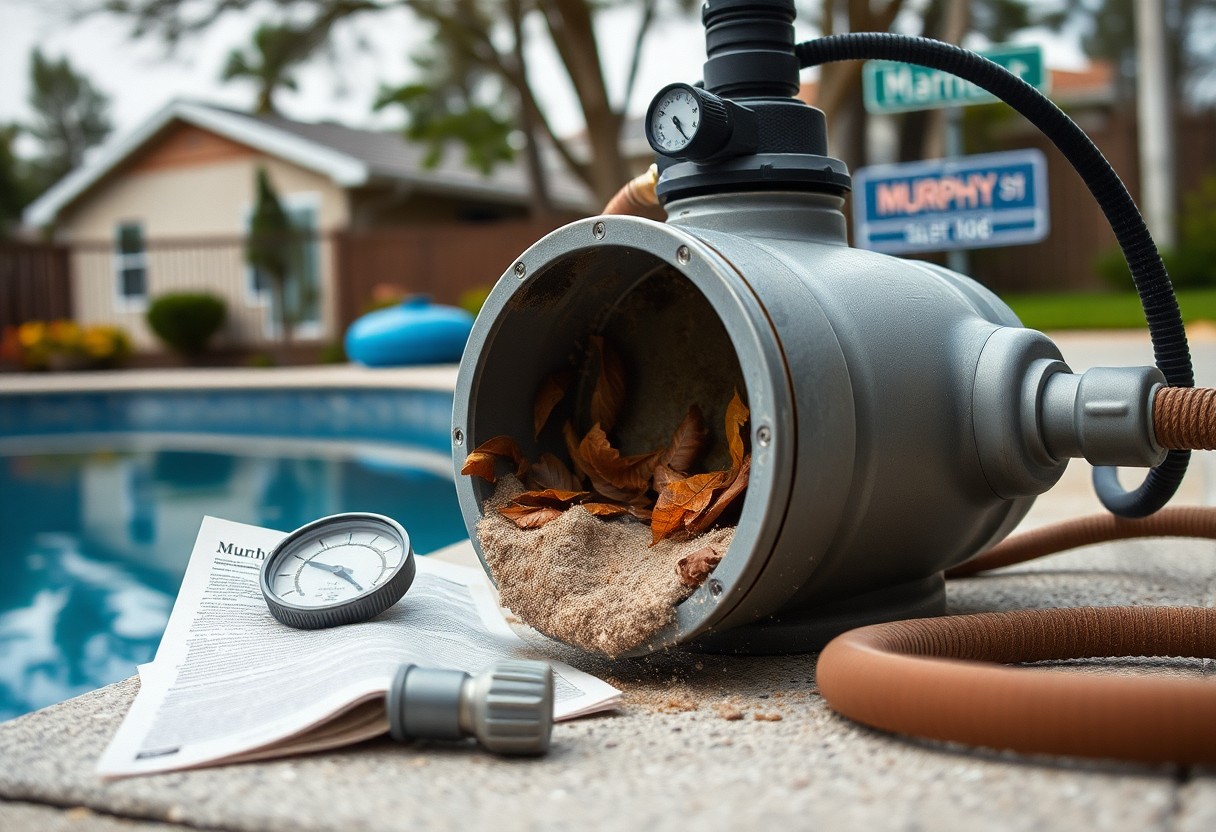
Torn cartridge pleats, broken sand filter laterals, a stuck multiport valve or a failing pump can mimic clogs by reducing flow or allowing bypassed debris; inspect for visible tears, sand in the pool (failed laterals), and listen for cavitation, and replace worn parts rather than repeatedly cleaning to restore proper filtration.
Common signs include pressure that won’t drop after backwashing, sand tracking into the skimmer, or persistent air in the pump lid. You should check valve positions, pressure gauge accuracy, and O-rings every 3 months; replacing cartridges every 2-3 years and servicing laterals or valves at first failure prevents long-term clogging and costly damage.
Environmental Factors in Murphy
Environmental Impacts vs. Recommended Actions
| Factor | Effect / Action |
|---|---|
| Pollen (Mar-May) | Coats skimmers and cartridges; you should pre-filter with a 100‑micron sock and increase skimmer checks to every 2-3 days. |
| Leaves & Pine Needles (Oct-Nov, spring drops) | Clog baskets and surface skimmers; rake perimeter, use a leaf net, and clear skimmers after storms. |
| Thunderstorm Runoff | Brings sediment and organic matter; you should backwash when pressure rises 8-10 psi above baseline and vacuum pooled debris quickly. |
| Yard Maintenance Debris | Grass clippings & trimmings spike filter load; you should keep cuttings away from pool edge and run the pump during cleanup. |
- Pine needles
- Oak and maple leaves
- Spring pollen
- Grass clippings and seed pods
- Storm-carried sediment
Local Flora and Fauna
You deal with mixed hardwoods and pines around Murphy that drop a large volume of organic debris-oaks and pines shed significant material in fall and spring storms-while birds and insects contribute feathers, nests, and insect bodies; these inputs accelerate biofilm on filters and can force you to clean cartridges or backwash 30-50% more often during high‑shed periods.
Climate Conditions
You experience seasonal swings: spring pollen peaks (March-May) and late‑summer or seasonal thunderstorms that can produce 1-3 inches of rain in short bursts, washing soil and yard debris into pools and rapidly raising filter differential pressure.
During heavy pollen weeks you may need to increase maintenance frequency substantially-expect to backwash or clean cartridges 2-3 times weekly if pressure climbs 8-10 psi above your clean starting point; for instance, after a July storm many homeowners see turbidity and a 10-15 psi spike that resolves only after vacuuming, prefiltering surface skimmings, and performing a full backwash or cartridge rinse.
This helps you prioritize prefiltering and post-storm inspections to keep filter pressure stable.
Regular Maintenance Practices
Cleaning Techniques
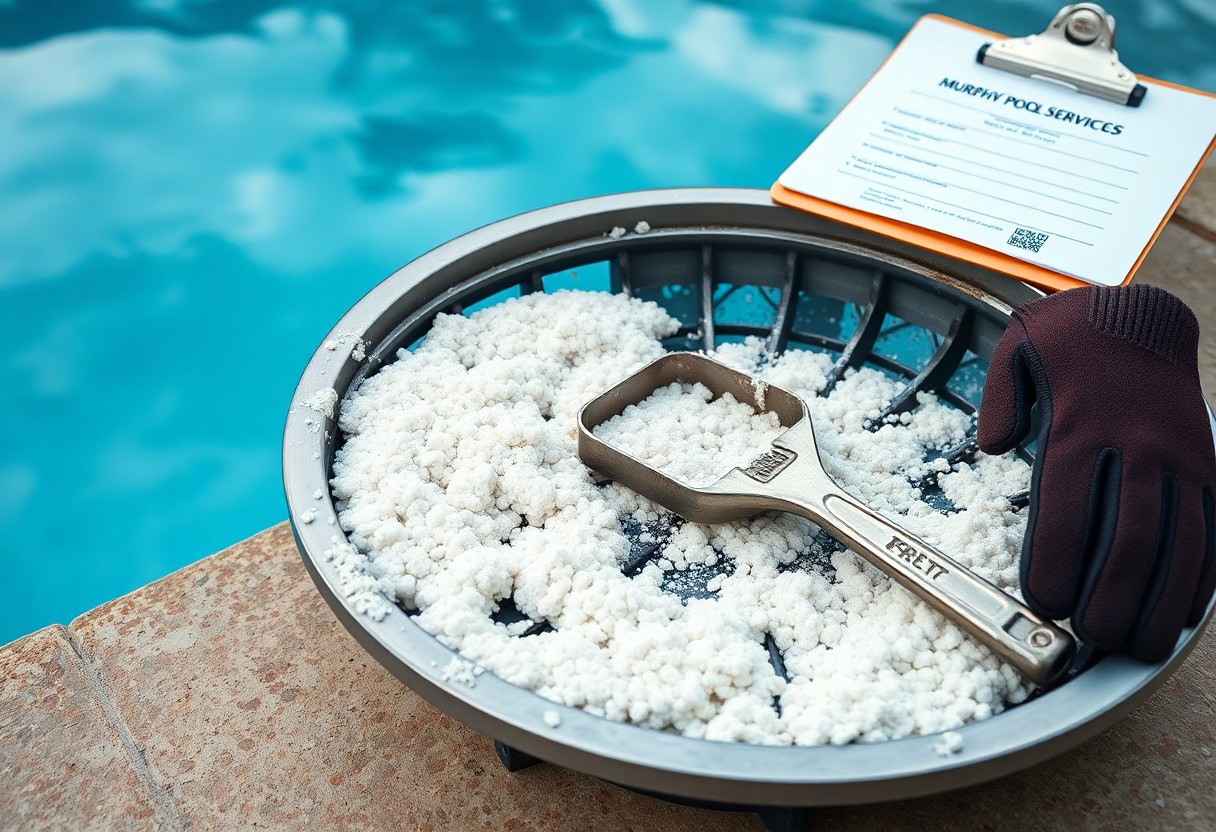
You should backwash sand/DE filters when pressure climbs 8-10 psi above the clean baseline and clean cartridge elements every 4-6 weeks; for cartridges, hose off, soak in a filter-cleaner solution monthly, and replace every 2-3 years. Brushing walls and ladder areas weekly prevents algae that sends extra load to your filter, while DE grids need a full tear-down and recoat roughly every 1-2 months depending on use.
Chemical Balance Monitoring
Test your water 2-3 times per week in summer and weekly otherwise, keeping pH 7.2-7.6, free chlorine 1-3 ppm, total alkalinity 80-120 ppm, and cyanuric acid 30-50 ppm; deviations accelerate scale or organic buildup that clogs filters and shortens service intervals.
When pH drifts above 7.8 you’ll see calcium precipitation and scale forming on media and grids; conversely low pH can corrode components and release metals that stain and foul filter media. Address swings quickly by dosing pH increaser/decreaser, shocking after heavy bather loads (follow product directions), and using a clarifier only as a short-term fix-if you get repeated cloudiness test for high CYA, organics, or phosphates and consider a partial drain-and-fill to reset concentrations.
Skimming and Vacuuming
Skim surface debris daily during leaf season and empty skimmer baskets every 24-48 hours; vacuum at least weekly (increase to 2-3 times weekly after storms) to prevent fine sediment reaching the filter and raising differential pressure, and use an automatic cleaner to reduce manual load.
Start by skimming before vacuuming so the cleaner handles less bulk; vacuum slowly to let the cleaner capture fines rather than re-suspending them, and if you remove heavy debris vacuum to waste or use the multiport valve to avoid overloading the filter. After intensive vacuuming watch the pressure gauge and backwash when you see that 8-10 psi rise.
Troubleshooting Clogged Filters
Identifying the Symptoms
You’ll see reduced return flow, cloudy water, and a steady pressure rise on the gauge; if pressure climbs 8-10 psi above your clean baseline or flow drops by 25-50% after skimmer baskets are empty, the filter is likely restricted. Also watch for noisy pump cavitation, frequent short cycles, or visible debris in the pump strainer after heavy storms in Murphy.
Step-by-Step Guide to Unclogging
Shut the pump off and open the air-relief to drop pressure, then backwash sand or DE filters until discharge runs clear (typically 3-5 minutes per cycle); for cartridges, remove and rinse, then soak in a cartridge cleaner overnight and rinse before reinstalling; inspect O-rings, laterals, and the pressure gauge, reassemble, and verify pressure returns to baseline.
Unclogging Steps
| Power Down & Relieve | Turn pump off, open air-relief valve to zero pressure. |
| Backwash / Remove Element | Backwash sand/DE until clear; remove cartridge elements for rinsing. |
| Clean & Soak | Rinse with a high-pressure hose; soak cartridges in manufacturer cleaner overnight for oils/scum. |
| Inspect Parts | Check O-rings, laterals, manifolds, and pressure gauge for wear or damage. |
| Reassemble & Test | Rebuild, run pump, confirm pressure drops to baseline (typical baseline 10-20 psi). |
If pressure doesn’t fall 8-10 psi toward your known baseline after cleaning, or if you see sand in the pool, perform a deeper check: sand filters may need lateral replacement, DE grids can be torn, and cartridges calcified or oil-fouled sometimes require replacement rather than repeated soaking.
When to Call a Professional
You should call a technician if pressure stays more than 8-10 psi above baseline after a full cleaning, if the pump runs hot or vibrates, if you find leaking housings, torn DE grids, or sand entering the pool, or if the system is older than 10 years and failures recur.
A pro can diagnose collapsed laterals, cracked manifolds, failed multiport valves, or motor issues-problems that commonly cost $150-$800 to repair depending on parts and labor. For example, a Murphy homeowner’s persistent 28 psi reading (baseline 12 psi) turned out to be broken laterals-repair and calibration by a technician restored normal flow and prevented repeated backwashing.
Preventative Measures
Improving Pool Surroundings
Trim trees and shrubs so branches and leaves sit at least 10-15 feet from the pool edge, and plant low-shedding species near borders to cut debris load; you should also keep mulch, compost piles, and firewood 10-20 feet away and install gutter guards or a permanent leaf net during peak leaf-fall to reduce skimmer clogging and daily clean-up.
Scheduling Regular Maintenance
Set a predictable routine: empty skimmer and pump baskets weekly, check the filter pressure gauge every 7 days, and backwash sand/DE systems when pressure climbs 8-10 psi above the clean baseline to prevent persistent strain on the pump and trapped debris from compacting into the media.
Use a simple calendar: run the pump 8-10 hours daily for one full turnover, deep-clean cartridge elements with a filter cleaner every 3 months and replace cartridges every 3-5 years, and perform a full system inspection annually (inspect O-rings, valves, and pressure reliefs). Tracking baseline PSI and noting when you backwash or chemically clean will show trends so you can act before a blockage becomes a major clog.
Upgrading Filter Systems
If you regularly battle fine organic matter, consider upgrading to a high-efficiency cartridge or DE filter and pairing it with a variable-speed pump; you can also add a leaf/debris trap ahead of the pump to catch large material before it reaches the filter, reducing cleaning frequency and wear.
Compare micron ratings and hydraulic sizing: DE filters typically capture 2-5 microns, cartridges about 10-15 microns, and sand 20-40 microns. Size equipment to your pool volume and turnover target-e.g., a 20,000-gallon pool needs roughly 42 GPM for an 8-hour turnover (20,000 ÷ 480 = 41.7 GPM)-and choose a filter with a max flow and surface area that exceed that rate to avoid high head pressure and premature clogs.
Conclusion
Now your pool filter in Murphy may be clogged because heavy local foliage and pollen load the cartridge or sand, infrequent backwashing allows buildup, algae from poor sanitizer levels creates organic gunk, a failing pump or valve reduces flow, or worn cartridges and scale cut efficiency; inspect the skimmer basket, lines, chemical balance, and backwash or replace media to restore flow.
FAQ
Q: Why does my pool filter clog quickly during leaf and pollen seasons in Murphy?
A: Murphy is surrounded by mature trees and experiences seasonal pollen and leaf drop that load skimmers and filters with organic debris and fine particles. Pine needles, small leaves and heavy pollen can bypass skimmer baskets and accumulate in the pump basket and filter media, raising filter pressure and reducing flow. Reduce clogging by keeping the area swept, using a leaf net over the pool during heavy drop periods, emptying skimmer and pump baskets daily, and increasing backwash or cartridge cleaning frequency until the season passes.
Q: Could recent storms or heavy rain in Murphy be causing my filter to clog?
A: Yes. Storm runoff carries dirt, lawn debris, and silt into the pool and stirs up settled debris, producing fine particles that clog filters faster than routine organic debris. After storms vacuum settled material, run the pump longer, backwash or clean the filter more often, and use a clarifier or flocculant if the water stays cloudy to help settle fines before vacuuming. Check gutters, downspouts and landscape grading to reduce direct runoff into the pool.
Q: Is improper maintenance or backwashing the reason my filter keeps clogging?
A: Possibly. Under- or over-backwashing, failing to deep-clean cartridges/DE, and not replacing worn media allow debris to build up and cake into the filter. Monitor the pressure gauge: when it rises about 8-10 psi above the clean baseline, backwash or clean; for cartridges, remove and hose off, then periodically soak in a cartridge cleaner. Establish a maintenance schedule based on usage and local conditions-more frequent cleaning during heavy use or high debris periods.
Q: Could equipment problems be causing repeated clogs despite cleaning?
A: Yes. A clogged pump strainer, a stuck valve, collapsed or damaged laterals in sand/DE filters, restricted return lines, or an undersized filter can mimic persistent clogs. Inspect and empty the pump basket, verify all valves are set correctly, listen for unusual pump sounds, and check flow at returns. If flow is low despite normal filter pressure or debris returns to the pool, have a technician inspect internal filter components and plumbing for damage or incorrect sizing.
Q: How do water chemistry and filter media condition affect clogging in Murphy pools?
A: Poor water chemistry (algae blooms, high oils, sunscreens, phosphates) and aging filter media cause faster fouling and reduced filtration efficiency. Algae and organic films cake onto media, oils and lotions coat cartridges/DE, and mineral scaling restricts flow. Test and balance water regularly, shock if algae are present, use a filter cleaner for oils and organics, replace sand every 5-7 years or DE cartridges/media per manufacturer recommendations, and consider a clarifier when fine particles persist.