Keep your pool safe for pets by maintaining free chlorine 1–3 ppm, rinsing pets after swimming, providing fresh drinking water poolside, teaching exit ramp or stair use, and skimming fur promptly to protect filtration. Pet dander and oils increase chlorine demand — North Texas pools with regular dog swims often need extra brushing and filter cleaning. RMD Pool Service in Allen, TX helps pet-friendly households stay on top of water chemistry.
Schedule Pet-Friendly Pool Care with RMD Pool Service
Need expert help with pet-friendly pool care in North Texas? RMD Pool Service — based in Allen, TX — serves homeowners across North Texas with weekly maintenance, repairs, and green pool recovery. Call (972) 656-0703 or request a free quote online. Browse our maintenance services and repair services.
Frequently Asked Questions — North Texas
Is pool water safe for dogs to drink in North Texas?
Occasional sips are common but not ideal — chlorinated water can upset stomachs. Always provide fresh drinking water poolside.
Does pet hair damage pool filters?
Yes. Fur clogs baskets and coats filter media, reducing flow. Clean baskets after pet swims and backwash or rinse cartridges more often.
Should I shock the pool after my dog swims?
Shock if you notice odor, cloudiness, or combined chlorine above 0.2 ppm after heavy pet use.
Can RMD help maintain a pet-friendly pool schedule?
Yes — call (972) 656-0703. We adjust visit frequency and filter service for homes with regular pet swimmers.
Pet-Safe Pool Care in North Texas
Dogs swimming daily in Allen, Plano, and Frisco backyards can raise combined chlorine and clog pump baskets within hours. Install a skimmer sock during pet swim days and run the pump an extra hour afterward to clear fur and oils.
- Verify pets know how to exit — install a pet ramp if needed.
- Test water after each heavy pet swim day; shock if combined chlorine rises.
- Keep pool chemicals locked away — chlorine tabs are toxic if ingested.
See our weekly maintenance for pet-heavy households or contact us for a custom plan.
Common Risks Posed by Pools to Pets
You face hazards such as drowning, chemical exposure, entrapment under covers and injuries from slipping on wet decks; many residential pools range 3-6 feet deep, so a panicked pet can tire quickly. Chlorine maintained at 1-3 ppm protects water quality but can irritate eyes and mucous membranes if your animal swims daily or laps water, and ingesting concentrated chemicals causes vomiting and burns.
Importance of Pool Safety Measures
You should install layered protections: a fence at least 4 feet (1.2 m) high with a self-closing, self-latching gate, surface or gate alarms, and a sturdy safety cover. Routine water testing (chlorine 1-3 ppm; pH 7.2-7.8) plus locked chemical storage reduces health incidents and keeps your pet safer during both supervised and unsupervised times.
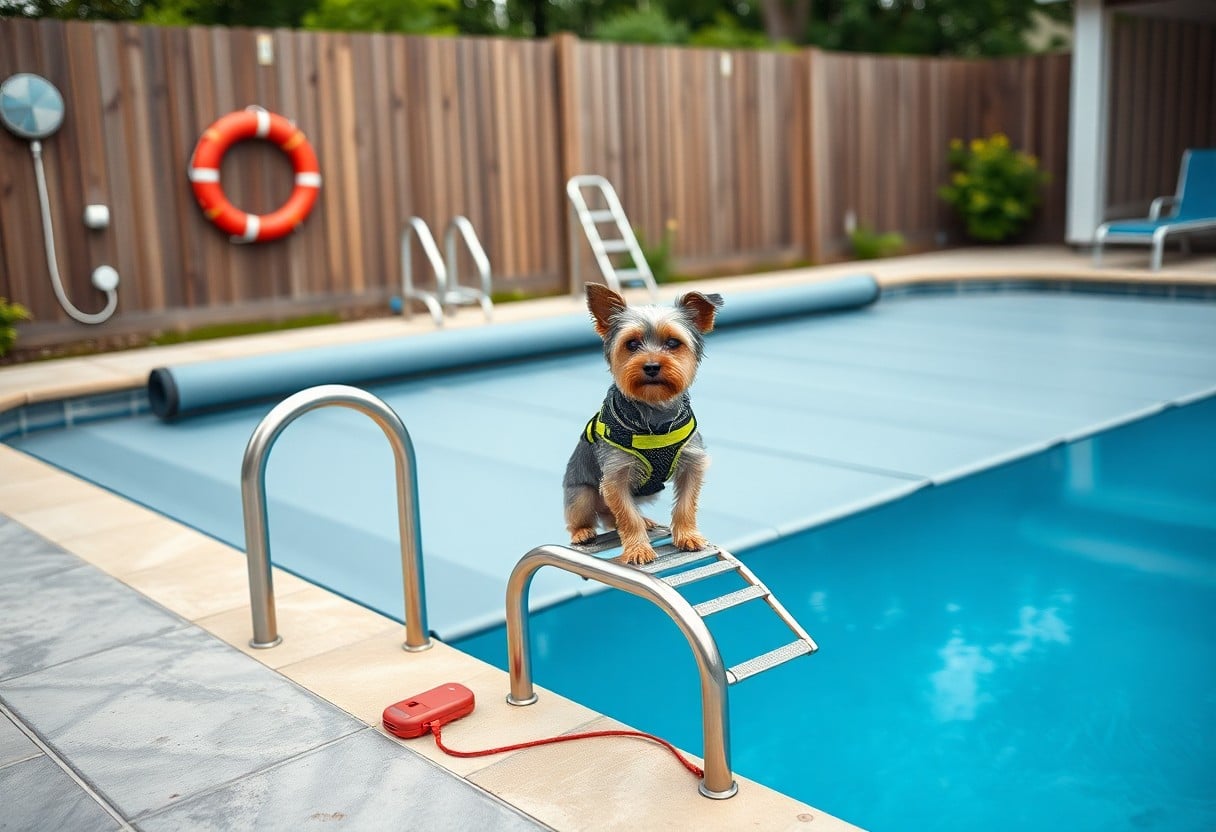
Start with a compliant perimeter barrier, then add active defenses like entry alarms that trigger within seconds and a solid cover rated for accidental loads. Train your pet to use designated exits and keep a canine life vest available for weak or novice swimmers. Test water weekly and after heavy use, secure chemicals in locked cabinets, and place a rescue hook and phone nearby so you can act immediately if an incident occurs.
Understanding Pet Behavior Around Water
You should observe breed, age and experience: retrievers and water breeds often swim instinctively, while brachycephalic dogs (Bulldogs, Pugs) and small toy breeds struggle. Puppies lack coordination and older pets have reduced stamina, so even a confident swimmer can panic, paddle in place and exhaust itself against smooth pool walls.
Begin introductions on shallow steps and reward calm behavior; practice exit drills 3-5 times per session so your pet learns routes under low stress. Use fitted life vests sized to your pet’s weight for the first several swims, supervise continuously-limit sessions to 10-15 minutes for most pets-and watch for frantic paddling, heavy panting or low head carriage as immediate signs to remove them from the water.
Creating a Safe Pool Area
Installing Pet Safety Fences
Install a 4 ft or taller fence with vertical pickets spaced no more than 2 in apart to prevent puppies slipping through; mount a self-closing, self-latching gate that opens outward and keep the bottom gap under 2 in to stop digging. You can use removable mesh panels for seasonal access, and position posts every 6-8 ft for stability against large dogs.
Using Pool Covers
Choose a labeled safety cover-mesh, solid, or automatic-rated to support at least 300-500 lb and anchored every 3-4 ft so a pet won’t fall through; automatic covers close at the touch of a button and reduce unsupervised access when you can’t watch your pet. You should never rely on a cover alone without fencing or supervision.
Mesh covers drain rainwater and let debris fall through, lowering drowning risk but allowing small leaves; solid covers keep debris and cut evaporation but need a pump or ballast to remove standing water. Have a professional install and test anchors and springs every 1-3 months, check the manufacturer’s weight rating, and keep toys and food off the cover to avoid tempting pets.
Designing a Pet-Friendly Landscape
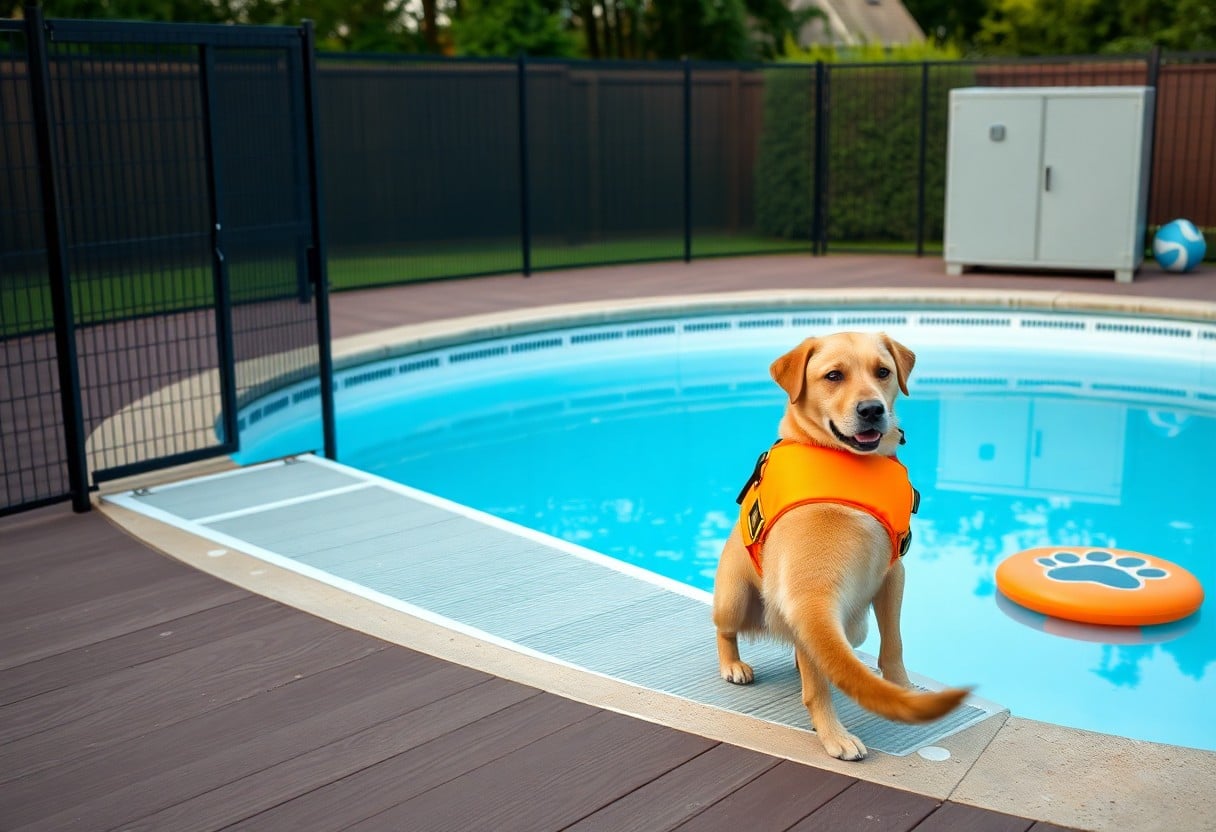
Place a 6-12 in shallow tanning ledge or ramp where your pet can rest or exit, use non-slip textured pavers around the deck, and create a 10-20 ft designated potty zone downwind from the pool to reduce accidents and runoff. You should also include shady spots and water stations so pets aren’t driven to the pool for relief.
Choose pet-safe plants like marigolds, rosemary, ornamental grasses and lavender while avoiding oleander, sago palm and azalea which are toxic to dogs and cats; use pea gravel or rubber mulch instead of cocoa mulch, and add a 3 ft mulch or gravel border to trap dirt so less soil gets tracked into the pool. You can test surfaces for traction-aim for a coefficient of friction similar to ADA-recommended levels for walkways to reduce slips.
Training Your Pets for Pool Safety
Introducing Pets to Water
Begin in 1-2 feet of calm water or at a shallow pool entry and keep sessions to 2-5 minutes, using a life vest for dogs that haven’t swum before. Use high-value treats and praise for every calm step forward; many pets show reduced anxiety after 3-5 short sessions. If your pet panics, back up to dry land and try smaller steps like paw-dipping and sitting at the edge until they approach on their own.
Teaching Pets to Avoid Pools
Use a leash and a clear verbal cue such as “leave it” or “no pool,” pairing the cue with treats when your pet moves away from the water; repeat 10-15 times per short session. Combine positive reinforcement with physical barriers-temporary fencing or a closed gate-while you train, aiming for consistent behavior over 1-2 weeks before removing the barrier.
Structure training in progressive stages: days 1-3 practice stepping 3-6 feet away on leash and reward, days 4-7 extend to the pool edge and require a 30-60 second “stay” before reward, then add distance and distractions. Use motion-activated deterrents or pool covers as backstops, and consult a professional trainer if your pet has a strong water drive or shows fear-based reactions.
Familiarizing Pets with Poolside Boundaries
Mark a clear buffer zone-at least 2 feet from the pool edge-with a mat or low barrier and teach a “place” or “off” cue so your pet associates that area with staying put. Install a 4-foot-high pool fence with slats no more than 4 inches apart for added security. Practice short boundary drills daily, rewarding calm behavior away from the water.
Walk the perimeter with your pet on leash and reward every time they remain 3-5 feet back from the edge; gradually increase freedom as reliability improves. Use a visible cue like a colored mat 24 inches from the edge to reinforce the boundary, and run 5-10 minute drills twice daily for 1-3 weeks to build a dependable habit.
Supervision and Monitoring
Importance of Active Supervision
You should stay within arm’s reach (about 3 meters / 10 feet) of pets in or near the pool, especially puppies, senior dogs, and short-nosed breeds. Drowning or panic can happen in under a minute if a pet tires or inhales water; active supervision means watching body language, keeping distractions away, and being ready to intervene immediately. Limit unsupervised playtime and end sessions as soon as you see signs of fatigue, shivering, or irregular paddling.
Using Surveillance Technology
You can layer technology-surface wave alarms, perimeter gate sensors, and motion-activated cameras-to extend your oversight when you can’t be poolside. Choose devices with push notifications to your phone and pet-aware motion filters to cut false alerts; many systems deliver alerts within 5-10 seconds. Prioritize waterproof ratings (IP66/IP67), night vision, and two-way audio so you can quickly assess and call your pet if an alarm triggers.
Place cameras 6-10 feet high for a 120°-140° field of view that covers the pool and immediate deck; mount surface or subsurface alarms per manufacturer spacing (often every 10-15 feet along a perimeter). Test each device weekly with a simulated fall to verify notification latency and battery status-many battery-powered units run 6-12 months depending on use. Integrate alarms with smart-home routines (lights on, siren, phone call) to shorten response time and reduce false positives from wind or rain.
Setting Up a Pool Safety Routine
You should build a simple, repeatable routine: pre-swim walk-around to remove toys and verify gate latches, limit active swims to 10-30 minutes depending on the dog’s fitness, and post-swim checks for ear water, paw cuts, or lethargy. Test gates and alarms daily, check pool chemistry weekly to prevent skin/eye irritation, and store flotation devices and a reach pole within 3 meters of the pool for fast access.
Draft a checklist you follow each day: morning chemical test, midday gate/alarm check, before-swim gear and life jacket fit, timed swim session with a stopwatch, and a post-swim drying and ear-care step. Keep a log of any incidents or near-misses and review it monthly to spot patterns (time of day, specific pets, or toys) so you can adjust supervision times, session lengths, or equipment placement accordingly.
First Aid and Emergency Preparedness
Recognizing Signs of Distress in Pets
You should watch for frantic, splashing paddling, an inability to keep the head above water, coughing or vomiting after rescue, pale or blue gums, rapid or very slow breathing, lethargy, or collapse. Small dogs and brachycephalic breeds (like pugs) can deteriorate within 30-60 seconds of respiratory compromise, so early detection and swift removal from water matters.
Responding to Drowning Incidents
After you get the pet out, clear the airway and check breathing and pulse immediately; if unresponsive or not breathing, call your emergency vet while starting basic life support. Offer gentle warming (blanket) and keep the head lower than the body to help drainage; get professional care within the hour because pulmonary complications often develop or worsen.
If the animal is unresponsive and not breathing, begin CPR: for a single rescuer perform 30 chest compressions followed by 2 rescue breaths, aiming for about 100-120 compressions per minute. For intubated patients use continuous compressions at 100-120/min with ventilations at roughly 10 breaths per minute. Compression placement varies by size-over the widest part of the chest for medium/large dogs, two-thumb encircling technique for small dogs and cats. Transport immediately after resuscitation; vets will check for aspiration pneumonia, administer oxygen, and run chest radiographs and blood work. Note that signs of pulmonary edema or infection can appear 2-12 hours after submersion, so monitoring at an emergency clinic is often necessary.
Creating a Pet First Aid Kit
Keep a waterproof kit by the pool with saline solution (0.9%), sterile gauze, adhesive tape, cohesive bandage, digital rectal thermometer, blunt scissors, tweezers, disposable gloves, a leash/muzzle, styptic powder, and laminated emergency numbers for your vet and nearest 24-hour clinic; check contents monthly and replace expired items.
Pack duplicates of high-use items (2-3 gauze pads, one roll of cohesive bandage, extra gloves), a 10 mL syringe for flushing wounds, antiseptic wipes (chlorhexidine), a soft blanket for warming, and a small flashlight. Include a printed emergency action sheet with your pet’s weight, baseline temperature (normal dog/cat rectal temp ≈ 38.3-39.2°C or 101-102.5°F), medication list, and microchip number. Store the kit in a labeled, easy-to-grab spot and restock immediately after any use so you’re always ready.
Additional Safety Equipment
Floating Devices for Pets
You should pick floating toys and platforms made of durable, non-toxic foam or reinforced vinyl with bright colors for visibility; avoid thin inflatables that can puncture. Choose buoyant fetch toys or shallow float pads sized for your pet’s weight and supervise every use. Inspect for tears before each session and retire items that show UV cracking or compressed foam to prevent swallowing hazards and sudden loss of buoyancy.
Non-Slip Surfaces Near the Pool
You can reduce slips by selecting textured concrete, travertine, porcelain pavers, or interlocking rubber mats designed for wet areas; these materials improve traction when wet and drain faster. Install tread strips on pool steps and along ramps, and place 2-3 anti-slip mats in high-traffic zones to give your pet secure footing when entering or exiting the water.
For choice and maintenance, favor exposed-aggregate or broom-finished concrete and pavers with a wet-slip rating from the manufacturer; many pool decks use silica-grit epoxy coatings that boost grip without trapping dirt. Pressure-wash decks quarterly, clear algae and pooled water promptly, and reapply textured coatings every 2-4 years depending on sun exposure and foot traffic to keep surface friction consistent for paws.
Pet Life Jackets: Pros and Cons
You should use a pet life jacket for weak swimmers, seniors, short-legged breeds, or rough-water outings; pick one with a strong grab handle, adjustable straps, and front flotation that supports the chest without forcing the head back. Fit by chest girth using the brand chart and test in shallow water to confirm mobility and buoyancy before trusting it in deeper water.
Pros and Cons
| Easy rescue using a top grab handle | Can restrict natural paddling if ill-fitting |
| Improves flotation for tired or inexperienced swimmers | May give a false sense of safety; still require supervision |
| Bright colors and reflective trim increase visibility | Buoyancy foam can compress over time and lose effectiveness |
| Adjustable straps allow custom fit across breeds | Straps can loosen; need frequent checks during use |
| Available in sizes for 2-100+ lb pets | Higher-quality models cost more than simple buoyant toys |
| Useful for boats, noisy environments, and currents | Not designed for diving or retrieving underwater objects |
| Some are machine-washable for easy cleaning | Wet jackets take time to dry and can smell if stored damp |
| Front float panels help keep the head above water | Excessive front buoyancy can tip some dogs backward |
After choosing a jacket, measure your pet’s chest girth at the widest point and follow the manufacturer’s sizing-typical small ranges finish under ~50 cm (20 in), mediums 50-90 cm (20-35 in), and larges above that, though charts vary. Test in calm, shallow water for 5-10 minutes to assess fit and mobility, check straps before each outing, and replace the jacket if foam shows permanent compression or stitching fails.
Maintaining a Healthy Pool Environment
Chemical Safety for Pets
When you add chlorine or shock, keep pets well away and wait at least 24 hours before letting them back in; verify free chlorine is 1-3 ppm and pH is 7.2-7.8 with a test kit. Store chemicals locked, dry, and in original containers, never mix products, and follow label disposal directions. Small amounts of pool chemicals or heavily chlorinated water can cause vomiting or skin irritation in dogs and cats, so rinse any chemical splashes off your pet and contact your vet if ingestion occurs.
Regular Pool Maintenance
Test water 2-3 times per week with strips or a digital meter, aiming for free chlorine 1-3 ppm, total alkalinity 80-120 ppm, and calcium hardness 200-400 ppm; skim daily, vacuum weekly, and backwash sand/DE filters when pressure rises 8-10 psi above baseline. If you have two active dogs that swim several times a week, increase testing to daily and consider shocking after heavy use to control organics.
Make a weekly checklist that logs test results, chemical doses, and maintenance actions; you should inspect skimmer and pump baskets after every pet swim to prevent clogs and motor strain. Clean cartridge filters by hosing every 4-6 weeks, service DE grids per manufacturer, and run your pump 8-12 hours/day-bump to 12-16 hours after peak pet use. After shocking, only allow pets back once chlorine and pH are back in the normal ranges.
Keeping the Pool Free of Debris
Skim surface debris daily with a fine-mesh net and empty skimmer baskets after every heavy-shedding session to avoid clogs; use a leaf trap on the suction line and cover the pool when unused for more than 24 hours. Letting hair, leaves, and organic matter build up reduces filter efficiency and increases sanitizer demand, so stay proactive.
Pre-rinse your pet with a hose or rinse station to remove loose fur and dirt before swimming, run a robotic cleaner or manual vacuum weekly to remove settled debris, and increase circulation to 10-12 hours/day after pets swim. Empty the pump basket immediately after heavy use and consider enzymatic pool clarifiers that break down oils from fur and sunscreen without harming animals.
Conclusion
From above, you should supervise pets near water, install secure fencing and a pet-friendly ramp or steps, keep pool covers and gates locked, and use pet-safe chemicals while maintaining proper pH and chlorine levels. Train your pet to enter and exit safely, provide a flotation device for weak swimmers, rinse off chlorine after swimming, and have a plan for emergencies with a nearby first-aid kit and your veterinarian’s contact.
FAQ
Q: How should I supervise my pet around the pool?
A: Always assign a responsible adult to actively watch pets whenever the pool is accessible. Keep pets on a leash or within reach during training sessions, remove enticing toys from the pool area when not in use, and establish a clear boundary (visual or physical) so the pet knows where to stop. Teach family members to never leave young children and pets unattended together around water. Use pet-safe pool alarms and ensure gates are kept closed and latched.
Q: How can I teach my pet to swim and exit the pool safely?
A: Start slowly in shallow water or on pool steps, using a well-fitting canine life jacket with a handle for support. Encourage calm, short sessions with positive reinforcement and treats. Show the pet the nearest exit point repeatedly so it learns to find steps or a ramp; practice guided exits by supporting the pet’s hindquarters until it climbs out independently. Gradually extend swim time only as the pet shows confidence and no signs of fatigue or stress.
Q: What physical barriers and equipment help prevent accidents?
A: Install a four-sided fence or barrier with self-closing, self-latching gates that pets cannot squeeze under or climb. Use a sturdy pool safety cover rated for weight bearing (not just a lightweight mesh) or an automatic cover that reliably closes when the pool is not in use. Add a pet ramp or shallow entry/exit area, and consider motion or water-activity alarms that alert you to unexpected movement in the pool.
Q: Are pool chemicals hazardous to pets and how can I minimize risk?
A: Store chemicals locked, dry, and out of reach. Keep pets away while dosing, testing, or shocking the pool and until chemical levels return to safe ranges (follow product instructions and test the water). Rinse your pet with fresh water after swimming to remove residual chlorine or bromine, and prevent them from drinking pool water by offering fresh water nearby. If a pet ingests pool chemicals or shows vomiting, drooling, or severe irritation, contact your veterinarian or an animal poison control center immediately.
Q: What should I do in an emergency involving my pet and the pool?
A: Remove the pet from the water safely and check breathing and responsiveness. If not breathing, clear the airway of water and debris, then begin rescue breaths and chest compressions appropriate for the pet’s size (compress the chest roughly one-third to one-half its width at a steady rate until professional help is available). Keep the pet warm and transport to the nearest veterinary clinic immediately. Have emergency numbers (your vet, nearest emergency animal hospital, and a poison control line) posted near the pool and saved in your phone.