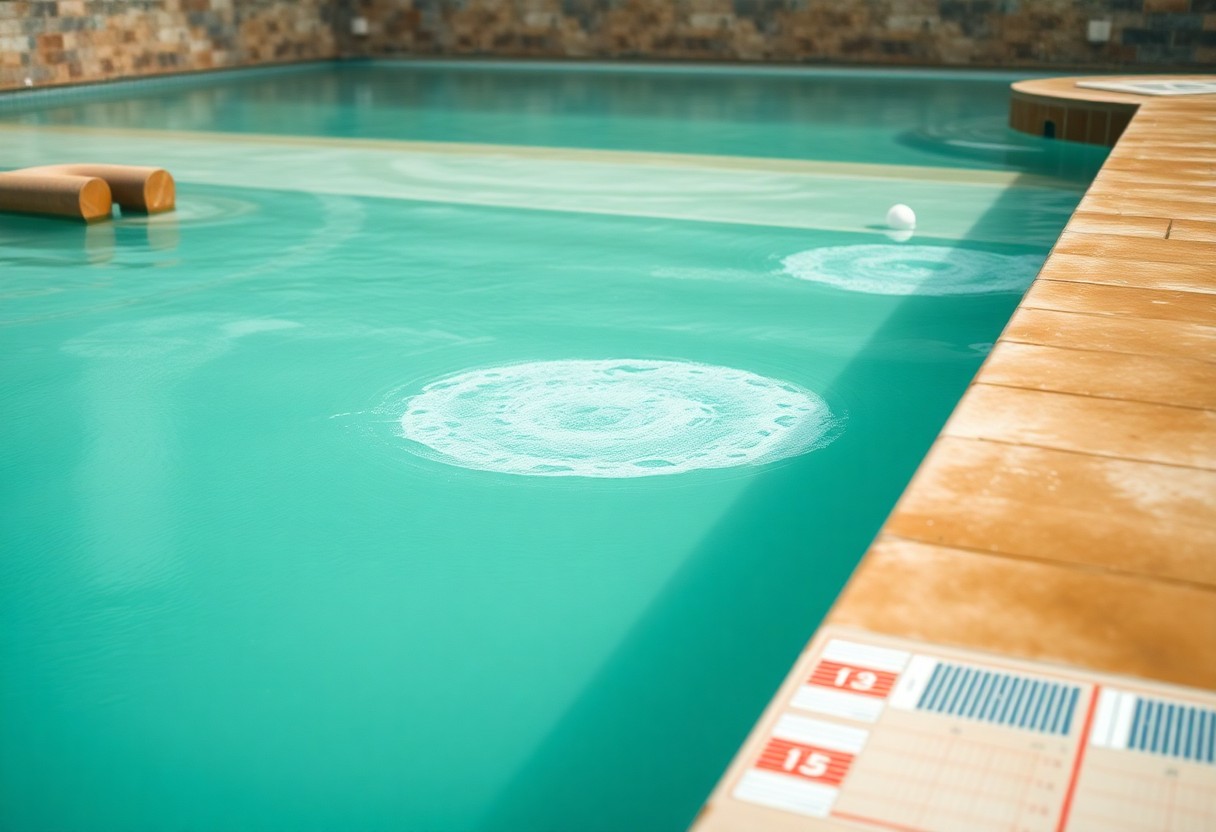
Over time you may notice a persistent foam on your pool surface in Anna, caused by organic contaminants (sunscreen, body oils, leaves), imbalanced water chemistry, high calcium or total dissolved solids, or agitation from wind and filtration. Identifying the source-testing pH, alkalinity, calcium hardness and sanitizer levels and skimming debris-lets you choose effective fixes like shock treatment, enzyme-based defoamers, filter cleaning or partial water replacement to restore clear water.
Key Takeaways:
- Organic contaminants (sunscreen, body oils, leaves, and other debris) introduce surfactants that foam when the water is agitated.
- Detergent or soap runoff from nearby washing, landscaping, or stormwater can cause persistent, bubbly foam.
- Buildup of total dissolved solids and organic matter makes foaming more likely and harder to clear without water replacement or deep cleaning.
- Certain pool chemicals or overdosed algaecides/flocculants can generate temporary foam or stabilize existing foam.
- Poor filtration, air leaks at returns, or excessive aeration concentrate contaminants and promote foam formation on the surface.
Understanding Pool Foam
Definition of Pool Foam
Foam forms when surfactants and organic films trap air into stable bubbles along returns or across your pool surface; even trace amounts-often around 0.1-1 ppm of organic surfactants from sunscreens, body lotions, or detergents-can create persistent foam, especially when total dissolved solids climb above roughly 1,000-1,500 ppm or when quaternary ammonium algaecides are present.
Common Misconceptions
You might assume foam means low chlorine or a failing pump, but many cases in Anna show normal free chlorine (2-4 ppm) while foam persists because of organic load from heavy bather use-one community pool had visible foam after a 50-person swim lesson despite proper filtration and sanitizer levels; simply upping chlorine or running the pump an extra hour often won’t remove the surfactants causing foam.
Anti-foam products frequently only collapse bubbles temporarily; the effective fix is removing or breaking down the organics-run continuous filtration 24-48 hours, vacuum to waste or backwash, use a polymeric clarifier to clump fine organics, and consider enzyme treatments that act on oils and lotions within a day or two to prevent reoccurrence.
Primary Causes of Foam Formation
Organic Matter
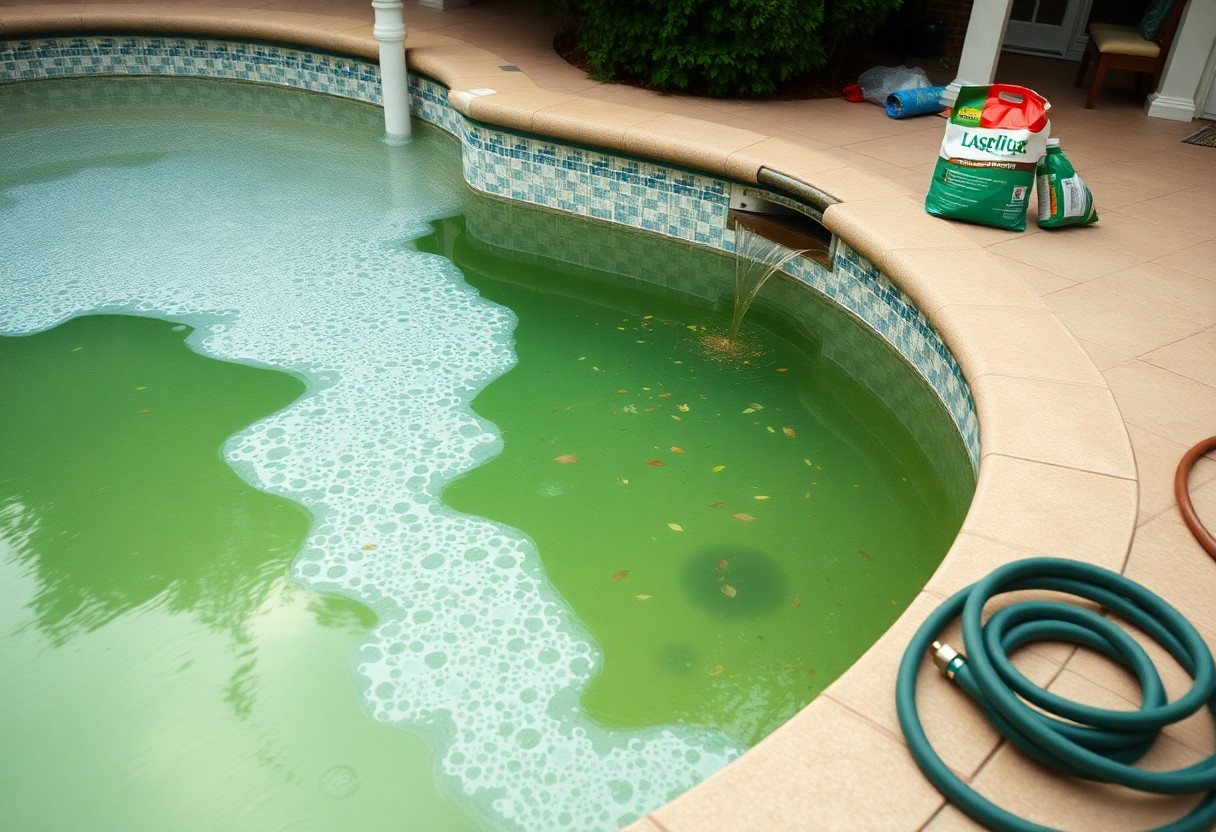
You’ll often see foam after leaves, grass clippings, algae or heavy bather loads introduce proteins and fatty acids into your pool; those breakdown products act as natural foaming agents. For example, pools near deciduous trees commonly foam within 24-48 hours of a storm because tannins and organic debris increase dissolved organics that stabilize bubbles, especially when your filter is overloaded or circulation is poor.
Chemical Imbalances
If your free chlorine falls below the recommended 1-3 ppm while combined chlorine rises above ~0.2 ppm, foam becomes more likely. You should also keep pH between 7.2-7.8, total alkalinity around 80-120 ppm and calcium hardness near 200-400 ppm, because departures from those ranges change surface chemistry and let organics and chloramines persist and produce foam.
Mechanistically, chloramines (combined chlorine) form when sweat, urine and ammonia react with chlorine; those chlorinated nitrogen compounds are surface-active and promote stable foam. In practice, pools with combined chlorine ≥0.5 ppm frequently show visible foam-public pools and heavy-use residential pools are typical examples. You can address this by shock-treating to breakpoint (roughly 10× the combined chlorine level) and restoring proper pH and alkalinity so sanitizers work efficiently.
Surfactants
Household detergents transferred from swimsuits, body washes, lotions, and pool toys introduce synthetic surfactants that dramatically lower surface tension and stabilize bubbles, so even small amounts make a big difference. You’ll notice foam spike after swim lessons, parties, or when poorly rinsed swimwear is used, because modern detergents are designed to foam at trace concentrations.
At the molecular level, surfactant molecules align at the air-water interface and prevent bubbles from collapsing, so parts-per-million level contamination can sustain persistent foam. Case studies from service techs show enzyme-based treatments followed by extended filtration (24-72 hours) often remove surfactant-related foam more effectively than chlorine alone, because enzymes break down organic surfactant molecules rather than merely oxidizing them.
Environmental Factors
Weather Conditions
Strong winds above 15 mph blow leaves, grass clippings and lawn treatments into your pool, while storms that drop 0.5-1.5 inches of rain wash road oils and detergents from gutters into skimmers. Hot stretches over 85°F accelerate organic breakdown and combined with pH creeping toward 8.0 can make surface foam form and persist; if free chlorine falls below 1 ppm you’ll see faster buildup. Seasonal spikes after spring landscaping are common in Anna.
Water Source Quality
If you top off from a pond, creek, or reclaimed supply, expect tannins, surfactants and higher total organic carbon (TOC) – often 2-10 mg/L in surface sources – which foam when aerated. Municipal outages or hydrant flushing can temporarily raise turbidity and suspend organics; testing conductivity and TOC before large refills helps you predict foam risk.
When your source water shows TOC above about 2 mg/L, hardness over 300 ppm or total dissolved solids (TDS) beyond ~1,000 ppm, foaming becomes more likely because dissolved organics and surfactants stabilize bubbles. You can mitigate this by pre-filtering (sediment + activated carbon), using a small RO/polishing unit for large fills, or treating incoming water with a clarifier before it reaches the main pool. If you use reclaimed water, contact the supplier for surfactant or detergent residual data and avoid filling during recent lawn-spray events.
- Wind-blown organics (leaves, grass clippings)
- Storm runoff carrying soaps, oils, fertilizers
- High temperatures accelerating decomposition
- Refill water with high TOC or surfactants
Recognizing these environmental triggers helps you target the right corrective steps and prevents repeat foam events.
Pool Maintenance Practices
Regular Cleaning
Skim the surface daily and brush walls and steps twice a week to prevent the organic film that contributes to foam. You should vacuum weekly, empty skimmer and pump baskets every 2-3 days, and clear leaf buildup from the deck to stop debris washing in. Backwash sand/DE filters or clean cartridges when pressure rises 8-10 psi above the clean reading to maintain circulation and reduce organic buildup.
Chemical Testing and Balancing
Test your water 2-3 times per week with test strips, a DPD kit, or a digital photometer; target free chlorine 1-3 ppm, pH 7.2-7.6, total alkalinity 80-120 ppm, calcium hardness 200-400 ppm and cyanuric acid 30-50 ppm for outdoor pools. Shock weekly or after heavy bather load and use enzyme treatments to break down oils and organics that cause foam.
You should use a DPD colorimetric kit or digital tester for the most reliable chlorine readings, sampling at elbow depth away from returns and testing in the morning before swimmers; log every result. If pH climbs above 7.6 add muriatic acid in small increments, and if it falls below 7.2 raise it with soda ash; adjust alkalinity with sodium bicarbonate. When filter pressure is 8-10 psi over baseline, backwash or clean cartridges, and if foam persists combine a shock with targeted enzyme dosing and filter maintenance rather than relying solely on anti-foam products.
Troubleshooting Pool Foam
Initial Assessment
Test your water first: aim for pH 7.2-7.6, total alkalinity 80-120 ppm and free chlorine 1-3 ppm as baseline; low calcium hardness (<150 ppm) and high dissolved organics (sunscreen, detergents) often cause foam. Check filter pressure and skimmer basket, note recent events (parties, storms) and whether foam is thick or thin. If the filter hasn't been cleaned in 2-4 weeks, that increases the likelihood of organics recycling into foam.
Solutions for Removal
Skim surface foam, run the filter 24-48 hours and backwash or clean cartridges; dilute by replacing up to 10% of pool water if foam is concentrated. Shock to raise free chlorine to about 10 ppm for 24 hours to oxidize organics, then maintain normal FC. Use a polymer defoamer per label (typical 1-2 fl oz per 10,000 gallons) for immediate collapse, and consider raising calcium hardness to 200-400 ppm if water is very soft.
In practice, a common fix after a party is: shock to 10 ppm, run filtration nonstop and dose a single defoamer treatment-many pools clear in 24-48 hours. Persistent foam after 72 hours usually indicates trapped organics in the filter media or recurring contamination; perform a deep filter clean or replace media, and if the problem continues, have a professional test for non-ionic surfactants and advise targeted treatment.
Preventing Future Foam Issues
Improved Filtering Techniques
Run your pump 8-12 hours daily and monitor the filter pressure; backwash sand/DE filters when pressure climbs 8-10 psi above clean baseline. Clean cartridge elements monthly and replace media every 3-5 years; switching to a DE or high-quality cartridge filter can trap particles down to 2-10 microns, cutting organics that cause foam. Add a reusable filter sock on the pump basket and use a clarifier sparingly after heavy use to aggregate fine particulates for easier removal.
Routine Maintenance Schedule
Test water weekly for pH (7.2-7.6), free chlorine (1-3 ppm), and total alkalinity (80-120 ppm), adjust as needed, and shock after heavy bather load or a storm. Empty skimmer and pump baskets daily, brush walls twice weekly, and vacuum once weekly to remove oils and debris that contribute to foaming.
Sample schedule: daily-check skimmer baskets, water level, and pump run time; weekly-test and log chemistry, shock if combined chlorine exceeds 0.5 ppm, vacuum and brush; monthly-inspect and clean or backwash filters, clean cartridge elements, and check chlorinator/stabilizer (CYA) aiming for 30-50 ppm; seasonally-service heater, replace sand or DE media every 3-5 years, and perform a deep drain-and-clean if persistent organic buildup exists. In a 15,000-gallon residential pool that followed this plan, owners typically report far fewer foam events within one season.
Conclusion
Considering all points, foam on your pool in Anna is usually caused by organic contaminants (oils, sunscreens, leaves), detergents or runoff, imbalanced chemistry and high dissolved solids, or inadequate filtration and algae growth. You should test and balance your water, remove debris, shock if needed, clean or backwash filters, and limit soap/runoff sources to prevent recurrence; use a defoamer only as a temporary fix.

FAQ
Q: What is causing foam on my pool surface in Anna?
A: Foam usually forms when non‑ionic surfactants and organic contaminants (body oils, lotions, sunscreens, detergents, leaves, algae breakdown products) mix with agitation from returns or wind. Low sanitizer levels and imbalanced chemistry (high pH, low free chlorine) let organics accumulate and make foaming worse. Local sources in Anna can include runoff after rain, nearby lawn or car-washing detergents, heavy bather loads, or a recent fill from a municipal or well source that contains dissolved organics or high TDS. Test free chlorine, pH, total alkalinity, calcium hardness and check the filter and recent weather/use events to narrow the cause.
Q: Is the foam harmful to swimmers in Anna?
A: Foam itself is usually a sign of contamination rather than a direct poison, but it can irritate eyes and skin and indicate low sanitizer or elevated organics that support bacteria. Thick persistent foam or foam with a strong chemical or sewage smell means you should avoid swimming until water balance and sanitizer are corrected. Foam that recurs quickly after treatment also raises concern about source contamination or filter malfunction that should be addressed before normal use resumes.
Q: What immediate steps can I take to remove foam from my pool?
A: Skim and remove surface debris, run the pump and filter continuously, and backwash or clean the filter/cartridges to restore circulation and filtration. Apply a pool-grade defoamer only as a temporary fix, then shock the pool (follow label dosing) to raise free chlorine and oxidize organics. Use a quality enzyme product to break down oils and organics and consider a partial water replacement if TDS or cumulative contaminants are high. After treatment, monitor sanitizer and keep the pump running until the foam is gone and water tests normal.
Q: How can I prevent foam from coming back in Anna?
A: Encourage pre‑swim showers and remove lotions/sunscreen before entering the water, keep pets and greasy objects out of the pool, avoid washing items near the pool, and prevent yard runoff from entering the water. Maintain balanced chemistry (target free chlorine, pH 7.2-7.6, proper alkalinity and calcium hardness), clean or replace filter media on schedule, use enzyme treatments periodically to reduce organic buildup, and replace a portion of the water annually or when TDS is elevated. Regular maintenance and limiting sources of soaps/detergents are the best long‑term defense.
Q: When should I call a pool professional in Anna?
A: Contact a licensed pool technician or local pool store if foam persists after proper shocking, filtration cleaning, and enzyme treatment; if tests show unexplained high TDS, cyanuric acid or contaminant levels; or if the filter/pump appears damaged or undersized for the pool. A professional can perform a detailed water analysis, inspect equipment, recommend activated carbon treatments or water replacement, and help identify recurring external sources unique to your property in Anna.