Over time you may notice persistent water loss beyond normal evaporation; to determine if your pool has a leak you should monitor water levels daily, inspect visible fittings, lights, skimmers, and plumbing lines, perform a bucket or dye test, and check for wet spots or erosion around the pool perimeter; if tests indicate loss or you find unexplained damp areas, contact a qualified leak-detection professional for an accurate diagnosis and repair plan.
Key Takeaways:
- Unexplained steady water loss exceeding normal evaporation – use a bucket test to confirm.
- Visible wet spots, soggy ground, sinkholes, or abnormal algae growth near the pool or equipment indicate ground saturation from a leak.
- Cracks, missing tiles, liner separations, waterline staining, or soft plaster suggest structural leaks.
- Air in the pump, continuous bubbles at returns, loss of pump prime, or sudden pressure drops point to plumbing or suction-side leaks.
- Use dye tests at suspected areas; if the source isn’t obvious, get professional leak detection (pressure testing, listening gear, or video inspection).
Understanding Pool Leaks
Definition of a Pool Leak
A pool leak is any unintended escape of water from your pool system-through the shell, liner, plumbing, or equipment-beyond normal evaporation and splash-out. You can gauge it by measuring daily water loss versus expected evaporation (often about 1/8-1/4 inch/day); persistent excess loss indicates a leak that needs pinpointing and repair.
Common Causes of Pool Leaks
You typically see leaks from aging plumbing, damaged fittings, vinyl liner tears, cracked concrete shells, or failing equipment seals. Seasonal ground movement, tree roots, and freeze/thaw cycles often accelerate deterioration, and saltwater chemistry increases corrosion risk in metal components.
You can identify likely culprits by observing where loss accelerates (pump-on vs pump-off) and checking visible components. Common, actionable signs include wet or sinking ground near equipment, air in the pump, and sudden water loss after backwashing or vacuuming.
- Skimmer or return fittings: loosened or cracked connections around the pool perimeter.
- Equipment seals and pump housing: drips at the pump or wet base near the filter.
- Plumbing lines: leaks often show as steady loss when the pump runs.
- Vinyl liners: visible tears or wrinkles inside the shell.
- This points to targeted inspection of the listed areas to narrow the source quickly.
| Skimmer/Returns | Wet soil, inconsistent waterline |
| Pump/Filter Seals | Drips at equipment, air in pump |
| Plumbing Joints | Loss only when pump runs |
| Vinyl Liner | Visible tear, rapid loss |
| Concrete Shell | Hairline cracks, foundation shift |
Types of Pool Leaks
You’ll encounter structural leaks (shell cracks), plumbing leaks (buried pipes or fittings), equipment leaks (pumps, filters, heaters), liner leaks, and fitting/seal failures. Each type affects how you diagnose and repair the problem-buried plumbing often needs pressure testing, while liners usually require patching or replacement.
When prioritizing repairs, assess safety and water loss rate: structural shell failures and major plumbing breaks require immediate attention, whereas small liner punctures can be temporarily patched. Use dye testing, pressure testing, and visual inspection to categorize the leak before committing to invasive repairs.
- Structural: visible cracks, shifting coping, or large, sudden loss of water.
- Plumbing: wet spots in surrounding soil or loss only when system is operating.
- Equipment: pooling around pumps, filters, heaters, or visible drips.
- Liner: small pinholes or seam separations, often near steps or ladders.
- This classification helps you decide whether DIY fixes are viable or if professional excavation and repair are needed.
| Structural Leak | Concrete crack, requires structural repair |
| Plumbing Leak | Buried pipe/joint; detect with pressure test |
| Equipment Leak | Pumps, filters, valves-often accessible |
| Liner Leak | Patchable hole or seam failure |
| Fittings/Seals | O-rings, gasket failures; low-cost fixes |
Signs Your Pool May Have a Leak
Water Level Drop
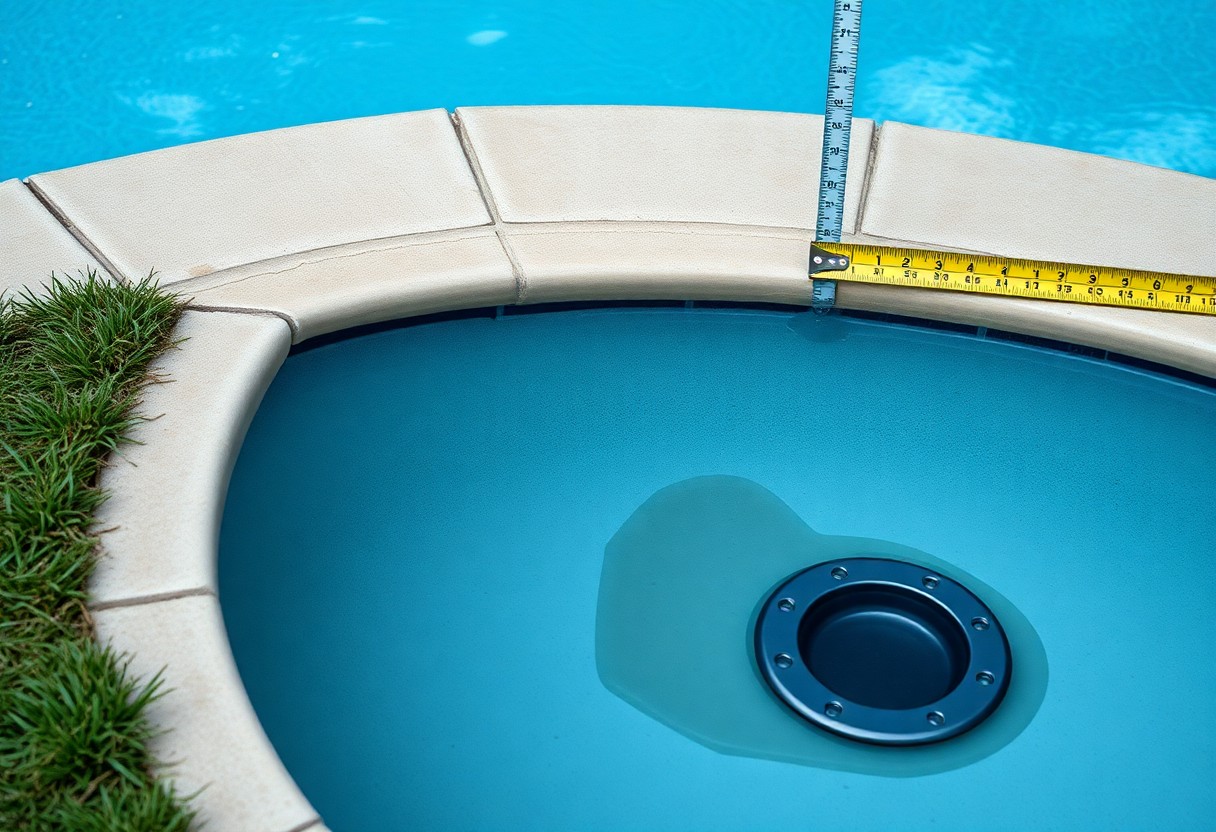
If your pool loses more than typical evaporation-commonly around 1/4″ per day depending on climate-you likely have a leak. For example, a 16’x32′ pool loses roughly 80 gallons with a 1/4″ drop; losing 1″ a week means ~320 gallons gone. You should track daily drops over several days; steady, unexplained declines beyond expected evaporation rates indicate water escaping somewhere in the shell, plumbing, or equipment.
Unexplained Water Bills
A sudden spike in your water bill while household use stays constant often signals a pool leak. For instance, a 1/4″ daily loss on a 16’x32′ pool is about 80 gallons per day-~2,400 gallons per month-adding roughly $24 at $0.01/gal. Watch for month-to-month jumps of 1,000-5,000 gallons that you can’t account for.
To confirm, shut off all indoor and outdoor fixtures and read your water meter for 15-30 minutes; any movement suggests a continuous leak. Also compare usage on consecutive bills, check for irrigation or municipal variances, and contact your utility if you see continuous flow or unexplained large usage-those patterns often isolate plumbing or pool-related leaks.
Wet Spots Around the Pool
Persistent soggy areas, patches of greener grass, or standing water near the pool perimeter often indicate a leak routing into the soil. You might see saturated ground 1-3 feet from the coping, or wet spots near return lines and equipment trenches; those localized patterns differ from general lawn irrigation wetness.
Probe suspect areas with a screwdriver or small shovel to find soft, muddy soil; if you notice soil erosion, springing up of weeds, or an increasingly large wet patch after you stop filling the pool, the leak is likely in a return line, skimmer plumbing, or a crack directing water under decking-document locations and timing before calling a specialist.
Cracks or Damage to Surrounding Areas
Visible cracks in plaster, separated coping, loose tile, or sinking concrete slabs near the pool can be both cause and symptom of leaks. Even hairline plaster cracks let water through the shell under pressure, while larger structural gaps (over 1/8″) often allow rapid loss and soil washout that worsens settling.
Inspect cracks for width, length, and active seepage; dye tests at the crack or pressure tests on lines can help pinpoint the source. Small plaster or tile repairs often run in the low hundreds to low thousands of dollars, whereas foundation settlement or major structural repairs can cost several thousand to tens of thousands-get a professional assessment before pursuing fixes.
Methods to Check for Leaks
Visual Inspection
You should scan the pool shell, tile line, fittings, lights, skimmer and equipment for obvious signs: peeling plaster, hairline cracks, wet or sinking soil on the pool apron, or consistently damp spots in the yard. Check returns, skimmer throat and light niches closely, and note if your pool level drops more than about 1/4-1/2″ per day compared with typical evaporation.
The Bucket Test
You place a sturdy bucket on a pool step, fill it to the same level as the pool, mark both water lines, then run the test for 24 hours; if the pool level falls more than the bucket by roughly 1/4″ or more, you likely have a leak. Use a ruler and mark with waterproof tape for accuracy.
Perform the test on a calm day and keep the bucket in shade to limit evaporation differences; shut off autofill and avoid running jets or heaters. For best results run it 48-72 hours and use two buckets on opposite ends for irregular shapes-if the pool consistently drops 1/2″ more per day than the buckets, the leak is significant enough to warrant professional detection.
Pressure Testing
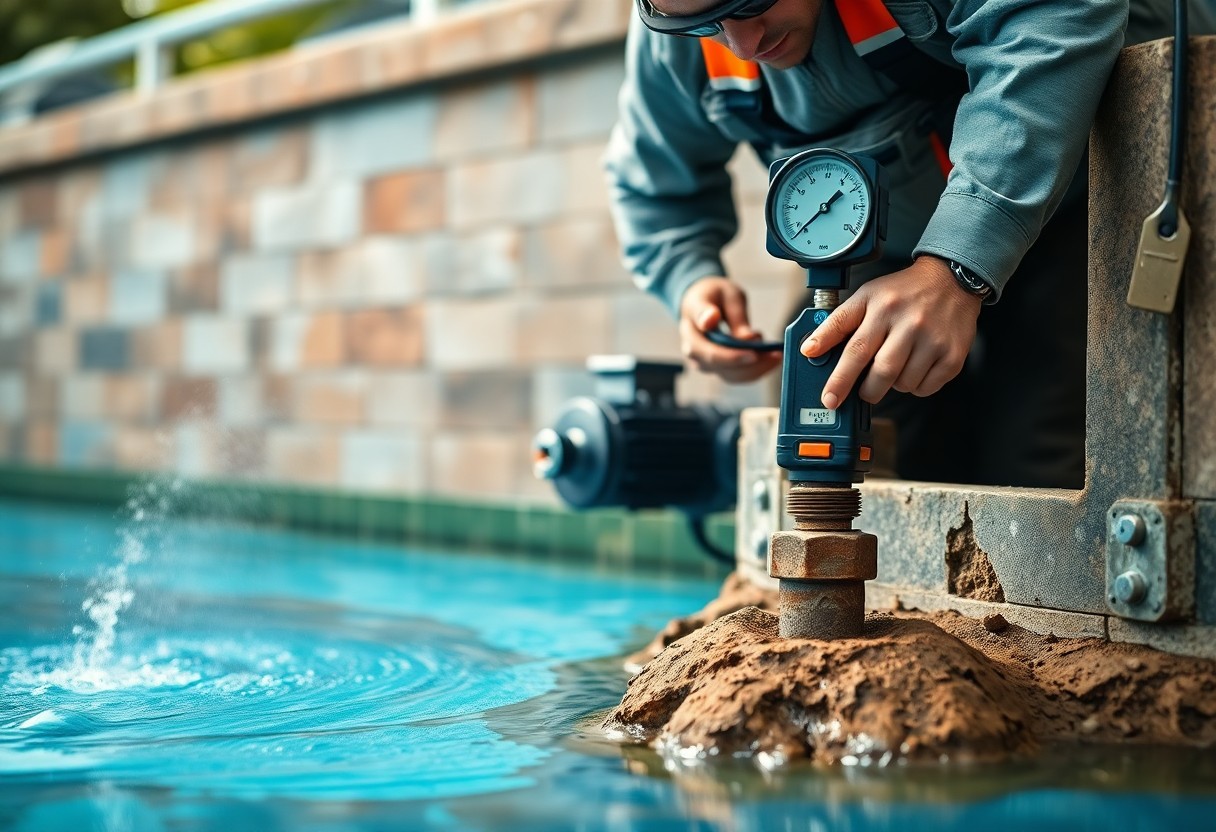
You isolate plumbing lines, cap them, and pressurize each run with a hand pump and gauge; a steady pressure drop indicates a leak in that line. Typical test pressures range from about 10-20 psi on pressure-side lines; professional kits let you test suction lines at lower pressures to avoid damage.
Use a pressure test kit with properly sized plugs and a calibrated gauge, then test each branch for 10-15 minutes-if pressure falls more than 2 psi in that window the line is leaking. Focus on skimmer and return runs, check underground junctions, and combine results with acoustic listening or electronic amplifiers if the pipe is buried; hire a licensed tech for complex underground systems or when joints and manifolds are involved.
Dye Test
You introduce a small amount of leak-detection dye or concentrated food coloring near suspected areas (cracks, skimmer, light niches, fittings) while the water is still; dye that is drawn into a gap reveals the leak’s location. Work slowly and use a syringe for control.
Turn off pumps to eliminate currents, then release dye in 1-2 ml pulses and watch whether it moves toward a seam or hole-if you see continuous suction pulling dye into a crack, you’ve found the source. For skimmers, test around the throat and weir; for lights, apply dye along the gasket seam or conduit. Note dye won’t locate deep underground leaks, so pair it with pressure testing or electronic detection for full diagnostics.
Analyzing Leak Location
Skimmers and Returns
If water level is consistently below the skimmer mouth and your pump is losing prime, you likely have a skimmer or return issue; inspect skimmer weir, faceplate screws, and the skimmer-to-pump union for loose fittings or cracked gaskets. You can run a dye test at the skimmer throat and watch for quick suction pull-if dye is drawn in within seconds, that skimmer or its plumbing is the suspect. Small leaks at the skimmer can let your pool lose dozens of gallons per week.
Main Drains
Main drains sit at the deepest point (often 8-10 ft) and will cause steady losses if cracked or if a fitting below grade fails; bubbles near the drain while the pump runs, or sudden changes when you close the main-drain valve, point to that area. Perform a dye check around the grate and watch for immediate flow toward the grate-rapid attraction indicates a suction-side leak at the drain or its connecting pipe.
To confirm, isolate the main drain by shutting valves or plugging the grate with an inflatable test ball; if your loss rate falls significantly after isolation, the main-drain line or the drain sump is the source. Technicians often pressure-test the drain line or use a submersible camera to inspect the sump and grate assembly; if you have dual drains, test each individually since one failing drain can mask the other.
Pool Walls and Floors
Visible cracks in plaster, tile grout failures around waterline tiles, or a damp patch on the deck above the wall are strong indicators you should focus on walls and floors; small hairline plaster cracks can migrate and leak progressively, losing hundreds of gallons over weeks. Use a dye test along suspected grout lines, steps, and corners-if dye flows into a crack, you’ve likely pinpointed the spot.
For deeper investigation, perform a vacuum-loss test by sealing a section with a suction cup and monitoring how quickly the vacuum falls; a quick drop isolates that floor or wall area. Infrared scans can reveal cooler zones from leaking water behind plaster, and a pool leak specialist can use acoustic listening or inject dye under pressure to map the exact breach before patching.
Plumbing Lines
Suspect underground plumbing when water loss doesn’t correlate with visible pool features and you notice wet spots or sinkage in the surrounding yard; pressurizing the line and listening with an electronic amplifier often finds a hidden leak. Tracer-gas methods (helium or nitrogen) combined with a sniffer are commonly used when acoustic methods fail, particularly on long runs of PVC under concrete.
Typically a professional will isolate the circuit, cap fittings, and pressure-test the line at roughly 20-25 psi to watch for pressure drops-any sustained fall indicates a leak. If a drop is detected, pinpointing proceeds with listening gear or tracer gas; repairing may require directional digging or pipe replacement, so confirm the exact pipe location before excavating.
Repairing Pool Leaks
Temporary Solutions
You can slow or stop many small leaks with on-the-spot fixes: underwater epoxy putty (sets in 5-10 minutes) for skimmer and tile cracks, silicone-based sealants for small fittings, or inflatable pipe plugs for a leaking return line; these typically hold for days to weeks while you plan a permanent repair and often cost $10-$50 in materials.
Professional Leak Detection Services
Technicians use dye testing, pressure testing of plumbing, electronic acoustic amplifiers and video inspection to pinpoint leaks; a full diagnostic often takes 2-4 hours and commonly costs $200-$800 depending on pool size and complexity, with a written report and repair estimate provided.
Pressure testing isolates lines and monitors for pressure loss, which quickly identifies plumbing failures, while acoustic methods amplify subsurface water flow so you can locate small cracks in gunite or plaster; video inspection then confirms pipe breaks or root intrusion. For example, a tech using pressure and camera inspection can often locate a buried PVC joint leak within an hour, avoiding unnecessary full-deck excavation and reducing repair costs significantly.
DIY Repair Methods
You can patch vinyl tears with manufacturer-rated patch kits (clean, dry, adhesive, press and cure 24-48 hours), fill small plaster/gunite hairline cracks with pool-grade epoxy or hydraulic cement, and replace visible return fittings or gaskets yourself if you’ve pressure-tested and isolated the line.
For vinyl, cut a patch 1-2 inches larger than the tear, apply adhesive per instructions and keep the area submerged only after the full cure time; for plaster, chase out the crack to a V-shape, clean debris, then inject epoxy and smooth before 24-48 hour curing. When working on buried PVC, you’ll need to excavate, cut out the damaged section, and solvent-weld a replacement coupling rated for your system pressure-if you lack tools or certainty, stop and call a pro.
Long-Term Maintenance Tips
Inspect your pool weekly for 10-15 minutes and log water-level changes, equipment run times and any odd noises or pressure shifts. The habit of tracking these trends helps you spot slow leaks before they become major repairs.
- Check skimmer and return fittings monthly for seepage
- Monitor filter pressure and backwash when pressure rises 8-10 psi above baseline
- Maintain chemical range: free chlorine 1-3 ppm, pH 7.2-7.6
Schedule a professional leak test every 2-3 years, replace rubber gaskets and O-rings every 3-5 years, and budget routine excavation inspections if you have older PVC plumbing; backwash DE/Cartridge systems per manufacturer intervals (DE backwash typically every 4-6 weeks under normal use). The best long-term approach is a routine maintenance calendar you follow consistently.
- Keep a maintenance log with dates and water loss (inches per week)
- Have a pro pressure-test plumbing if you lose >¼ inch/day without evaporation
- Allocate an annual maintenance budget equal to 1-3% of your pool’s replacement value
Preventing Future Leaks
Regular Pool Inspections
You should do a quick visual check weekly and a hands-on inspection monthly: scan tile lines, skimmer throats, return fittings, visible plumbing, and equipment pads; test filter pressure and backwash or clean when gauge rises 8-10 psi above the clean reading. Pay attention to wet spots in the surrounding deck, sinking soil, or unusually high chemical use-those signal slow leaks before they become major repairs.
Maintaining Proper Water Chemistry
Keep pH between 7.2-7.6, free chlorine 1-3 ppm, total alkalinity 80-120 ppm, and calcium hardness 200-400 ppm to prevent plaster etching, metal corrosion, and scale that can open seams or pits; test 2-3 times weekly in summer and at least weekly off-season. Outdoor chlorinated pools should target cyanuric acid 30-50 ppm to stabilize sanitizer activity while limiting over-stabilization.
If pH drifts above 7.8 you’ll see scale deposits that can lift tile and grout, while pH below 7.0 accelerates etching of plaster and metal components. For example, pools with calcium hardness under 150 ppm often develop microscopic plaster pitting that evolves into hairline cracks; correcting hardness to 250-350 ppm and balancing alkalinity typically stabilizes the surface. Use shock treatments weekly during heavy bather load and retest after major rainfall or backwash events to keep chemistry steady.
Sealing Cracks and Joints
You should repair hairline cracks and failing joint seals promptly using pool-grade products: use hydraulic cement or epoxy for concrete shell repairs, polyurethane or urethane sealants for expansion joints, and vinyl patch kits for liner tears. Small, inexpensive DIY patches cost $20-$100, but active leaks or moving joints need professional attention to avoid repeated failures.
Underwater leaks require specially rated epoxies or putties you can apply without full draindown; for larger structural cracks an injection of epoxy or polyurethane by a technician seals internal voids and stabilizes the shell. If a crack is moving more than 1/8″ or you see progressive settlement of the deck, plan on professional injection or partial replastering-costs range from a few hundred dollars for spot repairs to several thousand for structural work.
Winterizing Your Pool
Lower in-ground pool water 4-6 inches below the skimmer/tile, remove and drain pumps, filters and heaters, and either blow out lines and insert winter plugs or add pool-specific antifreeze into traps; cover the pool with a secure winter cover and inspect it every 4-6 weeks. Proper winter prep prevents freeze damage to plumbing and reduces risk of springtime leaks.
When you blow out lines use a compressor or shop-vac rated for plumbing work and install expansion plugs in return fittings; if you use pool antifreeze, choose a propylene-glycol-based product labeled for pools and pour into skimmer/trap low points per manufacturer guidance. Store vulnerable equipment indoors, keep the cover free of standing water, and recheck seals and plugs after storms so thawing cycles don’t reveal hidden leaks.
To wrap up
Summing up, if your pool loses more water than expected from evaporation, shows wet areas around the deck, has persistent algae despite proper chemistry, or you notice higher bills or pressure issues in equipment, you likely have a leak; perform a bucket test and inspect fittings, or contact a professional leak detector if you can’t locate the source.

FAQ
Q: What are the most common signs that my pool is leaking?
A: Steady water loss beyond expected evaporation (more than about 1/4-1/2 inch per day), persistent wet or soggy ground near the pool, sinking or cracked pool deck, unusually high pump run time or air in the pump basket, and unexplained algae growth from low water levels are common indicators of a leak.
Q: How can I tell if water loss is from evaporation or a leak?
A: Use the bucket test: place a filled, marked bucket on the top step and mark the pool water level, then run the pool and leave it undisturbed for 24 hours. If the pool water drops more than the water in the bucket (adjust for rain or splash-out), you likely have a leak. Record water loss rate over several days to confirm.
Q: How do I test for leaks around equipment, fittings, and plumbing?
A: Inspect pump, filter, heater, skimmer, return fittings and visible plumbing for wet spots, corrosion, or air in the system. Turn the pump off and check static water level at skimmer and return fittings. Use a dye test near fittings and valves (with calm water) to see if dye is drawn into a crack or joint. Listen for hissing or running water in the equipment area.
Q: How do I perform a dye test on the pool shell, lights, and skimmer?
A: Shut off pumps so water is still, then use a syringe or squeeze bottle to release a small amount of dye close to suspected leaks (cracks, around lights, skimmer throat, tile lines). If the dye is pulled toward a spot and disappears, that location is leaking. Test one area at a time and work methodically around the shell and fittings.
Q: When should I call a professional leak detector and what methods will they use?
A: Call a pro if the bucket test shows a leak, you can’t locate the source, the leak is near structures or electrical equipment, or the loss is rapid. Professionals use pressure testing of plumbing, electronic acoustic listening, tracer gas, video inspection, thermal imaging, and dye confirmation. They can provide repair options and cost estimates based on the location and severity of the leak.