Pool maintenance involves a variety of tasks, and dealing with cloudy water is one of the more frustrating challenges you might face. If you’re experiencing murky, unclear water, it’s necessary to understand the key steps you can take to restore your pool’s clarity. In this guide, you’ll learn about common causes of cloudy water and effective methods to clear it up, ensuring that your pool remains inviting and enjoyable for your swimming experience.
Common Causes of Cloudy Pool Water
Cloudy pool water can stem from various issues, including chemical imbalances and environmental factors. Identifying the root cause is imperative for restoring your pool to crystal clear conditions. Regular testing and maintenance can significantly reduce the chances of encountering these issues.
Chemical Imbalances: pH, Alkalinity, and Chlorine Levels
Your pool’s chemical balance plays a critical role in maintaining clarity. High or low pH levels can hinder chlorine’s effectiveness, leading to cloudy water. Similarly, improper alkalinity can cause water to become corrosive or overly scaled, exacerbating clarity issues. Regularly testing and adjusting these chemical levels can keep your water sparkling.
Environmental Factors: Leaves, Debris, and Algae Growth
Leaves and debris can easily accumulate in your pool, especially during windy weather or certain seasons. Algae blooms thrive in warm water, especially if your chlorine levels are insufficient to combat them. Routine cleaning and employing a proper sanitation system can help mitigate these environmental factors.
- Ensure you skim and vacuum regularly to remove leaves and debris.
- Check for any visible algae that might be forming in your pool.
- Consider using a pool cover to minimize debris accumulation.
Environmental elements like leaves and debris not only obscure visibility but can also lead to algae outbreaks. Stagnant water provides an ideal breeding ground for organisms, which can multiply quickly. Preventative measures such as regular skimming, vacuuming, and chemical treatments will help keep your pool ecosystem healthy and clear.
- Monitor temperature levels that encourage algae growth.
- Utilize algaecides as a preventive measure during peak seasons.
- Check your filtration system for proper functionality to reduce debris buildup.
The impact of environmental factors on your pool’s clarity is more significant than it may seem, resulting in the need for diligent maintenance to maintain that inviting blue hue. Regular attention to both chemical balance and environmental cleanliness is imperative to achieving that pristine water quality you desire.
Effective Filtration Techniques to Clear Up Cloudiness
Your pool’s filtration system plays a vital role in maintaining clear water. An effective filtration technique ensures that debris, algae, and other impurities are removed efficiently. Fine particles can often bypass standard filters; using a multi-layered filter system or a clarifier can significantly improve your water clarity. Additionally, consider running your filter for longer periods, especially after heavy pool usage or after a rainstorm, to help clear up any cloudiness more quickly.
Choosing the Right Filter System
Selecting the appropriate filter system for your pool depends on its size and type. For smaller above-ground pools, cartridge filters can provide an effective and hassle-free solution, while larger in-ground pools may benefit from sand or diatomaceous earth (DE) filters, which offer superior performance. Evaluate your pool’s turnover rate, ensuring that your filter can circulate the entire volume of water at least once every eight hours to maintain optimal clarity.
Routine Maintenance: Backwashing and Cleaning
Regular backwashing and cleaning of your filter system are fundamental for optimal performance. Backwashing is necessary when the pressure gauge shows a level 8-10 psi higher than normal. Aim to do this every few weeks or whenever you notice decreased water clarity. In addition, routinely removing debris from skimmer baskets and cleaning or replacing filter media helps prevent buildup that could lead to cloudy water.
During backwashing, you expel dirty water from the filter and return clean water to the pool. This not only clears out trapped contaminants but also helps maintain the effectiveness of your filtration system. For sand filters, replacing the sand every 3-5 years ensures continued efficiency, whereas cartridge filters should be cleaned or replaced according to the manufacturer’s recommendations. Staying on top of these tasks will directly contribute to clearer, healthier pool water and reduce the occurrence of cloudiness.
Chemical Solutions: When to Shock Your Pool
Shocking your pool is a powerful way to eliminate particles and contaminants that can cause cloudy water. This treatment is particularly necessary when chlorine levels drop too low, or after periods of heavy use or storms. Scheduling regular shock treatments can help maintain a balanced chemical environment, ensuring your pool remains inviting and clear throughout the season. Ideally, you should shock your pool once a week during peak swim times or whenever you notice murkiness setting in, as it quickly addresses water clarity issues.
Identifying the Right Chemicals for Cloudiness
To effectively combat cloudy water, selecting the right chemicals is imperative. You’ll likely want to use a chlorine shock, which rapidly increases chlorine levels to eliminate bacteria and algae. Alternatively, if the cloudiness is due to organic matter, a non-chlorine shock can be effective. Consider using clarifiers or flocculants as well; they work by binding small particles together, making it easier for your filter to remove them, thus clearing up the water.
Proper Application Techniques for Maximum Effectiveness
Applying chemicals correctly ensures they work efficiently to clear your pool water. Always follow the manufacturer’s instructions regarding dosage, and be mindful of your pool’s size and current chemical levels. Disperse chemicals around the pool in multiple locations to enhance their mixing and effectiveness. Additionally, running the filter continuously for at least 24 hours after application helps circulate the chemicals uniformly, allowing for optimal results.
For maximum effectiveness, consider timing your chemical application carefully. Applying shock in the evening allows it to work overnight without interference from sun exposure, which can dissipate the chlorine too rapidly. Additionally, pre-dissolving certain granular chemicals in a bucket of water before adding them to the pool can enhance their distribution and prevent potential damage to your pool surfaces. Monitoring water conditions before and after treatment can also inform you of how well the chemicals are working and whether further adjustments are necessary.
Preventative Measures to Maintain Crystal Clear Water
Preventing cloudy water is much easier than trying to fix it after it occurs. By implementing regular maintenance practices, you can keep your pool water pristine. Establishing a regular cleaning schedule, consistent use of chemicals, and monitoring will help you avoid murky water. Making a point to educate yourself about potential seasonal changes, such as pollen or leaves, can also put you ahead in the game of pool maintenance.
Regular Testing and Monitoring Practices
Testing your pool water at least once a week ensures the chemical levels remain balanced. Utilize a reliable test kit to check for pH, chlorine, alkalinity, and calcium hardness. Maintaining the correct pH level (between 7.2 and 7.6) is particularly important for preventing cloudy water and promotes effective sanitizer performance. Make adjustments as needed and keep a log of your readings to notice any trends that might require attention.
Preventing Debris and Environmental Contamination
Taking proactive steps to prevent debris accumulation is vital for keeping your pool water clear. Regular skimming of leaves and insects, using a pool cover when not in use, and regularly cleaning filters can drastically reduce contamination. Consider placing plants strategically around the pool to minimize debris from falling into the water.
Environmentally, weather changes can lead to more debris in your pool. Windy conditions stir up leaves and pollen, while heavy rain can introduce dirt and other contaminants. Implementing windbreaks, like tall hedges or fencing, can help reduce the amount of debris that lands in your pool. Additionally, using pool covers during off-seasons prevents leaves and rainwater from entering your pool, thereby maintaining clearer water and saving on maintenance time.
When to Call in the Professionals
If you’ve tried multiple DIY methods without success, it may be time to seek professional help. Cloudy pool water can sometimes signal underlying issues that require expert intervention, giving you peace of mind knowing that your pool is in capable hands.
Signs That Indicate a Bigger Problem
Keep an eye out for persistent cloudiness despite balancing chemicals, abnormal water levels, or unusual smells. If you notice algae growth or discoloration in addition to the cloudiness, these symptoms may suggest more profound issues like equipment malfunctions or serious contamination.
What to Expect from Pool Maintenance Experts
When hiring a pool maintenance professional, you can expect a thorough inspection of your pool’s systems, including the filtration unit, water chemistry, and overall hygiene. Experts will identify any problems and recommend appropriate treatments tailored to your specific situation.
Pool maintenance specialists typically have access to advanced diagnostic tools and industry knowledge that far surpasses general practices. They often conduct a series of tests for pH levels, alkalinity, and other chemical balances, removing contaminants effectively. Their experience allows them to tackle deeper issues like mechanical failures or structural integrity problems, providing long-term solutions that enhance your pool’s efficiency and longevity. By investing in professional maintenance, you’re ensuring a sparkling, safe swimming environment for you and your family.
Conclusion
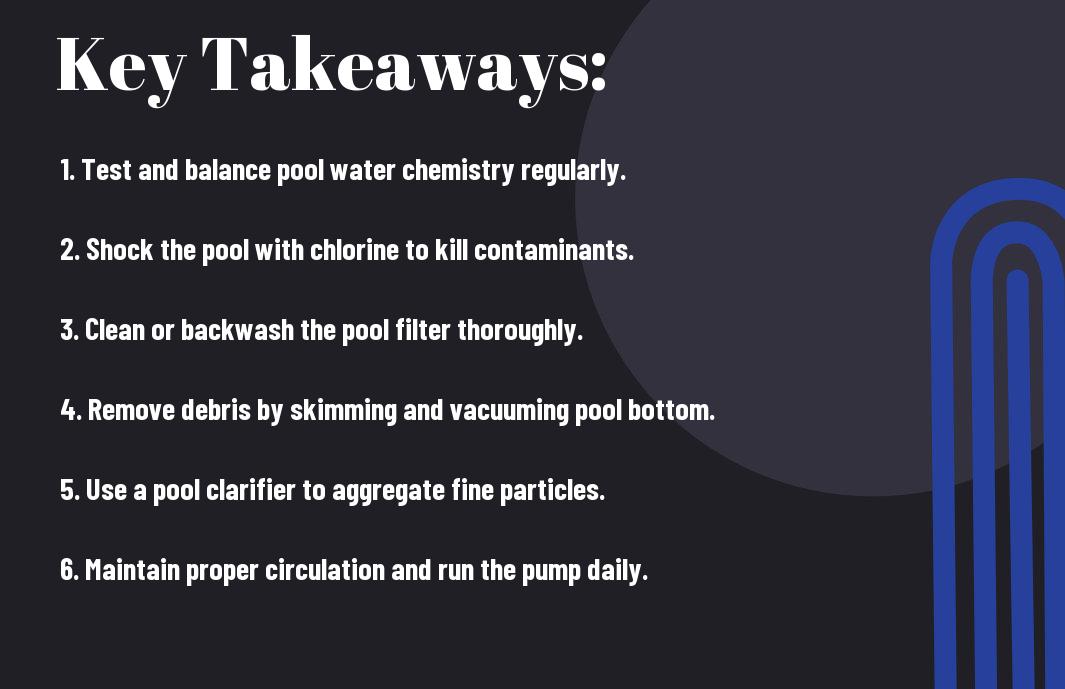
As a reminder, to clear up cloudy pool water, you should regularly test and balance your water chemistry, ensure proper filtration, and use clarifiers or algaecides as needed. Regularly cleaning your pool surface and vacuuming debris will also help maintain clarity. Make sure to backwash your filter or clean it according to its type. By implementing these steps and monitoring your pool consistently, you can enjoy crystal-clear water all season long.